
Choosing the right shuttlecock is one of the most consequential decisions you can make for your badminton game. The choice between feather and nylon (synthetic) shuttlecocks depends primarily on your skill level, playing environment, and budget. While both options serve the same fundamental purpose on the court, they offer vastly different experiences in terms of flight mechanics, durability, and overall feel.
Feather shuttlecocks represent the gold standard for advanced and competitive players who demand authentic flight paths, precise net control, and steep smash trajectories. Their natural design allows for intricate spin and rapid deceleration, which are essential for high-level tactical play. However, this superior performance comes at a premium price and with a high level of fragility.
Nylon shuttlecocks are the practical and economical choice for beginners, casual players, outdoor environments, and high-frequency training sessions. Their synthetic construction provides exceptional durability and a highly predictable, long-lasting flight path. For those looking to maximize their court time without constantly replacing damaged gear, nylon offers an unmatched cost-to-performance ratio.
Products mentioned in this guide
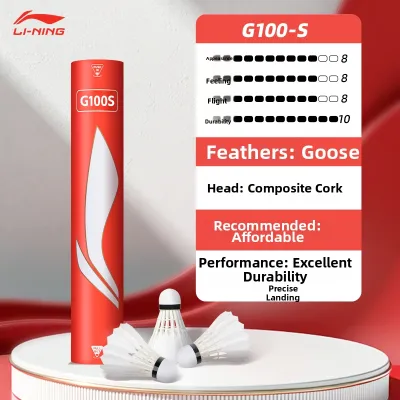
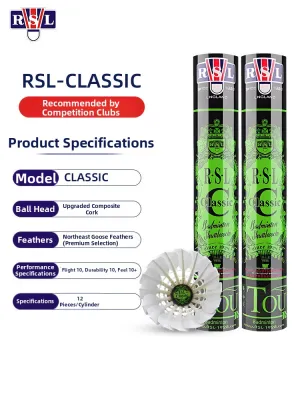
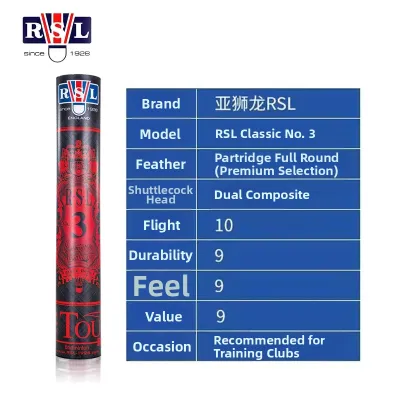
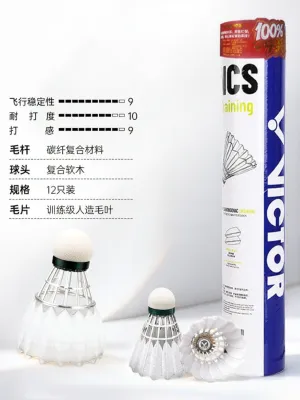
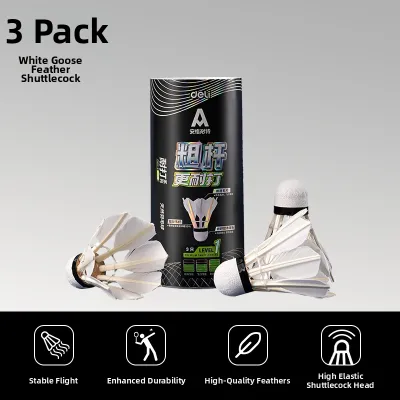
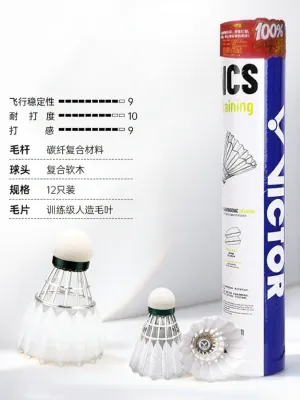
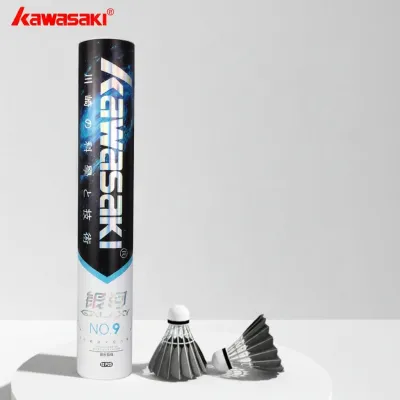
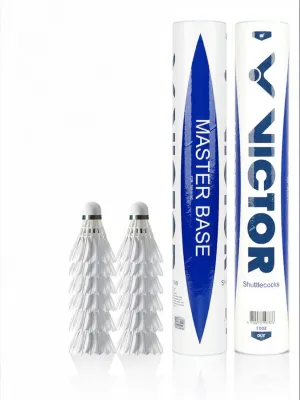
Prices are valid at publication and may change. Please refer to the product page for the latest price.
Core Differences: Flight, Durability, and Feel
To understand why these two types of shuttlecocks perform so differently, it is helpful to look at their physical and economic characteristics side by side. The structural design of each material dictates how it interacts with the air and how it responds to the impact of your racket.
| Feature | Feather Shuttlecocks | Nylon (Synthetic) Shuttlecocks |
|---|---|---|
| Material Composition | Natural goose or duck feathers with a natural cork base | Molded nylon skirt with a synthetic or natural cork base |
| Flight Trajectory | Parabolic with rapid deceleration and a steep drop angle | Flatter trajectory with slower deceleration and longer carry |
| Durability | Low; feathers easily split, bend, or break upon mishits | High; highly resilient to frame hits and structural warping |
| Relative Cost | High (ongoing expense due to frequent replacements) | Low (economical option with long-lasting single units) |
| Impact Sound & Feel | Crisp, solid acoustic feedback; precise tactile control | Muffled or "mushy" feedback; heavier impact feel |
| Target Player Level | Intermediate, advanced, and competitive tournament players | Beginners, casual players, and high-volume training groups |
The fundamental difference in flight physics lies in how each shuttlecock decelerates. Feather shuttlecocks experience high aerodynamic drag because the individual feathers overlap to create a flared cone. When hit, the shuttlecock spins rapidly, stabilizing its flight path, and then decelerates quickly at the end of its trajectory to drop at a steep angle. Nylon shuttlecocks, which are frequently marketed as “synthetic” or “plastic” in sports retail, feature a more flexible, single-piece molded skirt that does not deform or recover in the same dynamic manner, resulting in a flatter, more consistent path that travels further with the same amount of force.
The acoustic and tactile feedback upon racket impact also differs significantly. Striking a feather shuttlecock produces a sharp, satisfying sound and a crisp feel that tells you exactly how clean your contact was. In contrast, hitting a nylon shuttlecock yields a duller, slightly heavier feedback that some players describe as “mushy,” making it harder to gauge the precise touch required for delicate shots.
The Case for Feather Shuttlecocks
Feather shuttlecocks are crafted using 16 individual natural goose or duck feathers that are meticulously sorted, measured, and inserted into a premium natural cork base. This traditional construction is designed to deliver the ultimate aerodynamic experience. The natural cork provides a solid, predictable rebound off the racket face, while the feathers ensure the shuttlecock stabilizes almost instantly after impact.

The flight characteristics of a feather shuttlecock are unmatched. When you execute a drop shot, the rapid deceleration allows the shuttlecock to fall sharply and tightly over the net. For offensive players, the steep angle of a smash hit with a feather shuttlecock makes it incredibly difficult for opponents to defend. This level of precision is why feather shuttlecocks are mandatory for any serious competitive play.
However, this elite performance comes with significant durability constraints. Natural feathers are highly fragile and prone to splitting or snapping, especially when struck with the frame of the racket during a mishit. In dry environments, the feathers lose their natural moisture and become brittle, accelerating their breakdown.
This vulnerability is particularly evident in Singapore, where heavily air-conditioned indoor sports halls strip the moisture from the air. A dry environment causes the feathers to dry out quickly, meaning a single high-intensity match can easily consume three to six shuttlecocks. With a quality tube of feather shuttlecocks retailing between S$30 and S$45, players face a high recurring cost to maintain their hobby.
The Case for Nylon (Synthetic) Shuttlecocks
Nylon shuttlecocks feature a single-piece molded synthetic skirt attached to either a synthetic foam or a natural cork base. This design is engineered specifically to address the fragility of natural feathers. Because the skirt is made of resilient plastic, it can bend, flex, and absorb high-velocity impacts without losing its structural integrity.
The primary advantage of nylon is its incredible durability. A single nylon shuttlecock can withstand repeated frame clashes, heavy smashes, and rough handling that would instantly ruin a feather alternative. This resilience makes them virtually immune to the drying effects of air-conditioned sports halls or the humid outdoor air of Singapore, allowing players to use a single shuttlecock for multiple games or even weeks of casual play.
In terms of flight, nylon shuttlecocks offer a highly consistent, albeit flatter, trajectory. Because they do not slow down as quickly as feathers, they require less physical effort to clear from baseline to baseline. While this makes the game more accessible for beginners, it does come with a slightly heavier impact feel and less responsive feedback for advanced techniques like deceptive slices or tumbling net play.
From a financial perspective, nylon shuttlecocks are exceptionally cost-effective. A tube of six high-quality nylon shuttlecocks typically costs between S$15 and S$25. Given their long lifespan, the cost per hour of play is incredibly low, making them the ideal choice for school physical education programs, multi-shuttle coaching drills, and casual weekend games with family and friends.
Decision Framework: Which One Fits Your Game?
Choosing between these two options requires balancing your current skill level, your playing environment, and your monthly budget. Aligning your choice with these factors will ensure you get the most enjoyment and value out of your time on the court.
Choose Feather If:
- You are an intermediate to advanced player: You have developed clean stroke mechanics, rarely hit the shuttlecock with your racket frame, and want to refine your tactical play.
- You play in competitive environments: You participate in organized leagues, tournaments, or advanced social groups where authentic flight paths are expected.
- You prioritize touch and net play: Your game relies heavily on precise drop shots, tight net spins, and steep, aggressive smashes.
- You have the budget for recurring costs: You are comfortable spending S$30 or more per tube on a regular basis to maintain premium performance.
Choose Nylon If:
- You are a beginner or casual player: You are still developing your hand-eye coordination, frequently hit off-center shots, and want to focus on basic rally consistency.
- You play in varied environments: You play outdoors in parks, at community void decks, or in non-air-conditioned community halls where wind and temperature fluctuate.
- You are running high-volume training: You need a large volume of durable shuttlecocks for multi-shuttle drills, coaching clinics, or school practices.
- You want maximum cost efficiency: You prefer a low-maintenance setup where a single purchase lasts for weeks of regular play.
Verify First If:
If you are planning to transition from nylon to feather shuttlecocks, expect a noticeable adjustment period. Because feather shuttlecocks decelerate much faster, your timing on clears and smashes will feel different initially. You will need to apply more physical power and ensure clean racket contact to push a feather shuttlecock to the backcourt, whereas a nylon shuttlecock often masks poor technique by traveling further with less effort.
Additionally, you must verify the speed rating of the shuttlecocks you purchase. Shuttlecocks are rated by speed (typically from 75 to 79), which indicates how far they will travel under specific temperature and altitude conditions. In Singapore’s hot and humid climate, speed 76 (slower) and speed 77 (medium-slow) are the standard choices. Using a speed 78 or 79 in a warm Singapore sports hall will cause the shuttlecock to fly consistently out of bounds, ruining the quality of your game.
Care and Storage: Getting the Most Out of Your Shuttles
Proper maintenance can significantly extend the lifespan of your shuttlecocks, helping you get more value out of every tube. This is especially true for fragile feather variants, which require active care to prevent premature breakage.
To combat the drying effects of air-conditioned courts, you should humidify your feather shuttlecocks before play. You can do this by using a dedicated humidifying cap or by carefully steaming the tube. To steam your shuttles, open both end caps of the cardboard tube and hold one end over a steaming kettle for five to ten seconds until steam passes through the other side. Immediately close both caps to seal the moisture inside. Performing this routine 24 to 48 hours before your session allows the feathers to absorb the moisture, making them flexible and far less likely to snap on impact.
Proper storage is equally important for both feather and nylon options. Always store your shuttlecocks inside their original protective tubes, keeping them either perfectly horizontal or vertical. Avoid leaving your shuttlecock tubes in hot, enclosed environments, such as the trunk of a parked car in Singapore’s intense heat. Extreme heat dries out the natural oils in feather shafts and can permanently warp the delicate plastic skirt of nylon shuttlecocks.
Knowing when to retire a shuttlecock will keep your games fair and prevent injury. For feather shuttlecocks, you should replace the unit as soon as a single feather breaks or bends severely, as this causes the shuttlecock to wobble in the air and ruins flight accuracy. For nylon shuttlecocks, you can continue using them for casual rallies even if the skirt has minor scuffs, but you should retire them once the skirt develops deep tears, loses its circular shape, or the cork head begins to wobble or separate.
Frequently Asked Questions (FAQ)
Can I use nylon shuttlecocks for official tournaments?
No, official tournaments sanctioned by the Badminton World Federation (BWF) and most national sports associations strictly require the use of approved natural feather shuttlecocks. Natural feathers provide the precise flight characteristics, speed control, and spin dynamics required for fair, professional-level competition. Nylon shuttlecocks are generally restricted to grassroots recreational leagues, school physical education classes, and informal community tournaments where durability and budget are the primary concerns.
Do feather shuttlecocks come in different speeds?
Yes, feather shuttlecocks are manufactured in different speed ratings, usually ranging from 75 (slowest) to 79 (fastest). The correct speed is determined by the ambient temperature, humidity, and altitude of the playing venue. Warmer air is less dense, meaning the shuttlecock will fly faster and further; therefore, players in hot, tropical climates like Singapore typically use slower speed ratings (such as 76 or 77) to keep the shuttlecock within court boundaries. Cooler climates require faster ratings (such as 78 or 79) to ensure the shuttlecock reaches the backcourt naturally.
Is goose feather better than duck feather?
Yes, goose feather is generally considered superior to duck feather for competitive play. Goose feathers feature thicker, stronger shafts and a more uniform structure, which translates to a more durable shuttlecock with highly consistent flight stability. Duck feathers are thinner and more brittle, making them prone to breaking faster under heavy hits. However, duck feather shuttlecocks are more affordable to manufacture, making them an excellent mid-tier option for intermediate training sessions and budget-conscious social clubs.
Community discussion
Share your experience or ask a question. Comments are reviewed before publication.