
Choosing between feather and nylon badminton shuttlecocks comes down to a trade-off between flight precision and physical durability. Your decision should align with your playing level, budget, and where you play, whether you are booking a court at a local community center or training for a competitive tournament.
Feather shuttlecocks are the standard for competitive play, offering an authentic flight path, sharp deceleration, and precise net control. However, they are fragile and require frequent replacement. Nylon shuttlecocks, made from synthetic materials, offer exceptional durability and a consistent trajectory, making them the practical choice for beginners, casual rallies, and outdoor games where budget and longevity are the primary concerns.
Ultimately, the right choice depends on balancing your performance expectations with your ongoing equipment budget. By understanding how each material behaves on the racket and in the air, you can select the option that best supports your development on the court.
Products mentioned in this guide
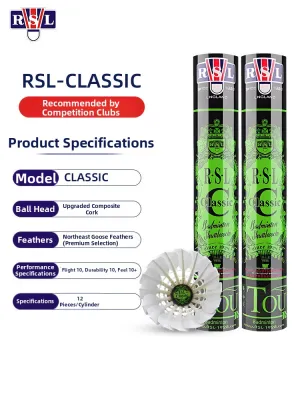
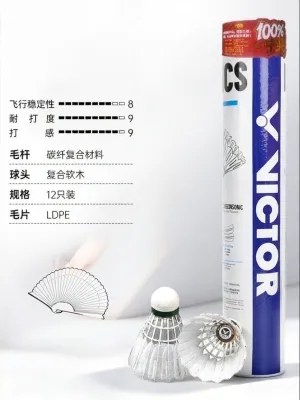
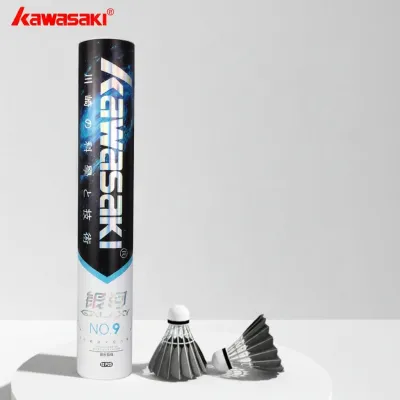
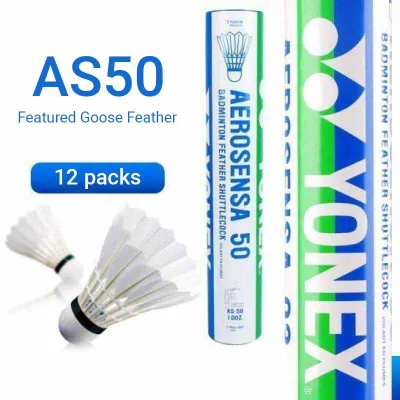
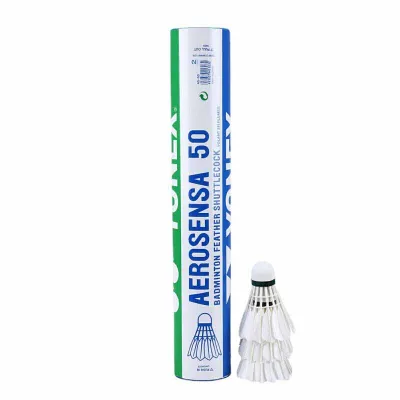
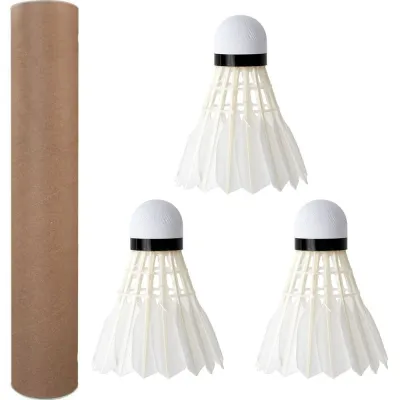
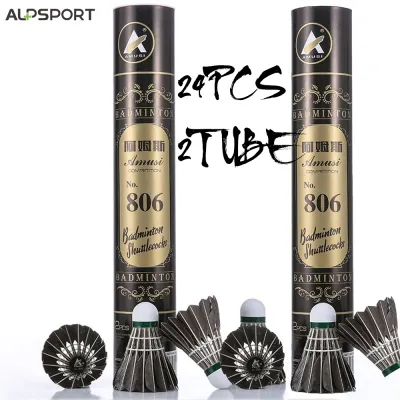
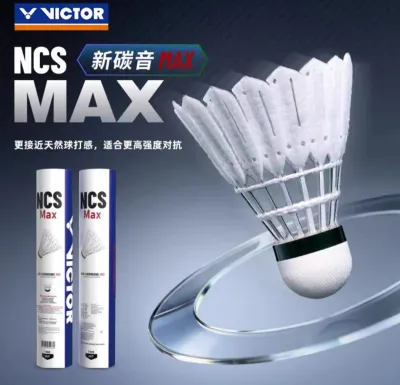
Prices are valid at publication and may change. Please refer to the product page for the latest price.
Flight Characteristics and Playing Feel
The aerodynamic behavior of a badminton shuttlecock is determined by its construction. A feather shuttlecock is crafted from 16 overlapping feathers, typically sourced from ducks or geese, anchored into a solid cork base. This unique structure creates high aerodynamic drag. When struck, a feather shuttle accelerates rapidly and then decelerates sharply, dropping almost vertically at the end of its flight path. This characteristic allows for precise, tight drop shots and steep smashes.
Nylon shuttlecocks feature a continuous synthetic plastic skirt designed to mimic natural feathers. While modern manufacturing has improved their design, nylon shuttles do not compress or expand in the air the same way natural feathers do. Consequently, they experience less drag, resulting in a flatter, more parabolic trajectory. A nylon shuttle retains its speed longer during flight, which can make deep clears easier to execute but harder to keep within the baseline.
Impact feel is another critical differentiator for players. The combination of natural cork and real feathers produces a crisp, satisfying sound and immediate tactile feedback upon contact with the racket string bed. This sensory feedback helps players gauge the power and angle of their strokes. In contrast, synthetic skirts often deliver a slightly muted or heavier sensation, which can make delicate net play and deceptive slices more challenging to control.
These flight differences directly influence your tactical options during gameplay. With a feather shuttle, you can execute tight, tumbling net shots that drop immediately after crossing the tape. When playing with a nylon shuttle, the flatter flight path and lack of sharp deceleration mean net play is generally less dramatic, and defensive players must adjust their timing to account for the shuttle maintaining its speed longer.
Durability, Lifespan, and Budget Impact
Structural resilience is the primary advantage of synthetic shuttlecocks. Nylon skirts are highly flexible and can withstand repeated impacts, including off-center hits against the racket frame. Even when a nylon shuttle begins to wear, the skirt typically stretches or suffers minor tears rather than breaking entirely, allowing a single shuttle to last for multiple games or even entire sessions of casual play.

Feather shuttlecocks are inherently fragile. A single poorly timed smash that strikes the feather vanes instead of the cork base can instantly bend, crack, or snap a shaft. Once a feather is damaged, the shuttle loses its aerodynamic balance, begins to wobble or spin unevenly, and must be replaced immediately to maintain fair play. In a typical intermediate or advanced match, players may go through several feather shuttles per game.
This difference in lifespan has a significant impact on your long-term playing budget. While a tube of high-quality feather shuttles and a tube of premium nylon shuttles may have comparable upfront purchase prices, the cost-per-hour of playing with feathers is substantially higher. Players who meet multiple times a week at local sports halls must evaluate whether their recreation budget can support the recurring cost of replacing worn-out feather tubes.
To maximize your investment, it is helpful to recognize observable wear signs before discarding a shuttlecock. For feather models, inspect the shuttle for broken shafts, frayed vanes, or separated glue lines around the binding threads. For nylon models, look for significant warping of the skirt’s circular shape, tears in the plastic lattice, or a loose cork base that compromises flight stability.
Matching the Shuttlecock to Your Skill Level and Usage
Beginners and casual players should generally prioritize durability and forgiveness. When you are still mastering basic stroke mechanics, contact errors are common. Using fragile feather shuttles at this stage can lead to rapid destruction of the equipment and unnecessary expense. Nylon shuttles provide a durable, consistent option that allows you to focus on footwork, timing, and hand-eye coordination without worrying about the cost of mishits.
Intermediate club players often find themselves at a transition point. As your consistency improves and mishits become rare, you may want to experience the realistic flight dynamics of feather shuttles. Many intermediate social groups compromise by using entry-level feather shuttles or high-quality hybrid models, which offer a taste of authentic flight characteristics while keeping overall equipment costs manageable.
For advanced and competitive players, feather shuttlecocks are essential. High-level training and tournament play require the precise control, steep drop angles, and rapid deceleration that only natural feathers can deliver. Developing advanced techniques, such as deceptive slices and tight net spins, is difficult to achieve with the flight profile of a synthetic shuttle.
Your weekly playing frequency and venue should also guide your purchase. If you play occasionally on outdoor courts or in multi-purpose family spaces, nylon shuttles are highly practical as they resist wind interference better and survive rough surfaces. If you rent indoor courts regularly for structured games, investing in the appropriate shuttle type ensures you get the most out of your court time.
Storage, Climate, and Maintenance Checks
Environmental conditions play a significant role in how shuttlecocks perform and how long they last. Natural feathers are highly sensitive to humidity and temperature fluctuations. In highly humid environments, feathers can absorb moisture from the air, making them heavier and slower. Conversely, in dry, air-conditioned sports halls, natural feathers can dry out quickly, becoming brittle and highly prone to snapping on impact.
Proper storage is vital to preserving the lifespan of your shuttlecocks. Always store them vertically in their original protective tubes with both end caps securely fastened to maintain their shape. Keep the tubes in a cool, dry place away from direct sunlight; leaving sports gear in a hot car trunk can dry out natural feathers and melt the adhesives holding the skirt together.
Before stepping onto the court, perform a quick pre-game inspection of your equipment. For feather shuttles, gently smooth out any ruffled vanes and ensure the cork base is firm and free of cracks. For nylon shuttles, check that the synthetic skirt has not been compressed or flattened during storage, as an oval-shaped skirt will cause the shuttle to wobble and fly unpredictably.
Final Decision Framework
To finalize your purchase at a local pro shop or online sports retailer, use this quick decision framework to match your needs to the correct shuttlecock type.
- Choose Feather if:
- You play in organized club sessions, leagues, or competitive tournaments.
- You want to develop advanced net play, precise drop shots, and authentic tactical timing.
- Your monthly sports budget comfortably accommodates replacing multiple shuttles per session.
- Choose Nylon if:
- You are a beginner learning the basic strokes or play casual games for general fitness.
- You frequently play outdoors, in wind-exposed areas, or on non-traditional court surfaces.
- You want a highly durable, low-maintenance option that lasts for multiple sessions.
- Verify first if:
- You are joining a specific coaching program or social league, as they often mandate a particular shuttlecock type or speed rating to ensure uniform playing conditions across all courts.
Frequently Asked Questions (FAQ)
What do the speed ratings (like 76 or 77) mean?
Shuttlecock speed ratings, typically ranging from 75 to 79, indicate how fast and how far a shuttlecock will fly under specific environmental conditions. Lower numbers, such as 76, are designed for warmer, humid climates or high-altitude areas where the air is less dense, causing the shuttle to naturally fly faster and further. Higher numbers, like 77 or 78, are suited for cooler, dry climates where denser air slows the shuttle down. Choosing the correct speed rating ensures the shuttlecock covers the standard distance without requiring excessive force.
Are there hybrid shuttlecocks that combine both materials?
Yes, hybrid shuttlecocks are designed to bridge the gap between feather and nylon options. These models typically feature a natural cork base, a synthetic plastic frame or cage that replaces the fragile lower portion of the feathers, and real feather vanes inserted into the top of the synthetic branches. This hybrid construction aims to offer the improved durability of a nylon frame while retaining the authentic flight path, spin, and sharp deceleration of a traditional feather shuttlecock, making them a popular choice for budget-conscious intermediate players.
Community discussion
Share your experience or ask a question. Comments are reviewed before publication.