
Choosing the right shuttlecock directly shapes your badminton experience, affecting everything from your racket’s string longevity to the precision of your deceptive net drops. The choice between natural feather and synthetic nylon shuttlecocks is not merely a matter of budget; it dictates the trajectory of your shots, the pace of your rallies, and how quickly you develop proper swing mechanics. To choose the right material, you must balance your current skill level, where you play, and how much you are willing to spend per session.
Quick Answer: How to Decide Between Feather and Nylon
If you want a fast way to decide, look at your primary playing environment and skill level. Natural feather shuttlecocks are the undisputed standard for advanced, competitive, and indoor club play. They offer unparalleled flight precision, a steep drop angle, and a crisp feel off the racket face, but they are fragile and require a higher ongoing budget.
In contrast, nylon (synthetic) shuttlecocks are the ideal choice for beginners, casual recreational players, and outdoor games. They are exceptionally durable, highly forgiving of off-center mishits, and offer excellent cost-effectiveness over weeks of play.
Products mentioned in this guide
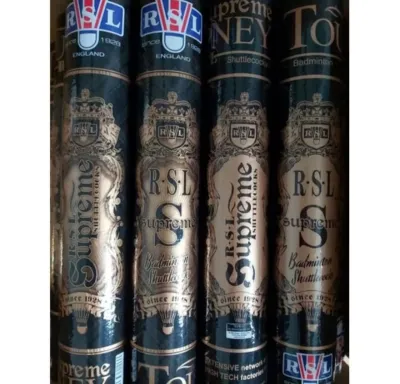
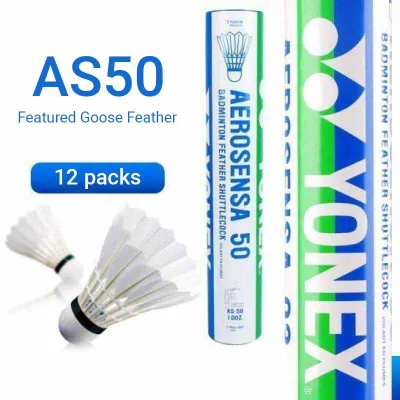
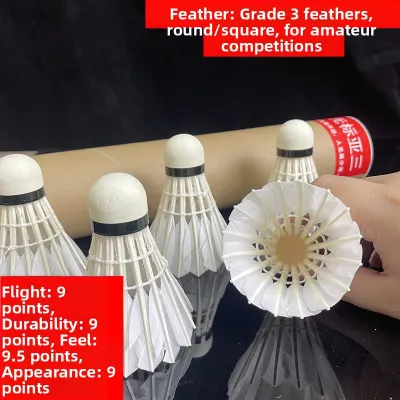
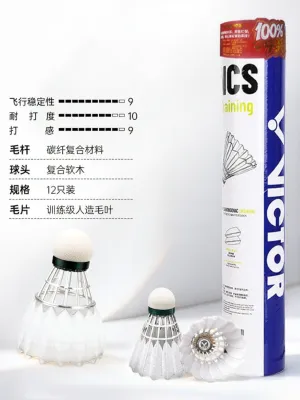
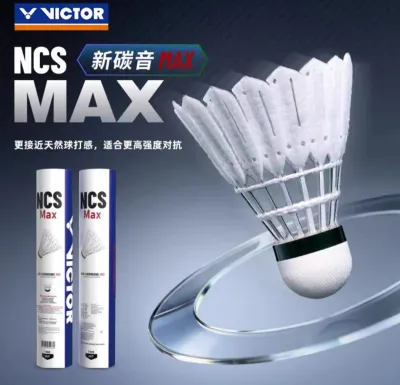
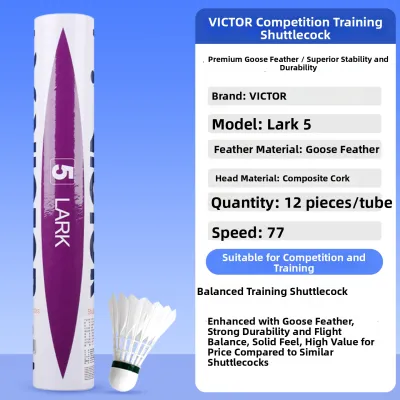
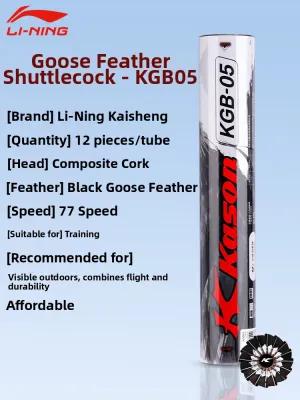
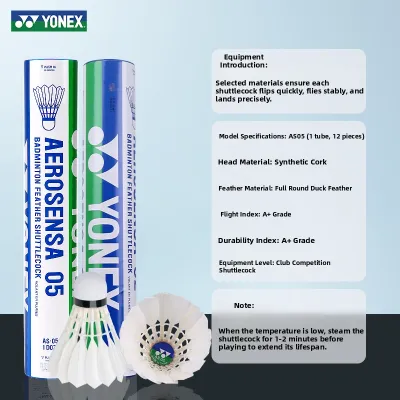
Prices are valid at publication and may change. Please refer to the product page for the latest price.
To make your decision easy, use this simple framework:
- Choose natural feather if you play exclusively indoors, have consistent swing mechanics, participate in structured club sessions or tournaments, and prioritize precise shot placement.
- Choose synthetic nylon if you play outdoors (such as at neighborhood parks or void decks), are still mastering your racket contact, or want to keep your long-term equipment costs as low as possible.
Flight and Feel: How Material Changes Your Game
The physical differences between feathers and nylon synthetic skirts fundamentally alter how the shuttlecock travels through the air. Natural feather shuttlecocks, typically crafted from 16 overlapping goose or duck feathers anchored into a cork base, possess unique aerodynamic properties. When struck, a feather shuttlecock accelerates rapidly and then decelerates in a highly predictable, steep curve. This rapid deceleration is due to the natural flare of the feathers, which catch the air and create high drag as the shuttlecock slows down. This allows players to execute tight spinning net shots, steep drops, and powerful smashes that land reliably within the court boundaries.

Nylon shuttlecocks, on the other hand, feature a continuous synthetic skirt molded from plastic or nylon. This design lacks the individual overlapping gaps of natural feathers, resulting in a different drag profile. Nylon shuttlecocks tend to maintain their velocity longer, exhibiting a flatter, more linear flight path with slower initial deceleration. Because they do not slow down as quickly as feathers, a nylon shuttlecock struck with the same force will often travel further, making it harder to control precise baseline clears and delicate drop shots. The impact feel is also noticeably different; hitting a nylon shuttlecock feels heavier and produces a duller sound compared to the crisp, satisfying crack of a well-struck feather shuttlecock.
These differences remain apparent even when comparing speed ratings. Both feather and nylon shuttlecocks use standardized speed classification systems (often ranging from 75 to 79, or labeled as slow, medium, and fast). However, a speed 77 feather shuttlecock will behave very differently from a medium-speed nylon shuttlecock. The nylon variant will consistently feel faster mid-flight because it lacks the natural air resistance and rapid braking action of real feathers, requiring players to adjust their power and timing when switching between the two materials.
Matching the Shuttlecock to Your Skill Level
Your current proficiency on the court should heavily influence your choice of shuttlecock. For beginners and casual players, nylon shuttlecocks are highly recommended. When you are learning the game, clean contact with the center of the racket face is rare. Beginners frequently mishit the shuttlecock, striking the skirt rather than the cork base. When a feather shuttlecock suffers a direct hit to its feathers, the shafts instantly bend or snap, permanently ruining its flight path. Nylon skirts are highly resilient and can withstand hundreds of these mishits without losing their shape, allowing novice players to focus on developing proper footwork and swing mechanics without the frustration of destroying expensive gear.
As you transition to an intermediate or club-level player, your training needs become more nuanced. At this stage, you are likely developing more advanced shots like cross-court drops, slices, and offensive clears. Here, a hybrid approach is highly beneficial. You can use high-quality nylon shuttlecocks for high-repetition training drills, physical conditioning, and casual warm-ups to control costs. However, you should introduce feather shuttlecocks during your match-play sessions. This transition ensures you develop the fine motor control and racket-face angles required to control a natural feather’s unique deceleration and spin.
For advanced and competitive players, natural feather shuttlecocks are mandatory. High-level badminton relies on deception, tight spinning net play, and extreme precision. Techniques such as the tumbling net shot—where the shuttlecock wobbles unpredictably over the tape—or deceptive slices that drop sharply just past the net are physically impossible to execute consistently with a nylon shuttlecock. The synthetic skirt simply does not grip the air or deform upon impact the way natural feathers do, meaning advanced players cannot express their full technical skill set without natural feathers.
Indoor vs. Outdoor: How Your Venue Dictates the Choice
The venue where you play acts as a hard boundary for which shuttlecock material you should use. Indoor badminton courts, such as those found in ActiveSG sports halls or community clubs, provide the controlled, wind-free environment necessary for feather shuttlecocks. Because natural feathers are incredibly light and sensitive to air currents, even a gentle draft can completely disrupt their flight. However, players must still account for indoor environmental factors. Air-conditioned halls reduce ambient humidity, making feathers drier and more brittle, which can cause them to break faster. Conversely, non-air-conditioned halls in tropical climates carry high humidity, which increases the moisture in the feathers, slightly adding weight and affecting the speed of the flight.
For outdoor venues, multi-purpose courts, parks, or void decks, synthetic nylon shuttlecocks are the only practical choice. Outdoor wind currents, dust, and uneven ground will destroy a feather shuttlecock within minutes. Nylon skirts are robust enough to handle breezy conditions, and because they do not rely on delicate feather alignment, their flight remains relatively stable even in light wind.
To maximize the lifespan of your shuttlecocks, proper storage and care are essential:
- Store tubes vertically with the cork end facing down to prevent the weight of the shuttlecocks from crushing the delicate feathers or deforming the nylon skirts.
- Keep them in a cool, dry place away from direct tropical sunlight, as extreme heat can dry out the natural oils in feathers and warp synthetic nylon skirts.
- Consider humidifying your feather shuttlecocks before play. Adding a tiny amount of moisture to the storage environment a day before playing helps restore elasticity to dry feathers, significantly reducing the likelihood of the shafts snapping during high-impact smashes.
Cost and Durability: Budgeting for Your Sessions
Managing your badminton budget requires looking past the initial shelf price of a tube of shuttlecocks. A standard tube of 12 high-quality natural feather shuttlecocks typically ranges from S$25 to S$45, depending on the brand and grade. In contrast, a tube of six high-grade nylon shuttlecocks generally costs between S$15 and S$25. While the upfront price of feathers seems comparable, the true difference lies in their operational lifespan.
During an intense, high-level intermediate session, a single feather shuttlecock may only last for one or two games—sometimes even less if players smash frequently or execute off-center hits. This means a single court session can easily consume three to six feather shuttlecocks, translating to an ongoing cost of S$8 to S$15 per session just for shuttlecocks. A single high-quality nylon shuttlecock, however, can easily survive multiple sessions, lasting for weeks or even months of casual play before the synthetic skirt finally tears or loses its structural shape.
To optimize your spending, consider a smart budgeting strategy. If you play multiple times a week, use nylon shuttlecocks for your solo feeding drills, multi-shuttle practice, and high-intensity physical training where you are focusing solely on footwork and stamina. Reserve your premium feather shuttlecocks strictly for competitive matches or tactical games where precise control and realistic match simulation are required. This hybrid approach keeps your monthly equipment costs manageable while ensuring your competitive skills remain sharp.
Frequently Asked Questions (FAQ)
Can I use nylon shuttlecocks for official badminton tournaments?
Official tournaments sanctioned by the Badminton World Federation (BWF) and national governing bodies strictly mandate the use of natural feather shuttlecocks. This requirement ensures that all competitive matches are played with the highest level of flight precision, speed consistency, and technical standard. Nylon shuttlecocks are generally restricted to school physical education classes, recreational community leagues, or specialized outdoor tournaments where durability and environmental resistance are prioritized over professional performance standards.
How do I know which speed rating to buy for my local hall?
Shuttlecock speed ratings (usually 75 to 79, with 76 and 77 being the most common in tropical regions) correspond to the temperature and altitude of your playing venue. Hotter and more humid environments, like non-air-conditioned sports halls, make the air less dense, causing the shuttlecock to fly faster. In these warm halls, a slower speed rating (such as 76) is ideal to prevent shots from constantly flying out of bounds. In contrast, fully air-conditioned halls have cooler, denser air, which slows the shuttlecock down; in these venues, a slightly faster rating (such as 77 or 78) is preferred to ensure a natural flight distance.
Does the cork material matter when choosing between feather and nylon?
Yes, the composition of the cork base significantly impacts both the feel of your shots and the durability of the shuttlecock. Premium feather shuttlecocks feature a natural solid cork base, which provides a highly responsive, crisp rebound off the racket strings and ensures optimal weight distribution for a stable flight trajectory. Nylon shuttlecocks, as well as lower-end feather options, often utilize synthetic foam, composite cork, or dual-layer cork bases. While these synthetic and composite bases are highly durable and help lower manufacturing costs, they tend to feel slightly stiffer upon impact and offer less tactile feedback to the player.
Community discussion
Share your experience or ask a question. Comments are reviewed before publication.