
Selecting the right badminton gear directly impacts your performance, technique development, and overall playing budget. When deciding between a synthetic option and a traditional shuttlecock feather design, the choice hinges on your skill level, playing environment, and budget. For beginners, recreational players, and those playing outdoors, nylon shuttlecocks offer exceptional durability, consistent flight paths, and excellent cost-efficiency. For intermediate to advanced players, competitive club members, and tournament athletes training indoors, feather shuttlecocks are essential because they provide authentic aerodynamics, rapid deceleration, and the precise control required for complex stroke play.
In Singapore, where badminton is a highly popular sport played across community clubs, school halls, and ActiveSG indoor courts, this choice also carries practical financial implications. A tube of premium feather shuttlecocks typically costs between S$30 and S$60 and may only last for a single session of intense play. In contrast, a tube of high-quality nylon shuttlecocks costs around S$15 to S$25 and can easily last for several weeks of regular matches. Understanding the structural, aerodynamic, and economic differences between these two options will help you make an informed purchase that aligns with your playing style and budget.
Material and Structural Differences
Understanding the physical anatomy of these two shuttlecock types explains why they behave so differently on the court. The materials used in construction dictate not only how the shuttlecock responds to racket impact but also how it degrades over time under intense physical stress.
Products mentioned in this guide
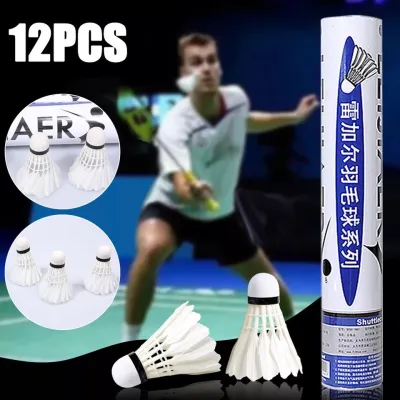
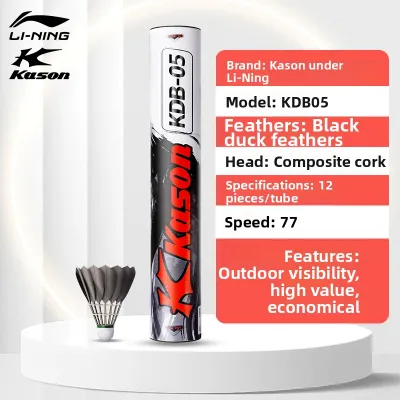
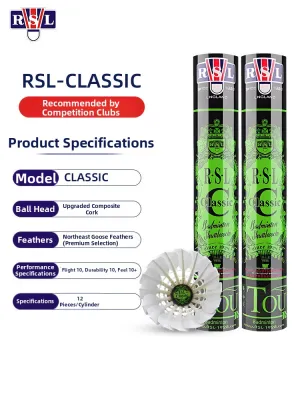
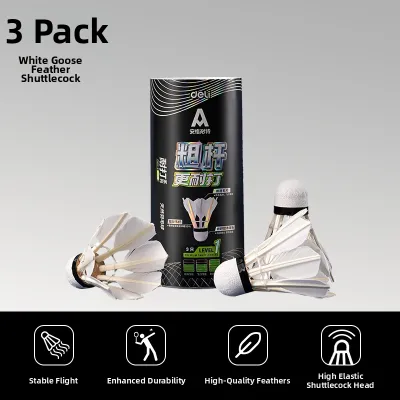
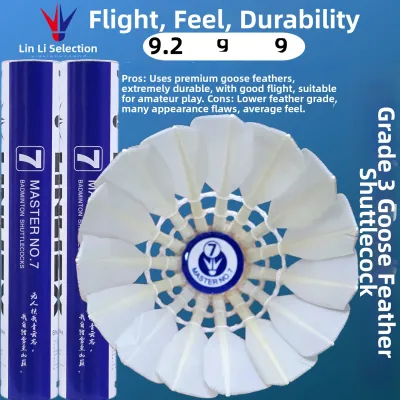
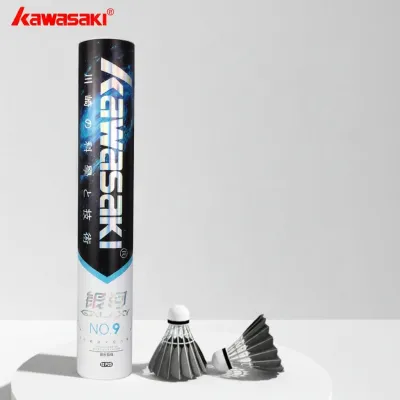
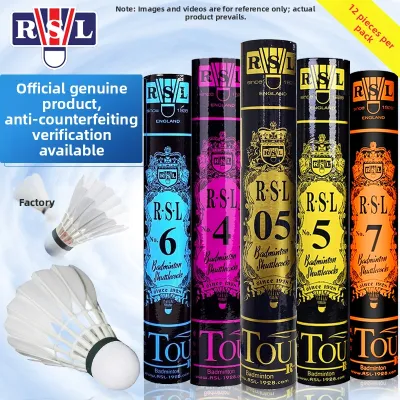
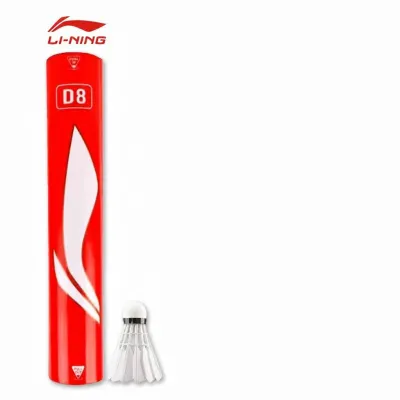
Prices are valid at publication and may change. Please refer to the product page for the latest price.
Feather Shuttlecocks
A premium feather shuttlecock is a marvel of natural engineering, typically constructed from 16 individual feathers harvested from the wings of geese or ducks. Goose feathers are generally preferred for premium models due to their thicker, stronger shafts and superior aerodynamic stability, while duck feathers are often used for training-grade options. These feathers are meticulously anchored into a solid, natural cork base, wrapped in thin leather, and bound together with two rows of high-tensile thread secured by specialized adhesive. Because natural feathers possess organic variations in density, curvature, and weight, manufacturers must carefully sort and grade them to ensure balance. This intricate, hand-assembled structure results in a highly responsive projectile, though the individual vanes remain highly delicate and susceptible to fracturing upon improper impact.
Nylon Shuttlecocks
In contrast, nylon shuttlecocks are manufactured using a highly automated, machine-molded process that ensures exceptional unit-to-unit consistency. The skirt is molded as a single piece of synthetic nylon or polyamide plastic, designed to mimic the slotted structure of natural feathers. This synthetic skirt is then attached to either a natural cork base, a laminated cork base, or a synthetic foam base. The use of synthetic foam is common in lower-end recreational models, whereas higher-end nylon shuttlecocks utilize natural or composite cork to replicate the weight distribution and rebound feel of a traditional feather option. Because they are machine-produced, nylon shuttlecocks lack the natural variations found in feathers, ensuring that every shuttlecock out of the tube flies almost identically to the last.
Aerodynamics of the Shuttlecock Feather vs Synthetic Nylon
The structural differences between natural and synthetic materials translate directly into distinct flight characteristics. Players transitioning from one type to another will immediately notice differences in speed, drag, and responsiveness during rallies.

Flight Path and Deceleration
The aerodynamic behavior of a shuttlecock feather is characterized by a unique high-drag, high-deceleration flight path. Upon a hard smash or clear, the natural feathers momentarily compress inward to reduce drag, allowing the shuttlecock to travel at high initial speeds. As it slows, the feathers flare back open, creating a massive amount of drag that causes the shuttlecock to decelerate rapidly and drop almost vertically at the end of its trajectory. This steep descent angle is critical for executing precise drop shots and deep clears that land safely within the court boundaries. Nylon shuttlecocks, by contrast, feature a more rigid synthetic skirt that does not compress or expand as dynamically. This results in a flatter, more linear flight path with slower, more gradual deceleration. A nylon shuttlecock tends to float longer and travel further, which often leads to defensive clears sailing out of bounds if struck with the same force used for a feather shuttlecock.
Control, Spin, and Feel
For players focused on tactical execution, the tactile feedback and spin manipulation of natural feathers are unmatched. The natural texture and flexibility of feathers allow them to grip the racket strings briefly, enabling players to generate significant spin for slicing, tumbling net shots, and deceptive cross-court drops. When hit, a feather shuttlecock delivers a crisp, satisfying sound and a clean sensation through the racket handle, providing immediate sensory feedback on the quality of the strike. Nylon shuttlecocks offer limited spin generation because the smooth plastic skirt slips across the strings rather than gripping them. The impact feel of a nylon shuttlecock is often described as heavier, denser, or slightly soft, which can obscure the subtle feedback needed to execute delicate net play or advanced deceptive shots.
Durability, Lifespan, and Environmental Factors
While performance is a key consideration, the practical realities of durability and environmental sensitivity play a major role in determining the long-term cost and convenience of your badminton sessions.
Impact Resistance and Wear
Nylon shuttlecocks are celebrated for their extreme durability and resistance to physical abuse. A single high-quality nylon shuttlecock can easily withstand multiple matches, heavy smashes, frame mishits, and racket clashes without losing its structural integrity or flight profile. Even when the plastic skirt begins to fray or stretch, it remains playable for recreational sessions. Conversely, feather shuttlecocks are highly fragile. A single clean smash that strikes the feathers instead of the cork base can bend or snap a vane, instantly ruining the shuttlecock’s balance and causing it to wobble or veer off-course. In fast-paced competitive play, players may go through several feather shuttlecocks in a single match, making them a much more expensive option over time.
Temperature and Humidity Sensitivity
The environmental conditions of your playing venue heavily influence the lifespan of natural feathers. Natural feathers contain moisture; in dry climates or air-conditioned indoor sports halls—such as those commonly booked in Singapore—the feathers can rapidly dry out, becoming brittle and prone to snapping on the first few hits. To combat this, players must often humidify their feather shuttlecocks using specialized steam tubes or damp sponges prior to play. Nylon shuttlecocks are virtually impervious to changes in humidity and temperature. Whether you are playing in a humid outdoor park or a heavily air-conditioned indoor court, a nylon shuttlecock will maintain its physical properties and flight characteristics without requiring any pre-game preparation or maintenance.
Matching the Shuttlecock to Your Skill Level and Scenario
Selecting the appropriate shuttlecock requires balancing performance requirements against practical limitations such as skill, budget, and location.
Beginners and Casual Players
If you are new to badminton or play casual weekend games with friends, nylon shuttlecocks are highly recommended. Beginners are prone to mishits, frequently striking the skirt of the shuttlecock rather than the cork. If you use feather shuttlecocks during this learning phase, you will likely break multiple shuttles per game, leading to high frustration and unnecessary expense. Nylon’s forgiveness allows you to focus entirely on developing your grip, footwork, swing mechanics, and hand-eye coordination. Furthermore, because a single nylon shuttle can last for weeks of casual play, the cost per session remains incredibly low, making the sport highly accessible.
Intermediate to Advanced and Competitive Players
As your skills progress and you begin mastering advanced strokes, transitioning to feather shuttlecocks becomes necessary. Advanced techniques like slice smashes, tumbling net drops, and tight brush shots rely entirely on the unique drag and spin characteristics of natural feathers. Training with nylon at an advanced level can actually hinder your development, as you may develop bad habits—such as holding back your power to prevent flatter nylon flights from going out of bounds. For club play, league matches, and tournament preparation, practicing with the exact medium used in competition is vital for building accurate muscle memory and timing.
Outdoor vs. Indoor Play
The venue where you play is a non-negotiable factor in your decision. Outdoor environments present challenges like wind, uneven surfaces, and concrete or asphalt courts. Natural feather shuttlecocks are highly susceptible to wind drift due to their light weight and high-drag design; even a gentle breeze can render them unplayable. Additionally, rough outdoor surfaces will quickly shred delicate feathers if they land on the ground. For outdoor recreation in parks or HDB void decks, nylon shuttlecocks—or specialized, heavier outdoor wind-resistant models—are the only practical choice. They cut through minor drafts far better and can survive landing on concrete repeatedly. Feather shuttlecocks should be reserved strictly for indoor courts where wind currents are non-existent and wooden or synthetic court mats protect them from premature wear.
Decision Framework: How to Make Your Final Choice
To finalize your purchase, evaluate your playing conditions and goals against this clear, conditional framework:
- Choose Feather if:
- You play exclusively on indoor courts with no wind interference.
- You are training for, or active in, competitive tournaments and club leagues.
- You have mastered basic stroke mechanics and rarely mishit the shuttlecock.
- You prioritize precise aerodynamic control, rapid deceleration, and authentic spin over budget constraints.
- Choose Nylon if:
- You are a beginner or recreational player focusing on basic skill development.
- You frequently play outdoors in parks, gardens, or open-air courts.
- You want to maximize your budget, requiring a durable product that lasts for multiple sessions.
- You prefer a low-maintenance option that does not require humidification or careful storage.
- Verify first if:
- You are purchasing in bulk for a school team, coaching academy, or community club. Always consult with the head coach or review the specific league guidelines, as some development programs mandate specific nylon models to manage costs, while others require feather models to maintain competitive standards.
Frequently Asked Questions (FAQ)
Can I use nylon shuttlecocks for official badminton tournaments?
Official international and professional tournaments sanctioned by the Badminton World Federation (BWF) strictly require natural feather shuttlecocks to ensure the highest standard of athletic competition and uniform flight dynamics. However, at the local, grassroots, or junior levels, tournament organizers frequently permit or even mandate high-quality nylon shuttlecocks. This is done to keep entry fees affordable and ensure tournament budgets are not entirely consumed by shuttlecock replacement costs. Always check the specific rules of your local league or tournament organizer before registering.
How do I properly store feather shuttlecocks to extend their life?
To maximize the lifespan of your feather shuttlecocks, store them in a cool, dark, and stable environment away from direct sunlight and heat sources, which can dry out the natural oils in the feathers. In dry or air-conditioned spaces, use a specialized shuttlecock humidifier or place a slightly damp sponge inside the top cap of the storage tube a few days before playing. This allows the feathers to absorb subtle moisture, making the shafts more flexible and significantly reducing the likelihood of them snapping during intense rallies.
Community discussion
Share your experience or ask a question. Comments are reviewed before publication.