
When selecting a grip strap for your strength training, the ideal choice depends on your specific workout routine, experience level, and training environment. For lifters seeking a versatile tool that adapts to various exercises—such as Olympic lifts, bodybuilding movements, and dumbbell rows—the traditional Lasso strap is the most adaptable option. If your primary focus is moving maximum weight on deadlifts or heavy shrugs with absolute security, the double-loop Figure 8 strap provides an unmatched lock on the bar. For those who prioritize rapid setup, high-volume machine rows, and minimal downtime between sets, the Hook strap offers immediate engagement without the need for manual wrapping.
In humid training environments, such as local non-air-conditioned gyms or outdoor fitness corners, sweat can rapidly degrade your natural grip. Relying on a high-quality grip strap can help you maintain training intensity, but the “best” style is not universal. Choosing the right design requires balancing your need for versatility, maximum security, and transition speed between sets.
Understanding the 3 Main Grip Strap Designs
While all grip straps aim to bypass grip fatigue during heavy pulling movements, their mechanical approaches differ significantly. The physical construction of each strap dictates how it transfers load from your hands to your wrists, affecting how the barbell feels in your palms and how securely you are connected to the weight.
Products mentioned in this guide
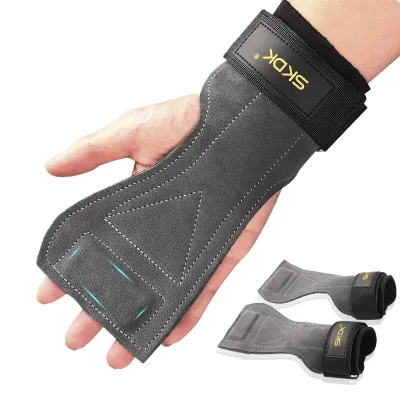
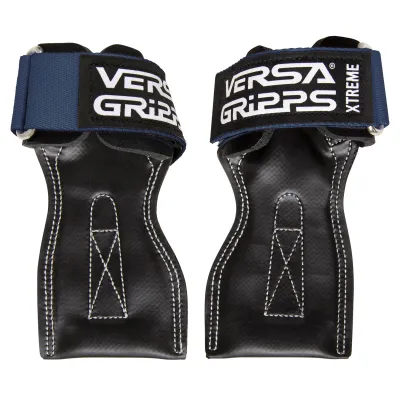
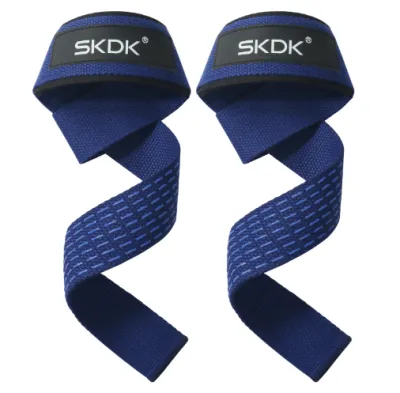
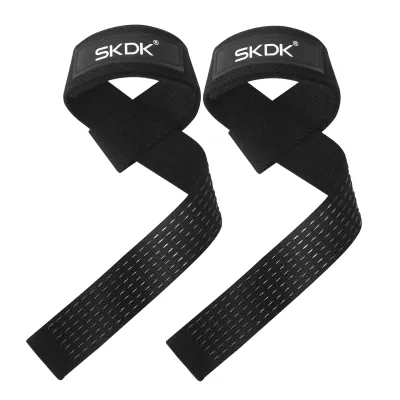
Prices are valid at publication and may change. Please refer to the product page for the latest price.
Lasso Straps (Traditional Loop)
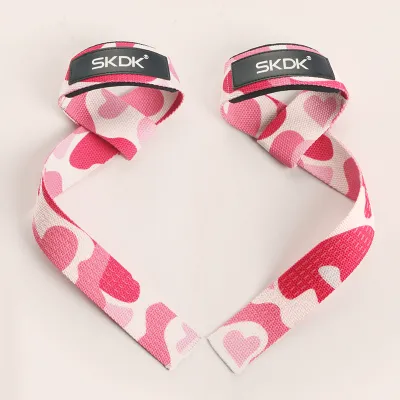
The Lasso strap is the most common design found in commercial and private gyms. Its physical structure consists of a single, flat length of webbing—typically made from heavy-duty cotton, nylon, or leather—with a small, reinforced loop sewn into one end.
To use a Lasso strap, you feed the straight tail of the webbing through the loop to create a slipknot-style collar. You then slide your hand through this collar, positioning it securely around your wrist. The remaining tail of the strap is wrapped tightly around the barbell or dumbbell handle in the opposite direction of your fingers. Once wrapped, you rotate the bar or pull the strap taut with your hand to lock the friction-based grip in place.
This design is highly adjustable. Because you control how many times the tail wraps around the bar and how tightly it is pulled, a single pair of Lasso straps can easily adapt to different bar diameters, from standard barbells to thick axle bars and dumbbell handles. The material choice also plays a role in performance:
- Cotton: Offers excellent sweat absorption in humid climates, breaks in quickly, and feels soft against the skin, though it may wear out faster under extreme loads.
- Nylon: Extremely durable and resistant to fraying, but can feel slick when wet with sweat, requiring a tighter initial wrap.
- Leather: Molds to the unique shape of your hands over time and provides a highly tactile grip, but requires a break-in period and can stretch slightly under massive loads.
Figure 8 Straps
Figure 8 straps are built specifically for heavy, raw pulling power. Their structure consists of a single piece of heavy-duty webbing sewn into two distinct loops that form a figure-eight shape. Unlike Lasso straps, there is no loose tail to wrap around the bar.
To apply a Figure 8 strap, you slide your hand through the first loop, pass the middle section of the strap underneath the barbell, and then thread your hand back through the second loop. This configuration places the barbell directly between the two loops, effectively locking your wrist to the bar with a continuous loop of high-tensile material.
Because of this design, Figure 8 straps are not adjustable. They must be purchased in a size that matches your wrist circumference and hand width. If the strap is too large, the bar will hang too low in your fingers, reducing control; if it is too small, you will struggle to thread your hand through the second loop once the strap is under the bar. They are generally constructed from thick, unpadded cotton or heavy nylon webbing to withstand extreme tension.
Hook Straps (Speed Hooks)
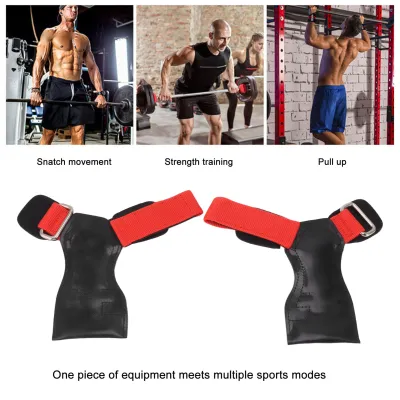
Hook straps, often referred to as speed hooks, take a completely mechanical approach to bypassing grip fatigue. They consist of a wide, heavily padded wrist strap made of nylon or neoprene, which secures tightly around the wrist using a hook-and-loop fastening system. Attached directly to the palm side of this wrist strap is a rigid, curved hook made of steel or heavy-duty molded plastic.
Using a Hook strap requires no wrapping technique. You simply slip your hand into the wrist strap, tighten the hook-and-loop closure, and rest the rigid hooks over the top of the barbell, dumbbell, or pull-up bar. The weight of the bar rests directly inside the curve of the hook, transferring the load straight to your wrists and forearms.
This design completely eliminates the friction-based wrapping process. Your fingers do not even need to wrap fully around the bar to maintain the connection, making them a popular choice for lifters recovering from finger or hand injuries. However, the rigid nature of the hook means the grip relies entirely on the physical barrier of the hook and the structural integrity of the wrist strap, rather than manual hand pressure.
Key Comparison Dimensions for Lifters
To determine which design fits your lifting routine, it is essential to evaluate how these straps perform under real-world gym conditions. Factors like setup speed, load capacity, and comfort can actively shape your training flow and safety.

Setup Speed and Ease of Use
In a fast-paced workout, the time and effort required to secure your straps can affect your rest intervals and focus.
- Hook Straps (Fastest): Hook straps require zero wrapping technique. You can engage or disengage the bar in a fraction of a second. This makes them incredibly efficient for high-volume supersets or drop sets where you need to transition between exercises without delay.
- Figure 8 Straps (Moderate): Securing a Figure 8 strap requires a specific sequence: hand through loop one, strap under the bar, hand through loop two. While this takes a few seconds to align, it is a straightforward process that quickly becomes muscle memory. However, setting up the second hand can occasionally feel slightly awkward since your first hand is already anchored to the bar.
- Lasso Straps (Slowest): Lasso straps are highly technique-dependent. Beginners often struggle to wrap the tail in the correct direction (it must wrap under and around the bar, opposite to your fingers' grip) and maintain proper tension. Securing your first hand is simple, but wrapping the second hand using only your fingers while your wrist is already strapped requires practice and coordination.
Grip Security and Load Capacity
When pulling near-maximal weights, any slippage can compromise your lift or lead to injury.
- Figure 8 Straps (Highest Security): For heavy static pulls like deadlifts, rack pulls, or heavy shrugs, Figure 8 straps offer unmatched security. Because the double-loop design mechanically locks your wrist to the bar, it is virtually impossible to drop the weight. Even if your fingers completely give out or open up, the strap will keep the bar attached to your wrists. This makes them the gold standard for competitive strongman events and maximal deadlift training.
- Lasso Straps (High Security): Lasso straps provide excellent security when wrapped correctly. The friction of the overlapping webbing holds the bar tightly. However, if the wrap is loose or if the barbell rotates dynamically during a lift, the tail can slowly unravel, causing the grip to slip. They require active hand engagement to maintain tension throughout the set.
- Hook Straps (Moderate Security): While highly secure for controlled, linear movements like lat pulldowns or machine rows, Hook straps have limitations under extreme loads. Because the hook is rigid, it cannot adapt to bar rotation. If your wrist angle shifts drastically or if the bar rolls unexpectedly, the hook can slip off the bar. Additionally, the load limit is bound by the strength of the hook-and-loop closure on your wrist.
Wrist Support and Comfort
The way a strap distributes weight across your wrist joints directly impacts your comfort during heavy sets.
- Lasso and Hook Straps (High Comfort): These designs frequently incorporate wide wrist bands and thick neoprene padding. This cushioning helps distribute the pressure of heavy loads across a larger surface area, reducing skin pinching and bruising during high-volume workouts.
- Figure 8 Straps (Minimal Comfort): Figure 8 straps are typically unpadded, raw webbing. Because they lock you tightly to the bar, the material can dig aggressively into your wrists under maximal loads. They prioritize absolute utility over comfort, and heavy use can result in temporary bruising or friction marks on the skin.
Figure 8 vs Lasso vs Hook: Feature Comparison Table
This table provides a quick, side-by-side reference of how the three main grip strap designs compare across key training metrics.
| Strap Type | Best For | Setup Speed | Wrist Support | Main Limitation |
|---|---|---|---|---|
| Lasso Straps | Versatile lifters, Olympic lifts, dumbbells, and varying bar diameters | Slow to Moderate | Moderate (often padded) | Requires practice to wrap efficiently with one hand |
| Figure 8 Straps | Maximal deadlifts, heavy shrugs, and strongman training | Moderate | Low (typically unpadded) | Cannot be easily released mid-lift; sizing must be precise |
| Hook Straps | Bodybuilding, high-volume machine rows, and hand/finger injuries | Fast | High (thickly padded) | Rigid hooks may not fit fat bars; less secure under extreme rotation |
How to Choose the Right Strap for Your Training Style
Selecting the perfect grip strap involves matching the mechanical strengths of the design to your specific fitness goals and training environment.
Choose Lasso Straps if:
- Your training routine is highly varied, incorporating a mix of barbells, dumbbells, pull-up bars, and cable attachments.
- You perform Olympic weightlifting variations (like cleans or snatches) where you need to be able to quickly release the bar if a lift fails.
- You want a single, durable pair of straps that can easily fit into a compact gym bag and adapt to different bar thicknesses at commercial or ActiveSG gyms.
- You do not mind dedicating a few workout sessions to mastering the one-handed wrapping technique.
Choose Figure 8 Straps if:
- You are a powerlifter, strongman competitor, or advanced lifter whose primary goal is maximizing your deadlift or rack pull numbers.
- Your hands frequently slip due to heavy sweat or smooth barbell knurling, and you require absolute, slip-proof security.
- You prefer a direct, raw feel of the metal barbell knurling against your palms without thick padding or hooks in the way.
- You train in a controlled environment where you can safely perform heavy pulls and do not need to release the bar instantly mid-lift.
Choose Hook Straps if:
- Your training focuses on bodybuilding and hypertrophy, featuring high-volume back days, dumbbell shrugs, and machine rows.
- You want to maintain a high heart rate and minimize downtime between sets by eliminating the time spent wrapping straps.
- You suffer from arthritis, tendonitis, or finger injuries that make gripping a bar painful or difficult.
- You primarily perform slow, controlled, linear pulling movements where the bar does not rotate or shift dynamically.
Verify First if:
- You have pre-existing wrist injuries: If you experience sharp joint pain or have a history of wrist instability, consult a physical therapist or sports medicine professional before using any grip strap. While straps can bypass grip fatigue, they are performance tools, not medical braces, and will not protect injured joints from improper lifting mechanics.
- Your gym or competition has specific rules: Before purchasing, check the regulations of your local gym or the lifting federation you plan to compete in. Some powerlifting federations strictly prohibit all straps during official lifts, while certain commercial gyms may have safety policies regarding the use of metal hook straps on their coated barbells or specialty bars.
Frequently Asked Questions (FAQ)
Are grip straps considered cheating in powerlifting?
In raw powerlifting competitions governed by major federations, grip straps of any kind are strictly prohibited during the deadlift. Competitors must rely entirely on their natural grip strength, often utilizing chalk and specialized techniques like the mixed grip or hook grip to secure the bar.
However, in a training context, grip straps are widely accepted and highly recommended tools. They allow powerlifters to accumulate high training volume and stimulate the target muscles (such as the hamstrings, glutes, and upper back) without being limited by grip fatigue. In contrast, Strongman competitions actively permit and often require the use of straps—specifically Figure 8 straps—to ensure safety and maximize the weight moved during heavy pulling events.
Can I use lifting straps for pushing exercises like bench press?
No, you should never use lifting straps for pushing exercises such as the bench press, overhead press, or dumbbell shoulder press. Grip straps are engineered exclusively for pulling movements where gravity or resistance threatens to pull the weight out of your hands.
During pushing exercises, gravity naturally forces the barbell or dumbbell down into your palms, making a grip-reinforcing strap completely unnecessary. More importantly, wrapping your hands tightly to a barbell during a heavy press poses a severe safety hazard. If you fail a lift or lose control of the bar, being physically strapped to the weight prevents you from safely pushing the bar away or escaping from underneath it, greatly increasing the risk of serious injury.
Community discussion
Share your experience or ask a question. Comments are reviewed before publication.