
Resistance bands have transitioned from simple physical therapy tools to fundamental components of modern strength training. When setting up a home gym or packing a travel workout kit, choosing between a figure 8 resistance band and a classic loop resistance band is one of the most practical decisions you will make. Neither band is universally superior; instead, their utility is defined by the specific muscle groups you target, your preferred exercise mechanics, and your comfort requirements.
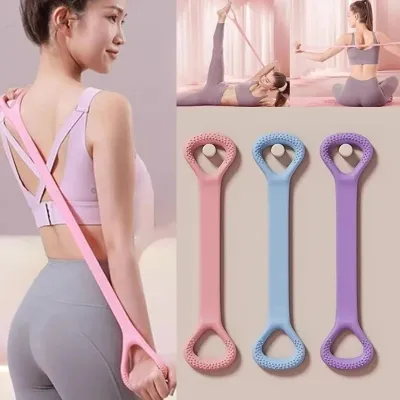
For individuals focusing on upper body isolation, rehabilitation, posture correction, and movements requiring a secure, built-in grip, the figure 8 resistance band is highly efficient. Its distinct double-loop structure with integrated handles naturally guides pulling motions and eliminates the need to wrap latex around your hands.
Conversely, if your primary training goals center on glute activation, lower body compound movements, and versatile full-body anchoring, loop bands—particularly mini loops—are the industry standard. Their continuous loop design allows them to sit flat against your limbs, providing even tension across a wider surface area.
Products mentioned in this guide

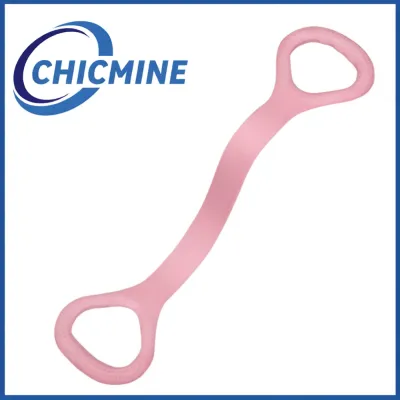

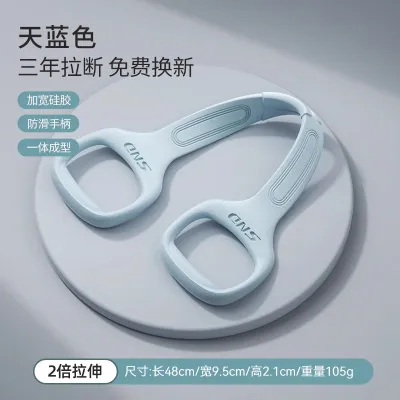
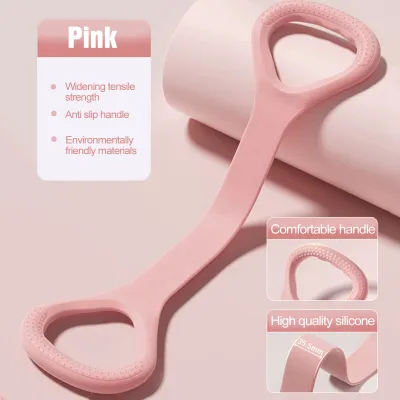
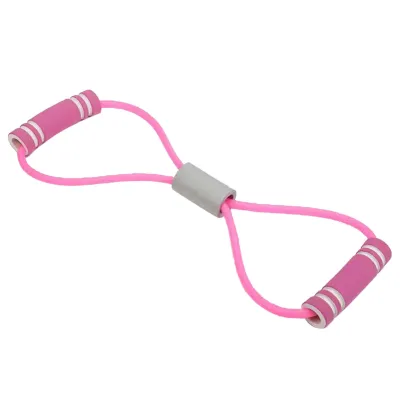
Prices are valid at publication and may change. Please refer to the product page for the latest price.
For many fitness enthusiasts, especially those optimizing limited workout space in Singapore apartments, incorporating both styles into a training routine offers the most complete coverage of all movement planes.
Design and Mechanics: How Figure 8 and Loop Bands Differ
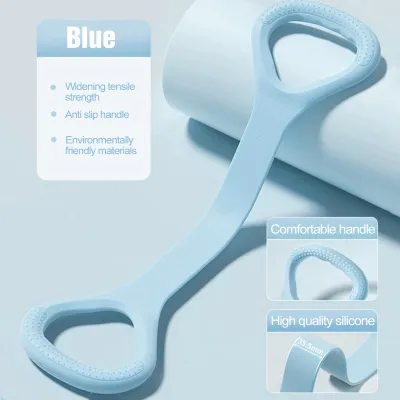
Understanding the structural design of these two tools explains why they perform differently during specific exercises. A figure 8 resistance band consists of two symmetrical loops joined in the center by a durable sleeve. This configuration creates a fixed intersection point, splitting the band’s tension into two distinct halves. Most figure 8 bands feature integrated handles—often covered in foam or textured rubber—providing a stable, ergonomic point of contact that prevents slipping.
The physical geometry of the figure 8 shape inherently limits its elasticity to a straight, linear path. When you pull the handles apart, the central connection point acts as a pivot, concentrating the resistance directly along the axis of movement. This makes the band highly predictable and easy to control, which is particularly beneficial for targeted, high-repetition isolation exercises.
In contrast, a loop band is a continuous, unbroken circle of material, available in various lengths and widths. Standard long loop bands typically measure around 104 centimeters in flat length, while mini loop bands are much shorter, usually ranging from 25 to 30 centimeters. Loop bands do not have built-in handles or fixed pivot points; instead, they rely on the user wrapping the band around their limbs, stepping on the material, or anchoring it to an external object like a heavy pole or a sturdy door frame.
This continuous design alters how tension is distributed. Because there is no central intersection, tension is distributed evenly across the entire circumference of the band. When wrapped around your thighs or ankles, a loop band provides a broad, flat surface area that distributes pressure evenly, reducing the risk of the band digging into your skin or rolling up during dynamic movements.
Upper Body Workouts: Targeting Arms, Back, and Chest
When it comes to training the arms, back, chest, and shoulders, the figure 8 resistance band offers significant ergonomic advantages. Exercises such as chest expansions, back extensions, standing lat pulldowns, and shoulder external rotations require a secure grip to maintain proper form. The integrated handles of a figure 8 band allow you to maintain a neutral wrist position, reducing joint strain and letting you focus entirely on muscle contraction.

For example, during a chest expansion (or band pull-apart), you can hold the handles of a figure 8 band and pull outward. The central sleeve keeps the two sides of the band aligned, preventing the material from snapping upward or brushing awkwardly against your chest. For shoulder mobility and rotator cuff rehabilitation, the fixed length and predictable tension of the figure 8 design make it exceptionally easy to perform controlled, low-impact movements that promote joint stability.
Loop bands can certainly be utilized for upper body exercises, such as banded pull-aparts, overhead presses, and triceps pushdowns, but they present distinct handling challenges. To perform a pull-apart with a loop band, you must either grip the thin edge of the band directly or wrap the latex around your hands to shorten the working length.
This wrapping technique often leads to discomfort. Under high tension, thin latex loop bands can pinch the skin, restrict blood flow to the fingers, or slip mid-set, which disrupts your focus and compromises safety. While fabric loop bands mitigate some of the pinching, they lack the stretch capacity required for long-range upper body pulling motions. For high-repetition upper body workouts, the figure 8 resistance band remains the more comfortable and practical alternative, allowing for smooth, uninterrupted sets without hand fatigue.
Glute and Lower Body Training: Activation and Strength
For lower body training, particularly glute activation and hip strengthening, loop bands are vastly superior to figure 8 designs. The primary goal of lower body band work is to provide lateral resistance against which your hips and glutes must push. Mini loop bands—whether made of latex or woven fabric—are specifically designed to slide over your feet and sit securely around your ankles, calves, or just above your knees.
During exercises like banded squats, hip thrusts, and lateral band walks, the wide, flat profile of a loop band ensures it remains in place. This constant lateral tension forces the glutes to fire continuously, preventing your knees from collapsing inward. Fabric mini loops are especially favored for these movements because their thick, non-slip interior prevents them from rolling up or snapping, even during intense, high-resistance lower body workouts.
Attempting to use a figure 8 resistance band for these same lower body movements highlights its physical limitations. The shorter overall length and fixed double-loop structure make it highly awkward to position around the legs. To use a figure 8 band for lateral walks, you typically have to step into the loops with both feet, which forces your feet into a narrow, predetermined stance that may not align with your natural biomechanics.
Furthermore, the lack of heavy resistance variations in standard figure 8 bands limits their effectiveness for large, powerful lower body muscle groups. Because they cannot easily be positioned above the knees without slipping or causing discomfort, they fail to provide the direct lateral resistance needed for optimal glute activation. For anyone serious about lower body strength and hip stability, loop bands are an essential tool, while figure 8 bands are largely ineffective for these patterns.
Feature-by-Feature Comparison
To help you decide which band fits your current training program, the table below outlines the primary structural and functional differences between the two designs.
| Feature | Figure 8 Bands | Loop Bands (Mini & Long) |
|---|---|---|
| Primary Use Case | Upper body isolation, shoulder rehab, chest/back pulling | Glute activation, lower body strength, full-body anchoring |
| Grip/Handle Design | Integrated foam or rubber handles for secure grip | No handles; must wrap around limbs, hands, or anchors |
| Resistance Range | Typically light to medium; limited heavy options | Broad range from ultra-light to extra-heavy resistance |
| Versatility | High for upper body; very low for lower body | High for full-body; easily anchored or layered |
| Anchor Requirements | Self-anchored (hands/feet); rarely needs external anchors | Can be anchored to doors, poles, or looped around limbs |
When interpreting these features, consider your primary training venue and goals. If you work out in a compact space where anchoring bands to furniture is difficult or unsafe, the self-contained nature of the figure 8 band is highly advantageous. However, if you want a tool that can scale from light rehabilitation to heavy lower body strength training, the broad resistance range and anchoring versatility of loop bands make them the more adaptable investment.
How to Choose the Right Band for Your Fitness Goals
Selecting the right band requires matching the equipment to your specific physical needs, skill level, and training environment. Use the following conditional framework to guide your decision:
Choose a Figure 8 Band if:
- Upper body focus: Your primary fitness goals are upper body toning, back strengthening, or shoulder rehabilitation.
- Grip comfort: You suffer from grip fatigue, joint pain, or find it uncomfortable to wrap latex bands around your hands.
- Simplicity: You want an intuitive, ready-to-use tool that does not require complex setups or external anchoring points.
- Posture correction: You are focusing on posture correction exercises, such as chest openers and scapular retractions.
Choose Loop Bands if:
- Lower body focus: Your main objective is glute activation, hip strengthening, or adding resistance to lower body compound lifts like squats and hip thrusts.
- Progressive overload: You require a wide range of resistance levels to progressively overload your muscles over time.
- Anchoring needs: You plan to anchor your bands to sturdy fixtures (such as heavy gym racks or secure doors) for full-body workouts.
- Comfort on legs: You prefer fabric options that will not roll, pinch, or slide during dynamic lower body movements.
Consider Using Both if:
- Complete home gym: You are building a comprehensive home gym setup in a limited space and want to perform a complete range of upper and lower body exercises.
- Targeted training: You want to combine the ergonomic upper body benefits of the figure 8 band with the superior glute-targeting capabilities of mini loop bands.
Regardless of which band you select, prioritizing safety and proper maintenance is essential for preventing equipment failure and injury. Before every workout, perform a quick visual inspection of your bands. Look for micro-tears, discoloration, or small nicks, especially along the edges of latex bands and near the central connection point of figure 8 bands. If you detect any signs of wear, replace the band immediately; a band snapping under high tension can cause severe injury.
In Singapore’s warm and humid tropical climate, latex and rubber materials degrade much faster than in cooler, drier environments. High humidity can cause latex to become sticky, brittle, or prone to sudden snapping. To maximize the lifespan of your equipment, always store your bands in a cool, dry place away from direct sunlight, balcony heat, and damp laundry areas. Never anchor your bands to sharp, abrasive, or rough surfaces like concrete pillars or metal edges with burrs, as these will quickly slice through the material and compromise its structural integrity.
Frequently Asked Questions (FAQ)
Can I use a figure 8 band for glute exercises?
While it is physically possible to perform light hip abductions or standing leg kickbacks with a figure 8 band by stepping into the loops or holding one handle while looping the other over your foot, it is highly inefficient. The fixed shape and shorter length of the figure 8 design make lower body placement awkward and unstable. The band is prone to slipping off your feet or rolling up your legs mid-exercise. For safe, effective, and targeted glute activation, loop bands are vastly superior because they remain securely in place and distribute resistance evenly across your limbs.
Are loop bands better for beginners?
The ideal beginner band depends entirely on the target exercise. For upper body movements, figure 8 bands are often much easier for beginners because the integrated handles are highly intuitive and require no special gripping techniques or wrapping. However, for lower body exercises like basic squats or side-steps, mini loop bands are incredibly straightforward for beginners to use. If you are new to resistance training, starting with a light-resistance figure 8 band for your upper body and a light fabric mini loop for your lower body will provide the safest and most comfortable learning curve.
How do I clean and maintain my resistance bands?
To keep your resistance bands sanitary and prevent premature material breakdown, wipe them down with a clean, damp cloth after every workout to remove sweat and body oils. Allow them to air dry completely in a shaded, well-ventilated indoor area before storing them. Avoid using harsh chemical cleaners, bleach, or alcohol-based sanitizing sprays, as these solvents will strip the moisture from latex, causing it to dry out, crack, and snap. For fabric loop bands, check the manufacturer’s care label; many can be hand-washed with mild soap and air-dried to maintain their elasticity.
Community discussion
Share your experience or ask a question. Comments are reviewed before publication.