
Managing a household filled with diverse sports equipment presents a unique challenge: keeping basketballs, footballs, volleyballs, and rugby balls properly inflated. A single, low-quality pump rarely suffices for a family that cycles through different sports seasons. To find the most reliable ball pump brands for a multi-sport household, you must look beyond flashy marketing and focus on brands that prioritize mechanical durability, pressure gauge accuracy, and universal valve compatibility. The ideal brand is one that treats inflation as a precise science, offering robust tools that can handle both the high-pressure demands of a football and the delicate, low-pressure requirements of a volleyball.
Rather than searching for a single “magic” brand name, the most effective approach is to understand the engineering standards that define reputable manufacturers. Reliable brands consistently design their products with user-replaceable parts, clear pressure indicators, and ergonomic features that make inflation effortless for every family member. By focusing on these structural and functional indicators, you can select a pump that keeps your household’s sports gear in peak playing condition for years to come.
Core Requirements for Multi-Sport Households
A multi-sport household requires an inflation system that is highly adaptable. Unlike a single-sport athlete who only needs to pump up one type of ball occasionally, a family active in multiple sports will deal with varying valve types, material sensitivities, and pressure requirements. The baseline requirement for any multi-sport pump is universal compatibility. While the standard inflation needle fits the vast majority of athletic balls, some specialized training equipment or recreational water sports gear may require plastic nozzles or brass adapters. A reliable brand will always include a comprehensive adapter kit with their pump, ensuring you are never left unable to inflate a new piece of gear.
Products mentioned in this guide
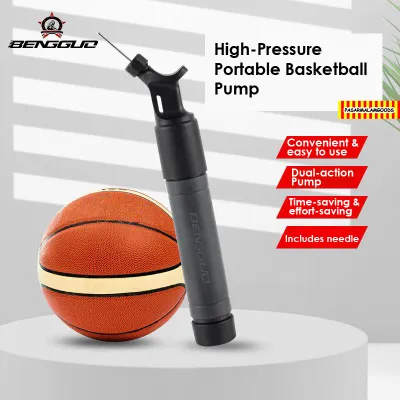
![[SG STOCK] Ball Air Pump with Needle](https://img.lazcdn.com/g/p/68529c3a4e15f53d0ddf08e7dc2c6925.png_400x400q80.png_.webp)
![[LOCAL SELLER] ROCKBROS A320 120PSI Bicycle Air Pump Aluminum Alloy Bike Mini Pump for Balloon Football Basketball Bicycle](https://img.lazcdn.com/g/p/4cdf88dce9570556e1ae5796568391e5.png_400x400q80.png_.webp)
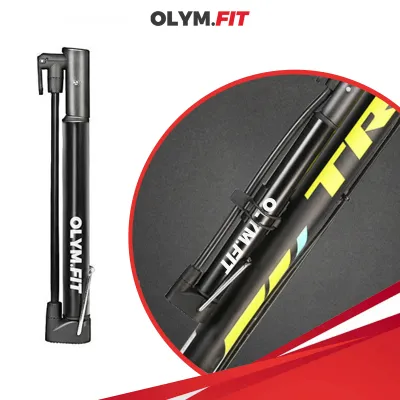
![[SG Stock] Air Pump Car Inflator Compressor Portable Ball Bike Bicycle Rechargeable Basketball Soccer Volleyball Tyre Wheel Tire 12V LED Fast Auto Shut-off Emergency](https://img.lazcdn.com/g/p/cc7d92c566c3860fbbfa1d535cc6f3bb.jpg_400x400q80.jpg_.webp)
Prices are valid at publication and may change. Please refer to the product page for the latest price.
Understanding and managing pressure requirements is the next critical factor. Different sports balls are engineered to perform within highly specific pressure ranges, measured in pounds per square inch (PSI). For example, a standard basketball typically requires between 7.5 and 8.5 PSI to achieve its intended bounce without putting excessive strain on its seams. A soccer ball (football) requires a higher pressure, usually ranging from 8.5 to 15.6 PSI, depending on the size and match specifications. Conversely, a volleyball requires a much lower, gentler pressure of 4.26 to 4.61 PSI. Over-inflating a volleyball can permanently damage its soft outer panels and make it painful to hit, while under-inflating a basketball results in a sluggish, unpredictable bounce.
Because of these varying requirements, accurate pressure reading is non-negotiable. A high-quality pump must feature a reliable, easy-to-read pressure gauge. Without an accurate gauge, you are forced to rely on the “squeeze test,” which is highly subjective and frequently leads to over-inflation. Over-inflating sports balls stretches the internal bladder, warps the outer casing, and can even cause catastrophic seam failure. An accurate gauge ensures that every ball is inflated to its exact specification, preserving the structural integrity of the equipment and ensuring consistent, safe performance on the court or field.
Comparing Pump Types for Household Use
When selecting an inflation tool for home use, you must choose between three primary pump configurations: floor pumps, portable hand pumps, and electric or battery-operated pumps. Each type offers distinct advantages and trade-offs regarding storage space, physical effort, and long-term reliability.

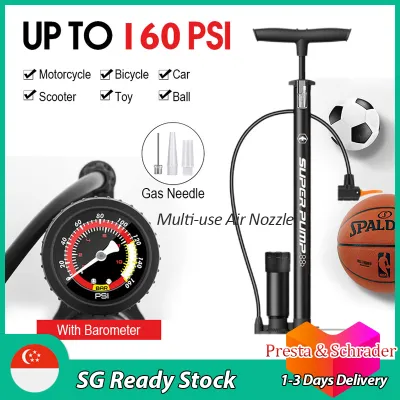
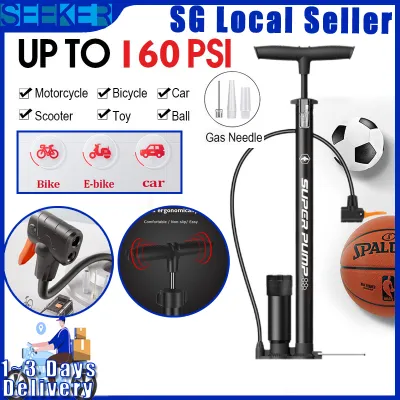
Floor pumps are the gold standard for high-volume, accurate home use. These pumps feature a stable base that you step on to hold the unit in place, allowing you to use your entire body weight to push a large volume of air with each stroke. Floor pumps almost always feature large, integrated mechanical pressure gauges positioned near the base or high up on the barrel for easy reading. The primary advantage of a floor pump is speed and accuracy; you can inflate a completely flat basketball in a matter of seconds with minimal physical strain. The trade-off is size. Floor pumps require dedicated storage space in a garage, utility closet, or storeroom, making them less practical to transport to weekend matches.
Portable hand pumps are compact, lightweight, and designed for travel or sideline emergencies. These pumps fit easily into a sports backpack or duffel bag, ensuring you can adjust ball pressure directly at the court or field. Many modern hand pumps utilize a flexible hose extension to protect the needle from snapping when the pump moves. However, hand pumps require significantly more physical effort to operate, as you must rely entirely on your arm strength. Furthermore, because of their compact size, portable hand pumps rarely feature integrated pressure gauges, or if they do, the gauges are small and difficult to read accurately. They are excellent secondary tools but can be tedious as a primary household pump.
Electric or battery-operated pumps represent the modern, high-convenience option. These compact devices allow you to set a target PSI on a digital screen, attach the hose, and press a button. The pump automatically shuts off once the desired pressure is reached, completely eliminating the risk of over-inflation. This convenience is highly appealing for busy households. However, electric pumps come with distinct trade-offs. They rely on rechargeable lithium-ion batteries, which degrade over time and can leave you stranded if you forget to charge the device before a game. They are also louder, more expensive—often costing upwards of S$40 to S$80 compared to S$15 for a manual pump—and contain complex electronic components that are more susceptible to damage if dropped on concrete.
How to Evaluate and Select Reliable Brands
In the absence of official brand rankings, you can identify reliable manufacturers by evaluating specific engineering choices, material selections, and customer support structures. A trustworthy brand views a ball pump as a long-term tool rather than a disposable plastic accessory.
The first indicator of a reliable brand is the availability of replacement parts and the robustness of their warranty. High-quality manufacturers understand that rubber seals wear out, hoses can crack under extreme temperatures, and inflation needles are easily lost or bent. Brands that offer dedicated replacement kits—including replacement hoses, internal O-rings, and multi-packs of needles—demonstrate a commitment to product longevity. Before purchasing, check if the brand sells these small components separately. A brand that offers a multi-year warranty on the pump body and makes replacement parts easily accessible is highly preferable to one that requires you to buy an entirely new pump when a single seal fails.
Build quality is another clear differentiator. When evaluating a pump, look closely at the materials used in its construction. Reliable brands utilize seamless aluminum or steel barrels for their pumps, which resist denting and maintain a smooth internal track for the piston. The base of a floor pump should be constructed from heavy-duty cast iron, steel, or highly reinforced composite plastic that does not flex when you step on it. Cheap, unbranded pumps often rely on thin, single-wall plastic barrels that can warp under pressure, leading to internal air bypass and a rapid loss of pumping efficiency.
Finally, analyze consistent user feedback on major online marketplaces, paying close attention to long-term reviews. Look for patterns in user complaints. If multiple reviews spanning six months or more mention that the pressure gauge began to drift, that the hose connection leaks air, or that the handle cracked under normal use, these are clear indicators of poor quality control. Conversely, brands that receive consistent praise for smooth piston action, clear gauge readability, and durable hose materials are highly likely to withstand the daily demands of a busy, multi-sport household.
Essential Features for Versatility and Convenience
To make ball inflation as painless as possible, look for specific design features that enhance usability, efficiency, and organization within a busy household.
One of the most valuable features for manual pumps is a dual-action pumping mechanism. Standard single-action pumps only push air into the ball when you compress the plunger. Dual-action pumps, however, are engineered to compress and deliver air on both the push and the pull strokes. This simple mechanical design effectively cuts your inflation time in half and significantly reduces the physical effort required to pump up multiple balls. This is especially beneficial for younger family members who may lack the upper-body strength to operate a stiff, single-action pump.
Another essential feature for household convenience is integrated storage. In a home with multiple sports, needles and valve adapters are constantly being misplaced. Reliable brands solve this issue by integrating dedicated storage compartments directly into the pump’s handle or body, or by attaching secure plastic clips to the hose. Having a designated, secure home for your inflation needles ensures that you will not spend twenty minutes searching through drawers and sports bags every time a ball needs a quick top-up.
Ergonomics and physical stability also play a major role in user satisfaction. Look for pumps featuring wide, contoured handles with rubberized grips that fit comfortably in the hand, preventing slippage and blisters during extended use. For floor pumps, a wide, textured base is crucial to prevent the pump from tipping over on uneven surfaces like grass or gravel. Additionally, a long, flexible hose made of high-quality rubber or braided nylon is highly desirable. A flexible hose decouples the movement of the pump from the needle, preventing the needle from bending or snapping off inside the ball’s valve if the pump shifts during use.
Maintenance and Safe Usage Practices
Even the highest-quality pump from a premium brand will fail prematurely if it is not used and maintained correctly. Implementing a few simple habits will protect both your inflation equipment and your expensive sports balls.
The single most important practice for safe inflation is lubricating the needle before insertion. Inserting a dry metal needle into a dry rubber ball valve causes friction that can tear the delicate inner valve core or push it entirely out of alignment, causing a permanent, unrepairable air leak. To prevent this, always apply a drop of glycerin, silicone oil, or even soapy water to the needle before gently sliding it into the valve. Never force a dry needle into a stubborn valve.
Proper storage is equally critical for preserving the lifespan of your pump. When you are finished inflating your equipment, avoid coiling the hose too tightly or bending it at sharp angles, as this can cause the internal rubber to kink, crack, or separate from the metal fittings over time. Store the pump in a cool, dry place away from direct sunlight. Prolonged exposure to extreme heat and UV rays degrades rubber hoses, dries out internal lubricants, and can cause plastic components to become brittle and prone to cracking.
Finally, learn to recognize the early warning signs of pump wear so you can address them before the tool becomes unusable. If you notice that the pumping action has become stiff, squeaky, or rough, it is likely that the internal piston O-ring needs lubrication; applying a small amount of silicone grease to the inside of the barrel will restore smooth operation. If you hear a faint hissing sound near the base or handle during a stroke, or if the pressure gauge fails to return to zero when disconnected, the seals or the gauge itself are failing. Addressing these minor issues early ensures your pump remains a reliable household utility for years to come.
Frequently Asked Questions (FAQ)
Can I use a bicycle pump for sports balls?
Yes, you can use a bicycle pump to inflate sports balls, provided you have the correct adapter. Most bicycle pumps are designed for Schrader or Presta tire valves, so you will need to screw a standard metal inflation needle into the pump’s nozzle. However, you must exercise extreme caution if your bicycle pump is designed for high-pressure road tires. These pumps can deliver high volumes of air very quickly, making it incredibly easy to over-inflate and damage low-pressure sports balls like volleyballs or soccer balls if you do not monitor the pressure closely.
How often should I check the air pressure of my sports balls?
You should check the air pressure of your sports balls before every active play session. Sports balls naturally lose air over time due to the microscopic permeability of their rubber or butyl bladders. Additionally, environmental temperature changes cause air to expand and contract; a ball left in a cold garage overnight will feel significantly flatter than one kept in a warm room. Checking and adjusting the pressure before you play ensures optimal bounce consistency, improves ball control, and protects the ball from structural damage caused by playing with improper inflation.
Community discussion
Share your experience or ask a question. Comments are reviewed before publication.