
Selecting the right hockey shin guards in Singapore requires balancing robust impact protection with the practical demands of playing in a hot, tropical climate. While several global brands compete for attention on the pitch, the ideal gear is not defined by brand name alone, but by how well it matches your playing position, fits your leg anatomy, and manages heat and moisture. Prioritizing brands that offer dedicated field hockey designs, transparent sizing specifications, and verified safety standards will ensure you stay protected during intense matches.
Because field hockey involves a dense, hard ball and low-swinging carbon sticks, your shin guards must be engineered specifically for these unique hazards. Standard multi-sport guards or those designed for other sports often lack the coverage and impact absorption required for field hockey. By focusing on reputable manufacturers that specialize in field hockey equipment, you can find gear that offers the precise balance of durability, comfort, and ventilation needed for local pitches.
Understanding Baseline Protection and Safety Standards
Field hockey shin guards must withstand high-velocity impacts from a solid ball that can travel at speeds exceeding 100 km/h. The human shin bone has very little muscle coverage, making it highly susceptible to painful bone bruising, deep tissue bruising, and fractures. To mitigate these risks, standard field hockey shin guards feature a rigid outer shell made of high-impact plastics, such as polycarbonate or polyurethane, paired with a thick, shock-absorbing foam backing like ethylene-vinyl acetate (EVA). This combination distributes the force of a localized blow across a much wider surface area, minimizing the energy transferred directly to your leg.
Products mentioned in this guide
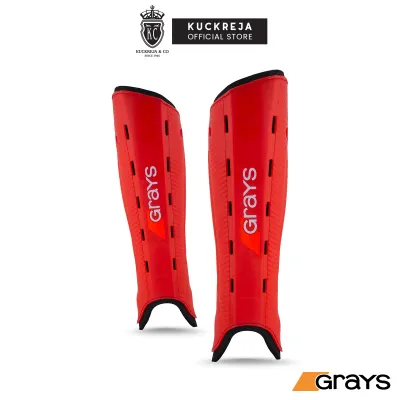
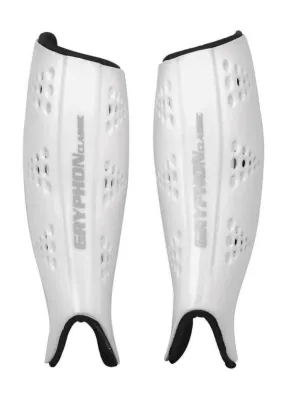
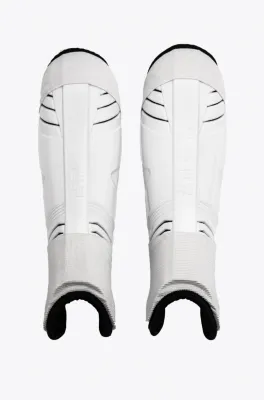
![[Grand Sport Singapore] Shin Pads - Protection Guards for Sports etc Football Floorball Hockey](https://img.lazcdn.com/g/p/874ee7e37fd7eda9872b7594dcb1c476.png_400x400q80.png_.webp)
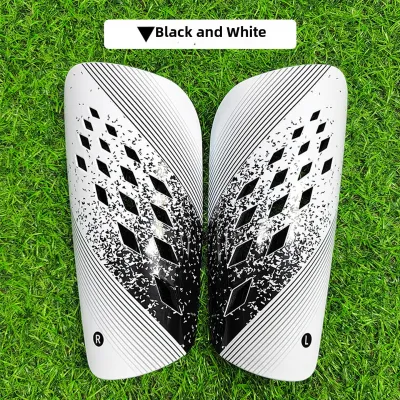
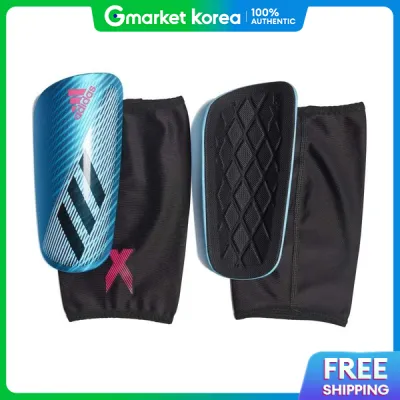
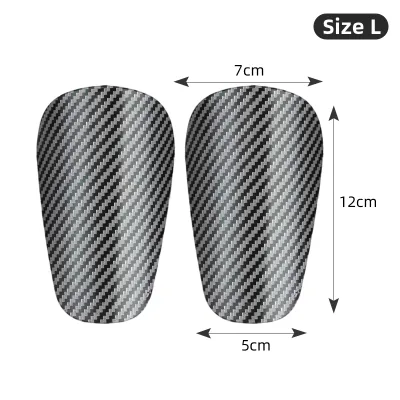
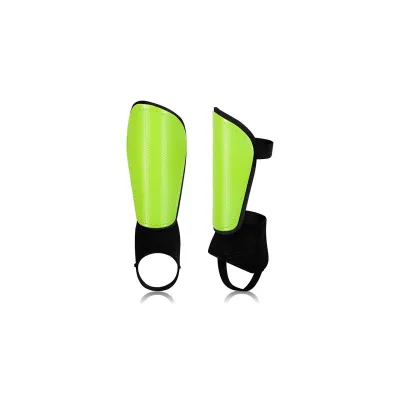
Prices are valid at publication and may change. Please refer to the product page for the latest price.
When evaluating different brands, it is crucial to distinguish between standard field hockey shin guards and goalkeeper-specific leg guards. Standard guards are designed for outfield players who require maximum running mobility, featuring a contoured, low-profile shape that fits snugly under long socks. Goalkeeper leg guards, on the other hand, are massive, heavily padded foam barriers designed to block shots directly and integrate seamlessly with specialized kickers. Attempting to use outfield guards for goalkeeping, or vice versa, compromises safety and performance on the pitch.
Before making a purchase, always check the manufacturer’s specifications for verified safety standards and impact resistance. Reputable brands typically display safety certifications, such as the European CE mark (specifically EN 13546 for field hockey protectors), on their product labels or packaging. This certification indicates that the gear has undergone standardized laboratory testing for impact attenuation, penetration resistance, and restraint system stability. Avoid purchasing guards that do not clearly state their material composition or lack recognized safety markings, as substandard plastics can crack or shatter under the force of a direct hit.
How to Evaluate Reputable Hockey Equipment Brands
Identifying a reliable hockey brand involves looking beyond marketing claims and focusing on engineering consistency and product support. Established sports brands that specialize in field hockey maintain dedicated research and development teams to continuously refine their protective gear. These manufacturers provide highly detailed, consistent sizing charts that correlate your physical measurements to specific guard dimensions, rather than relying on vague “small, medium, or large” labels. This precision is essential for ensuring that the protective shell aligns perfectly with your shin.

Another hallmark of a reputable brand is the transparency of its product lines and material specifications. Reliable manufacturers clearly detail the types of foam, plastic polymers, and ventilation technologies used in each model. They also offer comprehensive product catalogs that cater to different skill levels, from entry-level junior players to elite international competitors. When browsing these catalogs, look for brands that emphasize anatomical shaping, as guards molded to the natural curve of the left and right shins provide significantly better protection and comfort than symmetrical, one-size-fits-all designs.
Customer support, manufacturer warranties, and return policies are also key indicators of brand reliability. High-quality protective gear should come with a clear warranty against manufacturing defects, such as premature cracking of the shell or tearing of the straps. Before purchasing, verify the brand’s presence in Singapore through authorized local distributors or official brand websites. Buying from brands with an established local footprint ensures that you can easily access customer support, facilitate returns if the fit is incorrect, and obtain genuine replacement parts or accessories when needed.
Matching Shin Guard Designs to Your Playing Position
Your role on the field dictates the specific physical demands placed on your protective gear, making certain shin guard designs more suitable for your position. Forwards and midfielders cover extensive distances and rely on explosive acceleration, agility, and rapid footwork. For these high-mobility roles, players generally prefer lightweight, low-profile shin guards that minimize bulk and wind resistance. These designs often feature streamlined shells and minimalist strapping systems, allowing for unrestricted ankle flexion and comfortable running over long periods.
Defenders, conversely, are frequently positioned in the direct line of fire, blocking penalty corners and executing low tackles against aggressive attackers. For these defensive roles, maximum coverage and reinforced padding are paramount. Defensive-style shin guards typically feature wider shells that wrap further around the sides of the calf, along with integrated ankle guards that shield the vulnerable malleolus bones from stray sticks. While these guards are slightly heavier and bulkier, the enhanced protection they offer against high-velocity impacts is essential for players operating in the defensive circle.
Goalkeepers require an entirely different category of protective equipment that should never be confused with outfield gear. Goalkeeper leg guards are constructed from high-density, lightweight foam that allows for rapid sliding, stacking, and rebounding. These guards cover the entire front of the leg from the instep to well above the knee, providing a flat, wide surface area to control the direction of blocked shots. When selecting goalkeeper gear, ensure the brand offers a cohesive system where the leg guards and kickers are designed to lock together securely, preventing any gaps from exposing the feet or ankles.
Sizing, Fitting, and On-Field Comfort Checks
To find a shin guard that offers optimal protection, you must measure your leg accurately rather than guessing your size based on height alone. Sit on a chair with your feet flat on the floor and your knees bent at a 90-degree angle. Use a flexible measuring tape to measure the distance from the top of your ankle bone to approximately two centimeters below the bottom of your kneecap. Compare this measurement directly to the manufacturer’s sizing chart to select the correct length. A guard that is too long will push against your kneecap when you run, causing painful chafing, while a guard that is too short will leave a dangerous gap of exposed bone near your ankle.
In Singapore’s hot and humid climate, on-field comfort is heavily influenced by how the shin guards manage sweat and heat. Look for brands that incorporate advanced ventilation channels, perforated shells, and moisture-wicking inner liners. Removable liners are highly advantageous, as they allow you to wash the fabric components separately, preventing the buildup of sweat, bacteria, and unpleasant odors. Additionally, consider the fastening system; while some players prefer slip-in guards held in place by compression sleeves, others opt for adjustable elastic straps that allow for quick tension adjustments during a match.
When trying on new shin guards, perform a series of physical checks to ensure a secure, non-restrictive fit before taking them to the pitch. Put on your hockey socks and shoes, insert the guards, and perform several deep squats, high-knee lifts, and lateral lunges. The guards should remain firmly in place without sliding down your leg or shifting side-to-side. Verify that there are no painful pressure points against your shin bone and that the lower edge of the guard does not press uncomfortably into the top of your foot when you flex your ankle. If the gear restricts your natural range of motion or leaves gaps in coverage, try a different size or anatomical cut.
Where to Buy and Verify Authentic Gear in Singapore
To ensure you are purchasing genuine, high-quality protective equipment that meets international safety standards, always buy from authorized sports retailers, specialized hockey pro shops, or official brand stores in Singapore. Physical retail outlets, particularly those located in established sporting hubs like Queensway Shopping Centre, offer the invaluable benefit of allowing you to try on different brands and sizes in person. Experienced staff at specialized hockey shops can also provide personalized advice on fitting and recommend specific models based on your playing style and budget.
Be highly cautious when browsing general online marketplaces or e-commerce platforms, where unverified third-party sellers may list counterfeit or substandard protective gear. These imitation products often look identical to reputable brands but are constructed from cheap, brittle plastics and low-grade foam that offer virtually no protection against high-impact ball strikes. Using counterfeit gear puts you at a severe risk of injury on the pitch. If a deal online seems unusually cheap compared to official retail prices, it is highly likely to be a counterfeit or a discontinued model with degraded materials.
Upon receiving your shin guards, conduct a thorough physical inspection to verify their authenticity and structural integrity. Check the packaging for official brand holographic tags, serial numbers, and clear manufacturer labeling. Inspect the stitching along the edges of the foam liner and straps to ensure there are no loose threads or uneven seams. Press firmly on the plastic shell to verify that it is rigid and does not flex excessively or feel brittle. Authentic, high-quality gear will have a consistent finish, clean branding graphics, and permanently attached safety certification labels that match the manufacturer’s official documentation.
Frequently Asked Questions (FAQ)
How should I clean and maintain my hockey shin guards?
Proper maintenance is essential for extending the lifespan of your shin guards and preventing the buildup of odor-causing bacteria, especially in Singapore’s humid climate. After every training session or match, remove the shin guards from your gear bag immediately rather than leaving them enclosed in a dark, damp environment. Wipe down the hard plastic outer shells with a damp cloth and mild, non-abrasive soap to remove dirt, sweat, and turf debris, then dry them thoroughly with a clean towel.
If your shin guards feature removable fabric liners, detach them and wash them by hand or on a gentle machine cycle using cold water and a mild detergent, following the specific care instructions on the manufacturer’s label. Avoid using bleach or fabric softeners, as these chemicals can degrade the moisture-wicking properties of the synthetic fibers. Always air-dry the liners and shells in a well-ventilated indoor space away from direct sunlight, radiators, or high heat sources, as excessive heat can warp the plastic shell and cause the shock-absorbing foam to lose its structural integrity.
Can I use field hockey shin guards for ice hockey or football?
No, you should not use field hockey shin guards for ice hockey or football, as each sport has vastly different impact profiles and protective requirements. Field hockey guards are specifically engineered to protect against low-level, high-velocity impacts from a hard ball and stick, featuring a dense, elongated design that covers the front of the shin down to the ankle. Ice hockey shin guards require much heavier, wrap-around plastic shells that extend around the sides of the calf to protect against high-speed pucks, skate blades, and heavy slashes, making field hockey guards dangerously inadequate for the ice rink.
Conversely, football shin guards are generally much smaller, lighter, and lower-profile, designed primarily to protect against glancing blows from soft leather boots rather than solid composite sticks. Using football guards for field hockey leaves large areas of your lower leg and ankle completely exposed to severe injury. To ensure your safety and maintain the validity of any manufacturer warranties, always use protective equipment that is explicitly certified and intended for the specific sport you are playing.
Community discussion
Share your experience or ask a question. Comments are reviewed before publication.