
Finding the right aerobic step for a compact Housing & Development Board (HDB) flat in Singapore requires balancing workout versatility with strict spatial limits. Because space is at a premium in modern HDB layouts, bulky cardio machines like treadmills or stationary bikes are often impractical. A compact aerobic step offers an excellent alternative, delivering high-intensity cardiovascular workouts and strength-training opportunities while requiring only a fraction of the floor area. The key to success lies in selecting a model that can be easily stored under a bed, inside a wardrobe, or in a utility closet without compromising your safety during dynamic movements.
To make an informed decision, you must evaluate how a step’s physical dimensions, structural design, and storage mechanism align with your home’s layout. A step that is too large will clutter your living room, while one that is too small or unstable may limit your exercise range and increase the risk of slips or falls. By focusing on smart design features such as modular risers, low-profile frames, or collapsible joints, you can maintain an active lifestyle right in your living room without sacrificing precious living space.
Key Selection Criteria for Compact Living Spaces
Before browsing online marketplaces or local sporting goods stores, you must establish the physical boundaries of your workout and storage areas. Start by measuring the exact floor space where you plan to exercise. In a typical HDB living room or bedroom, you need to account not only for the footprint of the aerobic step itself but also for a safety buffer zone around it. This buffer ensures you can step off the platform in any direction without colliding with television consoles, coffee tables, or sofa edges.
Products mentioned in this guide
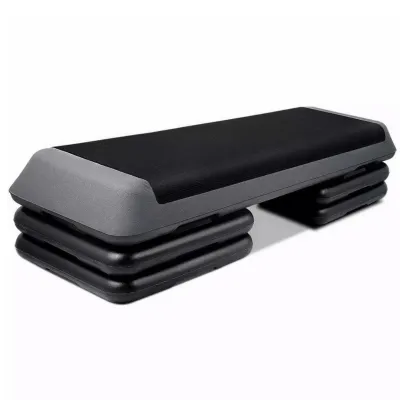
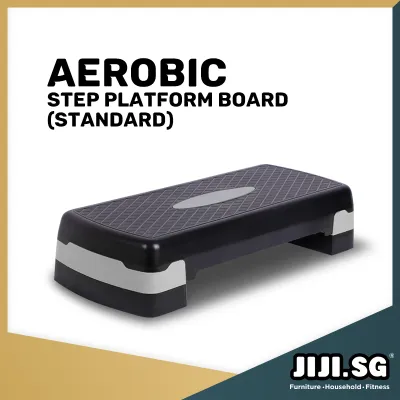
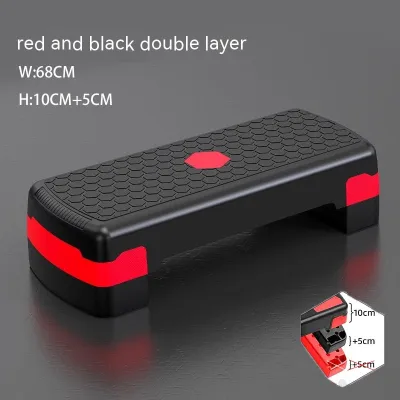
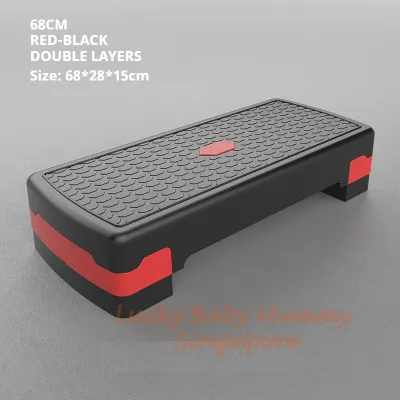
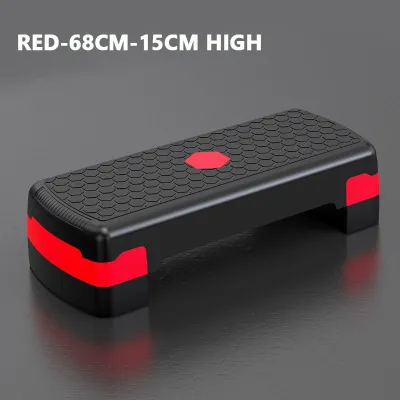
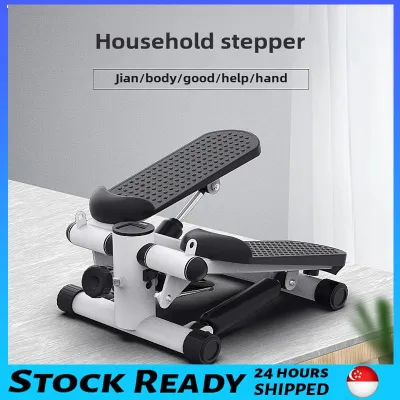
Prices are valid at publication and may change. Please refer to the product page for the latest price.
Ceiling height is another critical factor that many apartment dwellers overlook. When you stand on an aerobic step at its maximum height, your head rises significantly closer to the ceiling. If your flat has low false ceilings or low-hanging ceiling fans, you must calculate your total height while standing on the platform to prevent accidental head injuries. Ensure there is ample clearance between the top of your head at the peak of your jump and any overhead fixtures.
Storage clearance is the next metric to define. Measure the height of the gap under your bed frame, the bottom shelf of your wardrobe, or the designated corner in your household shelter. If you plan to slide the step under a sofa, verify the clearance of the sofa’s lower rail, as even a half-centimeter discrepancy can prevent easy storage. Knowing these dimensions beforehand allows you to filter out models that are too tall or wide to be tucked away.
You must also evaluate the platform’s surface area relative to your shoe size and stance. A platform that is too narrow can make rapid footwork precarious, especially during high-tempo cardio routines. Conversely, a larger platform offers superior stability but demands more storage space. Balancing this trade-off requires assessing your personal fitness goals; if your routine consists of basic straight steps, a smaller surface may suffice, whereas complex lateral movements demand a wider, more accommodating platform.
Types of Space-Saving Aerobic Steps
To accommodate the diverse layouts of modern apartments, manufacturers have developed several distinct structural designs for aerobic steps. These designs prioritize compact footprints and easy storage while maintaining the structural integrity required for high-impact workouts. Understanding these categories helps you match the equipment’s form factor to your specific storage constraints and preferred exercise style.

The three primary space-saving designs available on the market are adjustable platforms with removable risers, mini or low-profile steps, and foldable or collapsible models. Each approach addresses spatial limitations differently, offering unique advantages in terms of height customization, portability, and ease of concealment.
Adjustable Platforms with Removable Risers
Adjustable platforms with removable risers are the classic choice for home fitness, utilizing modular blocks to vary the workout intensity. By stacking or removing these blocks, you can adjust the platform’s height to target different muscle groups or increase cardiovascular challenge. This modularity provides excellent workout variety without requiring you to purchase multiple individual steps of varying heights.
However, storing these extra risers requires careful planning in a small HDB flat. When the step is set to its lowest level, the unused risers must be stored elsewhere, which can lead to cluttered closets if they do not nest neatly beneath the main platform. Look for designs where the risers lock securely inside the underside of the step when not in use, keeping the entire system self-contained.
While higher configurations offer a more intense workout, they also require a wider base to maintain lateral stability. You must verify that the base footprint remains stable at its highest setting and that the locking mechanisms between the risers and the platform are robust. Always perform a quick physical check to ensure the risers are fully engaged and locked before stepping onto the platform.
Mini and Low-Profile Steps
Mini and low-profile aerobic steps are specifically engineered for tight spaces and low-impact routines. These models feature a significantly reduced surface area and a lower maximum height, making them incredibly lightweight and easy to slide under almost any piece of furniture. They are particularly well-suited for shared living spaces where you need to set up and pack away your equipment in a matter of seconds.
The compact nature of mini steps makes them ideal for homes with low ceilings or active ceiling fans, as the minimal elevation keeps your head at a safe distance from overhead hazards. They are also highly portable, allowing you to move your workout from the living room to a balcony or bedroom with minimal effort.
However, the reduced surface area comes with clear limitations. Mini steps are generally unsuitable for advanced step choreography, lateral jumps, or high-intensity interval training (HIIT) that requires wide foot placement. If your feet are larger or if you struggle with balance, the smaller target area increases the risk of stepping on the edge of the platform, which can cause the step to tip. These models are best reserved for straightforward, linear stepping exercises or low-impact rehabilitation work.
Foldable and Collapsible Models
For fitness enthusiasts who require a full-sized platform but have absolutely no room for a bulky, rigid structure, foldable and collapsible models offer an innovative solution. These steps feature hinged legs or collapsible frames that fold flat against the underside of the platform. This design allows a standard-sized step to shrink to a thickness of just a few centimeters, making it easy to store behind a door or inside a narrow wardrobe gap.
The primary appeal of foldable models is their rapid setup time and ease of daily deployment. Within seconds, you can unfold the legs, lock them into place, and begin your workout. When finished, the unit collapses back down into a highly streamlined shape that frees up your living room floor completely.
Despite their convenience, you must carefully inspect the durability of the hinges, locking pins, and structural joints. Because these models rely on moving parts to support your body weight, any wear or manufacturing defect in the folding mechanism can compromise safety. Additionally, foldable units can sometimes be heavier than their modular counterparts due to the metal or reinforced plastic components required for the hinges, so you should verify that you can comfortably lift and carry the folded unit to its storage spot.
Safety and Stability Checks for Home Use
Exercising in a confined apartment environment leaves very little room for error, making safety and stability checks paramount. Before purchasing any aerobic step, you must inspect the non-slip surface textures on the top of the platform. A high-quality rubberized or deeply textured thermoplastic grip is essential to prevent your shoes from slipping, especially when sweat begins to drip during intense cardio sessions. Avoid smooth plastic surfaces that can become slick when wet.
The underside of the step is equally critical for safety. Look for models equipped with substantial, non-marking rubber feet or a continuous rubberized border. These feet prevent the step from sliding across smooth HDB flooring surfaces, such as polished large-format tiles, vinyl, or laminate, when you apply lateral force. If the step slides even slightly during a workout, it can cause you to lose your balance and fall against nearby furniture.
You must also verify the integrity of all locking mechanisms, whether they are nesting risers or folding hinges. A secure lock ensures the platform will not collapse or shift under dynamic loads. Always check the manufacturer’s specifications for the maximum dynamic load limit, which accounts for the force of your body landing on the step rather than just your standing weight. Ensure this limit comfortably exceeds your body weight plus any hand weights you plan to use.
Finally, establish a safe workout zone within your flat. Clear a radius of at least one to one and a half meters around the step to allow for unrestricted arm swings, leg extensions, and recovery steps. Working out too close to walls, glass sliding doors, or sharp furniture corners increases the risk of impact injuries if you lose your footing.
Building Your Equipment Shortlist
To find the perfect aerobic step for your HDB home, you should approach the selection process systematically. Start by listing your non-negotiable physical dimensions. Use your measurements for under-bed clearance, wardrobe depth, and available floor space to filter out any models that simply will not fit your storage or workout areas. This initial screening prevents you from buying a step that ends up permanently cluttering your living space.
Next, filter the remaining options by your primary workout type. If you focus on high-intensity cardio, complex choreography, or strength training with heavy weights, prioritize a standard-sized adjustable platform with secure, nesting risers. If your routine is limited to low-impact stepping, active recovery, or desk-side movement, a mini or low-profile step will offer the best balance of utility and space savings.
Once you have narrowed down the design type, cross-reference the manufacturer’s specifications with your safety requirements. Check the dynamic weight capacity, the material composition of the non-slip grip, and the presence of rubberized feet. Reading user reviews on local ecommerce platforms can also provide valuable insights into how well the step performs on typical apartment flooring.
Before making your final purchase, run through a quick verification checklist:
- Does the step fit within your measured storage space?
- Is the platform surface wide enough for your shoe size?
- Does the unit feature non-slip rubber feet suitable for your floor type?
- Are the height adjustments secure and easy to lock?
- Can you safely lift and move the step's total weight?
By systematically verifying these details, you can invest in a durable, space-saving aerobic step that enhances your home fitness routine without encroaching on your living space.
Frequently Asked Questions (FAQ)
Can I use an aerobic step on vinyl or laminate flooring?
Yes, you can use an aerobic step on vinyl or laminate flooring, but you must ensure the equipment has non-marking rubber feet to prevent scuffs, scratches, or sliding. Cheap plastic feet can easily scratch delicate laminate surfaces and fail to provide enough grip on smooth vinyl. If your step lacks adequate rubber padding, or if you want extra floor protection, place a thin, high-density rubber equipment mat underneath the step. This mat not only protects your flooring from friction and sweat but also helps absorb impact noise, which is highly beneficial for maintaining good relations with your downstairs neighbors in an HDB block.
How much clearance do I need around the step?
For a safe and effective workout, you should maintain a clear zone of at least one meter around all sides of your aerobic step. This clearance ensures you can perform basic steps, lateral movements, and off-step lunges without colliding with walls, furniture, or household items. If your workout routine involves advanced choreography, wide arm movements, or rapid directional changes, increase this buffer zone to one and a half meters. Always double-check that there are no low-hanging ceiling fans or light fixtures directly above your workout zone before you begin stepping.
Are mini steps effective for cardio workouts?
Mini steps are highly effective for low-impact cardio workouts, active recovery, and maintaining daily movement goals in very tight spaces. They elevate your heart rate and engage your lower body muscles much like a standard-sized step. However, their reduced surface area limits your exercise variety, making them unsuitable for complex choreography, wide-stance squats, or high-intensity lateral jumps. If your fitness goals involve basic stepping, light aerobic pacing, or rehabilitation exercises, a mini step offers an excellent, highly storable solution that fits easily into any small apartment.
Community discussion
Share your experience or ask a question. Comments are reviewed before publication.