
Finding the right strength-training equipment for a Singapore home requires balancing fitness goals with spatial reality. In a typical Housing & Development Board (HDB) flat, where every square meter is highly valued, a traditional rack of fixed dumbbells is rarely practical. An adjustable dumbbell solves this problem by consolidating an entire set of weights into a single pair. However, not all adjustable models are built the same, and finding the most compact option requires looking closely at how the equipment stores, adjusts, and moves within your specific living space.
To choose a model that fits seamlessly into your home, you must evaluate both static storage dimensions and the dynamic space required during a workout. A dumbbell that looks small on a retail shelf can feel surprisingly restrictive when you are in the middle of a lateral raise or an overhead press near your bedroom wardrobe. By focusing on physical footprints, adjustment mechanisms, and floor protection, you can build an efficient home gym that does not compromise your living space.
Measuring Your Available Space in an HDB Flat
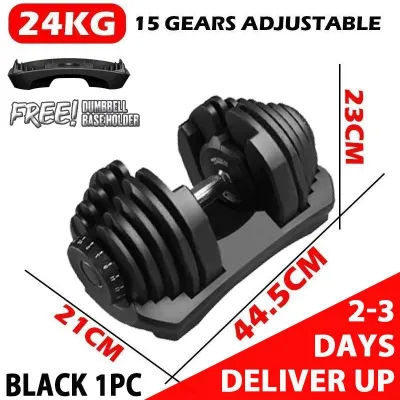
Before browsing online marketplaces or visiting local fitness showrooms, you need to map out the exact zone where your equipment will live and operate. Start by identifying a dedicated storage corner. Use a measuring tape to record the length, width, and height of this designated spot, keeping in mind that the dumbbell must sit in its protective base tray when not in use. This tray often extends slightly beyond the width of the weight plates themselves, making it the true metric for your storage footprint.
Products mentioned in this guide
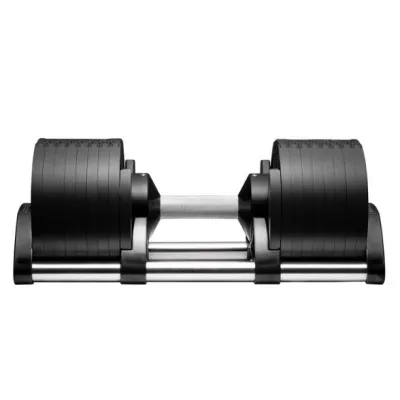
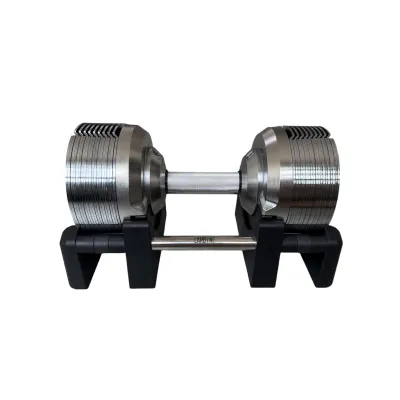
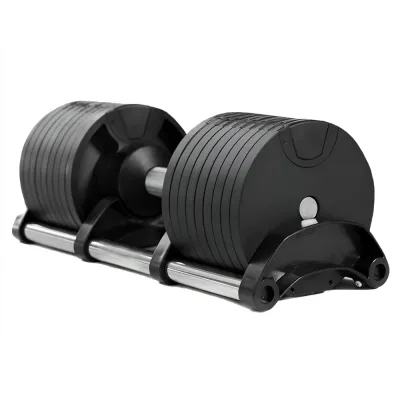

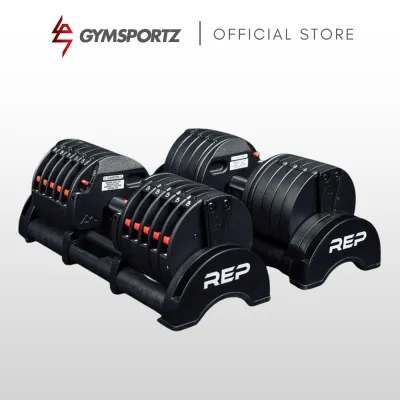
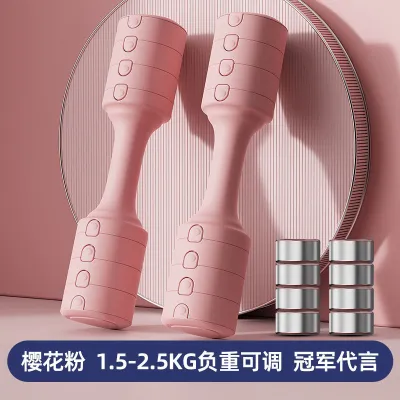
Prices are valid at publication and may change. Please refer to the product page for the latest price.
Next, calculate the dynamic clearance required for your actual workouts. This is the active space you need to perform exercises safely without hitting walls, light fixtures, or furniture. Stand in your planned workout spot and extend your arms fully to the sides and directly overhead. Add at least 30 to 50 centimeters of buffer space beyond your maximum reach to account for natural body sway and dumbbell movement paths.
HDB bedrooms and living rooms often feature tight layouts with swinging wardrobe doors, study desks, and bed frames. Ensure your workout zone does not block primary walkways or interfere with daily household traffic. If you plan to exercise in a multi-use space, test whether you can easily transition from storage to workout mode without constantly rearranging heavy furniture. Remember that lifting and carrying heavy weights across a room to find open space increases the risk of accidental drops and personal injury.
How Adjustment Mechanisms Affect Footprint and Length
The mechanism used to change weights directly dictates the physical shape and overall length of the dumbbell. Dial-based systems, which use a rotating dial on the outer ends of the dumbbell, require a fixed-length cradle. Even when you select the lightest weight setting, the overall length of the dumbbell remains the same because the central bar and outer dial housing do not shrink. This means you will always be lifting a relatively long bar, which can feel awkward during tight movements like bicep curls or chest presses.

In contrast, twist-lock handle systems and certain pin-selected block designs offer a variable length. As you select lighter weights, the unused plates remain behind in the base tray, and the physical length of the dumbbell shortens. This makes the dumbbell much more compact at lower weights, allowing for a more natural range of motion during high-repetition exercises. However, these systems often require highly precise alignment when returning the handle to the tray to select a new weight.
The design of the base tray itself also varies significantly between mechanisms. Dial and twist-lock systems generally rely on molded plastic or composite trays that hold the plates in perfect vertical alignment. These trays must sit on a completely flat, level surface to prevent the plates from shifting, which could jam the locking mechanism. When evaluating different designs, consider whether you prefer a fixed-length dumbbell with a highly stable tray or a variable-length dumbbell that requires more careful alignment during transitions.
Key Dimensions to Check on the Product Label
When comparing product specifications on manufacturer websites or retail labels, look beyond the maximum weight capacity and focus on three critical physical dimensions. The first is the base footprint, which is the exact length and width of the storage cradle. Compare these measurements directly to your pre-measured storage corner to ensure the tray will sit flat on the floor without hanging over baseboards or carpet edges.
The second dimension is the maximum overall length of the dumbbell at its heaviest setting. This measurement is crucial for verifying that the dumbbell will not collide with your body or restrict your range of motion during exercises like hammer curls or shoulder presses. A dumbbell that is too long can force you to alter your lifting form, which reduces workout efficiency and increases the risk of joint strain.
Finally, check the combined height of the dumbbell when it is resting inside its base tray. If you plan to store the equipment out of sight, such as under a bed frame or inside a low cabinet shelf, this height measurement will determine whether the unit can slide in and out smoothly. Always allow for at least two to three centimeters of vertical clearance above the handle to ensure you can grip and lift the dumbbell out of its tray without scraping your knuckles against the furniture.
Protecting HDB Floors and Managing Impact
Using heavy strength-training equipment in an HDB flat requires careful consideration of floor protection and noise management. Most modern flats feature vinyl, laminate, or ceramic tile flooring, all of which can chip, crack, or dent under the pressure of heavy metal plates. To safeguard your home, invest in a high-density impact mat specifically designed for heavy fitness equipment. Standard yoga mats are too soft and thin to absorb the localized pressure of a resting dumbbell tray.
You must also verify the weight capacity of your storage surface if you plan to place the dumbbells on a shelf or a dedicated rack. While HDB concrete floors are structurally engineered to handle standard household loads easily, lightweight wooden shelves or cheap plastic storage units can buckle under the concentrated weight of a 20-kilogram or 40-kilogram dumbbell set. Always store your weights on the floor or on a certified, heavy-duty equipment stand.
To maintain good relations with your downstairs neighbors, practice safe lowering techniques and avoid dropping the weights under any circumstances. Dropping an adjustable dumbbell not only creates loud impact noise that travels easily through concrete floors, but it can also permanently damage the internal dial or pin locking mechanisms. If a lift becomes too difficult to complete with control, lower the weight setting rather than risking a sudden drop that could damage your floor, your equipment, or your body.
Frequently Asked Questions (FAQ)
Can I store adjustable dumbbells under my bed or in a closet?
Yes, storing your adjustable dumbbells under a bed or inside a closet is an excellent way to keep your HDB flat clutter-free, provided you verify the physical clearance first. Measure the distance between the floor and the bottom of your bed frame, and compare it to the combined height of the dumbbell and its base tray. Additionally, ensure the storage area is completely dry and well-ventilated; excess humidity in enclosed spaces can lead to rust on metal plates and degrade the internal lubrication of the adjustment mechanisms.
Do compact adjustable dumbbells require a dedicated rack?
A dedicated rack is not strictly necessary, but using the manufacturer-provided base tray is absolutely mandatory. The base tray is not just packaging; it is a functional component that holds the unused weight plates in alignment and protects the delicate dial or locking gears on the bottom of the dumbbell. You should never store the dumbbells directly on the floor without their trays. If you want to save floor space, look for compact, low-profile stands approved by the manufacturer, rather than attempting to mount the heavy trays on uncertified wall shelves.
Community discussion
Share your experience or ask a question. Comments are reviewed before publication.