
Fitting a dumbbell bench into a typical Singapore HDB flat requires balancing the equipment’s physical footprint with your active workout clearance and storage options. Because residential space is highly optimized, a bulky or non-folding bench can quickly make a living room or bedroom feel cramped and cluttered. Selecting the right size involves understanding your home’s layout, measuring your available space accurately, and choosing a design that can be easily tucked away when not in use.
To make an informed decision, you must look beyond the basic product photos and analyze the exact dimensions of the equipment. A compact, foldable dumbbell bench that collapses to a low profile is often the most practical choice for high-density living, allowing you to maintain a functional home gym without sacrificing your daily living space.
Assessing Your Available Floor Space
Before browsing online marketplaces or visiting local fitness showrooms, you need to map out the physical limits of your workout area. HDB flats, particularly newer Build-To-Order (BTO) units, feature compact layouts where every square meter counts. Start by using a physical measuring tape to determine the length and width of the floor area where you plan to exercise. Do not rely on visual estimation, as furniture and room angles can easily distort your perception of available space.
Products mentioned in this guide
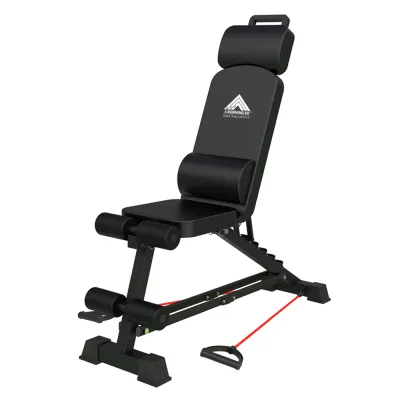
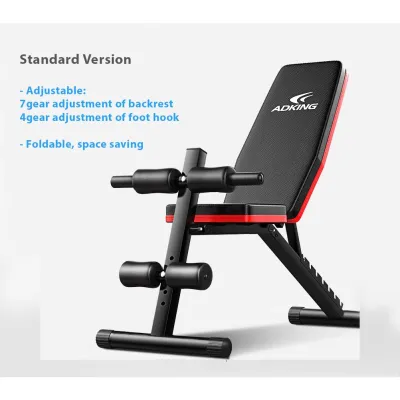
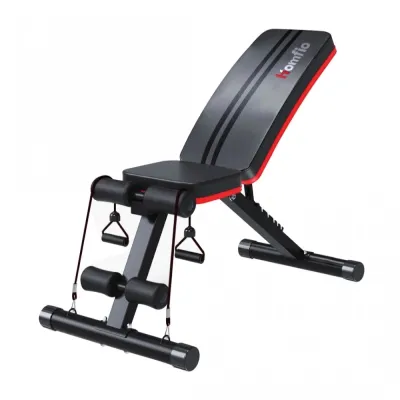
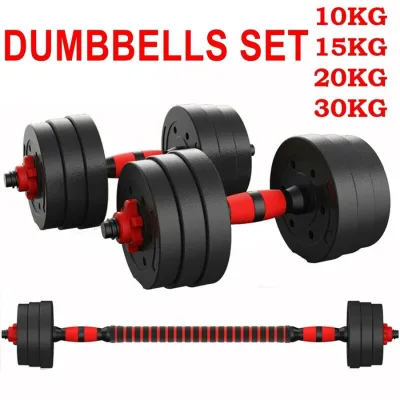
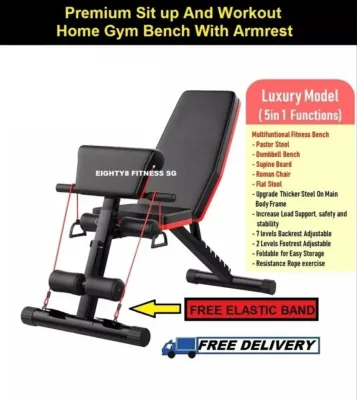
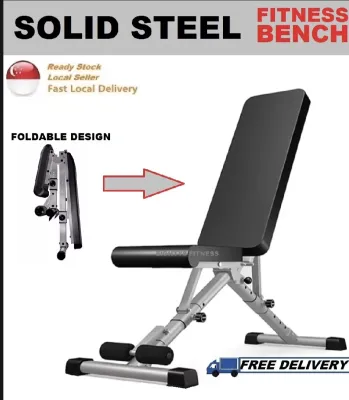
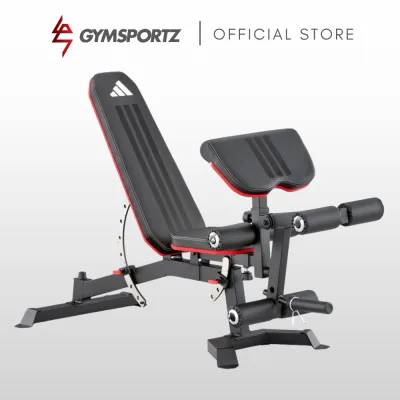
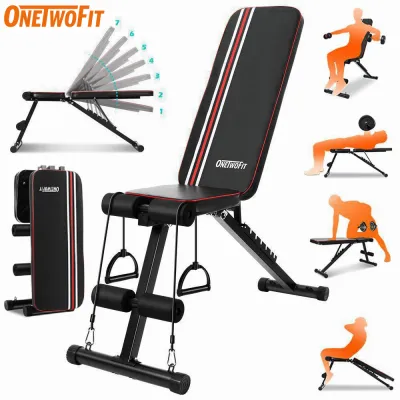
Prices are valid at publication and may change. Please refer to the product page for the latest price.
In addition to floor area, vertical clearance is a critical but frequently overlooked factor. When you adjust a dumbbell bench to an incline or military press position, the backrest extends upward. You must ensure that your head, hands, and the dumbbells themselves have sufficient overhead clearance. This is especially important if your room features low-hanging ceiling fans, decorative light fixtures, or wall-mounted shelving units.
Active safety clearance is another essential measurement. A dumbbell bench might only occupy a small footprint on paper, but you need extra room to perform exercises safely. When executing chest presses, lateral raises, or dumbbell flyes, your arms will extend well beyond the edges of the bench. Allocate at least 50 to 60 centimeters of completely clear space on all sides of the bench to prevent your weights from striking walls, television consoles, or glass doors.
Finally, identify your primary storage zones before making a purchase. Look for underutilized areas in your flat, such as the gap beneath your bed frame, the narrow space beside a wardrobe, or the area behind a bedroom door. Measuring these storage gaps beforehand ensures you buy a bench that actually fits into its designated hiding spot when your workout is complete.
Key Dimensions to Check Before Buying
When evaluating different dumbbell benches, you must carefully distinguish between the active footprint and the folded storage dimensions. The active footprint refers to the maximum length and width the bench occupies when it is fully assembled and placed flat on the floor. This is the dimension you must compare against your active workout space to ensure you can move around the equipment safely.

For adjustable benches, you must also check the maximum height and length extension when the backrest is set to its highest incline. Some designs require the seat to slide forward or the backrest to shift backward when adjusting angles. This shifting mechanism can unexpectedly increase the overall length of the bench during use. Always verify the maximum dimensions at both the fully flat and fully inclined settings.
Seat pad width is another specification that requires a careful trade-off between comfort and spatial efficiency. A wider seat pad provides better shoulder support and enhanced stability during heavy lifts, but it also increases the physical and visual bulk of the bench. For a compact HDB setting, a tapered backrest design—which is wider at the lower back and narrower at the shoulders—offers an excellent compromise, saving precious centimeters of space without compromising your lifting form.
Space-Saving Designs: Foldable vs. Fixed Benches
Choosing between a foldable and a fixed dumbbell bench comes down to how you prioritize structural rigidity versus daily storage convenience. Foldable benches are engineered specifically for compact homes. They feature jointed frames, hinge points, and locking pins that allow the entire unit to collapse flat. This design is highly convenient for multi-purpose rooms, as you can easily slide the collapsed bench under a bed or store it inside a household shelter after your training session.
However, the convenience of a foldable bench comes with structural trade-offs. Because these benches rely on moving joints and locking pins, they may exhibit a small amount of frame play or wobble over time. You must regularly inspect the hinges and locking mechanisms to ensure they remain tight and secure. For general fitness and moderate strength training, a high-quality foldable bench offers more than enough stability while keeping your living space clear.
Fixed benches, by contrast, feature welded or solid bolted frames with no moving joints. This construction offers superior structural rigidity and higher weight capacities, making them the preferred choice for heavy lifting. The major drawback in an HDB context is that a fixed bench acts as permanent furniture. It will permanently occupy around 1.2 to 1.5 square meters of your floor space, which can quickly make a small living room feel overcrowded.
If you decide on a heavier or semi-fixed bench, look for built-in mobility features. Rear transport wheels and a front lifting handle allow you to roll the bench out of the way with minimal effort. Lightweight steel frames can also make repositioning easier, but you must verify that the steel gauge is thick enough to support your body weight and your dumbbells safely without flexing.
Common Sizing Mistakes to Avoid
One of the most frequent mistakes buyers make is measuring only the padded cushions of the bench while ignoring the wider span of the metal base support frame. The actual footprint of the bench is determined by the bottom stabilizers, which often flare out wider than the seat pad to prevent the bench from tipping sideways. Always look for the maximum stabilizer width in the product specifications rather than the cushion width.
Another common oversight is failing to allocate floor space for your auxiliary equipment. Dumbbells, adjustable weight plates, and storage racks require their own dedicated space near the bench. If you do not plan for this extra storage, your workout area can quickly become cluttered and hazardous. Leaving no stepping clearance around the bench makes mounting and dismounting difficult, especially when you are holding heavy weights.
Finally, always verify your door frame widths and hallway clearances before purchasing a bench. A folded bench might fit perfectly under your bed, but if the folded unit is too wide to pass through your bedroom door or navigate a tight hallway corner, you will struggle to store it. Measuring these transition zones beforehand prevents the frustration of owning a space-saving bench that you cannot easily move around your home.
Frequently Asked Questions (FAQ)
Can I use a standard commercial gym bench in a small bedroom?
Standard commercial gym benches are generally unsuitable for small HDB bedrooms due to their massive footprints and heavy, non-foldable frames. These benches are built for spacious commercial facilities and often exceed 140 centimeters in length and 60 centimeters in width, weighing over 30 kilograms. In a typical bedroom, a commercial bench leaves virtually no room for safe movement or dumbbell clearance. To use one safely, you would need a dedicated spare room with a completely clear floor area of at least 2.5 meters by 2 meters, which is rarely practical in a standard household layout.
Do foldable dumbbell benches compromise workout safety?
Foldable dumbbell benches do not inherently compromise safety, provided they are manufactured to reputable standards and used strictly within their specified weight limits. Because they rely on moving joints, locking pins, and hinges, they do require more frequent maintenance and inspection than fixed benches. Before purchasing, always verify the manufacturer’s maximum weight capacity, which must include both your body weight and the weight of the dumbbells you plan to lift. Before starting any workout, perform a quick visual check to ensure all locking pins are fully engaged, the hinges show no signs of wear, and the frame sits completely stable on your floor.
Community discussion
Share your experience or ask a question. Comments are reviewed before publication.