
Selecting the ideal oppo ankle support requires matching the brace’s mechanical design to the physical demands of your specific sport or daily routine. Whether you are navigating rapid lateral cuts on a badminton court, logging long-distance runs along East Coast Park, or executing heavy squats in the gym, your ankle joint experiences vastly different forces. Choosing the wrong support level can either leave you vulnerable to painful sprains or unnecessarily restrict your natural range of motion. By evaluating your activity’s movement patterns, your personal injury history, and your footwear needs, you can find an OPPO brace that balances joint protection with comfort and mobility.
Understanding Ankle Support Levels for Different Activities
Ankle supports are categorized into three primary levels of stabilization: mild compression, moderate support, and maximum stabilization. Each level serves a distinct mechanical purpose, responding to different types of joint stress.
Mild compression sleeves are designed to provide light, elastic pressure that increases local blood flow and enhances proprioception—your brain’s awareness of your joint’s position in space. This level of support is ideal for minor aches, mild swelling, or general joint warmth during low-impact activities.
Products mentioned in this guide
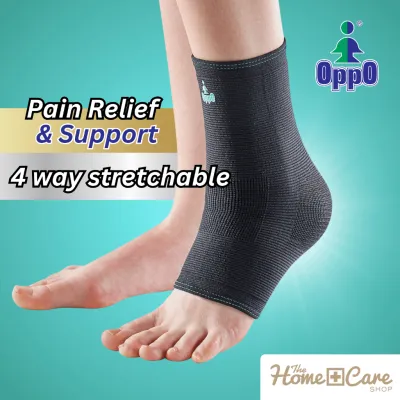
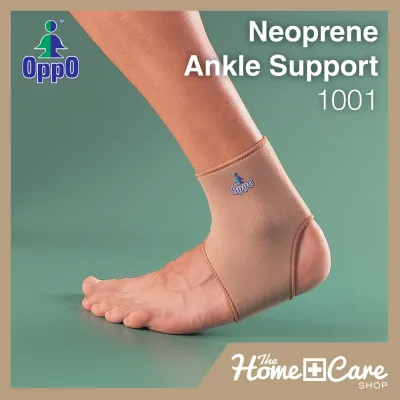
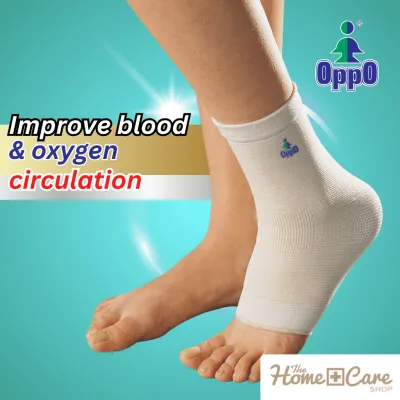
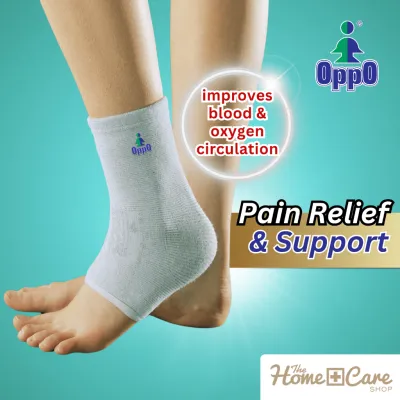
Prices are valid at publication and may change. Please refer to the product page for the latest price.
Moderate support braces incorporate adjustable straps, such as figure-eight bands, to wrap the joint more securely. These designs are engineered to handle moderate lateral (side-to-side) forces and repetitive impacts, providing a physical barrier against mild rolling without completely locking down the joint. They allow for controlled dorsiflexion (pulling the toes up) and plantarflexion (pointing the toes down) while reinforcing the lateral ligaments during dynamic movements.
Maximum stabilization braces utilize rigid or semi-rigid plastic or metal side stays, often combined with lace-up systems or heavy-duty strapping. These are designed for high-risk, high-impact activities or post-injury rehabilitation where lateral movement (inversion and eversion) must be strictly restricted to protect healing ligaments. This level of bracing absorbs significant external loads, transferring forces away from the vulnerable lateral ligaments of the ankle.
When selecting a brace, you must analyze the specific movement patterns of your sport. Lateral movements, such as those found in court sports, place severe shearing forces on the lateral ligaments, requiring structural reinforcement. Repetitive impacts from running subject the joint to continuous axial loading, where shock absorption and lightweight compression are prioritized over rigid stability. Heavy axial loading in weightlifting demands a stable base of support that does not compromise the deep ankle flexion required for proper lifting mechanics.
It is critical to remember that any ankle support is a supplementary aid designed to enhance comfort, manage swelling, and improve proprioceptive feedback. A brace is not a substitute for targeted physical conditioning, strength training of the surrounding musculature, proper athletic technique, or structured medical rehabilitation. Relying solely on a brace without addressing underlying joint weakness or mobility deficits can lead to long-term compensations and secondary injuries.
Matching Ankle Brace Designs to Specific Sports
OPPO offers a diverse range of ankle supports, each engineered with specific materials and structural features to address different athletic scenarios. Selecting the right model involves identifying which design features align with the physical demands of your chosen sport or activity.

Running, Cycling, and Linear Cardio
For sports characterized by repetitive, linear movements like running, cycling, or elliptical training, minimizing bulk and heat retention is essential. These activities involve continuous, predictable sagittal-plane movement (forward and backward) with minimal lateral cutting. Consequently, a lightweight, highly breathable compression sleeve is often the most suitable choice. These sleeves provide mild compression to assist with circulation and manage minor swelling over long distances, without adding unnecessary weight to your stride.
When selecting a compression sleeve for linear cardio, shoe clearance is a critical consideration. The sleeve must be thin enough to fit comfortably inside your standard running or cycling shoes without altering the fit of the footwear or causing tight spots that restrict circulation. Additionally, you must verify that the seams and edges of the sleeve are flat and smooth. Repetitive flexion of the ankle during running or pedaling can cause friction against rough seams, leading to painful blisters or skin chafing over time.
Basketball, Badminton, and Multi-Directional Court Sports
Court sports like basketball, badminton, tennis, and netball require rapid acceleration, sudden deceleration, and frequent lateral changes of direction. These movements, combined with jumping and landing on uneven surfaces or other players’ feet, place athletes at a high risk for lateral ankle sprains (inversion injuries). To mitigate this risk, you require an ankle support that offers moderate to maximum stabilization, specifically targeting lateral joint movement.
Look for OPPO designs that feature adjustable figure-eight strapping systems, lace-up configurations, or integrated rigid side stabilizers. The figure-eight straps mimic athletic taping, locking the heel in place and resisting excessive inward rolling (inversion) and outward rolling (eversion). Rigid or semi-rigid side stays provide a physical block against extreme lateral forces during sharp cuts. Before heading to the court, always verify that your chosen brace fits comfortably inside your high-top or low-top court shoes. It must provide robust lateral stability while still allowing the necessary dorsiflexion required for explosive jumping and sprinting.
Weightlifting and Strength Training
In strength training, the primary demand on the ankle joint is stability under heavy axial loads, combined with the mobility required to maintain proper posture during deep squats, cleans, and snatches. Rigid side stabilizers or bulky plastic stays can severely impede the ankle’s range of motion, particularly the forward knee travel (dorsiflexion) necessary for deep lower-body lifts. Restricted ankle mobility often forces the lifter to compensate by rounding their lower back or lifting their heels, increasing the risk of injury elsewhere in the kinetic chain.
For general strength training, adjustable strap supports or targeted compression sleeves are typically more appropriate than rigid braces. These designs allow you to adjust the tension of the wrap to provide a secure, stable feel during heavy lifts while maintaining the joint flexibility needed for deep movement patterns. Always check the manufacturer’s guidelines to ensure the support is rated for load-bearing activities and does not interfere with natural joint alignment under load. If you are recovering from a recent injury, consult a sports professional to balance the need for structural support with the mobility demands of your lifting routine.
Daily Wear, Walking, and Post-Activity Recovery
For daily wear, light walking, or recovering after a mild strain, comfort and extended wearability are the primary priorities. You require a low-profile ankle sleeve that can be worn discreetly under standard casual or office footwear for hours at a time. The material must be soft, seamless, and highly moisture-wicking to prevent skin irritation and chafing during prolonged use.
In Singapore’s hot and humid climate, breathability is a non-negotiable feature for daily-wear braces. Trapped sweat and heat can quickly lead to skin maceration, fungal infections, or contact dermatitis. Look for OPPO sleeves constructed from advanced knit materials or breathable, perforated fabrics that actively channel moisture away from the skin. Ensuring a proper, non-constricting fit is also essential to prevent the brace from acting as a tourniquet during long periods of sitting or standing.
How to Verify Features and Specifications Before Buying
To ensure you select the correct oppo ankle support, you must carefully evaluate the technical specifications and material properties of each model rather than relying on promotional descriptions or product names.
- Material Composition: Check the product label to determine if the brace is made of neoprene, knit fabric, or elasticized cotton. Neoprene provides excellent heat retention and uniform compression, making it highly effective for soothing stiff joints and promoting blood flow, but it can become hot and sweaty. Breathable knit fabrics are lighter, offer superior moisture-wicking properties, and are generally more comfortable for intense workouts in warm environments.
- Strap Adjustability: Ensure the strapping system allows for customizable tension. Braces with hook-and-loop fasteners let you adjust the compression level as swelling decreases or as your activity level changes throughout the day.
- Seam and Edge Construction: Inspect the placement of seams. Look for flat-locked seams or seamless designs, particularly around the heel and arch, to minimize the risk of friction-induced blisters inside your shoes.
- Sizing and Fit: Never select an ankle support based on your standard shoe size. Fit is critical for both the efficacy of the support and maintaining healthy blood circulation. Consult the official OPPO sizing chart for the specific model you are considering. Use a flexible measuring tape to measure the circumference of your ankle just above the ankle bone (malleolus), or around the heel and instep as specified by the manufacturer's instructions. If your measurement falls between two sizes, consider whether you prefer a tighter, more supportive fit (often better for sports) or a slightly looser fit for extended daily wear, while ensuring circulation is never compromised.
Fitting, Safety, and When to Seek Professional Advice
Properly fitting your ankle support is vital to ensure it functions as intended without causing secondary complications. When applying the brace, position your foot at a 90-degree angle to your leg (neutral position) before securing any straps or laces. This ensures the brace is aligned with the joint’s natural functional position. Smooth out any wrinkles in the fabric or sleeve to prevent pressure points, and tighten straps symmetrically to distribute pressure evenly across the joint.
You must monitor your physical response to the brace and establish clear safety boundaries. Stop using the support immediately and remove it if you experience any of the following symptoms:
- Numbness, tingling, or a "pins and needles" sensation in your foot or toes.
- Discoloration of the skin, such as your toes turning pale, blue, or purple, which indicates restricted blood flow.
- An increase in localized pain, throbbing, or swelling after putting the brace on.
- Severe skin irritation, redness, or itching under the brace.
These symptoms indicate that the brace is either too tight, improperly sized, or constructed from a material causing an allergic reaction.
It is essential to recognize the limits of off-the-shelf orthopedic supports. An ankle brace cannot replace professional medical diagnosis, treatment, or targeted physical therapy. Severe ankle sprains, suspected fractures (indicated by an inability to bear weight, severe swelling, or visible deformity), or chronic joint instability require immediate evaluation by a qualified healthcare professional, such as a doctor or physiotherapist in Singapore. If your ankle pain persists for more than a few days despite using a support, or if you experience recurrent rolling of the joint, seek professional medical advice to address the root cause of the instability.
Frequently Asked Questions (FAQ)
Can I wear an OPPO ankle support inside any type of shoe?
The compatibility of your ankle support with your footwear depends entirely on the bulk of the brace’s design. Thin, lightweight compression sleeves are low-profile and typically fit easily inside standard athletic shoes, casual sneakers, and office footwear without requiring any adjustments. However, bulkier braces featuring thick neoprene, multiple adjustable straps, or rigid side stabilizers take up significant volume inside the shoe. To accommodate these supportive models, you may need to loosen your shoelaces completely, remove the shoe’s existing insole, or wear a shoe that is half-a-size larger or has a wider toe box to prevent painful squeezing and restricted circulation.
How do I wash and maintain my ankle brace?
To preserve the elasticity, structural integrity, and hook-and-loop adhesion of your OPPO ankle support, you must follow the specific care instructions on the product’s wash label. As a general guideline, hand wash the brace in cold water using a mild, non-abrasive detergent. Avoid using bleach, fabric softeners, or harsh chemicals, as these can degrade the synthetic fibers and elastic components. Secure all hook-and-loop straps before washing to prevent them from snagging the fabric. Squeeze out excess water gently without wringing or twisting the brace, and lay it flat to air dry in a shaded area away from direct sunlight, clothes dryers, or radiators, as high heat will damage the elastic materials.
Should I wear the brace on both ankles for prevention?
While some athletes choose to wear supports on both ankles for peace of mind or bilateral symmetry, wearing a brace prophylactically on a healthy, uninjured joint is generally not recommended as a long-term solution. Over-reliance on external support can lead to a false sense of security and may cause you to neglect the essential strength, flexibility, and balance training required to protect your joints naturally. If you feel the need to brace both ankles due to persistent weakness or fear of injury, you should consult a sports physiotherapist. A professional can identify and treat underlying biomechanical issues, muscle imbalances, or poor landing mechanics through targeted exercise therapy, rather than relying on braces to prevent injury.
Community discussion
Share your experience or ask a question. Comments are reviewed before publication.