
Finding a reliable swim board for your child in Singapore involves balancing physical dimensions, material safety, and skill level rather than relying on generic brand names. In Singapore’s tropical climate, where condominium pools and public swimming complexes are highly accessible, a swim board serves as a fundamental training tool to help young swimmers build confidence and refine their kicking technique. To make an informed purchase, parents must look past marketing buzzwords and focus on verifiable specifications such as closed-cell foam construction, ergonomic grip designs, and precise weight capacities. A well-chosen board ensures proper body alignment in the water, allowing children to develop correct muscle memory without straining their shoulders or wrists.
Core Features to Look for in a Kids' Swim Board
Selecting a swim board requires understanding how the equipment interacts with a child’s body in the water. The primary function of a kickboard is to provide buoyancy for the upper body, but excessive buoyancy can be counterproductive. If a board floats too high, it forces the child’s chest upward, arching their lower back and pushing their hips and legs downward. This misalignment disrupts proper kicking mechanics and causes rapid fatigue. A suitable board offers a balanced level of buoyancy that keeps the user level with the water surface.
Edge design is another critical factor for comfort and safety. Look for boards with rounded, smooth edges rather than sharp, squared-off seams. During extended swimming sessions, children rest their inner arms and chest heavily against the sides of the board. Sharp edges can cause painful chafing and skin irritation, especially when combined with the friction of repetitive kicking movements and chlorinated water.
Products mentioned in this guide
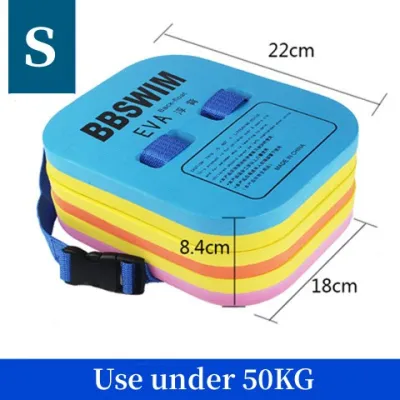
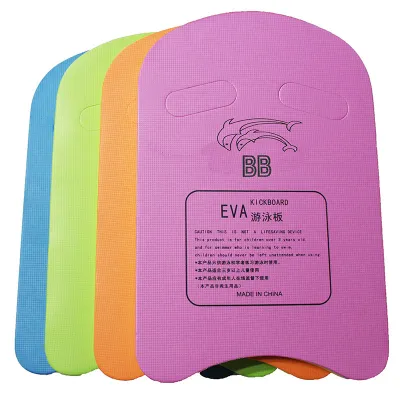
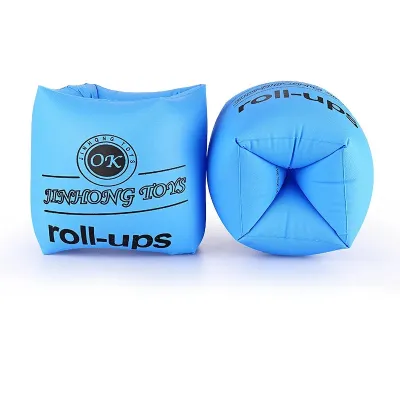
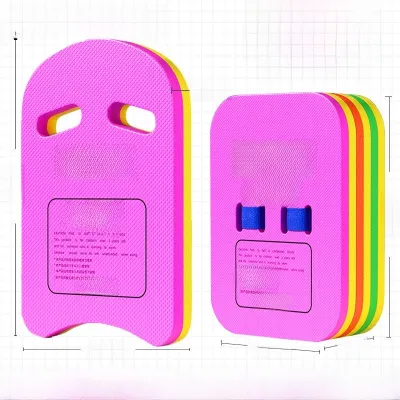
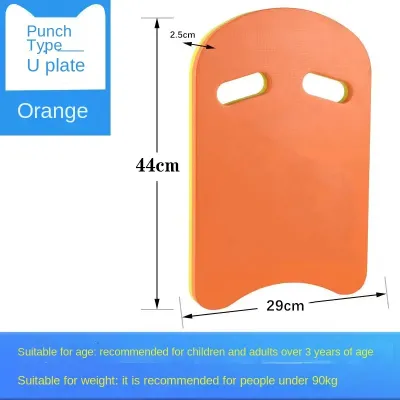
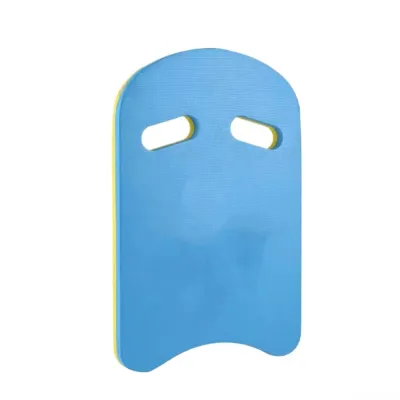

Prices are valid at publication and may change. Please refer to the product page for the latest price.
Small hands require specialized grip features to maintain control without experiencing wrist strain. Standard adult boards are often too wide and thick for a child to hold securely. Look for kids’ swim boards that feature textured surfaces, molded hand grips, or ergonomic cutouts. These design elements allow young swimmers to maintain a relaxed yet secure hold, preventing the board from slipping away during active kick drills.
Before making a purchase, always locate and verify the manufacturer’s stated weight capacity limit on the product label. Buoyancy is directly calibrated to weight ranges. Using a board that is not rated for your child’s weight can compromise their safety; a board that is too small will sink under their weight, while a board that is too large will be difficult to steer and control.
Matching Board Size and Shape to Swimming Skill Levels
Children at different stages of their swimming journey require different board profiles to support their learning. For absolute beginners, stability and confidence-building are the main priorities. Beginners benefit most from larger, thicker boards with a classic rectangular or tombstone shape. These profiles offer a generous surface area and high buoyancy, providing a stable platform that supports the child’s upper body entirely so they can focus on mastering basic leg movements.

As a child transitions to intermediate and advanced levels, their training needs change. Advanced swimmers use kickboards to isolate their lower body and build core strength, rather than relying on the board for basic flotation. For these swimmers, smaller, streamlined, or wedge-shaped boards are more appropriate. These compact designs reduce water resistance, allow for a more natural body position, and encourage the swimmer to engage their core muscles to maintain horizontal alignment.
To find the correct physical proportions, match the board’s width and length to the child’s arm span and torso size. When your child holds the top edge of the board with their arms extended, the bottom of the board should rest comfortably near their lower chest or stomach. The width of the board should align closely with the width of their shoulders. This alignment ensures that their arms extend straight forward rather than flaring outward or crossing inward.
Using an incorrectly sized board carries distinct physical risks. A board that is too large forces the child’s shoulders into an unnaturally wide and high position, which can lead to joint strain and muscle tightness over time. Conversely, a board that is too small will fail to support the child’s upper body, forcing them to lift their head excessively to stay above water, which drops their hips and ruins their kicking posture.
How to Verify Brand Reliability and Material Safety
Parents must look beyond generic marketing claims to ensure they are buying a safe and durable product. The most reliable swim boards are constructed from high-density, closed-cell ethylene-vinyl acetate (EVA) foam. Unlike cheap open-cell foam, closed-cell EVA does not absorb water. This ensures the board maintains consistent buoyancy throughout a swim session and dries quickly afterward, preventing the accumulation of water weight and the growth of mold or bacteria in Singapore’s humid climate.
Material safety is paramount, as children frequently rest their faces and mouths near the board during swim practice. Inspect the product packaging or manufacturer specifications for non-toxic material certifications. Ensure the board is certified BPA-free, phthalate-free, and compliant with international toy safety standards. Avoid products that emit a strong, chemical odor, as this can indicate the presence of volatile organic compounds or low-grade industrial plastics.
When shopping in physical stores, you can easily assess the build quality through a few simple checks. Squeeze the board firmly; it should feel dense and offer strong resistance to compression, rather than feeling soft or spongy. Run your fingers along the seams to check for uniform bonding. High-quality boards are molded as a single piece or have perfectly fused layers, whereas low-quality boards often show visible gaps or peeling edges that will quickly delaminate in chlorinated water.
Be cautious of products that rely solely on vague labels like “professional-grade” or “heavy-duty” without providing technical specifications. Reliable brands will clearly state the material composition, density, and safety compliance on their packaging or official product sheets. If a brand cannot provide these basic details, it is best to choose an alternative that prioritizes transparency.
Where to Buy Authentic Swim Boards in Singapore
To avoid counterfeit or substandard swimming gear, parents should purchase swim boards from authorized sports retailers, specialized swim schools, or official brand outlets in Singapore. Buying through these verified channels ensures that the product is genuine, meets local safety standards, and is backed by the manufacturer’s warranty. Specialized swim shops often employ staff who can provide personalized advice on sizing based on your child’s current skill level.
If you prefer the convenience of online shopping, take extra precautions to verify the seller’s credentials on e-commerce platforms. Look for official brand stores or authorized distributor badges. Always read through customer reviews, paying close attention to feedback regarding material quality, packaging, and whether the product matches the description. Be skeptical of listings that use generic stock photos and have highly inconsistent seller ratings.
Avoid purchasing from unverified third-party sellers offering unusually low prices, such as boards priced significantly below the typical market rate of S$15 to S$30 for a quality training board. These cheap alternatives are often made from low-density foam that degrades rapidly under UV exposure or contains restricted chemical additives. Investing in a genuine, safety-certified board is essential for your child’s health and long-term swimming progress.
Whenever possible, visit a physical retail store with your child before making a final decision. Allowing your child to physically hold the board, test the grip texture, and check the size against their torso eliminates the guesswork of online sizing charts. This hands-on trial ensures a comfortable fit and increases your child’s excitement about using their new gear.
Pre-Swim Safety Checks and Routine Maintenance
Establishing a quick pre-swim inspection routine helps ensure your child’s swim board remains safe and functional. Before every pool session, visually check the board for deep cracks, peeling layers, or areas that feel unusually soft or compressed. If the board exhibits significant structural softening or deep gouges, its buoyancy is compromised, and it should be replaced immediately to prevent unexpected sinking during practice.
Proper maintenance after each use will significantly extend the lifespan of the board. Chlorine, salt, and sunscreen residues can slowly degrade EVA foam, causing it to harden, crack, or lose its grip texture. After every swim, thoroughly rinse the board with clean, fresh tap water to remove all chemical residues. Avoid using harsh chemical detergents or abrasive sponges, which can strip away the protective outer layer of the foam.
Storage conditions are critical in Singapore’s hot and humid environment. After rinsing, allow the board to air dry completely in a shaded, well-ventilated area. Never leave the swim board in direct sunlight, inside a hot car trunk, or near outdoor heat sources. Extreme heat and UV exposure can warp the foam, melt the bonding adhesives, and cause the board to bend or delaminate, rendering it unusable.
Frequently Asked Questions (FAQ)
Can a toddler use the same swim board as an older child?
No, toddlers should not use swim boards designed for older children. Swim boards are calibrated to specific weight ranges and physical proportions. An older child’s board will be too large and highly buoyant for a toddler, making it difficult to control and increasing the risk of the board slipping out from under them. This can lead to sudden submersion and panic. Additionally, the wide grip required for a larger board can cause wrist and shoulder strain in younger children, whose joints are still developing.
Are inflatable swim boards a safe alternative to foam boards for kids?
Inflatable swim boards are generally not recommended as a primary training tool compared to solid closed-cell foam boards. Inflatables carry a constant risk of punctures, slow leaks, and valve failures, which can cause a sudden loss of buoyancy during a swim session. They also lack the structural rigidity required to support a child’s upper body properly, often bending under weight and leading to poor swimming posture. Solid foam boards provide consistent, reliable buoyancy and require far less supervision and maintenance.
How do I clean a swim board that has developed a slippery film?
If your swim board develops a slippery film from pool chemicals, body oils, or sunscreen, clean it using a mild dish soap mixed with warm water and a soft microfiber cloth. Gently scrub the surface to remove the residue, then rinse it thoroughly with fresh water and allow it to air dry completely in the shade. Never use harsh chemical cleaners, bleach, abrasive scrubbing pads, or washing machines, as these will permanently damage the closed-cell foam structure and strip away the board’s slip-resistant grip texture.
Community discussion
Share your experience or ask a question. Comments are reviewed before publication.