
Choosing the right non-slip yoga mat towel depends on matching the towel’s grip technology and thickness to your specific practice intensity, sweat levels, and existing yoga mat. A high-quality towel acts as a functional interface that absorbs moisture, prevents slipping, and adds a hygienic layer to your setup. By evaluating how you move and how much you sweat, you can select a towel that stays firmly in place throughout your session.
The ideal towel should complement your mat rather than fight against it. Different materials react uniquely to moisture, pressure, and friction. Understanding these interactions allows you to make an informed decision that enhances your stability, protects your joints, and supports safety during complex transitions.
Identifying Your Yoga Style and Grip Requirements
Your yoga style is the primary driver behind the type of towel you need. High-sweat, dynamic practices such as Hot Yoga, Bikram, or Power Vinyasa demand a towel with high moisture absorption and rapid-drying capabilities. In these intense sessions, sweat acts as a lubricant on standard mats, creating a slipping hazard that can lead to joint strain or injury. A dedicated non-slip towel captures this moisture, turning what would be a slick surface into a high-traction grip zone.
Products mentioned in this guide
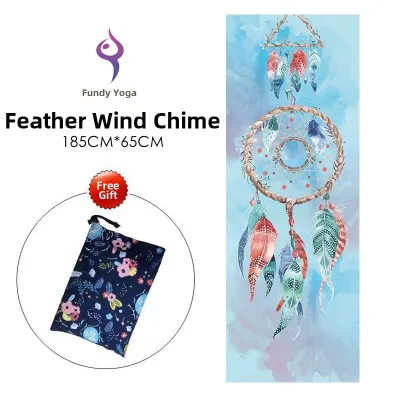
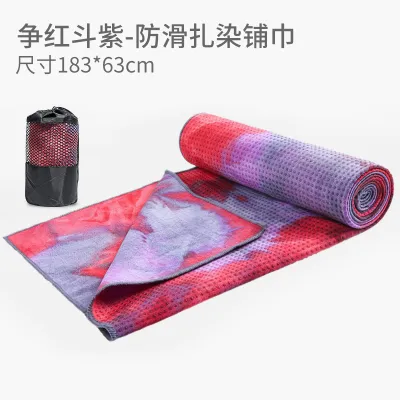
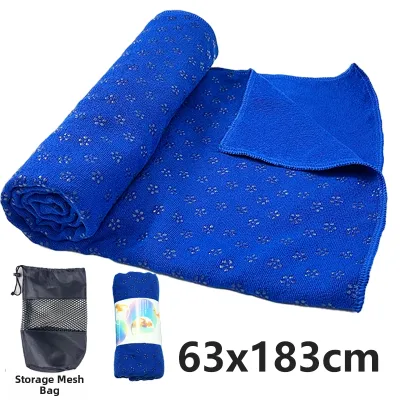
![[SG Seller] Fitpro Yoga Towel Mat Anti Slip with Nylon Bag](https://img.lazcdn.com/g/p/1fb1138e68c1c1793c160e020dbefb89.jpg_400x400q80.jpg_.webp)
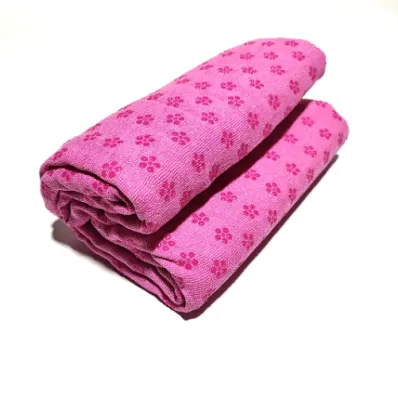
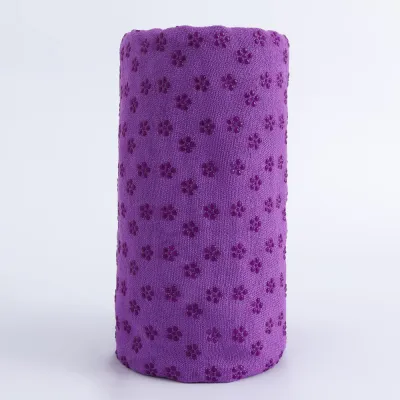
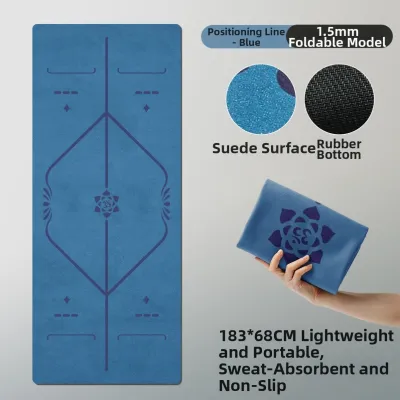
Prices are valid at publication and may change. Please refer to the product page for the latest price.
Conversely, slower and more restorative practices like Yin, Hatha, or gentle restorative yoga prioritize comfort, warmth, and cushioning over heavy moisture management. In these styles, you spend longer periods holding poses close to the ground. The towel’s primary role here is to provide a soft, hygienic barrier and a touch of extra padding for the knees, elbows, and hips, rather than managing heavy sweat.
Your transition speed between poses also dictates the level of grip you require. Fast-paced transitions, such as jumping back to Chaturanga or sweeping into Warrior poses, exert significant lateral force on your towel. If your practice involves these rapid movements, you need a towel with an aggressive backing—such as silicone grips or a high-friction weave—to prevent the fabric from bunching or sliding across the mat.
In highly humid tropical climates like Singapore, sweat levels can escalate quickly even in non-heated classes. This environmental factor makes moisture-wicking and quick-drying capabilities even more critical for local practitioners. A towel that dries slowly can become heavy, cold, and prone to developing unpleasant odors between your practice and your commute home.
Before purchasing, you must assess the texture of your current yoga mat. Mats made of open-cell natural rubber naturally offer high surface friction, which helps hold a basic microfiber towel in place even without specialized backing. On the other hand, closed-cell mats made of PVC or polyurethane (PU) often have smoother surfaces that require a towel with integrated silicone nubs or a specialized rubberized underside to prevent shifting.
Comparing Non-Slip Technologies Across Popular Brands
When exploring different brands in the fitness market, you will encounter several distinct non-slip technologies. The most common design features silicone nubs or dots distributed across the underside of the towel. This technology, popularized by brands specializing in high-grip accessories, relies on the physical grip of the silicone against the mat surface to lock the towel in place, making it highly effective for dynamic practices on smooth mats.

Another prevalent technology is the specialized microfiber weave, which relies on moisture activation. These towels are often smooth to the touch when dry but become increasingly grippy as they absorb water or sweat. Many leading brands utilize this lightweight design, which is highly favored by practitioners who prefer a seamless, uniform surface without the textured feel of silicone bumps under their hands and feet.
Some premium brands offer a dual-sided design featuring a rubberized or textured backing integrated directly into the fabric weave. This approach provides a highly stable, flat surface that mimics the feel of a secondary mat. While these options tend to be heavier and less compact, they offer high stability for practitioners who experience significant movement or bunching with lighter towels.
To evaluate these options, you should carefully check the manufacturer’s technical specifications regarding slip resistance on both the top and bottom surfaces. Look for details on material composition, such as polyester and nylon (polyamide) blends, which typically offer a reliable balance of absorption and durability. Be cautious of generic claims of universal grip and instead look for specific descriptions of how the grip is achieved and maintained.
Caring for these specialized materials is crucial, as improper maintenance can quickly degrade their non-slip properties. Silicone nubs can melt or peel if exposed to high heat in a dryer, while microfiber weaves can lose their absorbency if washed with fabric softeners. Always review the manufacturer’s care labels and washing instructions before making a purchase to ensure the maintenance routine fits your lifestyle.
Choosing the Right Thickness for Comfort and Stability
Towel thickness plays a critical role in balancing joint comfort with overall stability during your practice. Ultra-thin towels, typically ranging from 1 mm to 2 mm, are designed primarily for portability, travel, and direct contact with the mat. These lightweight options fold down easily into a gym bag, dry rapidly, and allow you to feel the firm, grounding surface of your mat beneath you, which is essential for standing balance poses.
Plush or thicker towels, often featuring double-sided weaves or heavier microfiber blends, offer a noticeable layer of extra cushioning. This added thickness is highly beneficial for practitioners who require extra joint support for their knees, wrists, or spine during floor postures. However, this comfort comes with a trade-off in weight, bulk, and drying time, making them less convenient for daily commuting or travel.
If you regularly commute to local studios via public transport, the weight and packed volume of your towel are key considerations. A bulky towel can take up significant space in your bag, whereas a lightweight, ultra-thin microfiber towel can be rolled tightly or folded flat, making it much easier to carry alongside your other daily essentials.
You must also verify the exact dimensions of the towel relative to your yoga mat. A towel that is too short will leave sections of your mat exposed to sweat, while an oversized towel will hang over the edges, creating a tripping hazard or catching on your feet during transitions. Most standard towels are designed to match typical mat sizes, but extra-long or extra-wide mats require specialized towel dimensions.
Thicker towels can sometimes bunch or shift more easily during dynamic movements if the underlying mat does not provide sufficient friction. The loft of a thicker fabric allows for more internal movement within the fibers, which can feel unstable during quick weight shifts. If you opt for a thicker towel, ensure your base mat has a high-traction surface or choose a towel with a highly secure backing system to mitigate this movement.
How to Test, Care for, and Verify Your Choice
Before committing to a specific non-slip yoga mat towel, establish a clear verification process to ensure it meets your practical needs. Begin with a pre-purchase checklist: verify the exact material composition, check the weight and folded dimensions for portability, and review the retailer’s return policy. Because yoga towels are personal hygiene items, many stores have strict return limitations once the packaging is opened.
Once you have your towel, perform an at-home dry and wet test before taking it to a public studio class. Lay the towel flat on your specific yoga mat and practice a few basic transitions, such as moving from Downward-Facing Dog to Plank. Observe how the towel behaves when dry; if it slips, lightly mist the surface with water from a spray bottle to see how moisture activation affects the grip.
This testing process allows you to understand the exact moisture threshold required to activate your towel’s non-slip properties. Some towels require a significant amount of moisture to lock in, while others provide immediate dry grip. Knowing this behavior beforehand prevents unexpected slipping during the initial minutes of your studio practice before you have built up a natural sweat.
Long-term care is the key to preserving the performance and lifespan of your non-slip towel. Avoid using fabric softeners or dryer sheets, as these products leave a thin, waxy coating on the fibers that clogs the microfiber structure and severely reduces both absorbency and grip. Wash your towel in cold or lukewarm water with a mild detergent, and air-dry it whenever possible to protect any silicone or rubber components from heat damage.
Monitor your towel regularly for signs of wear, such as fraying edges, thinning fabric, or peeling silicone nubs. Over time, repeated washing and friction will naturally wear down the non-slip elements. Replacing your towel when it loses its structural integrity or grip performance is essential for maintaining a safe, stable, and supportive practice environment.
Frequently Asked Questions (FAQ)
Do I need to wet my non-slip yoga mat towel before use?
Whether you need to wet your towel depends entirely on its specific non-slip technology. Microfiber towels without silicone backing often require a light spray of water at the beginning of your practice to activate their grip, as they rely on moisture to create surface tension. Conversely, towels with integrated silicone nubs or rubberized backings typically provide immediate dry grip and do not require pre-wetting. Always consult the manufacturer’s instructions to determine the correct preparation for your specific model.
How should I wash my yoga mat towel to maintain its non-slip properties?
To maintain the non-slip properties of your towel, wash it in cold or lukewarm water using a mild, gentle detergent. Avoid using fabric softeners, bleach, or dryer sheets, as these products leave chemical residues that coat the fibers and degrade both absorbency and traction. Air-drying is highly recommended to preserve the integrity of silicone grips and delicate microfiber weaves, though some manufacturers permit low-heat tumble drying.
Can a yoga mat towel replace a standard yoga mat?
A yoga mat towel is designed to function as an accessory layer and cannot fully replace a standard yoga mat. Towels lack the structural density, impact absorption, and cushioning required to protect your joints from hard floors. While a towel can be used alone on carpeted surfaces or grass for gentle stretching, dynamic or weight-bearing practices require the supportive base of a dedicated yoga mat underneath the towel to ensure safety and stability.

Community discussion
Share your experience or ask a question. Comments are reviewed before publication.