
Fitting a rowing machine home setup into a Singapore HDB flat is entirely feasible if you plan around the machine’s active footprint and storage mechanism. While a standard rowing machine can span between 1.8 to 2.4 meters in length, many modern designs fold in half or stand upright, reducing their storage footprint to less than one square meter. To make this work in a compact living room or study, you must balance the physical space required during a full-intensity workout with the practicalities of daily storage.
Measuring Your HDB Space for a Rowing Machine
When planning your workout area, you must account for the active footprint rather than just the static length of the machine. During a rowing stroke, your body extends beyond the physical seat rail at both the start and the finish. Your head and torso lean back at the end of the stroke, meaning you need more physical clearance than the static length of the machine suggests.
Measure the length and width of your designated workout zone carefully. Ensure you have at least 50 centimeters of clear space on all sides of the machine. This clearance is vital for safely mounting and dismounting, and it prevents your hands or elbows from hitting nearby walls or furniture during a vigorous training session.
Products mentioned in this guide
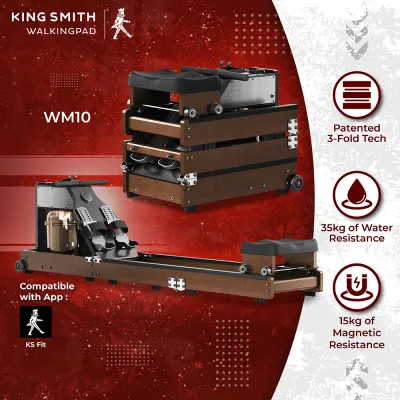
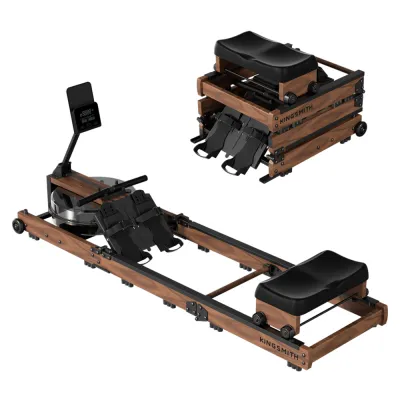
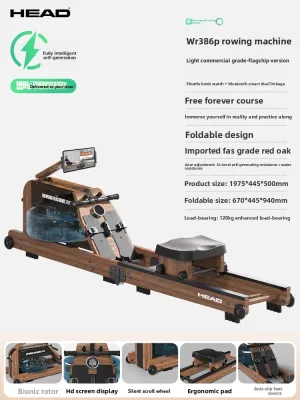
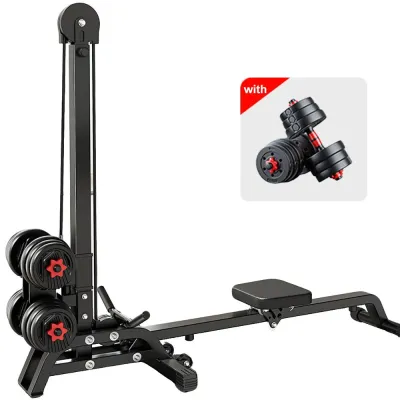
Prices are valid at publication and may change. Please refer to the product page for the latest price.
Do not forget to look up when assessing your space. If you plan to store the machine vertically, measure your ceiling height against the machine’s total length. Also, check the path of your ceiling fan. A spinning fan can pose a serious hazard if it is positioned directly above your head during the high-extension phase of your stroke or near the machine when you lift it upright.
Finally, map out the delivery route before making a purchase. HDB corridors, tight doorway turns, and lift cabins can be highly restrictive. Check the packaged dimensions of the machine to ensure the box can clear your front door and navigate any narrow hallways inside your flat.
Understanding Rowing Machine Footprints by Resistance Type
The type of resistance system directly influences the physical size and shape of a rowing machine home setup. Hydraulic rowers are typically the most compact, often utilizing dual pistons that allow for a shorter overall frame. However, they may not offer the same smooth, continuous stroke feel as larger systems.

Magnetic and air rowers generally require longer slide rails to accommodate a full range of motion. Air rowers, which use a flywheel to generate resistance, also feature a bulky fan housing at the front, which increases the machine’s width and height. Magnetic models often have a slightly slimmer profile but still require significant length.
Water resistance rowers utilize a water tank at the front of the frame. While these models provide a highly realistic rowing feel, the water tank adds substantial weight and width to the front of the machine. The rail length on water and air models is crucial because it determines the maximum inseam or user height the machine can support.
Beyond physical dimensions, consider the acoustic footprint. Air rowers produce a distinct whooshing sound that can easily penetrate thin HDB walls, especially during early morning or late-night workouts. Magnetic rowers operate almost silently, making them highly suitable for shared living spaces where noise transmission to neighbors or family members is a primary concern.
Folding and Upright Storage Solutions for Small Homes
To reclaim your living space after a workout, you must choose between two primary storage designs: folding frames and upright storage. Folding models feature a hinge mechanism, usually in the middle of the rail, allowing you to fold the back half of the rail upward or over the front housing. This significantly reduces the length but increases the height and depth of the folded unit.
Upright storage models do not fold; instead, they are designed to be tipped upward to stand vertically on their front stabilizers. This is common for water rowers and high-end wooden frames. Standing a machine upright requires a flat, stable floor and a ceiling height that comfortably exceeds the machine’s total length.
Before storing any machine vertically, verify the manufacturer’s explicit guidelines. Ensure the frame is engineered to support its own weight in this position and that the water tank (if applicable) is sealed to prevent leaks. If you have children or pets, use a safety strap or wall anchor to secure an upright machine and prevent accidental tipping.
Consider the effort required to move the machine daily. Look for built-in transport wheels on the front stabilizer. The net weight of the machine is a critical factor; a heavy water or air rower can be difficult to maneuver across rugs or door thresholds, even with wheels.
Evaluating Stability and Build Quality in Compact Models
When space is tight, it is tempting to choose the smallest, lightest rowing machine available. However, overly lightweight frames often compromise stability. During a high-intensity stroke, your body weight shifts rapidly along the rail, which can cause a light machine to slide, rock, or flex.
Compare the machine’s net weight with its maximum user weight capacity. A higher weight capacity relative to the machine’s weight usually indicates a more robust frame and sturdier stabilizers. Check the quality of the footplates, straps, and seat rollers. The rollers should glide smoothly along the rail without wobbling, as any play in the seat can lead to uneven wear and a noisy workout.
Pay close attention to the warranty terms, particularly for moving parts and folding joints. The hinges, locking pins, and quick-release latches on a folding rowing machine experience repeated stress. A manufacturer warranty that specifically covers these structural components provides peace of mind regarding long-term durability.
Regular maintenance is essential to keep a compact or folding machine operating safely. Consult the user manual for instructions on lubricating the folding hinges, tightening the locking pins, and cleaning the rail. Keeping the rail free of dust and debris ensures a smooth glide and prevents premature wear on the seat rollers.
Frequently Asked Questions (FAQ)
Can I keep a rowing machine on a balcony or outdoor corridor?
Storing a rowing machine on an open balcony or outdoor corridor is highly discouraged in Singapore. The region’s intense tropical humidity, heavy rainfall, and direct sunlight will rapidly degrade the machine. Moisture can cause electronic consoles to fail, metal frames to rust, and rubber seals or drive belts to dry out and crack. Additionally, placing large fitness equipment in common HDB corridors violates town council fire safety regulations, which require corridors to remain clear for emergency evacuation.
Do I need a protective mat under the rowing machine?
Yes, using a high-density equipment mat under your rowing machine is highly recommended for HDB apartments. A mat protects your flooring—whether it is vinyl, laminate, parquet, or tile—from scratches caused by the machine shifting during use, as well as from corrosive sweat. Furthermore, a thick mat helps absorb vibrations and dampens the sound of the seat rollers and drive mechanism, preventing noise from traveling through the concrete floor to the neighbors living directly below you.
Community discussion
Share your experience or ask a question. Comments are reviewed before publication.