
Fitting a squat rack into a Singapore Housing & Development Board (HDB) flat is entirely possible, but it requires a systematic approach to spatial planning, structural safety, and neighborly consideration. While standard public housing units offer comfortable living spaces, the physical demands of heavy strength training equipment mean you cannot simply purchase a rack and place it in a spare bedroom without prior preparation. Success depends on measuring not just the physical frame of the equipment, but also the operational clearance required to load barbells, perform overhead movements, and maintain structural safety. By understanding your flat’s layout, choosing the right compact design, and implementing proper floor protection, you can build a highly functional home gym that respects both your living space and your neighbors.
Diagnosing Your Space: Measuring Footprint and Clearances
Before purchasing any gym equipment, you must map out the difference between static footprint and operational clearance. The static footprint is the physical floor space the squat rack occupies when empty. However, the operational footprint is significantly larger. A standard Olympic barbell measures 2.2 meters in length. To use this barbell safely, you must allow at least 30 to 45 centimeters of clearance on either side of the bar to slide weight plates on and off without hitting walls, windows, or furniture. This means your training area needs a clear width of at least 2.8 to 3 meters.
Ceiling height is another critical factor that dictates what exercises you can perform. Standard HDB ceilings typically range from 2.6 to 2.8 meters, but this height can be significantly reduced by false ceilings, decorative plasterboards, or low-hanging beams. If you plan to perform pull-ups on the rack’s pull-up bar, your head will need at least 30 centimeters of clearance above the bar. For overhead pressing movements, you must calculate your total reach—your height plus your arm length and the height of the barbell—to ensure you do not strike the ceiling or light fixtures at the top of the lift.
Products mentioned in this guide
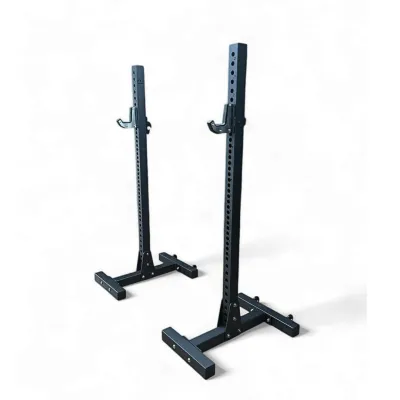
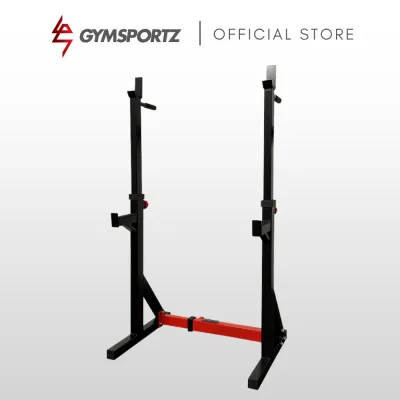
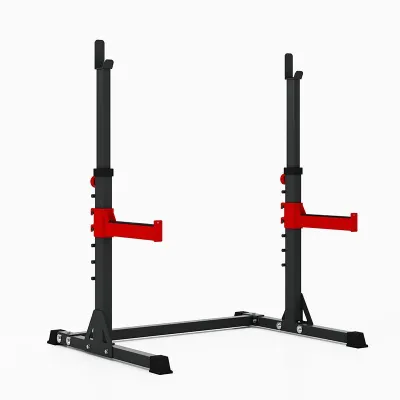
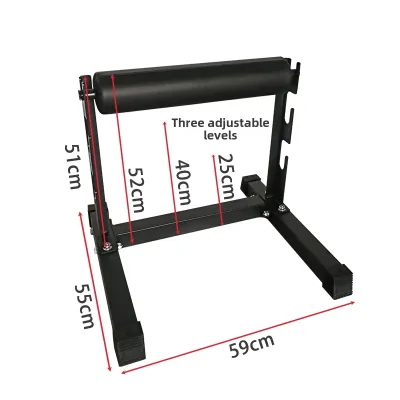
Prices are valid at publication and may change. Please refer to the product page for the latest price.
Physical obstructions within HDB flats often present unexpected challenges. Built-in wardrobes, air-conditioning trunking, and wall-mounted distribution boards can restrict where a rack can be placed. Ceiling fans are particularly hazardous in a home gym setup; they must be completely turned off or ideally replaced with wall-mounted fans or bladeless options to prevent catastrophic contact with a moving barbell. Additionally, ensure the rack does not block access to household shelters, windows, or main walkways, keeping your living space safe and compliant with local fire safety guidelines.
Matching Compact Squat Rack Designs to Your Layout
Selecting the right squat rack design involves balancing your training goals against the physical limitations of your room layout.

Wall-mounted folding racks are an exceptional space-saving solution for multi-purpose rooms. These racks feature a hinge mechanism that allows the uprights to fold inward or outward against the wall when not in use, reducing the depth profile to as little as 10 to 15 centimeters. However, their utility depends entirely on the mounting surface. These racks must be anchored into solid concrete or structural brick walls to handle the dynamic forces of racking a loaded barbell. They cannot be mounted onto drywall, partition walls, or the reinforced concrete walls of an HDB household shelter, as drilling into the latter is strictly prohibited by housing regulations.
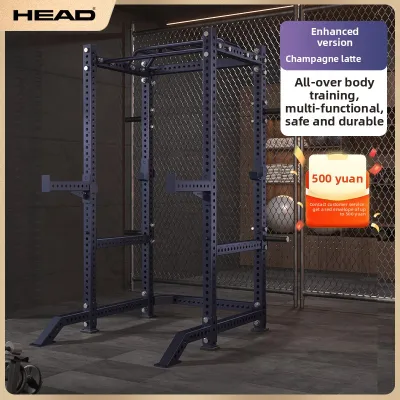
Independent squat stands and compact half racks offer a freestanding alternative that does not require wall drilling. Independent stands consist of two separate uprights that can be moved and stored away individually, making them highly versatile for tight spaces. However, they lack the structural stability of a connected frame and are more prone to tipping if a barbell is racked unevenly. Half racks provide a compromise, featuring a connected base and shorter safety spotter arms. When choosing a freestanding option, look for models with a wide, heavy steel base and extended spotter arms to ensure safety during solo training sessions without compromising too much floor space.
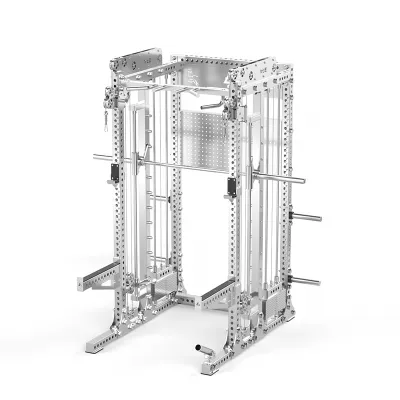
Multi-functional or all-in-one trainers combine a squat rack, smith machine, and cable pulley system into a single footprint. While the initial footprint of these machines is larger than a simple squat stand, they can actually save space overall by eliminating the need for separate cable towers, pull-up stations, and accessory storage. If you choose an all-in-one trainer, verify that the weight stack or plate-loaded carriage has enough clearance to move smoothly through its entire range of motion without contacting nearby walls or low-hanging air-conditioning units.
Navigating HDB Safety, Flooring, and Noise Constraints
Operating a home gym in a high-rise public housing environment requires careful management of structural loads, noise transmission, and environmental factors.
HDB floor slabs are designed to support standard residential loads, but concentrated heavy loads require careful distribution. To protect your tiles or vinyl flooring from cracking and to distribute the weight of the rack, barbell, and plates, you must install high-density protective flooring. Avoid soft, interlocking EVA foam mats, which compress easily and offer little structural protection. Instead, opt for high-density rubber gym tiles with a thickness of at least 15mm to 25mm. Placing a plywood subfloor beneath the rubber mats can further distribute the load across a wider surface area, protecting the underlying concrete screed.
Vibration and impact noise travel easily through concrete structures, potentially disturbing neighbors living below or adjacent to your flat. To maintain good community relations, implement noise-mitigation strategies. Use rubber-lined J-cups and safety spotter arms to dampen the metallic clang of racking the barbell. When performing deadlifts or Olympic lifts, use specialized drop pads made of high-density foam to absorb the impact and sound of the plates. Additionally, training with bumper plates rather than bare cast-iron plates significantly reduces high-frequency noise during workouts.
Singapore’s warm, humid climate poses a constant threat of rust and corrosion to steel gym equipment. Enclosed spare rooms or utility spaces often suffer from stagnant air, which accelerates sweat-induced rusting on barbells and rack frames. Ensure your training room has adequate ventilation by utilizing mechanical fans or air conditioning during workouts. To protect your investment, wipe down the barbell and rack with a dry microfiber cloth after every session to remove sweat and skin oils. Choosing equipment with durable finishes, such as powder coating, zinc, or cerakote, will also help prevent oxidation over time.
Alternative Paths if a Rack Will Not Fit
If your spatial measurements or structural constraints reveal that a traditional squat rack is not viable, you can still achieve highly effective strength training using alternative equipment.
Adjustable dumbbells and heavy kettlebells are excellent space-saving alternatives that require virtually no permanent floor space. Modern adjustable dumbbells allow you to change weights quickly using a dial or pin system, replacing an entire rack of fixed dumbbells. With these tools, you can transition from traditional back squats to highly effective unilateral movements such as Bulgarian split squats, lunges, and goblet squats. These exercises place significant demand on your lower body muscles while requiring a fraction of the physical space and eliminating the risk of ceiling or wall damage.
Heavy-duty resistance bands with secure door or wall anchors offer another versatile option for variable resistance training. Bands can be used to perform assisted squats, chest presses, and rows, providing a smooth tension profile that is exceptionally joint-friendly. Because they weigh almost nothing and can be folded into a small drawer, resistance bands are the ultimate zero-footprint fitness solution for compact HDB flats.
When heavy barbell training is irreplaceable for your fitness goals, utilizing external facilities remains a highly practical path. Singapore offers an extensive network of public ActiveSG gyms, community club fitness centers, and commercial gyms equipped with full-sized power racks and lifting platforms. Combining home-based dumbbell and bodyweight workouts with weekly visits to these local facilities allows you to maintain your heavy lifting routine without overcrowding your living space or risking structural damage to your home.
Frequently Asked Questions (FAQ)
Do I need to reinforce my HDB floor for a squat rack?
Standard HDB floor slabs are engineered to support residential living loads, which generally accommodate typical home gym setups without structural reinforcement. However, you must avoid concentrated point loads. Using high-density rubber gym mats (at least 15mm thick) or a double layer of plywood beneath your rack helps distribute the weight across a larger surface area. If you plan to lift exceptionally heavy weights (such as total combined rack and user weight exceeding 150 kg per square meter), or if you live in an older flat with compromised floor screed, you should consult a qualified structural engineer or check HDB guidelines before installation.
Can I anchor a folding squat rack to an HDB household shelter wall?
No, you must never drill into or anchor any equipment to the walls of an HDB household shelter (commonly known as the bomb shelter). These walls are constructed of reinforced concrete and form a critical part of the building’s structural integrity and civil defense safety. Drilling into them is strictly prohibited by HDB regulations and can compromise the shelter’s protective capabilities. Instead, folding squat racks must be anchored to standard internal concrete walls or structural brick walls, ensuring you use appropriate heavy-duty masonry anchors and verify the wall’s load-bearing capacity beforehand.
Community discussion
Share your experience or ask a question. Comments are reviewed before publication.