
To fit a treadmill or elliptical into a typical HDB flat without blocking walkways, select a machine with a compact static footprint—ideally under 160 cm in length and 70 cm in width—and ensure at least 60 cm of clearance on all active sides. For treadmills, a folding model that reduces its footprint by over 50% when upright is the most practical choice. For ellipticals, a compact front-drive or space-saving vertical-fold design prevents the pedal arms from sweeping into major transit paths. Successfully integrating home fitness equipment into high-density housing depends on measuring the dynamic operational zone rather than just the static frame of the machine.
Quick Space Rules for HDB Cardio Setups
When planning a home gym in a compact apartment, the most common mistake is measuring only the physical frame of the machine. Every piece of home fitness equipment has two distinct spatial profiles: its static footprint and its operational clearance. The static footprint is the physical floor space the machine occupies when turned off or folded. The operational clearance is the additional zone required for your body to move safely, for mechanical parts to extend, and for proper ventilation during a workout.
Maintaining unblocked walkways is a fundamental safety requirement in HDB layouts. Placing a machine in a narrow corridor or in front of a bedroom door can turn a daily workout setup into a hazardous obstacle during an emergency. Ensure that all door swings, wardrobe doors, and main transit paths remain entirely clear when the machine is in use.
Products mentioned in this guide
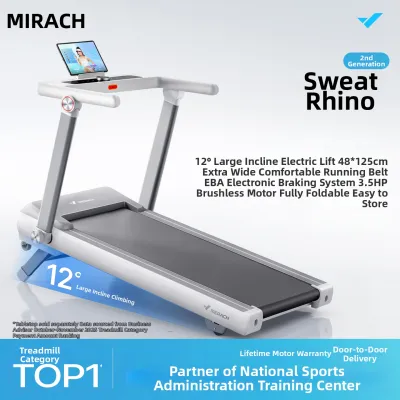
Prices are valid at publication and may change. Please refer to the product page for the latest price.
Ceiling height is another critical, yet frequently overlooked, spatial factor in Singapore apartments. While standard HDB ceilings typically range from 2.6 to 2.8 meters, structural beams, false ceilings, and ceiling fans can significantly reduce this vertical clearance. This is particularly vital for stepping machines and ellipticals, which elevate your body during exercise. Striking a ceiling fan or a concrete beam mid-stride poses a severe safety risk that must be calculated before purchasing any equipment.
How to Measure Your Room for Home Fitness Equipment
To find the ideal spot for your home fitness equipment, conduct a precise room survey using a physical measuring tape. Begin by measuring the absolute floor length and width of your target zone, making sure to measure from the skirting boards rather than the bare walls. Skirting boards can reduce your usable floor width by several centimeters, which can prevent a tight-fitting machine from sitting flush against the wall.

Next, map out the vertical and horizontal obstructions within the room. Measure the swing radius of nearby doors and wardrobe panels to ensure they can open fully without striking the machine. Take note of window curtains, wall-mounted air conditioning units, and the exact locations of your power outlets. Running long extension cords across a room to power a heavy treadmill is a major tripping hazard, so your machine should ideally sit within direct reach of a dedicated wall socket.
Once you have these measurements, sketch a simple floor plan on paper or a mobile app. Draw the machine’s maximum unfolded dimensions directly onto the plan, then sketch in the required safety buffers around it. This visual map allows you to see exactly how much walkway space remains and helps you identify potential bottlenecks before the delivery team arrives at your door.
Treadmill vs. Elliptical: Comparing Spatial Demands
Treadmills and ellipticals consume space in fundamentally different ways, meaning each requires a distinct spatial strategy to fit comfortably into an HDB flat. While a treadmill demands significant linear floor space and a substantial rear safety buffer, an elliptical requires more vertical clearance and dynamic side-to-side room for its moving handlebars.
Treadmill Footprint and Safety Margins
The primary spatial challenge of a treadmill is its linear length and the critical safety margin required behind the running belt. Unlike other home fitness equipment, a treadmill features a high-speed moving belt that can throw a user backward in the event of a slip or fall. For this reason, safety guidelines recommend keeping a clear, unobstructed zone of at least 1.2 meters behind the rear of the deck. Placing the back of a treadmill directly against a wall or a piece of furniture is highly dangerous.
When evaluating treadmill dimensions, you must also distinguish between the running deck length and the total unfolded length of the machine. The running deck is merely the usable belt surface, whereas the total length includes the front motor hood, the frame uprights, and the console assembly. A treadmill with a 130 cm running belt can easily have an overall physical length of 170 cm or more once the motor housing is factored in.
Because frame designs and motor configurations vary widely, you should never rely on general size estimates when planning your layout. Always check the specific manufacturer’s manual or product specification sheet for the exact recommended safety buffers. These documents provide the precise clearance boundaries required to operate that specific model safely in a residential environment.
Elliptical Clearance and Height Constraints
Ellipticals present a unique spatial challenge because their movement is highly dynamic, extending both vertically and horizontally beyond the static base frame. To calculate the vertical clearance you need, add your own height to the machine’s peak step-up height, then add an extra 15 to 20 centimeters of safety headroom. If this combined figure exceeds your room’s ceiling height, or if it brings your head dangerously close to a ceiling fan, the machine is not suitable for that space.
Horizontally, you must account for the forward and backward stride clearance of the pedal arms and the wide sweep of the dual-action handlebars. As you pedal, the metal linkages and footplates will extend past the front and rear edges of the static base frame. If you place the machine too close to a wall, these moving parts can scrape your paintwork or jam mid-workout, potentially causing a sudden stop and injury.
Furthermore, unlike treadmills, the vast majority of ellipticals on the market do not feature a folding mechanism. Once assembled, an elliptical remains a permanent, bulky fixture in your room. This lack of a folded footprint reduction means you must be entirely comfortable dedicating that specific floor area to the machine 24 hours a day, without relying on temporary storage options.
Evaluating Folding and Compact Design Trade-offs
For many HDB owners, folding home fitness equipment seems like the perfect solution to space constraints, but these designs come with distinct physical and mechanical trade-offs. Before buying a folding treadmill, consider the actual physical effort required to fold and unfold a heavy machine on a daily basis. Even with modern assistance features, lifting a heavy running deck can be physically demanding and may become a chore that eventually discourages you from working out altogether.
To make this process easier, look for machines equipped with hydraulic folding mechanisms rather than basic manual lift designs. A hydraulic system, often called a soft-drop mechanism, uses gas struts to support the weight of the deck as you lift it, and slowly lowers it to the floor automatically when released. This significantly reduces the physical strain on your back and prevents the heavy deck from slamming onto your flooring.
However, you must be cautious of ultra-compact or exceptionally lightweight models that promise to fold completely flat under a bed or sofa. To achieve such extreme space savings, manufacturers often use thinner steel frames, smaller motors, and narrower running decks. These design compromises can result in a machine that feels unstable or shaky when you run, has a lower maximum user weight capacity, and suffers from reduced long-term durability compared to more robust, non-folding alternatives.
Final Placement and Walkway Safety Checklist
Before finalizing the position of your home fitness equipment, run through a comprehensive safety and placement checklist to ensure your setup is practical for daily life. First, verify that the machine does not block natural light from windows or obstruct the airflow from your air conditioning units and standing fans. Good ventilation is crucial for temperature regulation during intense indoor cardio sessions.
Next, consider the physical structure of your home. HDB flats are multi-story concrete structures where impact noise and vibrations travel easily through the floor slabs to your neighbors below. To maintain good neighborly relations, place your machine on a thick, high-density vibration-dampening mat. This mat helps absorb the structural impact of your footsteps, protecting your vinyl, tile, or parquet flooring from scratches and heavy indentations.
Finally, inspect the routing of your power cables. The power cord must run safely along the perimeter of the room or under furniture, completely away from any active walkways. Never run a power cable under a rug or across a high-traffic path where it can be stepped on, damaged, or cause a family member to trip. If a safe path to an outlet cannot be established, you should re-evaluate the placement of the machine entirely.
Frequently Asked Questions (FAQ)
Do I need a special mat for cardio equipment in an HDB flat?
Yes, using a dedicated equipment mat is highly recommended when installing heavy cardio machines in an HDB flat. These mats are specifically designed to protect delicate flooring materials—such as luxury vinyl tiles, ceramic tiles, or timber laminate—from the heavy static weight of the machine and the corrosive effects of dripping sweat. However, it is important to understand that while a high-density rubber mat is excellent at dampening surface vibrations and reducing airborne motor hum, it cannot completely eliminate the deep, structural impact noise generated by running or jumping, which can still transfer through the concrete floor to the flat below.
Can I place a treadmill or elliptical near a window or balcony?
While placing your machine near a window or balcony offers pleasant views and natural ventilation, it exposes the equipment to significant environmental risks. Direct sunlight and UV exposure can rapidly degrade electronic consoles, dry out rubber running belts, and cause plastic housings to become brittle over time. Additionally, Singapore’s humid climate and sudden rainstorms mean that open windows can allow moisture or blowing rain to reach the machine, risking electrical short circuits in the motor and creating dangerous slip hazards on the floor around your equipment. If you choose this placement, ensure the window is fully closed during rain and use blinds to block direct sunlight when the machine is not in use.
Community discussion
Share your experience or ask a question. Comments are reviewed before publication.