
Choosing between a compact and a high-capacity FlexTail pump depends entirely on your primary gear volume, carrying constraints, and pressure requirements. Selecting the wrong category can leave you stranded with underinflated watercraft or burdened with unnecessary weight on a multi-day trail.
Choose a Compact model if:
- You prioritize ultralight backpacking, fastpacking, or travel where every gram and cubic centimeter in your pack matters.
- Your primary inflation tasks involve low-to-medium volume gear, such as single sleeping pads, camp pillows, or small packrafts.
- You want a multi-functional tool that can also serve as an emergency camp lantern or a vacuum pump for space-saving storage bags.
Choose a High-Capacity model if:
Products mentioned in this guide
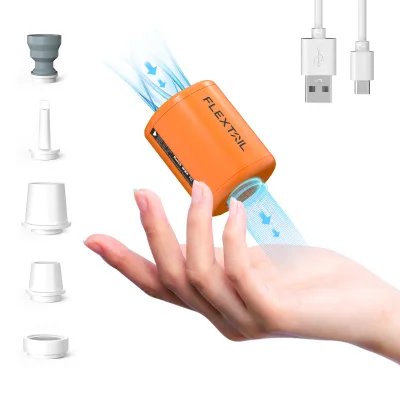
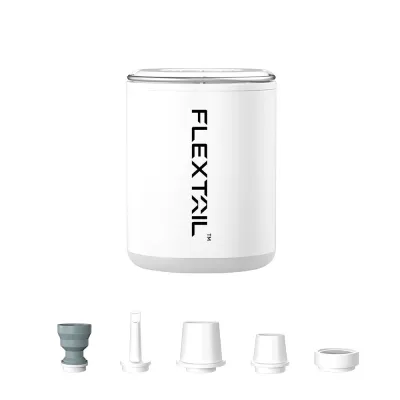
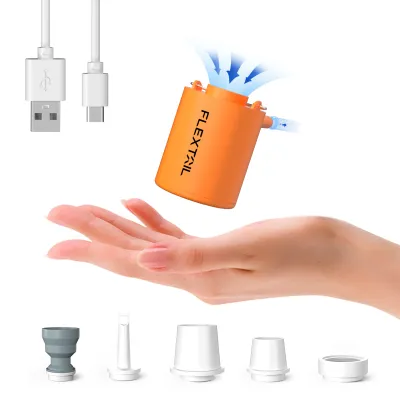
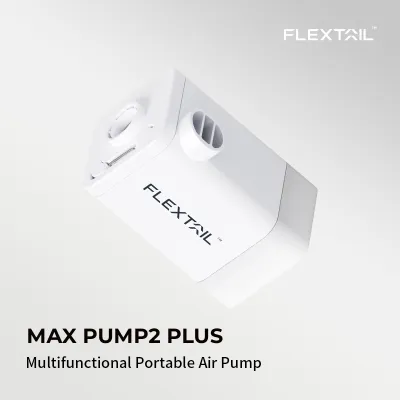
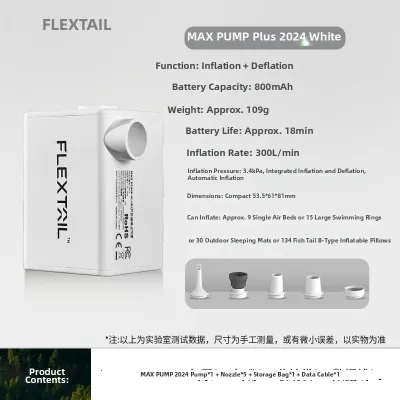
Prices are valid at publication and may change. Please refer to the product page for the latest price.
- You are car camping, basecamping, or engaging in water sports where gear is transported in a vehicle trunk.
- You need to inflate high-volume, high-pressure equipment like rigid stand-up paddleboards (SUPs), multi-person inflatable kayaks, heavy-duty air mattresses, or large family tents.
- You require rapid deflation capabilities to pack down bulky gear efficiently at the end of your trip.
Verify first if:
- You plan to bridge the gap with a single device. If you regularly transition between backpacking and water sports, a single pump may not satisfy both extremes. You will need to verify if a mid-tier model provides sufficient pressure for your high-volume gear, or if carrying two specialized units is a more practical, fail-safe solution.
Portability vs. Power: The Core Trade-Off Explained
The fundamental divide between compact and high-capacity portable air pumps lies in the laws of pneumatics and battery engineering. To move air, a pump relies on an electric motor spinning an impeller or driving a piston. Smaller motors and compact lithium-ion cells reduce physical weight and pack size, but they inherently limit both the volume of air displaced per minute (airflow) and the maximum force the pump can exert against resistance (pressure).
For an outdoor enthusiast, “multi-purpose” utility is defined by the environment. If you are hiking along the MacRitchie Reservoir trails or embarking on a multi-day trek in regional parks, a multi-purpose pump is one that saves your breath after a long day of walking, fits into a hip belt pocket, and doubles as an illumination source for your tent. In this context, weight and space efficiency are the primary metrics of utility.
Conversely, if you are setting up a family basecamp at East Coast Park or preparing an inflatable kayak for a session off Sentosa, your definition of multi-purpose shifts toward speed and raw power. A car camper needs a pump that can inflate multiple double-high air beds and rigid watercraft rapidly. In these scenarios, carrying a tiny pump that takes twenty minutes to partially inflate a single mattress is a liability, not a convenience.
Ergonomic designs also diverge significantly between these two classes. Compact pumps are designed for single-handed, effortless operation. They are lightweight enough to hang from a tent loop or be held flush against a sleeping pad valve without causing hand fatigue. High-capacity models, because of their larger motors and heavy-duty battery packs, often require a stable, flat surface to operate. They frequently feature rugged carry handles, wider bases to absorb motor vibration, and robust hoses that allow the pump to sit securely on the ground while connected to a high-volume valve.
Thermal management is another critical engineering distinction. High-capacity pumps moving large volumes of air under pressure generate substantial internal heat. These models require dedicated cooling vents, heat sinks, and sometimes active internal fans to prevent thermal degradation during extended runs. Compact pumps, designed for shorter duty cycles on smaller items, rely on passive cooling. Running a compact pump continuously beyond its intended limit can lead to overheating, emphasizing the importance of matching the pump’s capacity to your gear’s actual volume.
Key Comparison Dimensions for Multi-Purpose Inflation
Evaluating portable pumps requires looking past marketing buzzwords and focusing on concrete technical specifications. Understanding how airflow, pressure, battery capacity, and valve compatibility interact ensures you select a tool that matches your gear’s requirements.

Inflation Speed, Airflow, and Pressure Limits
Airflow, measured in liters per minute (L/min), dictates how quickly a pump can fill a given volume. High-capacity pumps excel at moving massive quantities of air rapidly, making them indispensable for large structures. A high-capacity pump can fill a large family air mattress in a fraction of the time a compact model would require, preventing the motor from running continuously for too long.
Pressure, measured in pounds per square inch (PSI) or kilopascals (kPa), determines how firm the inflated item will become. Low-pressure compact pumps are designed to fill items until they are shaped, but they cannot provide the high structural rigidity required for watercraft. For example, a rigid stand-up paddleboard typically requires a pressure of 12 to 15 PSI to remain stable on the water. Achieving this requires a specialized high-capacity pump, often utilizing a dual-stage motor that switches from high-volume displacement to a high-pressure piston stage once the board is filled.
| Feature | Compact Pumps | High-Capacity Pumps |
|---|---|---|
| Best For | Sleeping pads, pillows, packrafts, travel vacuum bags | SUPs, inflatable kayaks, large family tents, double-high air mattresses |
| Typical Airflow Profile | Low-to-moderate volume, low pressure | High volume, low pressure to high pressure |
| Pressure Capability | Low pressure (typically under 1 PSI / 5 kPa) | High pressure (up to 15–20 PSI for specialized models) |
| Primary Advantage | Minimal weight, highly packable, multi-functional | Rapid inflation, high rigidity, automated pressure shutoff |
Battery Capacity and Runtime Expectations
Battery capacity is typically stated in milliampere-hours (mAh) or watt-hours (Wh). However, raw battery capacity must be evaluated alongside the motor’s power draw. A high-capacity pump features a larger battery pack, but its powerful motor draws significantly more current. Consequently, runtime must be measured by practical output rather than operating minutes alone.
When reviewing manufacturer specifications, look for concrete application benchmarks. A reliable specification sheet will state how many standard items the pump can inflate on a single full charge—for example, “inflates up to 10 single sleeping pads” or “inflates up to 2 standard SUPs to 15 PSI.” These practical metrics give a much clearer picture of real-world performance than battery capacity numbers alone.
Charging infrastructure is another critical factor for off-grid trips. Most modern pumps utilize USB-C ports, allowing you to recharge them using the same power banks you carry for your phone. You should verify whether a pump supports pass-through charging, which allows the motor to run while connected to an external power source. For high-capacity pumps used near vehicles, check if the unit can run directly off a 12V DC car adapter, ensuring continuous operation even when the internal battery is depleted.
Nozzle Adapters and Gear Compatibility
An air pump is only as useful as its connection to your gear. Outdoor equipment manufacturers utilize a wide variety of valve designs, each requiring a specific adapter shape to establish an airtight seal.
- Boston Valves: Common on inflatable kayaks, budget air mattresses, and large towable tubes. They require a wide, threaded or friction-fit cone adapter.
- Halkey-Roberts (HR) Valves: The standard for high-pressure inflatable stand-up paddleboards and rigid boats. These require a specialized bayonet-style adapter that locks into the valve and depresses the internal pin.
- Pinch Valves: Frequently found on inexpensive pool floats and lightweight camping pillows. They require a narrow, tapered nozzle that physically pushes open the internal flap.
- Proprietary Sleeping Pad Valves: Many premium backpacking brands use flat, one-way valves that require precise, flexible silicone adapters to prevent air leakage during inflation.
Compact pumps generally ship with a set of lightweight, friction-fit silicone or plastic nozzles designed to slide directly onto the pump snout. High-capacity models, especially those designed for high-pressure water sports, typically feature heavy-duty, reinforced hoses with threaded connections to ensure the hose does not pop off under high pressure. Before purchasing, inventory your existing gear and verify that the pump’s included adapter kit matches your valves, or check if third-party adapters are available.
Matching the Pump to Your Specific Outdoor Activities
To make the right choice, visualize how the pump will fit into your typical outdoor routine. The ideal pump should complement your transportation methods, activity levels, and gear setup times.
Ultralight Backpacking, Hiking, and Travel
In the backpacking community, weight and volume are the ultimate constraints. When carrying your shelter, food, and clothing on your back for kilometers, adding unnecessary bulk is out of the question. For these scenarios, a compact pump is the clear choice, often weighing less than a standard energy bar and taking up no more space than a small cup.
Using a compact pump on the trail is more than just a luxury; it preserves your gear. Inflating a sleeping pad by mouth introduces warm, moisture-laden breath into the interior chambers. Over time, this trapped moisture can lead to mold growth and degrade the internal reflective insulation layers, reducing the pad’s thermal efficiency. A compact pump delivers dry ambient air, extending the lifespan of your expensive sleep system.
Additionally, many compact models offer secondary features that maximize their space-to-weight ratio. Built-in LED camp lanterns with adjustable brightness levels eliminate the need to pack a separate tent light. Some models also serve as high-efficiency vacuum pumps, allowing you to compress down sleeping bags or spare clothing inside vacuum storage bags, freeing up valuable space inside your pack for long-distance travel.
Car Camping, Water Sports, and Basecamp Setups
When your vehicle does the heavy lifting, physical weight becomes secondary to speed, convenience, and power. Arriving at a campsite or a beach launch point with a group means you want your gear ready for action as quickly as possible. A high-capacity pump ensures you spend your energy on the water or the trail rather than manually pumping up equipment.
For water sports like stand-up paddleboarding, a high-capacity pump is a necessity. Manual hand pumps supplied with SUPs require strenuous, repetitive effort to reach the final 5 PSI of pressure, which can leave your shoulders fatigued before you even step onto the water. A dedicated high-capacity electric pump handles this demanding transition automatically, allowing you to prep your board while you change or apply sunscreen.
Deflation is another area where high-capacity pumps excel. Packing up large, thick air mattresses or rigid inflatable kayaks can be incredibly frustrating, as air often remains trapped in the corners. High-capacity pumps typically feature a dedicated suction port. By connecting the hose to this port, you can actively vacuum every bit of air out of your gear, allowing it to fold completely flat. This makes packing up much easier and ensures your gear fits back into its original storage bags without a struggle.
Essential Specifications to Verify Before Purchasing
Before finalizing your purchase, look past the promotional descriptions and verify these critical operational specifications in the user manual or manufacturer’s technical documentation.
Duty Cycle Limits
Every electric motor has a duty cycle—the maximum continuous operating time allowed before the motor must be turned off to cool down. Compact pumps, due to their small size and passive cooling, often have strict duty cycle limits, frequently restricted to 10 or 15 minutes of continuous use. Running a compact pump beyond this limit can cause permanent thermal damage to the motor or melt the plastic housing. If you have multiple large items to inflate, verify the duty cycle and ensure you are willing to wait for the required cool-down periods.
Water and Dust Resistance
Outdoor gear is routinely exposed to sand, dirt, and water. You should verify the device’s Ingress Protection (IP) rating to ensure it can survive your intended environment.
- IPX4: Protects against splashing water from any direction. This is suitable for general camping in light rain but should be kept away from direct waves.
- IP56 or Higher: Offers protection against harmful dust deposits and powerful water jets. If you plan to use your pump on sandy beaches, near salt water, or on muddy riverbanks, look for an explicit IP rating that certifies dust and water resistance. Do not assume a pump is waterproof simply because it is marketed for outdoor use.
Altitude and Temperature Derating
Lithium-ion batteries and electric motors experience performance drops in extreme environmental conditions. In cold temperatures, the chemical reactions inside lithium-ion batteries slow down, resulting in reduced capacity and faster discharge rates. If you plan to camp in cold climates, you will need to keep the pump warm inside your jacket or sleeping bag prior to use.
At high altitudes, the air is thinner and less dense. Because there are fewer air molecules per cubic meter, the pump’s motor must spin longer and work harder to move the same mass of air and reach your target pressure. This increased workload accelerates battery drain and heat generation. Always check the manufacturer’s operating temperature and altitude limits if you plan to use the pump in alpine environments.
Warranty and Serviceability
Because portable pumps rely on rechargeable batteries and high-RPM motors, they are subject to wear over time. Verify the manufacturer’s warranty terms, paying close attention to coverage for battery capacity degradation and motor burnout. Additionally, check if the manufacturer or authorized retailers offer replacement parts, such as O-rings, hoses, charging port covers, or individual nozzle adapters. Being able to purchase a replacement nozzle rather than a whole new pump ensures your gear remains functional for years to come.
Frequently Asked Questions (FAQ)
Can a compact FlexTail pump fully inflate a thick sleeping pad or SUP?
A compact pump can easily inflate a thick, low-pressure camping sleeping pad, though it will take longer than a high-capacity model. However, compact pumps are not designed to inflate rigid stand-up paddleboards (SUPs).
SUPs require high pressures, typically between 12 and 15 PSI, to achieve the structural rigidity needed to support a rider on the water. Compact pumps are high-volume, low-pressure devices that generally top out at less than 1 PSI. Attempting to use a compact pump on an SUP will only fill the board with air until it takes shape, but the pump will stall and fail to generate the pressure required for actual use. Forcing a compact pump to run against this high resistance can overheat the motor and damage the internal seals.
How do altitude and temperature affect FlexTail pump performance?
Altitude and temperature both have a direct impact on the efficiency of lithium-ion batteries and electric motors. In cold environments, the internal resistance of lithium-ion batteries increases, which reduces their overall runtime and can cause the pump to shut off prematurely. To prevent this, store the pump in a warm pocket close to your body before operating it.
At high altitudes, the lower atmospheric density means the pump must work harder to compress the thinner air. This increases the load on the motor, leading to faster battery consumption and higher operating temperatures. If you are using the pump at high elevations, monitor the device closely for heat buildup and allow for more frequent cool-down periods to protect the motor from damage.
Community discussion
Share your experience or ask a question. Comments are reviewed before publication.