
Choosing between a floor pump and a portable pump comes down to where you intend to inflate your tires and how much physical effort you want to expend. A floor pump serves as your reliable home base, offering rapid inflation, high volume, and precise pressure readings before you head out. A portable pump, on the other hand, acts as an essential safety net, designed to fit in a jersey pocket or mount directly to your bicycle frame to rescue you from a flat tire during a ride. For most active cyclists, these two tools do not compete; instead, they complement each other to ensure both pre-ride preparation and roadside emergencies are fully covered.
Understanding Your Cycling Routine and Storage Space
Your choice of a bike air pump should align closely with your weekly riding habits and the physical constraints of your living space. If your routine consists of daily commuting along urban pathways or structured training sessions on road bikes, maintaining consistent tire pressure is essential for performance and puncture prevention. Road tires naturally lose pressure over a few days due to the high pressures they hold, requiring frequent top-ups. Conversely, if you only ride occasionally on weekends or use high-volume mountain bike tires that operate at lower pressures, your inflation schedule will be less demanding.
Storage space is another critical factor, particularly for cyclists living in compact urban apartments or high-rise flats where every square meter is optimized. A standing floor pump requires dedicated vertical storage space in an entryway, balcony, or utility closet. If your home storage is highly restricted, a bulky floor pump might feel intrusive, making a compact portable pump seem appealing as a sole option. However, relying entirely on a portable pump for routine maintenance can become tedious due to the physical effort required for regular top-ups.
Products mentioned in this guide
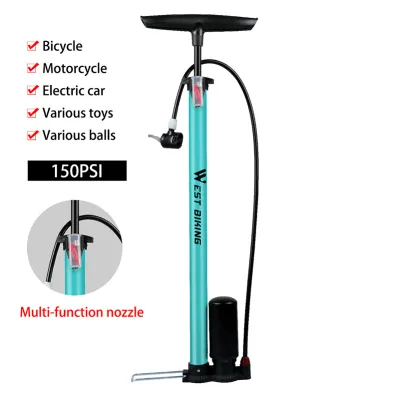
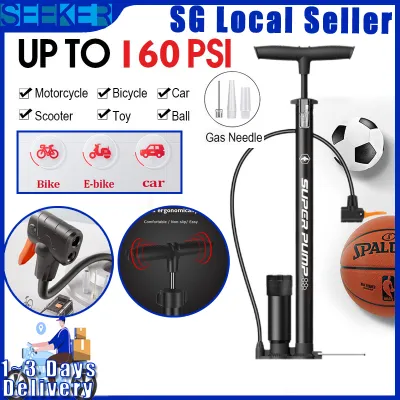
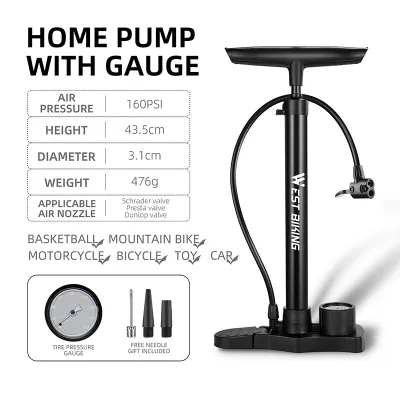
![[LOCAL SELLER] ROCKBROS A320 120PSI Bicycle Air Pump Aluminum Alloy Bike Mini Pump for Balloon Football Basketball Bicycle](https://img.lazcdn.com/g/p/4cdf88dce9570556e1ae5796568391e5.png_400x400q80.png_.webp)
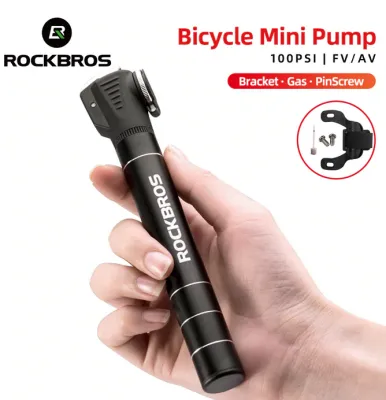
Prices are valid at publication and may change. Please refer to the product page for the latest price.
You must also evaluate the likelihood of encountering punctures during your rides. If you frequently embark on long-distance endurance routes, explore gravel trails, or commute through areas with construction debris, carrying an on-the-go inflation tool is non-negotiable. If you primarily ride short distances near public transit networks where a flat tire simply means a short walk or a taxi ride home, you might prioritize a high-quality home setup over portable gear.
Floor Pumps: High Volume, Precision, and Home Base
A floor pump is engineered to deliver maximum air volume with minimal physical effort. Because the pump stands on the ground, you can use your entire body weight to push down the plunger, rather than relying solely on your arm strength. The large internal cylinder allows you to fill high-volume mountain bike tires or high-pressure road tires in a fraction of the time it would take with a hand-held alternative. This efficiency makes pre-ride pressure checks a quick, painless habit rather than a chore.

One of the most significant advantages of a floor pump is the integration of a large, easy-to-read pressure gauge. Accurate tire pressure is vital for optimizing rolling resistance, cornering grip, and rider comfort. Most floor pumps feature analog dial gauges mounted either at the base or near the handle for better visibility. When selecting a floor pump, verify the gauge’s readability and check if the face displays both PSI and Bar measurements clearly.
Stability and build quality are essential verification points when shopping for a home pump. Look for models with a wide, heavy base made of steel or cast iron, which prevents the pump from tipping over during vigorous use. The handle should be ergonomically shaped and covered with a non-slip grip to prevent hand fatigue. Additionally, check the length of the hose; a longer hose allows you to inflate tires while the bicycle is mounted on a repair stand or parked several feet away. While budget-friendly models are available, investing around S$40 to S$80 in a floor pump with a steel barrel and rebuildable internals ensures long-term reliability.
Finally, inspect the pump head mechanism. High-quality floor pumps often feature a universal head that automatically adjusts to both Presta and Schrader valves, or a secure thread-on chuck that prevents air leakage. Some premium models also include a pressure release button on the head, allowing you to bleed out small amounts of air to achieve your exact target pressure.
Portable Pumps: On-the-Go Rescue and Compact Storage
Portable pumps, often referred to as mini pumps, are designed with one primary goal: to get you home after a puncture. These compact tools are lightweight, highly packable, and can easily slide into a jersey pocket, a frame bag, or mount directly beneath a bottle cage using included brackets. Because they are carried on the bike, they are constructed from lightweight materials like aluminum or reinforced composite plastics to minimize extra weight during climbs.
However, the compact size of a portable pump introduces clear physical limitations. The small air chamber means you must pump hundreds of times to inflate a single tire to a rideable pressure. This process can be physically exhausting, especially when trying to reach the high pressures required for narrow road tires. Furthermore, most basic portable pumps lack an integrated pressure gauge, meaning you must estimate tire firmness by squeezing the tire with your thumb.
When evaluating portable pumps, pay close attention to the connection method between the pump and the tire valve. Direct-mount mini pumps push directly onto the valve stem, which requires you to hold the pump perfectly still while pumping. Any rocking motion can easily bend or snap a delicate Presta valve stem, leaving you stranded. To prevent this, look for portable pumps that feature an extendable flexible hose, which isolates the valve from the pumping motion and reduces the risk of damage.
Additionally, verify the pump’s internal design. Some portable pumps are optimized for high volume (MTB), moving more air per stroke but struggling at higher pressures, while others are optimized for high pressure (road), moving less air but making it easier to pump past 80 PSI. Dual-action designs, which push air into the tire on both the push and pull strokes, can significantly reduce inflation time but may require more physical effort per stroke.
Comparing Key Specifications and Usability
To make an informed decision, it is helpful to compare how these two pump categories perform across key usability dimensions. While a floor pump excels in speed and accuracy, a portable pump is unmatched in its ability to travel with you.
| Feature | Floor Pump | Portable Pump | Verification Check |
|---|---|---|---|
| Inflation Speed | High (10–15 strokes to full) | Low (200–300 strokes to full) | Check chamber volume rating |
| Pressure Accuracy | High (large analog/digital gauge) | Low to None (rarely has a gauge) | Check gauge tolerance specifications |
| Portability | Low (bulky, designed for home) | High (fits in pocket or on frame) | Check weight and overall length |
| Physical Effort | Low (uses body weight and leverage) | High (requires repetitive arm strength) | Check for flexible hose to protect valves |
| Durability | High (protected from outdoor elements) | Moderate (exposed to road grime and rain) | Check for dust caps on the pump head |
For active cyclists, adopting a dual-pump strategy is often the most practical approach. Using a floor pump at home ensures your tires are always set to the correct pressure before you roll out, which significantly reduces the risk of pinch flats and uneven tire wear. Meanwhile, carrying a portable pump on your frame provides peace of mind, ensuring that an unexpected puncture on the road does not turn into an expensive taxi ride home.
How to Match the Pump to Your Riding Style
To determine which setup fits your lifestyle, evaluate your primary cycling activities against a clear decision framework. You should prioritize a floor pump if you ride multiple times a week, demand precise tire pressures for performance, and have a secure storage area at home. The convenience of a quick, accurate pre-ride top-up will save you time and protect your rims from damage caused by under-inflation.
Conversely, you should prioritize a portable pump if your cycling consists of long-distance touring, trail riding far from urban centers, or if you live in a shared living space with absolutely no room for larger tools. If you choose a portable pump as your primary inflation tool, look for high-performance models with integrated inline pressure gauges and flexible hoses to make routine maintenance as painless as possible.
Before making a final purchase, verify your specific bicycle setup. If you run a tubeless tire system, seating a new tire bead often requires a sudden, high-volume burst of air that standard floor pumps and portable pumps cannot easily provide. In this case, you will need to look for a specialized floor pump equipped with a pressurized charge chamber, or plan to use a separate compressed air system. Always check that the pump head is fully compatible with your valve type—whether Presta or Schrader—to ensure a reliable, airtight seal every time you inflate.
Frequently Asked Questions (FAQ)
Can I use a portable pump to reach high road bike tire pressures?
While many portable pumps are rated to handle high pressures up to 100 PSI or more, reaching these levels in practice requires significant physical effort. The small chamber size means resistance increases dramatically as the tire fills. A portable pump is best used to inflate your tire to a safe, rideable pressure to get you home, rather than as a daily tool for achieving maximum road pressures.
Do I need a pump with a pressure gauge?
An integrated pressure gauge is highly recommended for all cyclists. Riding with under-inflated tires increases rolling resistance, accelerates tire wear, and makes you highly susceptible to pinch flats. Conversely, over-inflation reduces traction and creates a harsh, uncomfortable ride. If your portable pump lacks a gauge, using a floor pump with an accurate gauge at home is essential to verify your pressures regularly.
What is the difference between Presta and Schrader valves?
Presta valves are slender, feature a built-in locking nut, and are typically found on road, gravel, and mid-to-high-end mountain bikes. Schrader valves are wider, identical to automotive tire valves, and are common on utility, hybrid, and entry-level bicycles. Before purchasing a bike air pump, verify that the pump head is compatible with your valve type, or choose a model with a reversible internal chuck that can accommodate both styles.
Community discussion
Share your experience or ask a question. Comments are reviewed before publication.