
Quick Answer: Which Bicycle Pump Type is Right for You?
No single bicycle pump handles every cycling scenario perfectly. Most active cyclists eventually find that a combination of pump types is necessary to support their riding habits, storage limitations, and maintenance routines. Choosing the right tool depends heavily on where you ride, how often you check your tire pressure, and how you manage the risk of roadside punctures.
To identify the ideal setup for your needs, consider this straightforward decision framework:
- Choose a Floor Pump if you require high air volume, precise pressure control, and have dedicated storage space at home. It is the essential tool for routine pre-ride maintenance and effortless inflation.
- Choose a Portable Mini Pump if you want a highly reliable, infinitely reusable backup for daily commuting, touring, or long-distance rides without the need to carry single-use consumables.
- Choose a CO2 Inflator if you prioritize rapid inflation, minimal weight, and zero physical effort during competitive races, fast group rides, or time-sensitive events.
Before purchasing any bicycle pump, you must verify your bike’s valve type. Most modern bicycles use either Presta (slender, with a threaded locking nut) or Schrader (wider, identical to car tire valves) systems, while some utility bikes utilize Dunlop valves. Ensuring your chosen pump head is natively compatible with your valve type—or features a reliable dual-head adapter—is the critical first step to avoiding frustrating air leaks and damaged valve stems.
Products mentioned in this guide
Prices are valid at publication and may change. Please refer to the product page for the latest price.
Floor Pumps: Best for Home Maintenance and High Volume
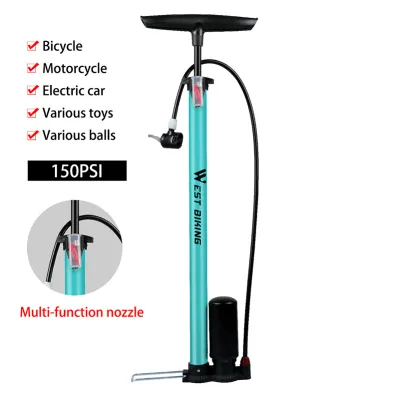
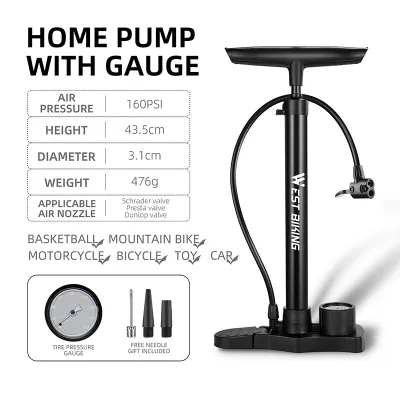
Floor pumps are the workhorses of bicycle maintenance, designed to sit firmly on the ground while you use your entire body weight for inflation. Because they feature a large, rigid barrel, they deliver a high volume of air with every stroke. This mechanical advantage allows you to inflate a tire from completely flat to riding pressure in a matter of seconds, requiring minimal physical exertion compared to hand-held alternatives.

A defining advantage of the floor pump is its integrated pressure gauge. Maintaining correct tire pressure is vital for optimizing rolling resistance, ensuring cornering grip, and preventing pinch flats. Built-in gauges on floor pumps are typically large and highly legible, allowing you to fine-tune your pressure to precise specifications. Furthermore, the stable, wide base—often constructed from heavy steel or composite materials—provides the necessary leverage to pump comfortably up to high pressures without the unit tipping over.
These pumps are ideal for pre-ride top-ups, routine weekly maintenance, and seating tubeless tire beads. If you run a tubeless setup, the sudden rush of high-volume air from a floor pump is often required to push the tire bead securely into the rim channel. However, these benefits come with obvious physical limitations. Floor pumps are bulky, heavy, and completely impractical to carry on a ride. They are strictly designed for home workshops, garages, or transport in a car trunk to a trailhead.
When shopping for a floor pump, carefully evaluate the valve head design. Many premium models feature “smart heads” that automatically adjust to both Presta and Schrader valves, while others use a flippable dual-sided head or a threaded chuck. Look for a gauge that is mounted near the top of the barrel rather than at the base, as this makes the numbers much easier to read in low-light storage areas. Finally, ensure the hose is long enough to reach your bicycle when it is mounted on a repair stand or parked in a tight storage corner.
Portable Mini Pumps: The Essential On-the-Ride Backup
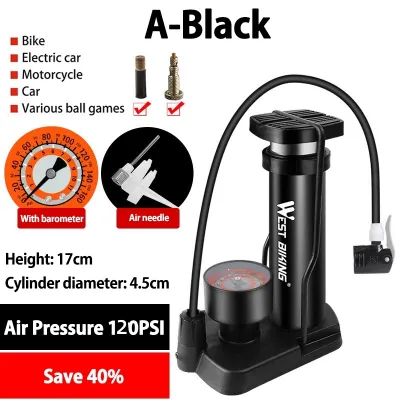
Portable mini pumps are compact, lightweight hand pumps designed to be carried on your bicycle frame or inside a jersey pocket. Their primary value lies in their absolute reliability. Unlike gas-based systems, a mechanical hand pump is infinitely reusable and will never run out of air, making it the ultimate safety net when you are far from home or dealing with multiple punctures on a single journey.
These pumps are the go-to choice for daily commuters, bikepacking adventurers, and endurance riders who travel through remote areas. In tropical environments where sudden downpours can catch you off guard, having a reliable mechanical pump ensures you can repair a flat and get moving without worrying about damp or malfunctioning gear. They require no recurring purchases, making them a highly sustainable and cost-effective long-term investment.
However, mini pumps require a compromise in speed and physical effort. Because the air chamber is highly compact, each stroke delivers only a small fraction of the air volume provided by a floor pump. Reaching high pressures—particularly the 80 to 100 PSI common on road bikes—can require hundreds of strokes and significant arm fatigue. Additionally, because you must hold the pump directly against the wheel, aggressive pumping can shake the valve stem, potentially causing damage or tearing the inner tube at the base.
To mitigate these risks, look for mini pumps that feature a short, flexible hose extension rather than a rigid, direct-mount head. This hose isolates your pumping motion from the valve stem, preventing accidental damage. Consider whether you need a high-volume (HV) model, which is optimized for wide mountain bike tires, or a high-pressure (HP) model, designed to reach road bike pressures more efficiently. Dual-action designs, which push air into the tire on both the push and pull strokes, can also significantly reduce your inflation time.
CO2 Inflators: Fast Fixes for Racers and Minimalists
CO2 inflators represent the minimalist approach to on-the-ride inflation. The system consists of a tiny, pocket-sized inflator head and a small canister filled with compressed carbon dioxide gas. When the head is pressed or threaded onto a tire valve and the cartridge is pierced, the compressed gas is released instantly, inflating a bicycle tire to full riding pressure in less than three seconds with absolutely zero physical effort.
This instantaneous inflation makes CO2 systems incredibly popular among competitive racers, triathletes, and fast group riders. When every second counts, or when you are trying to maintain your heart rate and position in a pack, spending ten minutes sweating over a mini pump is highly undesirable. The compact footprint of a CO2 head and a single cartridge is small enough to fit into a tiny under-saddle bag or a zipped pocket, keeping your bike’s aesthetic clean and aerodynamic.
Despite their speed, CO2 inflators come with distinct operational quirks and safety considerations. The cartridges are single-use items, which introduces a recurring cost of approximately S$3 to S$6 per cartridge and generates metal waste that must be recycled. Furthermore, if you make a mistake during alignment and accidentally discharge the gas into the open air, you are left with an empty canister and a flat tire. The rapid expansion of compressed gas also causes the cartridge and inflator head to drop to freezing temperatures instantly, which can cause frostbite if you touch the bare metal without protective gloves or an insulating sleeve.
When choosing a CO2 system, verify cartridge size compatibility. Road tires typically require a 16-gram cartridge, while high-volume gravel or mountain bike tires require a 25-gram cartridge to reach functional riding pressures. Decide between a simple press-fit inflator head or a control-valve model that allows you to regulate the flow of gas. Finally, ensure you buy high-quality threaded cartridges that match your inflator head, as non-threaded cartridges are generally not interchangeable.
Key Comparison Dimensions: Matching the Pump to Your Riding Habits
To make an informed decision, it is helpful to compare these three pump types across the primary dimensions that impact your daily ownership experience. Balancing these trade-offs ensures you do not end up with a pump that is too heavy to carry or too tedious to use.
Inflation Speed and Physical Effort
The differences in speed and effort are stark. A floor pump requires moderate effort but inflates a tire in under a minute thanks to its large chamber. A CO2 inflator requires zero physical effort and works instantly, making it the fastest option by far. A portable mini pump sits at the bottom of this scale, requiring significant, sustained physical arm strength and several minutes of continuous pumping to achieve functional riding pressures.
Portability and Storage
If you live in a compact urban apartment, such as a typical Singapore HDB flat, storage efficiency is a daily consideration. Floor pumps require dedicated vertical space in a closet, bomb shelter, or balcony. Mini pumps are highly portable, easily mounting alongside your water bottle cage or tucking into a small backpack. CO2 inflators are the ultimate space-savers, disappearing into a saddlebag alongside a spare tube and tire levers.
Long-Term Cost and Sustainability
Manual pumps—both floor and mini models—represent a one-time upfront purchase. High-quality manual pumps can last for decades with basic maintenance, such as occasionally lubricating the internal seals. CO2 inflators have a low initial cost for the head, but they carry a continuous financial and environmental cost due to the need for replacement gas cartridges.
Tubeless Tire Seating
Setting up tubeless tires requires a sudden, high-volume blast of air to pop the tire bead into the rim’s locking shoulders. A standard mini pump is physically incapable of delivering this volume quickly enough. While standard floor pumps can sometimes succeed, specialized floor pumps with integrated high-pressure charge chambers (often called tubeless boosters) are designed specifically for this task. CO2 inflators can also seat tubeless tires in an emergency, though the extreme cold can occasionally cause certain liquid sealants to coagulate prematurely.
Comparison Summary
| Pump Type | Best For | Inflation Effort | Portability | Ongoing Cost |
|---|---|---|---|---|
| Floor Pump | Home maintenance & pre-ride top-ups | Low to Moderate | Low (Home/Car use only) | None |
| Portable Mini Pump | Emergency backup & self-sufficiency | High | High (Frame mount/Pocket) | None |
| CO2 Inflator | Races, fast groups & quick repairs | None (Instantaneous) | Very High (Saddlebag/Pocket) | High (Single-use cartridges) |
Final Verdict: Building Your Ideal Pump Setup
Rather than searching for a single perfect tool, the most effective approach is to build a pump system tailored to your specific cycling discipline. By combining the strengths of different pump types, you can ensure your tires are always properly inflated at home while remaining fully prepared for any unexpected roadside punctures.
- The Commuter and Weekend Rider: If you use your bicycle for daily travel to the MRT station or weekend cruises along the Park Connector Network (PCN), your best setup is a reliable floor pump kept at home for weekly pressure checks, paired with a portable mini pump mounted to your frame. This combination guarantees you can always maintain optimal pressure before leaving home and will never be stranded by a flat tire.
- The Competitive Road Cyclist: For those who ride long distances on public roads or participate in competitive events, efficiency is paramount. Use a high-quality floor pump in your home workshop to ensure precise tire pressures. On the road, carry a compact CO2 inflator for instant, effortless flat repairs during group rides, alongside a ultra-lightweight mini pump tucked into your jersey pocket as a mechanical fail-safe in case you experience multiple punctures.
- The Mountain Biker and Gravel Rider: Off-road riding over rough terrain requires high-volume tires and frequent pressure adjustments. A high-volume floor pump with a tubeless chamber is essential for home tire installations. For trailside repairs, carry a robust, high-volume mini pump that can quickly fill wide tires without freezing up, which is a common issue with CO2 canisters when used in humid, muddy off-road conditions.
Regardless of which setup you choose, safety and preparation are key. Always check your tire pressure before every ride to minimize the risk of flats. If you do experience a puncture on the road, ensure you move your bicycle completely off the active pathway or road shoulder to a safe, flat area before starting repairs. Finally, do not wait for a roadside emergency to test your gear—practice using your mini pump or CO2 inflator in the comfort of your home so you are confident and ready when a real puncture occurs.
Frequently Asked Questions (FAQ)
Can I use a CO2 inflator to seat tubeless tires?
Yes, a CO2 inflator can be used to seat a tubeless tire bead because it releases a rapid, high-pressure burst of gas. However, this should generally be treated as a temporary trailside solution. The extreme cold of the expanding CO2 gas can freeze and degrade certain liquid tubeless sealants inside the tire. It is best to use a dedicated floor pump with a charge chamber for initial home installations.
Do I need a portable pump with a pressure gauge?
If you ride a road or gravel bike, a portable pump with an integrated pressure gauge is highly beneficial because these tires have narrow pressure tolerances where even a 10 PSI variance can affect safety and rolling speed. For mountain bikers running high-volume, low-pressure tires, a pressure gauge is less critical during emergency trailside repairs, as a simple physical squeeze test is often sufficient to get you safely home.
Why does my tire lose pressure faster after using CO2?
Carbon dioxide molecules are smaller than the nitrogen and oxygen molecules that make up standard atmospheric air. Because of this, CO2 gas permeates through the microscopic pores of butyl and latex inner tubes at a much faster rate. If you inflate your tire with a CO2 cartridge on the road, you should fully deflate the tire when you return home and re-inflate it using a standard floor pump to ensure stable, long-term pressure.
Community discussion
Share your experience or ask a question. Comments are reviewed before publication.