
Choosing the right thickness for a foldable exercise mat depends on balancing your joint cushioning needs with the stability required for your specific movements. Unlike standard roll-up mats, foldable mats offer unique segmented designs that impact portability, storage, and surface consistency. Finding the ideal thickness involves evaluating your primary workout style, your body type, and the physical constraints of your workout space.
By understanding how different thickness ratings translate to real-world support, you can select a mat that protects your body without compromising your balance. This guide breaks down the key factors to consider so you can make an informed decision for your home or studio workouts.
Understanding Thickness Ratings: Comfort vs. Stability
When selecting a foldable exercise mat, thickness is the primary factor determining how much impact your body absorbs. A thicker mat provides a deeper barrier between your joints and the hard floor, which is particularly beneficial for sensitive areas like the knees, elbows, and wrists. This cushioning helps distribute your body weight more evenly, reducing localized pressure points during static holds or floor-based exercises.
Products mentioned in this guide
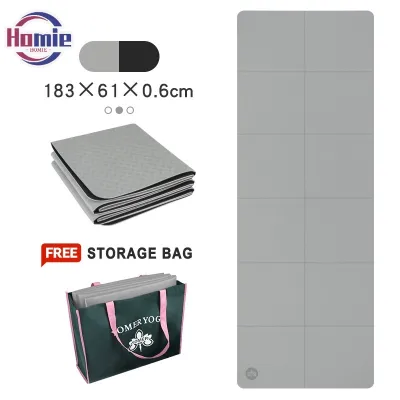
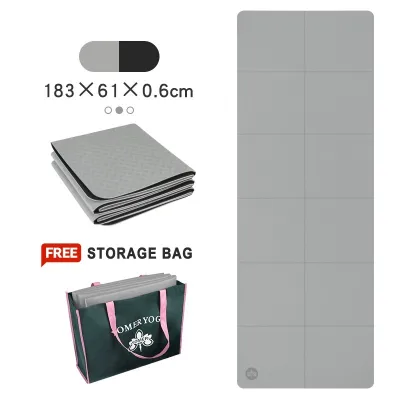
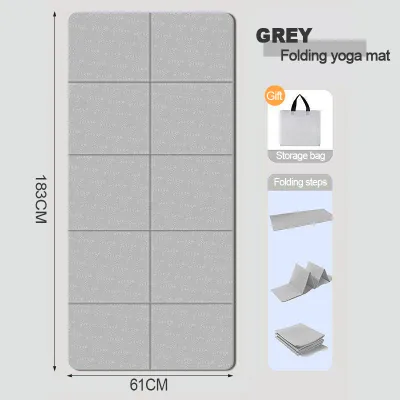
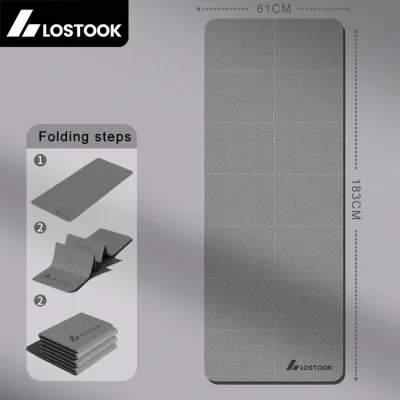
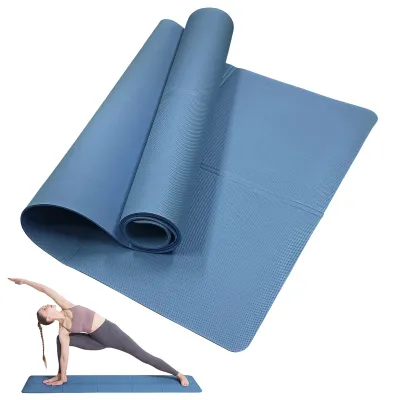
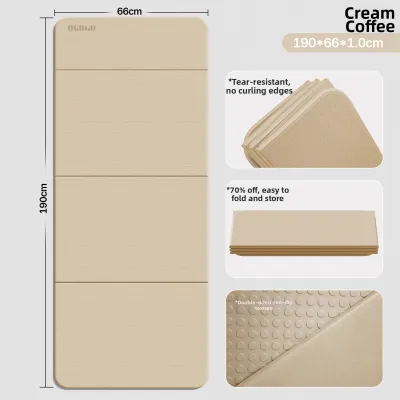
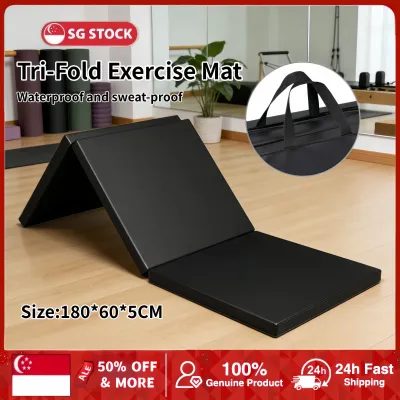
![[Local Seller]TPE folding mat yoga mat lunch break sleeping mat floor mattress lazy foldable nap mat thickened 折叠瑜伽垫午休毯](https://img.lazcdn.com/g/p/8e06b32f72b39913288f5b16977d5b1a.jpg_400x400q80.jpg_.webp)
Prices are valid at publication and may change. Please refer to the product page for the latest price.
However, increased thickness often comes at the expense of stability. Thinner mats keep your center of gravity closer to the solid floor, offering immediate ground feedback and a more stable foundation for standing poses or balance-heavy routines. When a mat is too soft or excessively thick, your feet can sink unevenly, forcing the stabilizing muscles in your ankles and core to work significantly harder just to keep you upright.
It is also important to recognize that thickness alone does not dictate firmness. The density of the material and the specific foam type—such as high-density ethylene-vinyl acetate (EVA) or thermoplastic elastomer (TPE)—play a critical role in how the mat behaves under load. A dense, medium-thickness mat can often provide better joint support and structural integrity than a thicker, low-density foam mat that compresses completely under pressure.
Matching Thickness to Your Workout Style
Your primary exercise routine should dictate the thickness profile of your foldable exercise mat. For low-impact floor work, classical Pilates, and restorative stretching, a thicker mat is generally preferred. These activities involve prolonged periods of kneeling, lying down, or rolling on your spine, making a cushioned barrier essential for maintaining comfort and preventing bruising against hard tile or wooden floors.

Conversely, dynamic workouts, high-intensity interval training (HIIT), and active standing balances require a thinner, firmer surface. If you perform rapid lateral movements, jumps, or complex standing transitions, a thin mat ensures your feet remain securely planted without the risk of the material shifting or compressing unevenly. This firm connection to the ground helps you maintain proper alignment and reduces the risk of minor slips or ankle rolls.
Because foldable mats are engineered with distinct panels, their performance can vary widely across different activities. Before making a decision, verify the manufacturer’s intended use cases and activity recommendations for the specific foldable model you are considering. Some mats are designed specifically as firm gymnastics tumbling mats, while others are softer, segmented cushions tailored for light stretching or meditation.
Factoring in Your Body Type and Joint Sensitivity
Personal physical attributes, such as body weight and joint sensitivity, must be factored into your decision. Individuals with higher body weight exert more downward force on the mat, which can cause thin or low-density foam to compress entirely. When this happens, you lose the protective benefits of the cushioning, resulting in discomfort as your joints press directly against the hard floor beneath.
This phenomenon, known as “bottoming out,” is a common issue for those using thin mats for weight-bearing poses like planks, side bridges, or deep lunges. If you have pre-existing joint sensitivity, a history of wrist discomfort, or sensitive knees, prioritizing a slightly thicker or higher-density foldable mat can help mitigate this issue. The extra material helps absorb the localized force, allowing you to focus on your form rather than physical discomfort.
Ultimately, personal comfort and joint feedback should take precedence over generic fitness guidelines. If a standard thickness recommendation leaves you feeling sore or unsupported during your routine, it is a clear sign to adjust your setup. Pay close attention to how your body feels during and after a workout to determine if your current mat thickness is providing adequate protection.
Foldable Mat Specifics: Hinges, Folding Lines, and Storage
Foldable exercise mats offer distinct advantages in portability, but their segmented construction introduces unique structural considerations. Unlike standard roll-up mats, foldable designs rely on hinges or seams to fold into bi-fold, tri-fold, or accordion configurations. The thickness of the panels directly influences how these hinges behave, as thicker panels require wider fabric seams to fold flat, which can sometimes create noticeable gaps when the mat is fully extended.
The overall thickness also heavily impacts the folded footprint and storage convenience of the mat. A very thick foldable mat will fold into a bulky, rigid block that requires substantial storage space in your home or closet. Additionally, thicker mats constructed with high-density foam can be significantly heavier, making them more cumbersome to transport to outdoor workouts or local fitness studios.
To ensure a seamless workout experience, carefully inspect the design of the folding lines. Some lower-quality models may have prominent seams that create uneven or unstable surfaces right where you need to place your hands or feet. Checking detailed product specifications and user feedback can help you verify that the hinges lie completely flat and do not interfere with your stability or comfort during transitions.
How to Test and Verify the Right Fit Before Buying
To ensure you select the correct foldable exercise mat, avoid relying on vague marketing descriptions like “extra thick” or “ultra-supportive.” Instead, look for the exact thickness measurements listed in the product specifications, typically detailed in millimeters or inches. Comparing these precise measurements across different models allows you to make an objective decision based on your specific comfort requirements.
Next, verify the material composition of the mat, as this determines how the thickness translates to actual support and durability. Common materials include ethylene-vinyl acetate (EVA) foam, thermoplastic elastomer (TPE), and polyurethane (PU). EVA foam is lightweight and highly cushioned but can compress permanently over time, while TPE and PU often offer a denser, more resilient feel that maintains its shape under heavy use.
Finally, review the retailer’s return or exchange policies before finalizing your purchase. Because comfort is highly subjective, you may find that a specific thickness or density feels different in practice than it appeared online. Having the flexibility to test the mat on your home floor and exchange it if it does not meet your joint support needs provides valuable peace of mind.
Frequently Asked Questions (FAQ)
Can I use a thick foldable mat for standing balance poses?
Thicker, softer mats tend to compress unevenly under your feet, which can compromise your stability and make balance poses more challenging. If your routine requires both joint protection and standing balance, look for a foldable mat featuring a high-density foam core. This design provides the necessary cushioning for floor work while remaining firm enough to support your feet without excessive sinking.
Does a thicker foldable mat always mean better durability?
No, thickness does not directly correlate with the lifespan of a foldable exercise mat. Durability is primarily determined by the quality of the raw materials, the density of the foam, and the reinforcement of the folding hinges. A thin, high-quality TPE mat with reinforced seams will often outlast a thicker, low-density EVA mat that degrades or tears at the joints under regular use. Always check the manufacturer’s care instructions to maximize your mat’s longevity.
Community discussion
Share your experience or ask a question. Comments are reviewed before publication.