
To fit comfortably within a typical Singapore HDB flat, a foldable workout bench should ideally have an unfolded footprint of no more than 120 cm to 140 cm in length and 30 cm to 40 cm in width, while collapsing down to a folded height of under 20 cm. This balance ensures you have enough support for your exercises without permanently sacrificing precious floor space in your bedroom or living area. Selecting the right dimensions requires evaluating both your active workout zone and your storage constraints.
Measure Your HDB Space and Clearance Needs
Singapore HDB flats, whether they are newly built Build-To-Order (BTO) units or older resale flats, require smart spatial planning. Before browsing online marketplaces for fitness equipment, you must measure your dedicated active workout zone. A bench itself might only take up a small rectangular footprint, but your body and weights require a much larger dynamic envelope during actual training.
For exercises like dumbbell chest presses, chest flyes, or lateral raises, you need to add at least 50 cm to 60 cm of clearance on either side of the bench. This buffer prevents your hands, elbows, or dumbbells from striking walls, wardrobes, or television consoles. Measure the total width of your arm span with weights extended to find your true active width requirement.
Products mentioned in this guide
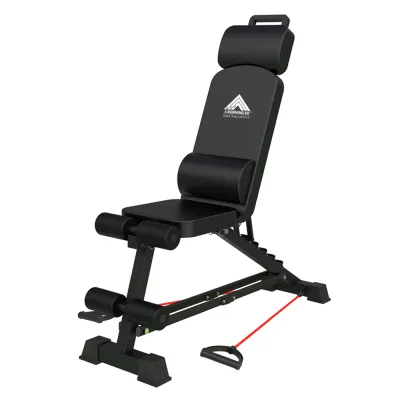
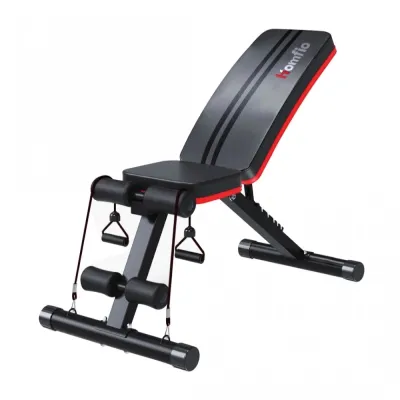
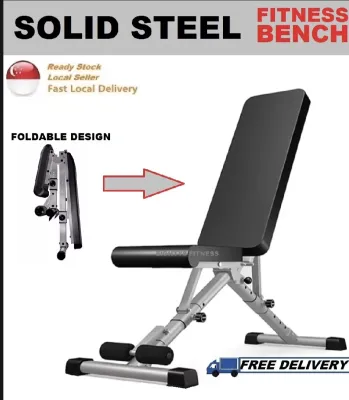
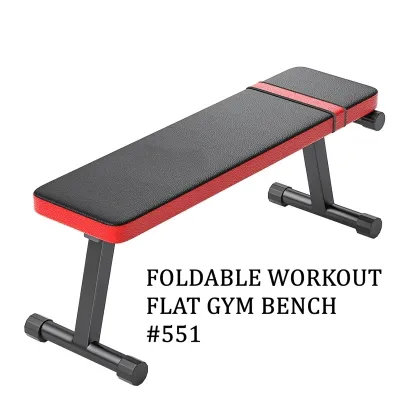
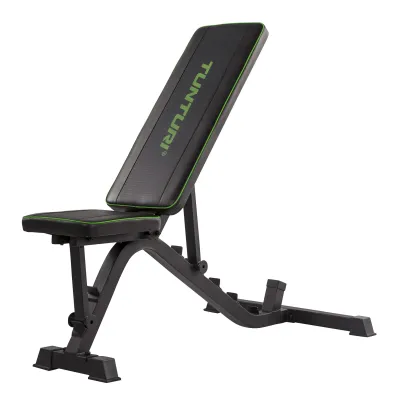
Prices are valid at publication and may change. Please refer to the product page for the latest price.
Next, identify where the bench will live when it is not in use. If you plan to slide it under a bed frame, measure the exact vertical clearance from the floor to the bottom of the bed frame. Many standard HDB bed frames have a clearance of only 15 cm to 20 cm. If you plan to store it vertically behind a door or inside a household shelter, measure the depth and height of that specific gap to ensure a snug fit.
Do not forget to map out the pathways of daily life. A workout bench should not block the main walking path to the bathroom or kitchen, nor should it sit directly under a low-hanging ceiling fan where an overhead movement could result in a dangerous collision. Mark out the proposed footprint on your floor using masking tape to visualize the space before making a purchase.
Evaluate Unfolded and Folded Bench Specifications
When comparing product specifications, look closely at the unfolded length, width, and height. The length of the backrest pad must support your head and torso comfortably during flat exercises. For taller individuals, a bench that is too short can leave the head unsupported, which compromises neck safety. However, an excessively long bench unnecessarily eats into your limited floor space.

The height of the bench from the floor is equally critical. A standard height of around 40 cm to 45 cm allows your feet to plant firmly on the floor, providing essential leg drive and stability during presses. If the bench is too high, shorter users may find their feet dangling, which destabilizes the entire movement and reduces safety under load.
The folded profile is where compact design is truly tested. Look for the collapsed thickness in the product specifications. A truly space-saving bench folds flat, aligning the legs parallel to the frame. If the adjustment dials, foot anchors, or locking pins protrude significantly when folded, the actual storage thickness might be much larger than the manufacturer’s basic frame measurements.
Weight and portability features are the final piece of this evaluation. A bench weighing between 12 kg and 18 kg is generally manageable to lift and roll around. Look for models equipped with built-in transport wheels and a dedicated carry handle. While a lighter bench is easier to tuck away after a tiring workout, you must verify that the lightweight materials do not compromise the structural stability of the base.
Navigate Delivery and Room Layout Constraints
The journey of your workout bench begins before it even enters your flat. HDB corridors, lift lobbies, and doorways can present tight angles, especially in older estates. Check the packaged dimensions of the bench to ensure it can clear the elevator doors and navigate any sharp turns in your entryway during delivery.
Once inside, ceiling height is a major consideration for overhead movements. Standard HDB ceilings are typically around 2.6 meters high, but false ceilings or ceiling fans can reduce this clearance significantly. If you are performing seated shoulder presses or overhead tricep extensions, calculate your reach height while seated on the bench to ensure your hands or weights remain safely clear of any overhead hazards.
Floor protection is another essential factor. Dropping weights or sliding a heavy steel bench across vinyl, parquet, or polished tile flooring can cause permanent scratches and dents. Investing in a high-density rubber or EVA foam protective mat is highly recommended to safeguard your home’s flooring.
Furthermore, a thick mat helps dampen the vibration and noise generated during your workout. In high-density HDB living, sound travels easily through concrete floors. Using a mat is a simple way to maintain good relations with your downstairs neighbors while protecting your home’s flooring from impact damage.
Balance Compact Footprints with Stability and Safety
While saving space is a priority, safety must never be compromised. Always check the manufacturer’s certified weight capacity. This limit must cover your body weight plus the maximum weight of the dumbbells or barbells you plan to lift. For example, if you weigh 80 kg and plan to press a pair of 20 kg dumbbells, your bench must safely support at least 120 kg. It is wise to choose a bench with a capacity that exceeds your current lifting limits to allow for future strength progression.
The physical design of the base determines how stable the bench feels during lateral movements. Look for a wide rear stabilizer bar and rubberized end caps that grip the floor. A bench with a very narrow base may feel unstable or tip slightly when you sit on the edge or perform exercises that shift your center of gravity.
Inspect the locking mechanisms, pins, and hinges carefully. Foldable benches rely on these joints to remain rigid under load. Before every single workout session, perform a quick check to ensure all pins are fully engaged and locked. If you ever observe any structural play, loose bolts, or wobbling during use, stop your workout immediately and tighten the connections or consult the manufacturer. Equipment cannot replace proper setup vigilance and sound judgment.
Frequently Asked Questions (FAQ)
Can I keep a foldable workout bench permanently set up in a small HDB bedroom?
You can keep a foldable bench permanently unfolded only if your bedroom layout allows for at least 60 cm of clear walking space around it. In typical HDB bedrooms where space is shared with a queen-sized bed and a wardrobe, leaving the bench set up permanently can create a tripping hazard and restrict daily movement. If space is tight, taking two minutes to fold and store the bench after your session is the best way to maintain a comfortable, clutter-free living environment.
Do foldable workout benches require full assembly after every use?
No, modern foldable workout benches do not require full assembly or disassembly after each use. They are designed with quick-release pull pins, spring-loaded knobs, or folding hinges that allow you to collapse the frame in under a minute. You do not need any tools to fold or unfold them. However, always verify the specific folding mechanism of the product before purchasing to ensure it is simple enough for your daily routine.
Community discussion
Share your experience or ask a question. Comments are reviewed before publication.