
Choosing the right football goal post requires balancing the age of your players, the format of the game, and the physical constraints of your playing area. Whether you are setting up a recreational kickabout in a backyard, organizing a school tournament, or equipping a community pitch, selecting an incorrect size can lead to a cramped playing experience or safety hazards. By evaluating your available space, understanding standard format dimensions, and checking the structural requirements of your surface, you can find a setup that keeps the game realistic, engaging, and secure.
Assessing Your Available Space and Surface
Before purchasing a football goal post, you must measure the physical footprint of your designated playing area. This measurement goes beyond the width and height of the goal frame itself. You need to account for the depth of the goal, which includes the ground support bars and the slope of the net. Additionally, a safe run-off zone is essential on all sides. Players running at high speeds need adequate space to slow down or change direction after shooting, preventing collisions with nearby walls, fences, or spectator areas.
When measuring the width of your playing area, ensure you leave at least one to two meters of clear space on either side of the goal posts. This side clearance is crucial for players executing corner kicks, throw-ins, or chasing loose balls near the touchline. If the goal frame is flush against a side wall or fence, players risk colliding with these structures during intense match play. A cramped setup also limits the tactical options of the game, making it difficult to utilize the full width of the pitch.
Products mentioned in this guide
![[MUMof2boys] Kids Portable Mini Football Goal Post – Perfect size Soccer Net for Toddlers & Children](https://img.lazcdn.com/g/ff/kf/S67a9c92319db4d71bfe2ac22af040e573.jpg_400x400q80.jpg_.webp)
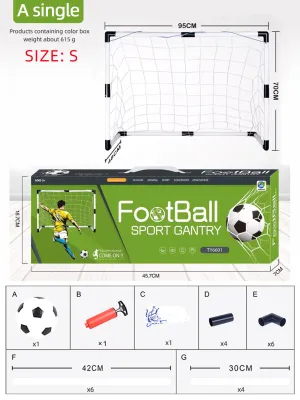
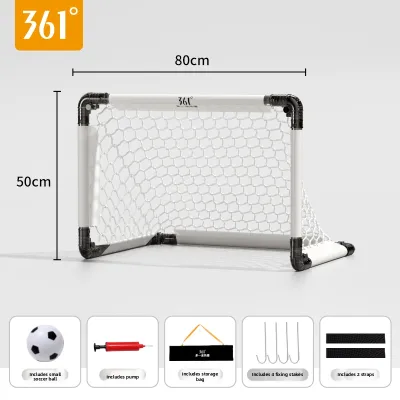
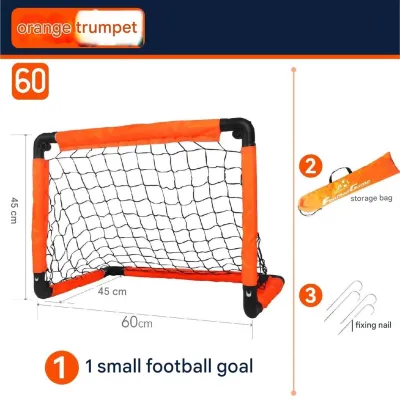
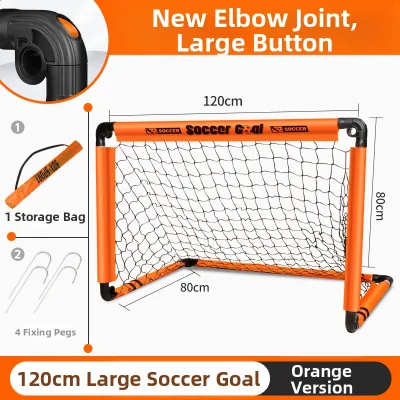
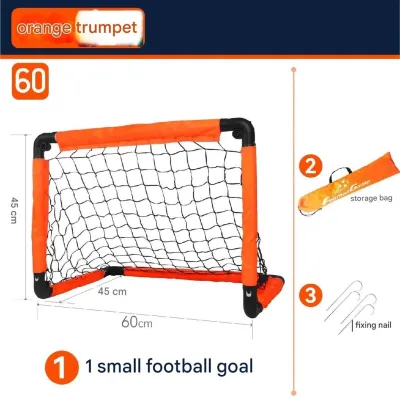
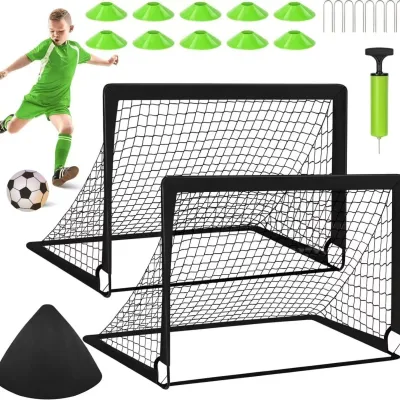
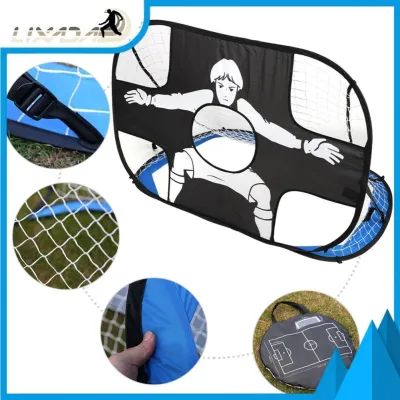
Prices are valid at publication and may change. Please refer to the product page for the latest price.
The surface of your playing area dictates how you will secure the goal post. Natural grass allows for deep ground anchors, such as metal pegs or corkscrew anchors, which provide excellent stability. Artificial turf, concrete, or indoor sports hall floors cannot be penetrated, meaning you must plan for alternative stabilization methods like weighted bags or specialized base frames. Placing a goal on an incompatible surface without the correct anchoring system poses a severe tipping hazard.
Overhead clearance is another critical factor that is easily overlooked. If you are setting up a goal post in a residential garden, a school courtyard, or near public pathways, check for low-hanging tree branches, utility lines, or outdoor lighting fixtures. High-flying balls can easily damage property or become tangled in overhead hazards. Ensure the vertical clearance above and around the goal frame is completely unobstructed before finalizing your setup.
Matching Goal Dimensions to Player Age and Format
Football goal dimensions scale alongside player development and the number of participants on the pitch. For younger players, smaller goals are not just a matter of space; they are crucial for skill development. A goal that is too large for a young goalkeeper can discourage defensive play, while a goal that is too small for older players reduces the realism of the match. Standardizing your goal size with the age group ensures players build appropriate shooting and positioning habits.

For informal or structured 5-a-side matches, goals typically range from 1.2 meters by 1.8 meters (4 feet by 6 feet) up to 1.2 meters by 3.6 meters (4 feet by 12 feet). These compact dimensions suit fast-paced, close-quarters play on smaller pitches or indoor courts. As players transition to 7-a-side and 9-a-side formats, standard youth sizes often increase to approximately 1.8 meters by 3.6 meters (6 feet by 12 feet) or 2.1 meters by 4.9 meters (7 feet by 16 feet), accommodating the larger pitch size and the growing physical reach of the players.
If your playing space serves a wide range of age groups—such as a shared family garden or a multi-purpose community center—selecting a single goal size can be challenging. In these scenarios, a mid-sized goal, such as a 1.8 meter by 2.7 meter (6 feet by 9 feet) frame, often serves as a practical compromise. This size is large enough to challenge older youth and adults during casual games, yet manageable enough for younger children to practice goalkeeping without feeling overwhelmed by an unreachable crossbar.
Full-sized 11-a-side football matches for adults and older youth require standard goal posts measuring 2.44 meters by 7.32 meters (8 feet by 24 feet). Because these dimensions demand a substantial amount of space and a dedicated pitch, they are rarely suitable for residential gardens or multi-use community areas. Before purchasing any equipment for competitive use, always verify the exact dimension requirements with your local sports association, school league, or facility management guidelines to ensure compliance with their specific regulations.
Evaluating Portability, Material, and Storage Needs
The frequency with which you need to move or store your football goal post will determine the best material and design for your needs. Heavy-duty frames made of steel or high-grade aluminum are ideal for dedicated sports fields where the goals remain in place long-term. These materials offer excellent structural integrity and can withstand powerful shots, but their weight makes them difficult to relocate without specialized wheels or multiple people.
For multi-use spaces, schools, or shared community areas, lightweight materials like PVC or fiberglass offer a practical alternative. PVC goals are highly portable, relatively easy to assemble, and resistant to rust, making them a popular choice for recreational play. Fiberglass pop-up designs are even lighter and can be collapsed in seconds, making them perfect for temporary training sessions or casual games in public parks where equipment must be packed away after use.
Storage is another critical factor, especially if you do not have a dedicated outdoor pitch. Even weather-resistant goals benefit from being stored indoors during extended periods of non-use or severe weather seasons. If storage space is limited to a small garden shed or a school sports cupboard, look for goals that feature quick-release button systems or modular designs that can be disassembled into compact segments. Having a dedicated carry bag also protects the frame pieces and net from tangling or getting lost during transport.
If your goal post will remain outdoors year-round, check the manufacturer’s specifications for weather resistance and UV protection. In tropical climates with high humidity and intense sunlight, unprotected plastics can become brittle and crack, while low-quality metals may rust rapidly. Look for powder-coated steel, anodized aluminum, or UV-stabilized plastics to ensure the frame survives seasonal weather changes without degrading structurally.
Safety, Anchoring, and Maintenance Checks
Safety must be the primary consideration when installing and using any football goal post. Unsecured or poorly anchored goals can tip over during play, leading to serious injuries. The anchoring method must match the ground surface perfectly. For grass pitches, use heavy-duty ground pegs or U-anchors driven deep into the soil. For hard surfaces where pegs are not an option, utilize heavy sandbags, water-filled weights, or specialized counterweights designed specifically for the frame’s base.
Establishing a routine inspection checklist is vital for maintaining the structural integrity of the goal over time. Before every session, inspect the frame joints for cracks, loose bolts, or signs of metal fatigue. Check that the net is securely attached to the frame without loose gaps where a player’s hand or foot could get caught. Any damaged components should be repaired or replaced immediately, and the goal should be taken out of service until it is fully secure.
Finally, enforce strict safety rules among all players and spectators. Under no circumstances should anyone climb, swing, or hang on the crossbar or the net support frame. Most tipping accidents occur when individuals use the goal frame as climbing equipment rather than a sports target. Educating players about these boundaries and supervising recreational sessions are the most effective ways to prevent accidents on the pitch.
Frequently Asked Questions (FAQ)
Can I use a football goal post on a concrete or hard court surface?
Yes, you can use a football goal post on concrete or hard courts, but you must use a freestanding frame designed for hard surfaces and secure it with appropriate counterweights. Standard ground spikes cannot penetrate these surfaces, so you must rely on sandbags, water weights, or specialized metal base weights to prevent the goal from tipping. Never leave a goal unanchored on a hard court, as the lack of friction makes it highly susceptible to sliding or falling over when struck by a ball or a player.
How much space should I leave behind the goal for safety?
As a general safety guideline, you should maintain a clear run-off zone of at least 1.5 to 3 meters behind the goal line and along the sides of the pitch. This space must be completely free of obstacles, including fences, walls, trees, benches, and spectator seating. The exact distance required often depends on the age and speed of the players; older players running at high speeds require a larger deceleration zone to prevent high-impact collisions with surrounding structures. Always check with your local sports facility guidelines or school safety policies for specific regional requirements.
Community discussion
Share your experience or ask a question. Comments are reviewed before publication.