
Choosing the right feather shuttlecock is one of the most impactful decisions a badminton player can make, directly influencing flight trajectory, game pace, and overall playing costs. While synthetic nylon options exist, serious players rely on the authentic feel and flight dynamics of a genuine feather shuttlecock. The core choice comes down to two primary materials: goose feathers and duck feathers. Goose feathers offer premium flight stability and exceptional durability for competitive play, whereas duck feathers provide a highly cost-effective alternative for training and casual matches. Understanding how these materials differ structurally, aerodynamically, and financially is key to selecting the ideal option for your specific level of play.
Understanding the Structural Differences Between Goose and Duck Feathers
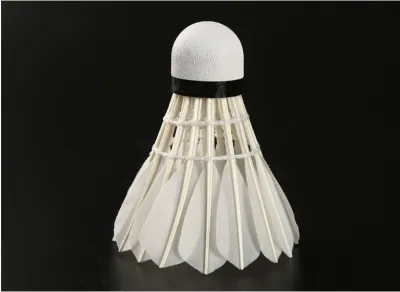
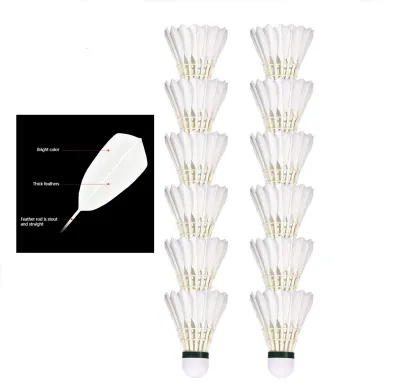
To understand why a feather shuttlecock behaves the way it does on the court, you must first look at the biology of the birds. Geese are generally larger and heavier than ducks, and they naturally produce feathers with thicker, stronger quills (the central shaft of the feather). This structural robusticity is highly pronounced in the feathers harvested from the wings, which are used to construct high-quality shuttlecocks. The natural curvature of a goose feather is also highly uniform, allowing manufacturers to align them precisely around the cork base to create a perfectly symmetrical cone.
In contrast, duck feathers are naturally thinner and possess narrower quills. The curvature of duck feathers is less consistent, which makes the manufacturing process more challenging when attempting to build a perfectly symmetrical skirt. Additionally, geese have a higher concentration of natural oils in their plumage compared to ducks. These natural oils keep the feathers supple and prevent them from drying out quickly, which directly impacts how well the shuttlecock retains its shape under the intense aerodynamic forces experienced during a fast-paced rally.
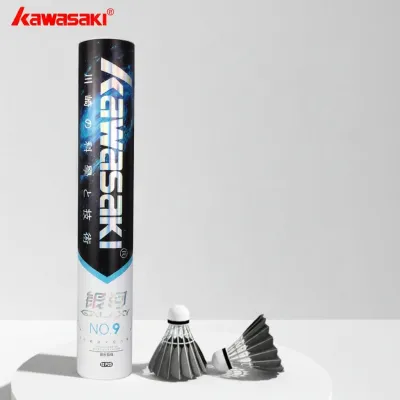
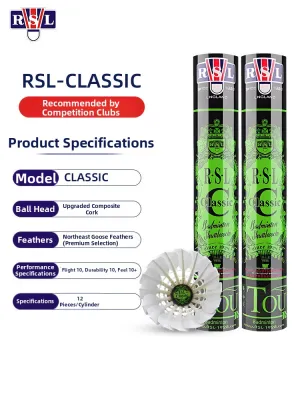
Products mentioned in this guide
![[SG SELLER] EVAGOLD BADMINTON FEATHER SHUTTLECOCKS SHUTTLECOCK FOR BEGINNER](https://img.lazcdn.com/g/p/96915ea93a82ac9b9e06426cb14b0fc8.jpg_400x400q80.jpg_.webp)
Prices are valid at publication and may change. Please refer to the product page for the latest price.
When browsing for a feather shuttlecock, you will often encounter grading terms such as “full round,” “semi-round” (or half round), and “straight.” These terms refer to the shape of the feather vane used in construction. A full-round feather utilizes the widest, most complete portion of the feather, providing maximum surface area for optimal air resistance and flight stability. Straight-cut feathers are narrower and are often used in budget-friendly options. While these grading terms apply to both goose and duck feathers, a high-grade, full-round duck shuttlecock may actually fly better than a low-grade, straight-cut goose shuttlecock. However, when comparing equivalent grades, the inherent structural superiority of the goose feather always prevails.
Flight Performance: Trajectory, Spin, and Deceleration
The flight performance of a feather shuttlecock is defined by three key phases: the initial acceleration, the spin-stabilized cruise, and the rapid deceleration at the end of its arc. Goose feather shuttlecocks are the undisputed standard for competitive play because they excel in all three phases. The rigidity of the goose quills ensures that the skirt does not collapse when struck with extreme force, such as during a jump smash. This structural stability allows the shuttlecock to spin consistently along its longitudinal axis, creating a predictable aerodynamic drag that results in a clean, vertical drop at the end of its trajectory.

Duck feather shuttlecocks, on the other hand, exhibit slightly different flight characteristics. Because duck quills are less rigid, they tend to flex more under high-impact shots. This temporary deformation of the skirt can cause the shuttlecock to wobble slightly in mid-air, leading to minor variations in its trajectory. The spin rate of a duck shuttlecock can also be less consistent, which directly affects its deceleration curve. Players may notice that a duck shuttlecock does not slow down as predictably as a goose shuttlecock, sometimes gliding further past the baseline or dropping at a shallower angle.
To evaluate the flight consistency of a new tube of shuttlecocks, you can perform a simple on-court test. Stand on your baseline and hit a series of high, deep clears to the opposing baseline. Pay close attention to the peak of the arc and the subsequent descent. A high-quality shuttlecock should climb smoothly without any visible wobble, stabilize at its peak, and then drop almost vertically. If you notice the shuttlecock drifting laterally in a draft-free indoor hall, or if the drop angle varies significantly from shot to shot, it is a clear sign of inconsistent feather alignment or structural flexing.
Durability on the Court: Breakage Resistance and Lifespan
Durability is often the deciding factor for players when choosing between goose and duck feather shuttlecocks. The way these two materials degrade under stress is fundamentally different due to the cellular structure of their quills. Goose quills are highly fibrous and flexible, meaning they possess a degree of elasticity. When subjected to high-speed impacts, a goose feather is more likely to bend, fray, or split along the vane rather than snap completely. A slightly frayed goose shuttlecock can often maintain a relatively stable flight, allowing you to continue using it for several more rallies.
Duck quills, by comparison, are significantly more brittle. When a duck feather shuttlecock is subjected to a powerful smash or a mishit, the quill is prone to snapping cleanly in half. Once a single quill snaps, the symmetrical balance of the skirt is instantly ruined, causing the shuttlecock to wobble violently and become completely unplayable. This clean-snapping characteristic means that duck shuttlecocks often have a much shorter lifespan on the court, especially during high-intensity games where hard smashes are frequent.
It is important to recognize that durability is not solely a property of the material; it is heavily influenced by player technique. The frequency of mishits—where the racket frame or the string bed makes contact with the feathers rather than the cork base—is the single greatest threat to any feather shuttlecock. Because duck feathers are so brittle, even a minor mishit can instantly destroy them. For players who have not yet developed consistent striking accuracy, the lifespan of a duck shuttlecock will be drastically reduced, whereas a goose shuttlecock might survive a few minor misjudgments with only minor bending.
Budget Considerations: Weighing Cost Against Performance
The price difference between goose and duck feather shuttlecocks is a direct reflection of agricultural supply chains and manufacturing complexity. Geese require a longer rearing period and more resources to raise than ducks, which limits the global supply of high-quality goose feathers. Furthermore, the strict sorting process required to select matching left-wing feathers for premium tournament shuttlecocks results in a high rejection rate, driving up the final retail cost. Consequently, goose feather shuttlecocks command a premium price in the market.
Duck feathers serve as a highly practical, budget-friendly alternative. Because ducks are farmed in much larger quantities worldwide, the raw materials are abundant and significantly cheaper. This makes duck feather shuttlecocks an excellent choice for high-volume training environments, such as school team practices or multi-court social sessions, where shuttlecocks are consumed at a rapid pace.
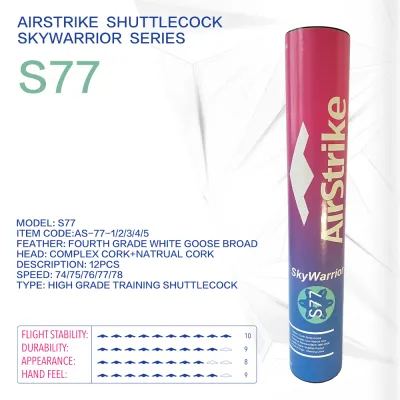
In Singapore, a tube of 12 premium goose feather shuttlecocks typically retails between S$35 and S$55, depending on the brand and tournament grade. In contrast, a tube of decent duck feather shuttlecocks can be found for S$20 to S$30. While the upfront savings of duck feathers are appealing, smart players evaluate cost-effectiveness by calculating the “cost per usable hour” or “cost per session.” For intermediate players with clean striking techniques, a single goose shuttlecock might last an entire set, whereas they might go through three or four duck shuttlecocks in the same timeframe. In such scenarios, investing in the more expensive goose tube actually yields a lower cost per game while providing a vastly superior playing experience.
How to Choose the Right Shuttlecock for Your Skill Level
Selecting the right feather shuttlecock requires matching the material characteristics to your current playing profile, technical ability, and budget. There is no single “best” option for every player, as the demands of a casual weekend session are vastly different from those of a competitive tournament.
Beginners and Casual Players
If you are new to badminton or play primarily for leisure, your primary focus should be on developing consistent hand-eye coordination and mastering basic stroke mechanics. At this stage, mishits are inevitable, and expensive tournament-grade shuttlecocks will be ruined within minutes. For this group, duck feather shuttlecocks or entry-level goose options are highly recommended. They provide a cost-effective way to experience the feel of a real feather shuttlecock without the financial burden of rapid wear and tear.
Intermediate and Club Players
Players who have transitioned past the basics and are actively developing advanced shot-making—such as tight net drops, deceptive slices, and powerful smashes—require a higher level of flight consistency. For intermediate and club players, mid-grade goose feather shuttlecocks (often featuring semi-round or straight-cut feathers) offer the ideal sweet spot. These shuttlecocks provide the necessary flight stability and predictable deceleration required for tactical drills, while their fray-resistant goose quills ensure they can withstand the occasional mishit during intense rallies.
Advanced and Tournament Players
For competitive athletes and advanced club players, there is no substitute for premium, tournament-grade full-round goose feather shuttlecocks. These players operate at a level where a fraction of a millimeter in flight deviation can mean the difference between a winning shot and an unforced error. Premium goose shuttlecocks deliver absolute precision, maximum control, and standardized speed ratings, ensuring that the shuttlecock responds exactly as expected to every subtle wrist movement and high-power impact.
| Skill Level | Recommended Material | Primary Benefit | Expected Durability Factor |
|---|---|---|---|
| Beginner / Casual | Duck Feather (or Entry-Level Goose) | High cost efficiency; low financial impact on frequent mishits | Low (quills are prone to snapping on off-center hits) |
| Intermediate / Club | Mid-Grade Goose Feather (Semi-Round/Straight) | Balanced flight consistency; resilient to fraying during drills | Moderate to High (highly durable with clean contact) |
| Advanced / Tournament | Premium Full-Round Goose Feather | Maximum flight precision; stable spin; predictable deceleration | High (highly resilient to high-speed impacts) |
Maintenance Tips to Extend Feather Shuttlecock Life
Feather shuttlecocks are highly sensitive to environmental conditions, and proper care can significantly extend their lifespan, saving you money over time. The most critical factor in preserving feather integrity is maintaining the moisture level within the quills. Dry feathers become brittle and snap easily, while properly hydrated feathers remain flexible and resilient.
Always store your shuttlecocks in their original cardboard or plastic tubes, keeping the caps firmly secured on both ends. Store the tubes vertically to prevent the feathers from being crushed or deformed. It is vital to keep them away from direct sunlight, hot car trunks, or air-conditioning vents, as these environments will rapidly dry out the natural oils and moisture in the feathers.
Humidifying your shuttlecocks before a session is a highly effective way to make the quills more supple. A common method is to place a small, damp sponge or a piece of moist paper towel inside the non-cork cap of the tube about 24 to 48 hours before you play, allowing the moisture to circulate through the feathers. Alternatively, you can invest in specialized humidifier caps designed specifically for badminton tubes.
However, players in Singapore must exercise caution due to the local climate. Singapore’s naturally high humidity (often exceeding 80%) means that shuttlecocks stored in non-air-conditioned spaces already absorb a significant amount of ambient moisture. Over-humidifying your shuttlecocks in this environment can make the feathers waterlogged and heavy. A heavy shuttlecock will fly significantly slower, drop faster, and require more physical effort to clear, which can lead to shoulder or wrist strain. If you play in air-conditioned sports halls, some mild humidification is beneficial, but you should always monitor the shuttlecock’s weight and flight speed. If the shuttlecock feels sluggish or drops too quickly, reduce your humidification time or allow them to dry slightly before hitting the court.
Frequently Asked Questions (FAQ)
How can I visually tell the difference between goose and duck feather shuttlecocks?
To visually distinguish between the two, examine the quills and the feather vanes closely. Goose quills are generally thicker, wider, and have a more solid, opaque white appearance. The feather vanes of a goose shuttlecock are wider and exhibit a natural, gentle curve that wraps smoothly around the cone. Duck quills, by contrast, are noticeably thinner and can appear slightly translucent when held up to the light. The vanes of duck feathers are often narrower and straighter. However, because high-grade duck feathers can look remarkably similar to low-grade goose feathers, checking the manufacturer’s packaging or product specifications remains the most reliable method of identification.
Are feather shuttlecocks better than nylon ones for training?
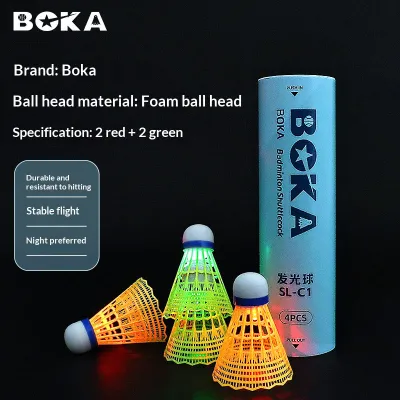
Feather shuttlecocks, including duck feather options, are vastly superior to nylon (synthetic) shuttlecocks for serious training. Feather shuttlecocks offer a unique aerodynamic profile characterized by rapid spin-stabilization and a sharp deceleration curve, which is essential for developing proper stroke mechanics, timing, and delicate net touch. Nylon shuttlecocks are incredibly durable and cost-effective for absolute beginners, but they fly in a different, more linear trajectory and do not slow down as quickly. Transitioning to feathers is highly recommended as soon as a player can consistently strike the sweet spot, as training exclusively with nylon can lead to poor habits and a lack of control when playing with real feathers.
Community discussion
Share your experience or ask a question. Comments are reviewed before publication.