
Choosing between goose and duck feather shuttlecocks is one of the most critical decisions you will make as a badminton player. In Singapore, where booking ActiveSG courts and community club halls is a weekly ritual for thousands of enthusiasts, the choice of shuttlecock directly impacts your playing experience, performance, and recurring expenses. This decision hinges on your current skill level, how frequently you mishit the shuttlecock, and your performance requirements during play.
Goose feather shuttlecocks represent the premium standard for competitive and advanced players. They offer exceptional flight consistency, precise spin rotation, and a highly responsive, crisp impact feel that is essential for executing advanced tactical shots. However, they come with a higher upfront cost. Duck feather shuttlecocks serve as the practical, economical alternative. They are highly suited for beginners, recreational groups, and high-volume training sessions where frequent feather breakage from off-center hits makes premium options cost-prohibitive. By aligning your purchase with your actual playing habits, you can optimize both your budget and your performance on the court.
Core Differences in Flight, Feel, and Durability
To understand why these two materials perform so differently, it is essential to look at the physical and structural properties of the feathers themselves. While both options look remarkably similar at a glance, their performance on the court is governed by the biological differences between geese and ducks.
Products mentioned in this guide
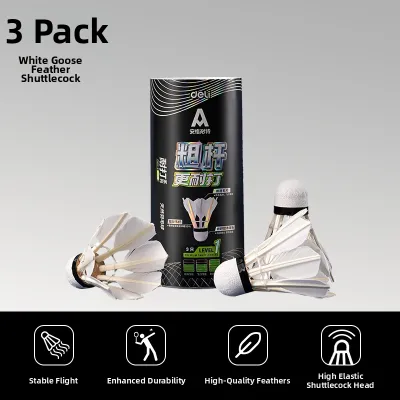
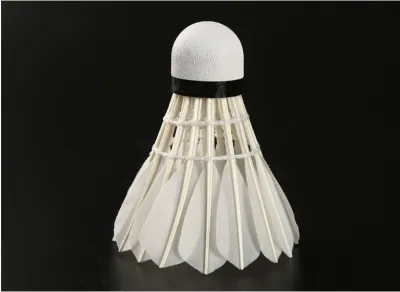
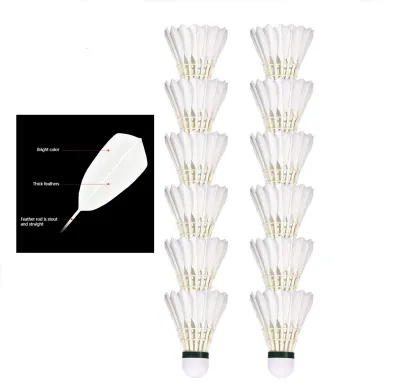
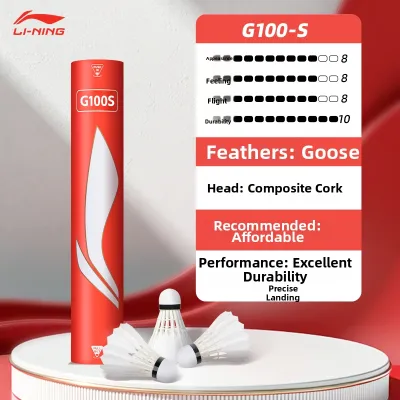
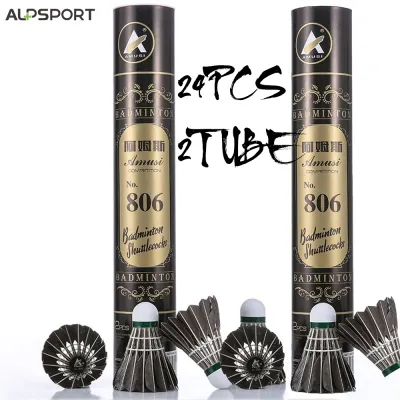
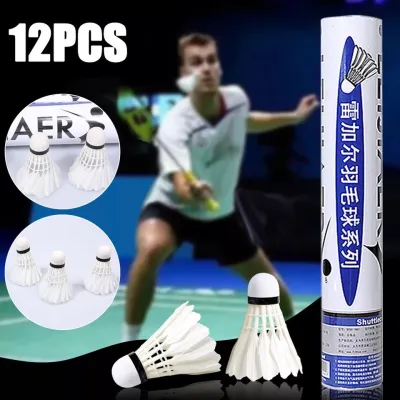
![[AS-Lion] Badminton Shuttlecock (6 pcs Feather Shuttlecock) (SG Seller)](https://img.lazcdn.com/g/p/aaa128afb33073d9d5e8c138bc6d3f01.png_400x400q80.png_.webp)
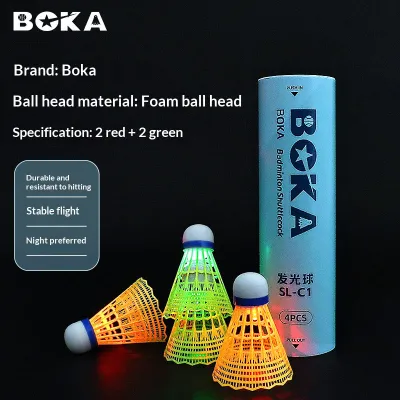
Prices are valid at publication and may change. Please refer to the product page for the latest price.
Flight Stability and Trajectory
The aerodynamic performance of a feather shuttlecock is determined by how its sixteen overlapping feathers interact with the air. Goose feathers are naturally thicker, stiffer, and possess more uniform quills than duck feathers. This structural uniformity allows the shuttlecock to maintain its shape under the immense aerodynamic stress of high-speed smashes and rapid drives. When a goose shuttlecock is struck, it deforms slightly and then quickly recovers its original shape, establishing a highly predictable, parabolic flight path. This uniform structure also ensures consistent spin rotation, which is vital for stable deceleration as the shuttlecock travels over the net and drops into the opponent’s court.
In contrast, duck feathers naturally exhibit more variance in quill thickness, density, and curvature. This lack of structural uniformity means that duck feather shuttlecocks are more prone to minor aerodynamic imbalances. During high-velocity exchanges, a duck shuttlecock may exhibit a slight wobble, drift, or inconsistent deceleration trajectory. As the feathers begin to wear or fray during a game, these flight discrepancies become more pronounced, making it more challenging for players to gauge depth and execute precise defensive clears.
Impact Feel and Sound
The sensory feedback transmitted from the racket stringbed to a player’s hand is a critical component of touch and control in badminton. Goose feathers, due to their robust quill structure and superior natural elasticity, deliver a highly responsive, crisp feel upon impact. When the racket strings strike a goose shuttlecock, the energy transfer is clean and solid, accompanied by a distinct, high-frequency sound. This tactile and auditory feedback is highly valued by players who rely on precise touch for delicate net drops, tight hairpins, and deceptive cross-court slices.
Duck feathers, being naturally softer and less rigid, tend to absorb and dampen the impact energy differently. The resulting feel on the stringbed is often described as slightly softer, heavier, or less uniform. The impact sound is typically a deeper, more muffled thud rather than a sharp crack. For beginners, this difference in sensory feedback is negligible. However, for players attempting to execute highly technical shots where a fraction of a millimeter in racket face angle determines success, the dampened feedback of duck feathers can make delicate net play feel less precise and harder to control.
Durability and Breakage Patterns
The primary factor driving the ongoing cost of badminton is shuttlecock durability, which is directly linked to how each feather type fails structurally. Goose feathers contain a higher concentration of natural oils and a more fibrous, flexible quill structure. When subjected to repetitive high-impact forces, goose feathers tend to degrade gradually. They will bend, fray, and split along the vane rather than snapping cleanly. Because the main quill stem remains intact, a slightly frayed goose shuttlecock can often maintain a reasonable, playable flight trajectory for several additional rallies before requiring replacement.
Duck feathers are inherently more brittle and dry. Under the stress of hard hits—particularly off-center hits where the racket frame or strings strike the feather blades directly—duck quills are highly prone to snapping cleanly at the base or mid-section. Once a single duck feather snaps, the aerodynamic balance of the shuttlecock is immediately destroyed. The broken feather causes the shuttlecock to wobble violently in the air and drop prematurely, making it completely unusable. This catastrophic failure mode means that while duck shuttlecocks may cost less upfront, they often have a much shorter usable lifespan on the court if the quality of play involves frequent hard hitting or occasional mishits.
Matching the Shuttlecock to Your Skill Level and Play Frequency
Selecting the right shuttlecock requires an honest assessment of your current skill level and the specific format of your playing sessions. Using a premium shuttlecock does not automatically translate to a better experience if your playing style does not match the equipment’s design.

Beginners and Casual Players
For those who are new to badminton or play casually on weekends, the primary challenge is developing consistent timing and clean striking mechanics. Beginners frequently experience mishits, where the racket strings or frame strike the feather portion of the shuttlecock instead of the solid cork base. When a mishit occurs, even the highest-grade goose shuttlecock will break instantly.
Because of this high rate of accidental damage, investing in premium goose shuttlecocks at this stage is highly impractical and financially wasteful. Duck feather shuttlecocks are the logical choice for entry-level play. The lower upfront cost per tube offsets the rapid rate of breakage. Furthermore, players who are still learning basic footwork, service techniques, and overhead clears are unlikely to notice or benefit from the subtle aerodynamic advantages and precise spin control that goose feathers offer. Using duck feathers allows beginners to focus on developing their skills without the constant worry of ruining expensive equipment.
Intermediate and Club Players
Intermediate and club players occupy a middle ground. They have developed reliable striking consistency and rarely mishit during slow-paced rallies, but they may still clip the feathers during fast-paced defensive exchanges, intense smashes, or competitive doubles play. For this group, a strategic, mixed-use approach is often the most cost-effective solution.
During high-repetition training drills, multi-shuttle feeding sessions, or physical conditioning routines, intermediate players should opt for duck feather shuttlecocks. These sessions involve high volumes of hits where flight precision is secondary to physical repetition, making the cost savings of duck feathers highly advantageous. However, when transitioning to actual match play, tactical practice, or club ladder games, switching to goose feather shuttlecocks is highly beneficial. This transition allows intermediate players to adapt to realistic tournament flight speeds, refine their touch shots, and build the precise muscle memory required to advance to the next level of play.
Advanced and Competitive Players
For advanced, league, and competitive tournament players, goose feather shuttlecocks are an absolute necessity. At this level, rallies are incredibly fast, and players rely on split-second timing, precise deceleration, and predictable spin to execute complex tactical strategies. A shuttlecock that wobbles or drops inconsistently can ruin a player’s timing and lead to critical unforced errors.
Furthermore, advanced players possess highly refined striking mechanics and rarely mishit the feathers. Because the racket almost always makes clean contact with the cork base, the feathers are subjected to uniform, axial forces rather than shearing lateral impacts. Under these conditions of clean play, high-quality goose shuttlecocks can actually demonstrate excellent durability, lasting through multiple intense games before the gradual fraying of the feathers finally compromises their flight. For skilled players, the higher initial investment in goose shuttlecocks is fully justified by both the performance advantages and the extended usable lifespan.
Cost, Value, and Budgeting for Regular Play
When managing your badminton expenses, it is crucial to evaluate value based on the concept of “cost per usable hour” rather than simply looking at the retail price of a single tube. In Singapore’s active badminton community, shuttlecock consumption is one of the largest recurring costs alongside court booking fees.
A typical tube of duck feather shuttlecocks sits in a lower price band, generally ranging from S$20 to S$30. In contrast, premium goose feather shuttlecocks sit in a higher price band, typically ranging from S$35 to S$55 or more per tube, depending on the brand and tournament certification level.
If a group of recreational players uses duck feather shuttlecocks, they might go through six to eight shuttles in a two-hour session because the brittle quills snap easily during fast play. If that same group switches to goose feather shuttlecocks but continues to experience frequent mishits, they will still break them quickly, resulting in an incredibly high cost per hour. However, if a group of clean-striking intermediate or advanced players uses goose shuttlecocks, they might only use two or three shuttles for the entire two-hour session because the goose feathers wear down gradually. In this scenario, the premium goose shuttlecocks actually yield a lower cost per usable hour despite the higher upfront purchase price.
To budget effectively for your regular sessions, consider the following strategies:
- Segment your inventory: Keep a dedicated tube of duck feather shuttlecocks in your bag for warm-ups, half-court drilling, and casual rallies. Reserve your premium goose shuttlecocks strictly for competitive, full-court matches where flight precision is critical.
- Purchase in bulk: Most specialized sports retailers and pro shops in Singapore offer significant discounts when purchasing shuttlecocks by the carton (typically containing 10 to 50 tubes). If you play regularly with a fixed group or club, pooling your funds to buy in bulk can substantially lower your cost per tube.
- Explore local retail hubs: Visit established sports shopping districts in Singapore, such as Queensway Shopping Centre, Bras Basah Complex, or specialized pro shops located near major badminton centers in Kallang and Jurong. These retailers often carry a wide range of both duck and goose models and can provide valuable advice on which speed rating is currently performing best in local sports halls. Note that top-tier, international tournament-grade goose models may have limited availability and occasionally require ordering through authorized local distributors.
Final Decision Framework: Goose or Duck?
To finalize your purchasing decision, use this structured framework to match your specific playing conditions and requirements to the correct feather type.
- Choose Goose Feather Shuttlecocks if:
- You play at an advanced, league, or highly competitive level where flight consistency is non-negotiable.
- You participate in organized tournaments or sanctioned club matches.
- Your playing style relies heavily on precise net play, spin control, and consistent deceleration.
- You possess highly consistent striking mechanics and rarely mishit the feathers.
- You have the budget to support a premium upfront cost in exchange for superior performance and gradual wear patterns.
- Choose Duck Feather Shuttlecocks if:
- You are a beginner, casual recreational player, or social group organizer looking to manage costs.
- Your playing sessions involve players who frequently mishit the shuttlecock on the feathers.
- You are conducting high-volume, multi-shuttle training drills, feeding sessions, or fitness workouts.
- You want a cost-effective, natural feather playing experience without transitioning to synthetic nylon shuttlecocks.
- Verify First if:
- You are purchasing shuttlecocks to prepare for a specific local tournament, ActiveSG league, or club competition. Always check the official tournament regulations or consult the organizers to identify the exact brand, model, and speed rating mandated for the event. In Singapore's hot and humid tropical climate, indoor sports halls can vary significantly in temperature and draft. Organizers typically specify a speed rating of 76 (slower, suited for warmer conditions) or 77 (medium, standard for most local halls). Practice with the exact mandated model and speed beforehand to ensure your timing, clears, and net control are perfectly calibrated for match-day conditions.
Frequently Asked Questions (FAQ)
How can I make my feather shuttlecocks last longer?
The primary reason natural feather shuttlecocks break prematurely is dryness, which makes the quills brittle and highly susceptible to cracking. While Singapore’s outdoor climate is naturally warm and humid, storing your equipment in air-conditioned rooms or playing in air-conditioned indoor sports halls can rapidly dry out the feathers.
To extend the lifespan of your shuttlecocks, you can humidify them to restore moisture to the quills, making them more flexible and resilient. A safe, low-risk method is to use a dedicated shuttlecock humidifier box, which slowly infuses moisture into the feathers. Alternatively, you can briefly expose the feather ends of the shuttlecock to gentle steam from a household humidifier or a cup of hot water for a few seconds before sealing them back inside their storage tube.
However, you must observe strict safety boundaries: never over-humidify the shuttlecocks or allow boiling water to make direct contact with the feathers or cork. Excess moisture will saturate the cork base, making the shuttlecock excessively heavy, slow in flight, and highly prone to developing mold. Always store your shuttlecock tubes vertically in a cool, dry place away from direct sunlight and extreme heat—such as the trunk of a car parked outdoors—to prevent the natural oils in the feathers from drying out.
Community discussion
Share your experience or ask a question. Comments are reviewed before publication.