
Building a functional home gym in a Singapore Housing & Development Board (HDB) flat requires a careful balance of space efficiency, noise control, and training versatility. To develop hand and forearm strength without cluttering your living area, the most practical choices are compact, quiet, and highly adjustable tools. Selecting a combination of adjustable hand grippers, silicone thick grip adapters, and hanging accessories allows you to target all aspects of grip strength—crushing, pinching, and supporting—while easily storing your equipment in a standard drawer.
Assessing Your HDB Space and Grip Training Goals
Living in an HDB flat means every square meter of floor space is highly valuable. Before purchasing any fitness gear, you must evaluate where you will perform your exercises and where the equipment will be stored when not in use. Unlike large power racks or stationary bikes, grip training tools have a remarkably small footprint, but they still require dedicated planning. For instance, if you plan to use hanging accessories, you must identify a structurally sound location, such as a ceiling-mounted pull-up bar or a heavy-duty door frame trainer, ensuring there is sufficient clearance for your body weight.
Understanding your specific training goals is equally critical because grip strength is not a single physical attribute. It is divided into four distinct categories: crushing grip (the ability to close your hand against resistance), pinching grip (the strength between your fingers and thumb), supporting grip (the capacity to hold onto an object for an extended duration), and extension grip (the ability to open your fingers against resistance). A well-rounded home routine should address these different movements. If you are a climber, supporting and pinching grip might take priority, whereas a powerlifter may focus heavily on supporting grip to hold heavy barbells.
Products mentioned in this guide
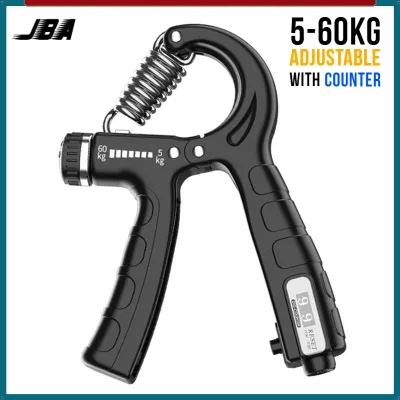
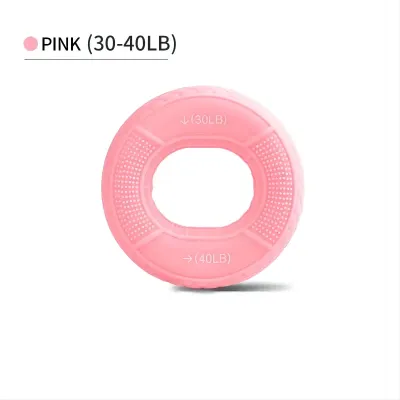
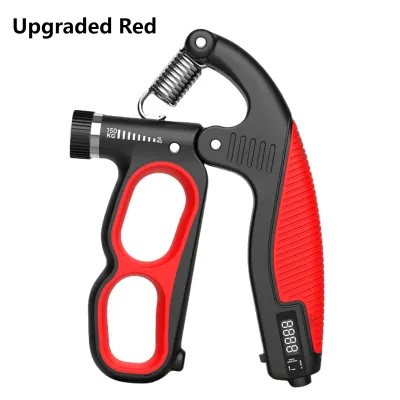
Prices are valid at publication and may change. Please refer to the product page for the latest price.
Additionally, noise and floor impact are major considerations in high-density HDB blocks. Dropping heavy metal plates or letting spring-loaded metal grippers snap shut can create sharp, echoing noises that travel easily through concrete walls and floors. Choosing equipment with rubberized coatings, silent spring mechanisms, or utilizing soft floor mats can help maintain a peaceful relationship with your neighbors downstairs.
Space-Saving Grip Equipment Types for Home Use
To build a versatile grip routine within a limited layout, you should focus on equipment categories that offer high training value relative to their physical size. Instead of buying multiple single-purpose machines, look for modular or adjustable tools that can target different muscle groups in the hand and forearm. These tools generally fall into four main categories, each focusing on a specific biomechanical movement while requiring minimal storage space.

Adjustable Hand Grippers and Spring Coils
Adjustable hand grippers are the quintessential tool for developing crushing strength. These compact devices utilize a torsion spring mechanism that allows you to modify the resistance level, often ranging from light tension suitable for active recovery to heavy resistance designed for advanced strength building. When selecting an adjustable gripper, verify the resistance range to ensure it matches your current capabilities while leaving room for progressive overload.
The physical construction of the handles is another vital factor to check. Aluminum or steel handles with knurled textures provide a highly secure, non-slip hold, which is particularly useful in Singapore’s humid climate where sweaty hands are common. However, very aggressive knurling can cause excessive calluses or skin irritation if used improperly; look for medium-grade knurling or consider using grip tape if your skin is sensitive. Ensure the spring mechanism operates smoothly without squeaking, and check that the adjustment dial is robust enough to withstand repeated tension changes over time.
Thick Grip Adapters for Existing Dumbbells
If you already own a set of dumbbells, a barbell, or a pull-up bar in your HDB flat, thick grip adapters are an exceptionally space-efficient way to upgrade your training. These cylindrical sleeves, typically made of high-density silicone, snap directly onto standard handles to increase their outer diameter. By widening the grip surface, these adapters force your forearms and hands to work significantly harder during standard lifting movements like bicep curls, rows, and deadlifts.
Before purchasing, measure the handle diameter of your existing home gym equipment to ensure a snug, compatible fit. The adapter must wrap completely around the bar without leaving a wide gap, which could compromise safety. Check the locking mechanism or the split-side design of the sleeve; it must remain firmly closed under load to prevent the adapter from spinning or slipping mid-lift. High-density silicone is preferred because it resists compression under heavy loads, ensuring your hands experience the full challenge of the wider diameter without the material tearing or degrading.
Wrist Rollers and Forearm Blasters
Wrist rollers are highly effective for building forearm endurance and wrist stability, targeting both the flexor and extensor muscles. These devices consist of a central handle or bar, a durable strap or rope, and a weight attachment mechanism at the bottom. By rolling the strap up and down around the handle, you create a continuous, intense burn throughout your entire forearm.
When evaluating a wrist roller for home use, ensure the rope length is compatible with your height and workout setup. If you plan to stand while using the roller, the rope must not be so long that the weight hits the floor before you complete a full repetition cycle. Alternatively, check if the device can be used from a seated position or mounted onto an existing barbell rack. Verify that the weight attachment method—usually a loading pin or a carabiner strap—is fully compatible with the standard or Olympic weight plates you already own. The handle should have a comfortable, non-slip texture, such as foam or textured rubber, to prevent hand fatigue from causing premature slippage during high-repetition sets.
Hanging Accessories and Towel Grips
Hanging accessories, such as wooden climbing blocks, pinch blocks, and hanging spheres, offer an excellent way to train supporting and pinching grip using your own body weight. These tools are suspended from a pull-up bar or a secure overhead anchor using durable nylon straps and carabiners. They challenge your grip in a highly functional manner, simulating the demands of rock climbing or obstacle course racing.
Before installing these accessories, you must confirm the load capacity and structural integrity of your HDB door frame pull-up bar or wall-mounted bar. Ensure the mounting point can safely support your full body weight plus any dynamic movement. Check the material of the hanging accessories; wooden blocks are highly favored for indoor use because they absorb sweat naturally and provide a comfortable grip without requiring excessive chalk. If you opt for plastic or metal variations, verify that they have a textured surface to prevent slipping. These accessories are incredibly easy to set up and take down, allowing you to pack them away into a drawer immediately after your workout to keep your living area completely clear.
Key Selection Criteria for Compact Living
Selecting the right grip equipment for an HDB flat requires looking beyond basic functionality to consider the realities of high-density residential living. Noise generation is a primary concern. Metal-on-metal contact, such as the clanking of weight plates on a wrist roller or the sharp snap of a spring gripper, can easily disturb family members or neighbors sharing adjacent walls. Prioritize tools with rubber dampeners, silicone sleeves, or strap-based loading systems that minimize impact noise.
Storage footprint is another critical factor. The ideal home gym equipment should be easily stowed away to maintain a clean, uncluttered living environment. Adjustable hand grippers, thick grip adapters, and hanging straps can easily fit into standard wardrobe drawers, under-bed storage boxes, or small plastic organizers. Avoid bulky, single-purpose forearm machines that require dedicated floor space unless you have a designated spare room converted entirely into a gym.
Budget alignment is also essential when planning your purchases. Compare the cost-per-use of adjustable tools versus fixed-resistance options. While a single fixed-resistance gripper might seem inexpensive initially, you will need to purchase multiple units as your strength progresses, which can quickly add up. An adjustable gripper or a set of thick grip adapters offers a much wider range of utility for a single investment, typically ranging from S$15 to S$50, making them highly cost-effective choices for budget-conscious homeowners.
Finally, never overlook safety limits. Always check the manufacturer’s maximum weight ratings and structural warnings, particularly for hanging accessories and door-frame pull-up bars. Ensure that all carabiners, straps, and mounting brackets are rated for your body weight. Regularly inspect your equipment for signs of wear, such as fraying ropes, cracked silicone, or fatigued metal springs, to prevent sudden failures during training.
Integrating Grip Work into Your Home Routine
To get the most out of your grip equipment without causing injury, you must program your training sessions strategically. A common mistake is training grip at the beginning of a workout. Because your hands and forearms are involved in almost every upper-body exercise, pre-fatiguing them can severely limit your performance on compound movements like pull-ups, rows, and deadlifts. Instead, schedule your dedicated grip work at the very end of your training session, or perform it on separate active recovery days.
Tendon health is a critical consideration when training the hands and wrists. The tendons in your fingers and forearms adapt to resistance training at a much slower rate than your muscles. Overtraining can quickly lead to painful overuse injuries, such as medial epicondylitis (golfer’s elbow) or lateral epicondylitis (tennis elbow). Monitor your body closely for any persistent, dull aches around the elbow joint or wrist, and reduce your training volume or intensity immediately if you experience discomfort.
To maintain joint health and prevent muscular imbalances, always balance your crushing and supporting exercises with extension movements. The muscles responsible for opening your hand are often neglected, leading to tight forearms and joint strain. You can easily train finger extension using simple rubber bands or dedicated silicone finger stretchers, ensuring that your hand muscles develop symmetrically and your finger joints remain mobile and pain-free.
Online Purchasing Checks and HDB Delivery Tips
When ordering grip training equipment from online marketplaces or local ecommerce platforms, a few practical checks can save you time and money. First, carefully review the seller’s return and exchange policies. Because grip comfort is highly subjective, you may find that a gripper’s handle spacing is too wide for your hand size, or that a thick grip adapter does not fit your existing dumbbells. A flexible return policy ensures you can exchange the item without hassle.
Next, check the shipping dimensions and weight of the package. While most grip accessories are lightweight, some packages containing wrist rollers with integrated steel loading pins can be surprisingly heavy. Ensure that the delivery details are clear, and verify if the package can be securely placed in your HDB’s digital parcel locker or riser if you are not home to receive it.
Lastly, verify seller ratings and read customer reviews specifically looking for feedback on build quality and resistance accuracy. Many budget-friendly grippers advertise high resistance levels that do not match their actual physical tension. Look for reviews from users who have tested the equipment over several months to ensure the springs do not lose their tension and the rubber or silicone components do not degrade prematurely in Singapore’s warm, humid climate.
Frequently Asked Questions (FAQ)
Can I train grip every day in my home gym?
No, training your grip every single day is generally not recommended, especially when using high-resistance tools. While the muscles of the forearm and hand are resilient and used to daily activities, the tendons and connective tissues require significant time to recover and adapt to intense resistance. Training daily without adequate rest can lead to chronic tendon inflammation and joint strain. For optimal results and safety, limit intense grip training to two or three sessions per week, allowing at least 48 hours of recovery between workouts, and use lighter, active-recovery movements if you feel stiff.
Do I need chalk for grip training at home?
While chalk is excellent for absorbing sweat and improving friction, traditional block chalk creates a fine powder that settles on furniture, floors, and air conditioning units, making it highly impractical for an HDB flat. If you require a grip aid to combat Singapore’s humidity, liquid chalk is a much cleaner alternative. It applies as a gel and dries quickly into a thin, non-dusty layer that does not easily transfer to your floor. Alternatively, you can opt for equipment with textured rubber handles, wooden hanging blocks, or silicone sleeves, which provide excellent natural grip without the need for any chalk or messy cleanups.
Community discussion
Share your experience or ask a question. Comments are reviewed before publication.