
Quick Answer: Matching Forearm Tools to Your Home Gym Goals
Selecting the right forearm exercise equipment for a home gym is not about finding a single, universally superior tool. Instead, the ideal choice depends on whether your primary training goal is building crushing grip strength, maximizing muscular hypertrophy, or improving joint mobility and rehabilitation. Because the forearm is a complex muscle group responsible for multiple hand and wrist movements, each training tool targets different biomechanical functions and offers distinct practical advantages for home use.
For those prioritizing raw crushing power and ultimate portability, grip strengtheners are the most efficient option. If your goal is balanced forearm development, muscular endurance, and significant hypertrophy, the wrist roller is highly effective but requires a bit more physical space and setup. For individuals focusing on joint health, injury rehabilitation, and versatile movement patterns, resistance bands provide a low-impact, highly customizable solution.
In a compact living environment, such as a Singaporean HDB flat, physical footprint and noise management are critical considerations. While all three tools are highly space-efficient compared to bulky gym machines, they differ significantly in their noise levels and the risk of floor damage. Understanding these practical trade-offs ensures you select a tool that fits both your physical training needs and your home environment.
Products mentioned in this guide
![🇸🇬 [READY STOCK] MMB Forearm Wrist Roller Trainer Weight-bearing Pulley and Rally Belt Wrist Exerciser with For Hand Forearm Shoulder Muscle Strength Training Hand and Wrist Exerciser Gym Wrist Curl Exerciser](https://img.lazcdn.com/g/p/7fcbf23e9feffaf53f687b1aab50ec16.jpg_400x400q80.jpg_.webp)
![🇸🇬 [READY STOCK] Wrist Trainer Ball Auto-Start Wrist Strengthener Gyroscopic Forearm Exerciser Gyro Ball for Strengthen Arms Fingers Wrist Bones and Muscles](https://img.lazcdn.com/g/p/55cd0f7380c3a857046b34abee915dde.png_400x400q80.png_.webp)
Prices are valid at publication and may change. Please refer to the product page for the latest price.
Identify Your Forearm Weak Points Before Buying
Before purchasing any fitness equipment, it is essential to diagnose your specific training deficits. Forearm strength is not monolithic; it consists of three distinct components: crush grip (the ability to close your hand around an object), pinch grip (the strength held between your fingers and thumb), and wrist stability (the control of flexion, extension, and rotation). Identifying which of these areas requires the most attention prevents you from investing in a tool that does not address your specific athletic bottlenecks.

If you find your hands slipping during heavy deadlifts, pull-ups, or when carrying heavy groceries, your primary weakness is likely support or crush grip. If you are a climber, martial artist, or racket sports player, you may require specialized wrist stability and rotational strength to protect your joints from rapid, high-impact movements. Alternatively, if your goal is purely aesthetic, you will need a tool that allows for high-volume, progressive overload to stimulate muscle growth in both the inner flexors and outer extensors.
Office professionals who spend long hours typing often suffer from wrist stiffness and repetitive strain issues. For this demographic, heavy strength training tools can sometimes exacerbate joint irritation, making low-resistance, high-mobility movements a higher priority. By matching your physical requirements to the mechanical profile of each tool, you can build a more effective, targeted home workout routine without cluttering your living space.
Grip Strengtheners vs Wrist Rollers vs Resistance Bands: Detailed Breakdown
Grip Strengtheners: Best for Crush Grip and Portability
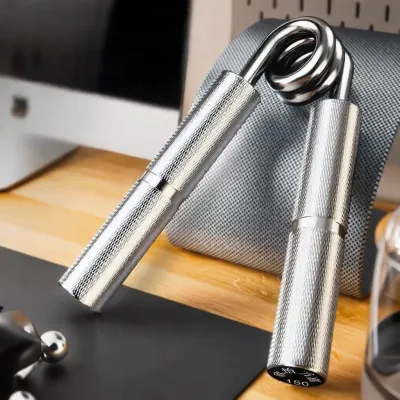
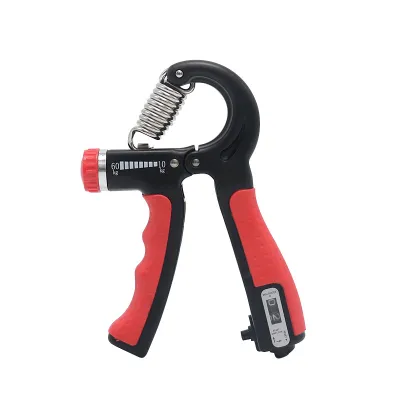
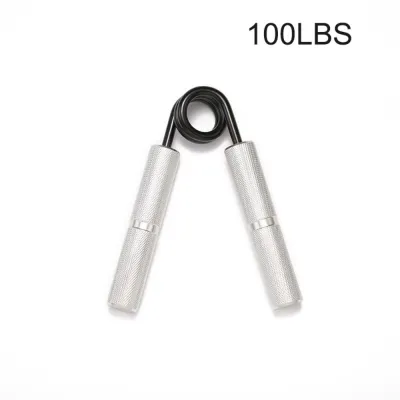
Mechanics & Target Grip strengtheners operate on a simple compression mechanism, utilizing a torsion spring or a coil system to provide resistance as you squeeze the handles together. This movement directly targets the finger flexors (specifically the flexor digitorum superficialis and profundus) and the intrinsic muscles of the hand. It is the gold standard for developing crushing grip strength, which is highly transferable to pulling exercises, climbing, and daily manual tasks.
HDB & Space Suitability From a spatial perspective, grip strengtheners are the ultimate space-saving tool. They easily fit into a small desk drawer, a cabinet, or even your pocket, making them incredibly easy to store. Because they operate silently and require no external weights, you can use them passively while watching television or working at your desk without disturbing family members or neighbors. There is absolutely zero risk of dropping heavy components on homogeneous tiles or parquet flooring.
Limitations The primary drawback of grip strengtheners is their highly specialized nature. They focus almost exclusively on closing the hand, completely neglecting the extensor muscles on the top of the forearm that open the hand. Overusing grip strengtheners without balancing them with extensor work can lead to muscular imbalances and tendon strain. Additionally, cheap, fixed-tension models offer limited progressive overload, meaning you will quickly outgrow them as your strength improves.
Buying Checkpoints
- Handle Material: Opt for knurled aluminum or high-grade steel handles rather than cheap plastic, as they offer a secure grip even when your hands sweat in a humid climate.
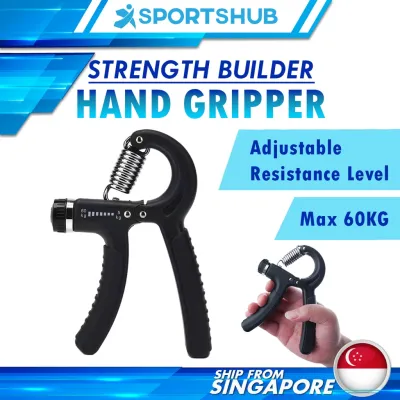
- Adjustability: Look for models with an adjustable tension dial (typically calibrated in kilograms or pounds) or interchangeable springs to ensure long-term progressive overload.
- Spring Quality: Ensure the steel spring is rust-resistant and operates smoothly without squeaking or binding.
Wrist Rollers: Best for Forearm Hypertrophy and Extensor/Flexor Balance
Mechanics & Target A wrist roller consists of a thick handle with a rope or strap attached to a central spindle, with a weight peg suspended at the bottom. By rotating the handle forward or backward, you roll the rope up, lifting the weight. This exercise engages both the forearm flexors (when rolling upward) and the extensors (when controlling the descent), providing a comprehensive workout that stimulates deep muscular fatigue and rapid hypertrophy.
HDB & Space Suitability While the tool itself is relatively small, using a wrist roller requires sufficient vertical clearance to let the weight hang and move freely. The primary concern in a high-rise apartment is the risk of dropping heavy metal weight plates, which can easily crack ceramic floor tiles and send loud, disruptive vibrations through the building structure. To make this tool HDB-safe, you can substitute iron plates with soft-sided sandbags or water-filled containers, and always perform the exercise over a thick, high-density rubber gym mat to absorb any accidental impacts.
Limitations Wrist rollers are highly demanding and produce an intense metabolic burn very quickly, which can make them difficult for beginners to use with proper form. They also require a dedicated setup time, as you must manually thread and secure the weights before each set. Unlike grip strengtheners, they cannot be used casually or passively; they require active physical effort and a clear standing area.
Buying Checkpoints
- Grip Diameter: A thicker handle (around 5 cm or more) increases the demand on your hand muscles, leading to greater muscle activation.
- Strap Material: Choose high-tensile nylon straps over thin ropes, as straps roll up more evenly and are less prone to fraying over time.
- Weight Attachment: Ensure the carabiner and loading pin are made of heavy-duty steel and are rated to hold more weight than your current maximum capacity.
Resistance Bands: Best for Joint Rehab, Warm-ups, and Versatility
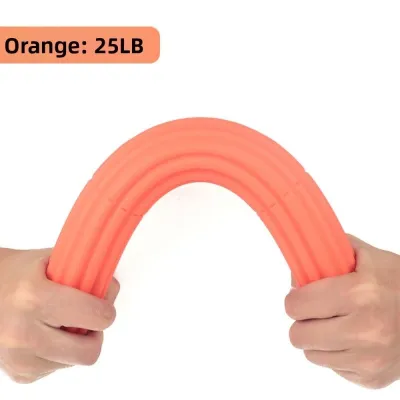
Mechanics & Target Resistance bands utilize elastic tension to provide variable resistance, which increases as the band is stretched. By anchoring the band under your foot or to a stable object, you can perform wrist curls, wrist extensions, and rotational movements like pronation and supination. This multi-directional capability allows you to target the smaller, stabilizing muscles of the wrist and elbow that are often missed by rigid metal tools.
HDB & Space Suitability Resistance bands are incredibly lightweight, completely silent, and pose zero risk to your home’s flooring. They can be folded up and stored in a small pouch, making them highly convenient for compact apartments. You can easily anchor them to a sturdy door frame using a door anchor, or wrap them around a heavy piece of furniture without causing any structural damage or permanent alterations to your living space.
Limitations The main limitation of elastic resistance is its non-linear tension curve. Because the resistance is lightest at the beginning of the movement and heaviest at the peak contraction, it does not provide the consistent, heavy mechanical tension required for building maximal crushing strength. This makes bands less effective for advanced lifters looking to achieve high-level strength milestones, though they remain excellent for high-rep endurance and mobility.
Safety Boundary Before starting any exercise session, always inspect your resistance bands for micro-tears, discoloration, or small punctures, as a band snapping under high tension can cause painful welts or facial injuries. Always anchor the bands to stable, non-moving objects, and avoid wrapping them around sharp metal edges that could cut the material. If you are using a door anchor, ensure the door is fully closed and latched, preferably pulling in the direction opposite to the door’s opening path.
Space, Noise, and Budget: Comparing Tools for HDB Living
When setting up a home gym in a compact apartment, practical lifestyle factors like storage, noise transmission, and cost are just as important as the physical benefits of the equipment. The table below provides a direct comparison of how these three forearm exercise tools perform across key domestic dimensions.
| Tool | Primary Focus | Space Footprint | Noise & Floor Risk | Adjustability | Budget Tier |
|---|---|---|---|---|---|
| Grip Strengthener | Crush grip & finger flexors | Pocket-sized; fits in a drawer | Zero noise; zero floor risk | Easy adjustment via dial or springs | Low to Mid (S$10 – S$40) |
| Wrist Roller | Hypertrophy & flexor/extensor balance | Small handle; requires weight storage | High drop risk; potential tile damage | Highly adjustable via external weights | Mid (S$25 – S$60 plus weights) |
| Resistance Bands | Rehab, warm-ups, & multi-planar movement | Extremely compact; fits in a pouch | Zero noise; zero floor risk | Variable by changing bands or anchor points | Low (S$10 – S$30 per set) |
Budget & Value Assessment
For budget-conscious fitness enthusiasts in Singapore, both resistance bands and basic grip strengtheners offer highly accessible entry points. A quality set of resistance bands or a standard adjustable grip strengthener typically costs between S$10 and S$30, making them highly cost-effective solutions. Specialized wrist rollers are slightly more expensive, especially when you factor in the cost of the external weight plates or loading pins required to use them. However, if you already own kettlebells or weight plates, adding a wrist roller is a highly economical way to expand your home training options.
Versatility Factor
While grip strengtheners and wrist rollers are highly specialized, single-purpose isolation tools, resistance bands offer exceptional multi-use versatility. A single set of bands can be used for shoulder mobility, full-body stretching, lower-body activation, and general strength training, providing excellent value for money. If you have limited space and want a tool that can support your entire fitness routine rather than just your forearms, resistance bands are the clear winner.
Decision Rule
If your budget and space allow, you do not have to limit yourself to just one tool. A highly effective approach is to combine these tools to create a comprehensive forearm routine. For example, you can use resistance bands to warm up the wrist joints and activate the stabilizing muscles, followed by heavy grip strengthener sets to build raw crushing power, or a wrist roller session to finish with high-volume hypertrophy work.
Preventing Wrist and Elbow Injuries During Home Training
The Overuse Risk
Because we use our hands and wrists constantly throughout the day for typing, carrying items, and chores, the forearm muscles and tendons are highly susceptible to overuse injuries. Adding intensive, direct forearm training on top of daily activities can easily overload the tendons that connect to the elbow. This frequently leads to painful conditions such as lateral epicondylitis (tennis elbow) from extensor overload, or medial epicondylitis (golfer’s elbow) from excessive flexor work.
Warm-up Protocol
To protect your joints, never begin a high-intensity forearm workout with cold muscles. Always perform a brief, dynamic warm-up to promote blood flow and joint lubrication. Spend two to three minutes performing the following movements:
- Dynamic Wrist Circles: Interlace your fingers and gently rotate your wrists in a figure-eight motion for 30 seconds in each direction.
- Unweighted Flexion and Extension: Extend your arms forward and actively point your fingers up toward the ceiling, then down toward the floor, holding each position for two seconds.
- Light Band Stretches: Use a very light resistance band to perform high-rep, low-tension wrist curls and extensions to warm up the tendons.
Stop Conditions
It is vital to distinguish between normal muscular fatigue (the deep, temporary burn of lactic acid) and joint or tendon pain. You must immediately stop your training session if you experience any of the following warning signs:
- Sharp, shooting, or localized pain in the wrist joint or elbow.
- Numbness, tingling, or a "pins and needles" sensation in your fingers, which may indicate nerve compression.
- A sudden, involuntary loss of grip strength or control during an exercise.
Recovery & Frequency
Forearm muscles require adequate recovery time to repair and grow, just like any other muscle group. Avoid training your forearms on consecutive days; instead, allow at least 48 hours of rest between intense hypertrophy or heavy strength sessions. For most home gym setups, training the forearms directly two to three times per week is highly effective and safe. Always check the manufacturer’s safety instructions for your specific equipment, and consult a medical professional before starting if you have a history of wrist or elbow issues.
Frequently Asked Questions (FAQ)
How often should I train my forearms at home?
The ideal training frequency depends entirely on the intensity of your workouts. If you are performing light mobility, stretching, or rehabilitation exercises with resistance bands, you can safely perform them daily as part of a warm-up or active recovery routine. However, if you are doing heavy strength training with grip strengtheners or high-volume hypertrophy workouts with a wrist roller, you should limit direct training to two or three times per week, ensuring at least one full day of rest between sessions to allow the tendons to recover.
Are wrist rollers too noisy or heavy for HDB floors?
The rolling motion of a wrist roller is completely silent, but the suspended weight poses a clear noise and safety risk if dropped. To make this exercise safe for HDB living, avoid using heavy iron plates that can crack ceramic tiles or transmit loud vibrations to your downstairs neighbors. Instead, load your roller with softer, household alternatives like sandbags, water-filled jugs, or a single rubber-coated kettlebell. Always stand on a thick, high-density rubber gym mat or a folded yoga mat while training to absorb any accidental impacts and eliminate noise transfer.
Community discussion
Share your experience or ask a question. Comments are reviewed before publication.