
Finding the right cardio equipment for a Singapore HDB flat requires balancing fitness goals with strict space constraints. While a full-sized commercial stair climbing machine offers an intense lower-body workout, its massive footprint and height make it impractical for typical HDB bedrooms or living rooms. Fortunately, compact alternatives like mini steppers and foldable stair steppers with handles allow you to achieve an effective cardiovascular workout without sacrificing precious floor area or obstructing daily movement.
Selecting the best compact stair climbing machine involves more than just looking at the floor footprint. You must consider vertical clearance, storage portability, noise dampening for downstairs neighbors, and your own physical balance. By evaluating these spatial and functional factors, you can find a machine that fits seamlessly into your home layout while providing a safe, challenging workout.
Assessing Your HDB Space and Ceiling Clearance
Before purchasing any stair climbing machine, you must accurately measure your designated workout area. First, distinguish between the machine’s static footprint (its folded or stationary size) and its dynamic footprint (the space required during use). The dynamic footprint accounts for the outward swing of the pedals, arm movements, and the clearance needed to safely mount and dismount without bumping into nearby furniture.
Products mentioned in this guide
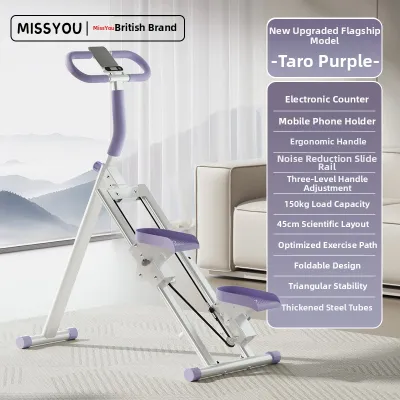
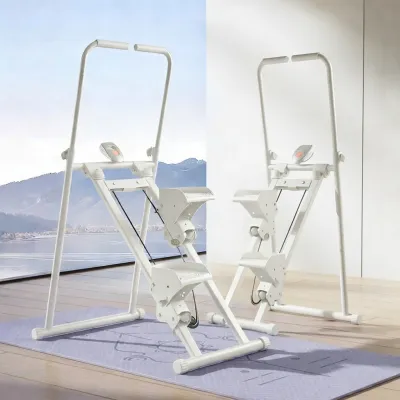

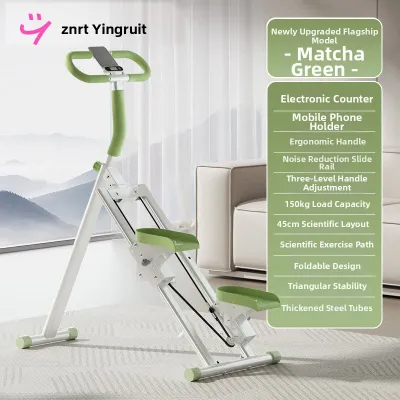
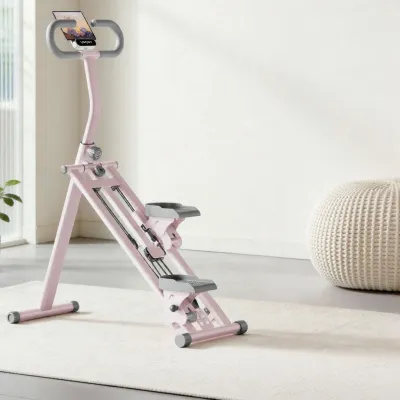
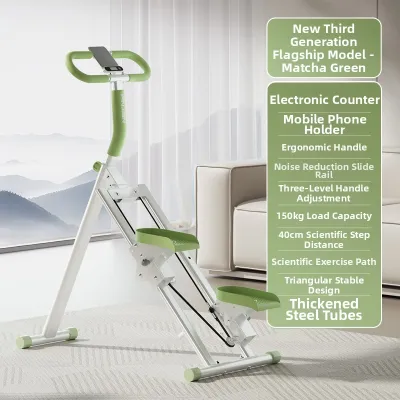
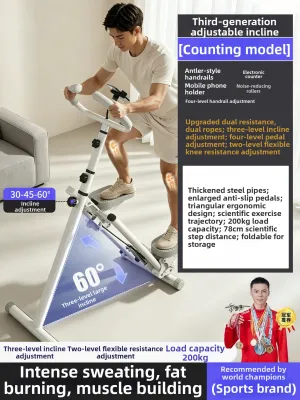
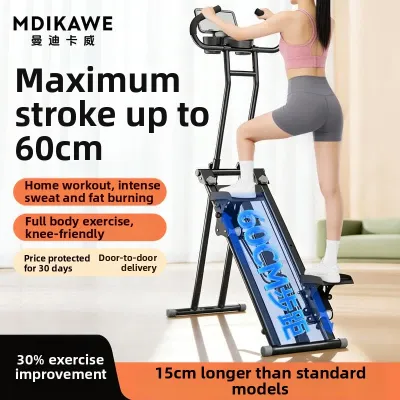
Prices are valid at publication and may change. Please refer to the product page for the latest price.
Ceiling clearance is a critical factor in Singapore HDB flats, where standard ceilings range from 2.6 to 2.8 meters. When you step onto a stair climbing machine, your body is elevated significantly. To ensure you do not strike your head or interfere with ceiling fans, subtract your height and the maximum pedal elevation from your floor-to-ceiling measurement. Maintain a safety buffer of at least 20 to 30 centimeters above your head at the peak of your stride.
Additionally, measure the pathway the machine must take to reach its final destination. Standard bedroom doors in HDB flats are typically 80 to 85 centimeters wide. Verify that the boxed or assembled dimensions can easily clear your main entrance, hallway corners, and bedroom doors. Forcing a bulky frame through a narrow doorway can damage your door frames or scratch the machine’s finish.
Finally, plan for adequate ventilation and physical clearance around the unit. Placing the machine directly against a wall restricts airflow, making your workout uncomfortable and causing sweat moisture to accumulate. Ensure there is at least 50 centimeters of open space on all sides of the machine to allow for natural ventilation and safe mounting.
Comparing Stair Climber Types for Compact Rooms
Different types of stair climbing machines offer varying balances of intensity, stability, and spatial efficiency. Understanding these categories will help you match the equipment to your HDB flat’s layout and your personal fitness level.

Mini Steppers
Mini steppers are the most compact and portable option available for small-space fitness. Consisting of two small pedals attached to hydraulic cylinders, they usually measure no more than 40 to 50 centimeters in length and width. Because they lack a tall frame or permanent handrails, they have an incredibly small static footprint and can be easily slid under a bed, placed inside a wardrobe, or tucked under a study desk.
However, mini steppers require a higher level of core stability and balance since they lack built-in handles. You must rely on your own equilibrium during fast-paced stepping. Mini steppers are highly suited for light to moderate cardio, active recovery, or multi-tasking at a standing desk, but they may not satisfy those looking for high-intensity athletic conditioning.
Compact Stair Steppers with Handles
Compact stair steppers with handles offer a practical middle ground for HDB dwellers who want the stability of a traditional gym machine without the massive bulk. These machines feature a sturdy base frame equipped with upright handlebars, providing a secure grip that allows you to push your cardiovascular limits safely. While they occupy more floor space than a mini stepper, their footprint remains significantly smaller than that of a treadmill.
The presence of handlebars allows you to perform high-intensity interval training (HIIT) with confidence. Many manufacturers design these compact models with space-saving in mind, incorporating folding mechanisms that allow the handlebars to fold flat against the base. This design enables you to store the machine vertically against a wall or behind a door.
Step Mills and Vertical Climbers
Traditional step mills, which feature a revolving flight of stairs, are generally unsuitable for standard HDB bedrooms. These machines are exceptionally heavy, require a large permanent footprint, and demand substantial ceiling clearance that standard 2.6-meter ceilings cannot accommodate. Attempting to squeeze a commercial-grade step mill into a small flat often results in an unusable machine or a cramped, hazardous workout environment.
Vertical climbers, which simulate climbing a ladder, present a different set of spatial trade-offs. They have a remarkably small floor footprint, often requiring less space than a standard compact stepper. However, they demand the highest vertical clearance of any home cardio equipment, as your arms extend fully overhead during the climbing motion. If you are considering a vertical climber for your HDB flat, carefully verify the manufacturer’s maximum height specifications against your ceiling height and the reach of your ceiling fans.
Essential Space-Saving Features to Check
When shopping for a compact stair climbing machine, paying close attention to specific engineering details can make the difference between a machine that integrates smoothly into your home and one that becomes a constant obstruction.
First, evaluate the folding mechanism and storage orientation. Some machines fold completely flat for horizontal storage under a bed frame, while others stand vertically. If storing vertically, ensure the base features dedicated support feet or locking pins to prevent tipping. A falling fitness machine poses a serious safety hazard, especially in households with young children or pets.
Built-in transport wheels are another indispensable feature for small apartments. Even a compact stair climber can weigh between 15 to 30 kilograms, making it awkward to lift and carry. High-quality, non-marking transport wheels on the base frame allow you to tilt and roll the machine effortlessly from its storage spot to your active workout zone. This ease of movement ensures that setting up your workout does not become a chore.
When reading product dimension charts on ecommerce platforms, look closely at how measurements are defined. Do not rely solely on base frame dimensions, as these often exclude the widest points of the handlebars or the outward path of the foot pedals. Look for “maximum operational dimensions” to understand the true physical boundary of the machine during use. If the listing only provides static dimensions, add 15 to 20 centimeters to the width and length to account for dynamic movement.
Finally, consider the weight of the machine in relation to construction quality. While lighter machines are easier to move, they often utilize smaller hydraulic cylinders or lighter flywheels, which can result in a jerky stepping motion. Conversely, a slightly heavier machine with robust steel construction and high-quality hydraulics offers a much smoother, more stable workout. Look for a balanced option that provides sufficient structural weight for stability—typically around 20 kilograms for a handle-equipped model—while still utilizing transport wheels for portability.
Setting Up a Safe and Functional Workout Zone
Creating a dedicated, safe workout zone within a limited HDB space is essential for protecting both your body and your home. Proper placement and preparation can prevent accidents and preserve your property.
Always position your stair climbing machine on a completely level, solid surface. Many HDB flats feature ceramic tiles, vinyl planks, or laminate flooring, which can have minor unevenness at the joints. Placing your machine across an uneven transition can cause the base to wobble during use, compromising your balance and placing uneven stress on the frame. If your floor is slightly uneven, look for a stair climber equipped with adjustable leveling feet.
Using a high-density equipment mat is highly recommended. A thick rubber or PVC mat protects your flooring from scratches and indentation marks caused by the heavy metal base under your dynamic weight. It also catches sweat, preventing moisture from seeping into vinyl seams or tile grout. Most importantly, a quality mat dampens vibration and mechanical noise, ensuring your workouts do not disturb your downstairs neighbors.
Establish a clear safety buffer zone around the machine. When stepping vigorously, your elbows and upper body will naturally move. Ensure there is at least 50 centimeters of clear space behind and to the sides of the machine, keeping it well away from sharp corners of study desks, wardrobes, or wall-mounted televisions.
Lastly, manage power cables and ensure proper ventilation. If your stair climber requires a mains connection, route the power cable flat along the floor away from walking paths. Keep the area well-ventilated by positioning the machine near an open window or utilizing a standing fan to maintain comfortable airflow and reduce sweating.
Common Space and Sizing Mistakes to Avoid
Avoiding common pitfalls during the planning and purchasing process can save you from the hassle of returning heavy equipment or dealing with a cramped living space.
One frequent mistake is measuring only the machine’s static base while ignoring the outward swing of the pedals and the width of the handlebars. During operation, the pedals on many compact steppers extend slightly beyond the main frame. If you place the machine too close to a wall based solely on its static footprint, the pedals may strike the wall during your workout, causing damage to your wall plaster and the machine itself.
Another common error is failing to account for your dynamic height and arm reach. Many users calculate ceiling clearance based on their standing height on the machine’s lowest step setting. However, as you step, your body moves up and down. Always base your calculations on the maximum step elevation and allow extra clearance for natural head movement.
Do not assume that all product labels claiming “compact” or “foldable” mean the machine is easy to manage alone. Some foldable stair climbers are constructed with heavy steel frames that can weigh upwards of 35 kilograms. Even when folded, these machines can be awkward to lift and maneuver into tight closets. Always check the net product weight and ensure you are physically comfortable moving that weight before relying on a daily folding routine.
Finally, avoid placing your stair climbing machine too close to an air conditioner unit or directly against a damp window. The combination of cool air from an air conditioner and the warm, humid air generated by your body heat can cause condensation to form on the metal parts and electronic console. Over time, this moisture can accelerate rust on the frame or cause premature failure of the electronic display and hydraulic cylinders.
Frequently Asked Questions (FAQ)
Can I store a stair stepper upright in a small HDB bedroom?
Yes, many compact stair steppers with handles are specifically designed to be tilted and stored vertically against a wall or inside a wardrobe to save floor space. However, you must consult the manufacturer’s product manual before doing so. Some models utilize hydraulic cylinders that are filled with oil; storing these machines in an unintended vertical position can cause the oil to leak or pool incorrectly, potentially damaging the seals and reducing resistance performance. Always ensure the machine is rated for vertical storage and use any built-in locking pins to secure the frame.
Are mini steppers effective for cardio compared to larger machines?
Mini steppers are highly effective for low-impact cardiovascular exercise, helping to elevate your heart rate, burn calories, and tone lower-body muscles such as the glutes, calves, and thighs. However, they generally offer a shorter range of motion and lower maximum resistance compared to full-sized commercial stair climbers. They are ideal for daily active movement, supplementary cardio, or light workouts while watching television, but they may not provide the extreme high-intensity challenge required for competitive athletic conditioning.
How do I protect my HDB flooring from a stair climbing machine?
To protect your HDB flooring from physical damage and vibration, place a high-density rubber or PVC equipment mat beneath the machine. The mat should extend at least 10 to 15 centimeters beyond the outer edges of the machine’s base. This setup distributes the dynamic weight of your body and the machine evenly, preventing indentations on softer vinyl planks or laminate flooring. Additionally, the mat acts as a barrier against sweat, which can otherwise damage floor finishes, and dampens operational noise to keep your home quiet for downstairs neighbors.
Community discussion
Share your experience or ask a question. Comments are reviewed before publication.