
Quick Answer: Matching the Target to Your Training Style
Choosing the right taekwondo target is not a matter of finding a single, universally superior piece of equipment. Instead, the decision hinges on your personal training environment, your access to a dedicated practice partner, and your specific athletic goals. The ideal setup must align with whether you prioritize dynamic, partner-driven precision or independent, high-intensity power workouts.
- Choose hand-held targets (such as paddle targets, kick shields, or focus mitts) if you regularly train with a partner, focus on speed, reaction times, and precise footwork, and need highly portable gear that can be easily stored in a compact home.
- Choose standing targets (such as freestanding heavy bags or humanoid training dummies) if you primarily practice solo, want to build raw kicking power and cardiovascular endurance, and have a dedicated floor space that can accommodate a heavy, stationary base.
By understanding how each target type interacts with your body, your space, and your training routine, you can make an informed investment that elevates your martial arts practice while keeping you safe and motivated.
Hand-Held Targets: Best for Partner Drills and Precision
Hand-held targets are the cornerstone of traditional and modern taekwondo training, offering an interactive experience that closely mimics the unpredictable nature of a real sparring match. This category encompasses several specialized designs, including classic single or double-leaf paddle targets, rectangular kick shields, and curved Thai-style pads. Each of these tools serves a distinct role in developing a martial artist’s technical precision, timing, and agility.
Products mentioned in this guide
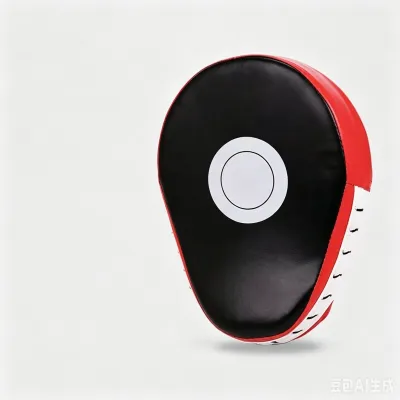
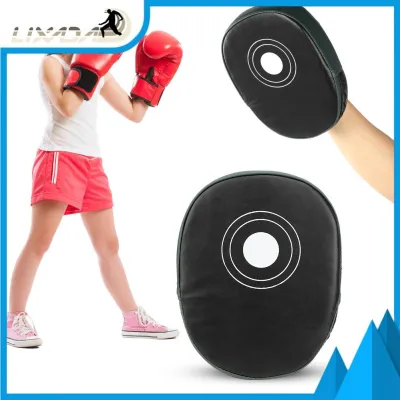
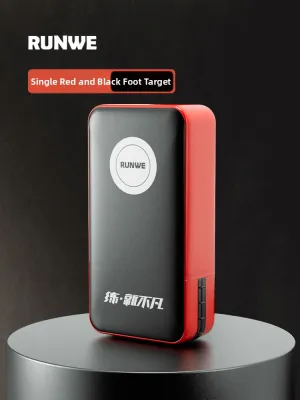
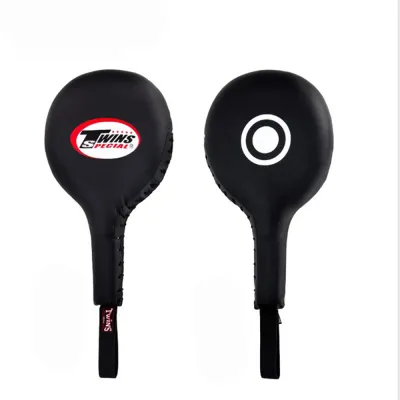
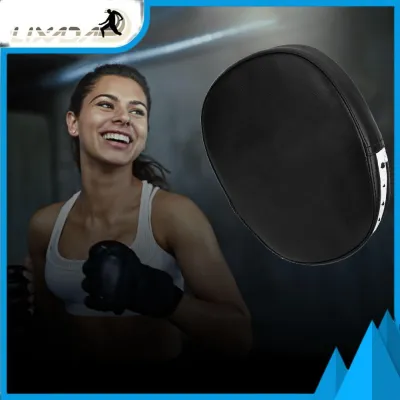
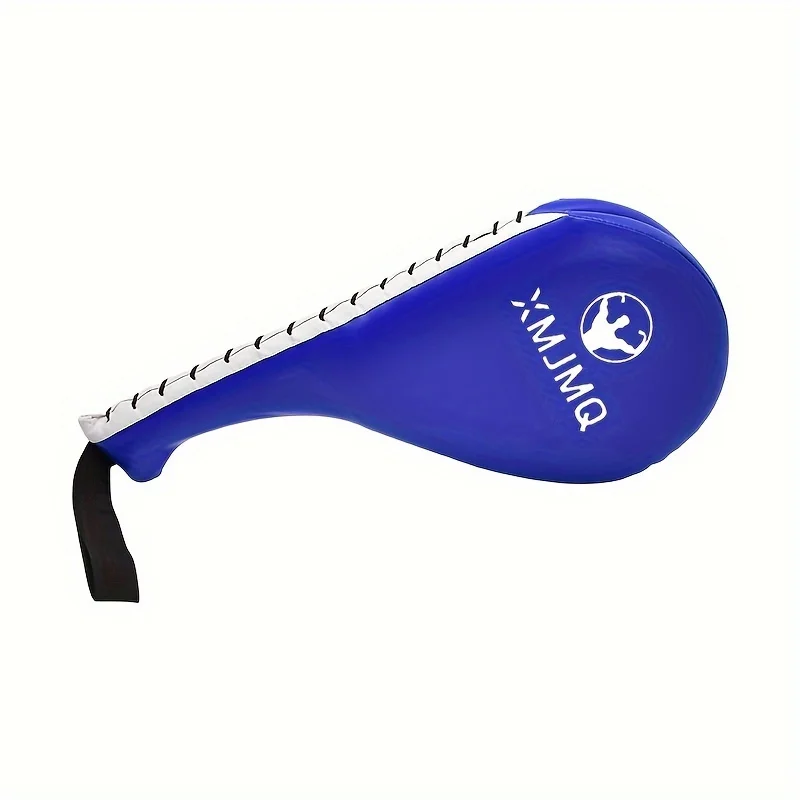
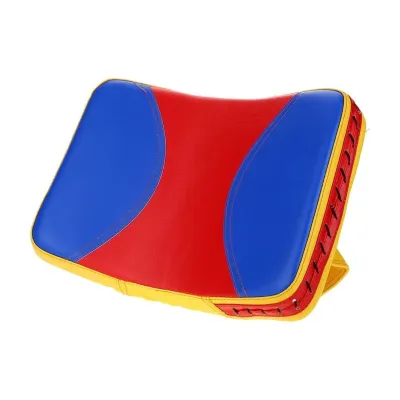
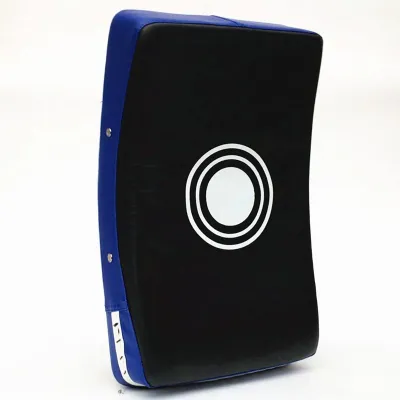
Prices are valid at publication and may change. Please refer to the product page for the latest price.

The Dynamics of Interactive Training
The primary advantage of hand-held targets is their capacity for dynamic movement. Unlike a stationary object, a pad held by a partner can move through three-dimensional space, forcing the kicker to constantly adjust their distance, angle, and timing. When practicing rapid combinations—such as a double roundhouse kick followed by a spinning hook kick—the pad holder can instantly reposition the targets to match the flow of the movement. This constant adjustment trains your visual reflexes and spatial awareness, skills that are critical for competitive sparring but impossible to develop when striking a static object.
Acoustic Feedback and Technical Accuracy
Paddle targets, particularly double-leaf designs, are engineered to provide immediate acoustic feedback. When a kick is executed with perfect technique, flat-foot instep contact, and rapid snap, the two leaves of the paddle slap together to produce a loud, sharp “crack.” This sound serves as an instant validation of your form. If the kick is delivered with a dragging foot, incorrect angle, or insufficient speed, the target will produce a dull thud or fail to snap entirely. This real-time auditory loop allows practitioners to self-correct their hip rotation and foot alignment mid-drill.
Limitations and the Partner Dependency
Despite their high technical utility, hand-held targets have one significant limitation: they are virtually useless without a trained, active partner. Holding pads is an art in itself that requires coordination, strength, and focus. An inexperienced holder may fail to provide the necessary resistance, hold the target at incorrect angles that strain the kicker’s joints, or fail to brace properly, leading to wrist, elbow, or shoulder injuries. Furthermore, if you do not have someone at home who is willing and able to hold pads for you on a regular basis, these targets will likely sit unused in your storage closet.
Ideal User Profile for Hand-Held Gear
Hand-held targets are best suited for active taekwondo competitors who need to sharpen their sparring reflexes and reaction times. They are also ideal for students who regularly attend classes and want to practice specific technical combinations with a family member or training partner at home. Finally, they are perfect for practitioners focusing on high-speed, low-impact accuracy drills, spinning kicks, and jumping techniques where joint safety and precise targeting are paramount.
Standing Targets: Best for Solo Power and Endurance
Standing targets, which include freestanding heavy bags, wavemasters, and spring-loaded humanoid dummies, are designed for independent, high-volume training. These targets stand on a heavy base filled with sand or water, providing a solid, upright obstacle that can withstand full-force strikes without requiring a partner to absorb the impact. For many home practitioners, a standing target is the ultimate tool for maintaining a consistent physical conditioning routine.
Developing Raw Kicking Power
To build functional power in taekwondo kicks—such as the side kick (Yeop Chagi) or back kick (Dwi Chagi)—you must practice transferring kinetic energy from the ground, through your hips, and directly into a dense, resistant target. Standing targets provide the structural resistance necessary for this power development. Kicking a heavy, padded column forces your core, glutes, and quadriceps to engage fully to overcome the inertia of the bag. Over time, this resistance training strengthens the specific muscle groups used in striking, improving both your explosive power and your structural stability upon impact.
Solo Training Independence and Conditioning
The most compelling benefit of a standing target is the freedom it provides. You do not need to coordinate schedules with a partner or worry about tiring someone else out during a grueling workout. This independence makes standing targets highly effective for cardiovascular endurance and high-intensity interval training (HIIT). You can set a timer and perform continuous kicking drills—such as alternating roundhouse kicks for three-minute rounds—to build aerobic capacity, leg stamina, and mental toughness. It allows you to rack up hundreds of repetitions in a single session, solidifying your muscle memory through sheer volume.
Technical and Physical Limitations
While standing targets excel at building power and stamina, they possess inherent limitations in teaching combat realism. Because a standing bag is stationary, it does not move, retreat, or counter-attack. This static nature can encourage poor habits, such as dropping your hands, failing to guard your face, or neglecting footwork and head movement. Additionally, because the target is rigid, striking it repeatedly with improper joint alignment can lead to micro-trauma in the ankle, knee, or hip joints. Unlike a human pad holder who can tilt a pad to accommodate your flexibility limits, a standing bag remains perfectly vertical, forcing your body to adapt to its rigid plane.
Ideal User Profile for Standing Gear
Standing targets are the ideal choice for martial artists who train primarily alone at home and need a reliable, always-available target for daily workouts. They are also excellent for practitioners focused on physical conditioning, weight loss, muscle toning, and cardiovascular endurance. Advanced students who already have solid kicking form and want to supplement their dojo training with high-volume power output sessions will also benefit greatly.
Core Comparison: How They Fit Your Practice Environment
When choosing between hand-held and standing taekwondo targets, practical environmental factors are often just as important as your training goals. Your living space, floor type, storage capacity, and local climate will heavily influence which option is viable and sustainable for long-term use.
Space and Storage in Compact Homes
In compact urban living environments, such as typical apartments or HDB flats in Singapore, floor space is a premium commodity. This spatial reality makes the portability of your training gear a critical consideration.
Hand-held targets have a negligible physical footprint. A set of paddle targets or a compact kick shield can easily slide under a bed, fit into a wardrobe, or hang from a simple wall hook. They do not permanently occupy floor space, allowing you to transform any clear room into a temporary training area and quickly restore it afterward.
A freestanding bag, on the other hand, requires a permanent or semi-permanent home. The base typically has a diameter of 50 to 60 centimeters, but the actual space required is much larger. To train safely, you must maintain a clearance zone of at least 1.5 meters in all directions around the bag. This prevents your foot, leg, or body from colliding with nearby furniture, walls, or glass doors during high-velocity spinning kicks. Furthermore, once a standing target’s base is filled with 100 to 150 kilograms of water or sand, moving it is an exhausting chore that can scuff or damage delicate flooring.
In addition to floor space, local environmental conditions play a role. Singapore’s high relative humidity (frequently exceeding 80%) creates a prime environment for mold, mildew, and material degradation. Sweat-soaked hand-held targets are easy to wipe down with a mild disinfectant and hang in a well-ventilated service yard to dry. Standing targets, with their large vinyl surfaces and dense foam cores, are more difficult to thoroughly dry and ventilate. If kept in a damp, unventilated corner, they can develop persistent odors and suffer from accelerated synthetic leather peeling.
Feedback and Realism in Striking
The tactile, visual, and physical feedback you receive when striking a target dictates how effectively your training translates to real-world application or sparring performance.
Hand-held targets excel at teaching distance management. A partner can step backward as you kick, forcing you to slide forward to reach the target, or step forward, forcing you to execute a defensive counter-kick. This teaches you to read body language and adjust your stride. Standing targets, being static, offer zero help with distance adjustment. If you stand too close, your kicks will jam; if you stand too far, you will overextend and lose balance, but the bag will never actively punish these mistakes.
Conversely, standing targets provide a realistic sensation of striking a solid opponent. When you execute a powerful side kick on a heavy standing bag, you feel the resistance travel back through your skeletal structure, teaching you to lock your ankle and align your heel correctly to prevent sprains. Hand-held targets, especially lightweight paddles, offer almost no resistance. While excellent for speed, they do not prepare your joints and bones for the physical impact of striking a solid body, which can leave you unprepared for the physical realities of full-contact sparring.
Side-by-Side Comparison of Target Types
To help visualize the key differences between these two target configurations, the table below compares them across critical operational and training dimensions.
| Decision Dimension | Hand-Held Targets (Paddles, Shields, Thai Pads) | Standing Targets (Freestanding Bags, Humanoid Dummies) |
|---|---|---|
| Primary Training Focus | Speed, accuracy, timing, and dynamic footwork | Power development, physical conditioning, and volume |
| Partner Requirement | Mandatorily requires a trained pad holder | Completely independent (100% solo training) |
| Space & Storage Needs | Extremely low; highly portable and easily stored | High; requires a permanent footprint and safety clearance |
| Power Development | Moderate (limited by the holder's physical strength) | High (dense foam and heavy base absorb maximum force) |
| Technical Precision | High (small target area forces exact foot placement) | Moderate (broad striking surface can mask sloppy accuracy) |
| Noise & Vibration | High pitch (sharp "snap" sound, minimal floor vibration) | Low pitch (deep, low-frequency thuds and floor vibration) |
| Climate Resilience | Easy to dry, clean, and store in ventilated areas | Requires regular wipe-downs; large surface prone to humidity wear |
The Decision Framework: Which One to Buy?
To finalize your decision, evaluate your current training circumstances against this structured framework. Choosing the correct tool will ensure that your equipment matches your lifestyle and actively supports your martial arts progression.
Choose Hand-Held Targets If:
- You have a dedicated training partner: You live with a family member, roommate, or fellow martial artist who is willing to learn proper pad-holding techniques and train with you regularly.
- Your primary goal is technical mastery and sparring prep: You need to work on your reaction times, practice complex combinations, and refine the precise angle of your instep and heel contact.
- Your living space is highly constrained: You live in a compact apartment or shared space where a large, permanent piece of fitness equipment is impractical or visually intrusive.
- You prioritize quiet speed drills: You want to avoid transmitting heavy, low-frequency impact vibrations through the floor to your neighbors.
Choose Standing Targets If:
- You train completely solo: You do not have access to a reliable partner at home and need an always-ready target that allows you to work out whenever your schedule permits.
- Your goal is physical conditioning and power: You want a high-intensity, cardiovascular workout that builds leg stamina, core strength, and explosive striking power.
- You have a dedicated floor area: You have a spacious room, balcony, or garage with a flat, level floor and at least 1.5 meters of clear space around the unit.
- You can implement floor soundproofing: You have a ground-floor space or are prepared to install thick, high-density rubber mats to dampen the impact vibrations before they travel through the building's concrete structure.
Consider a Hybrid Approach If:
If your budget and space allow, combining both target types offers the most complete training experience. You can use a freestanding standing bag for your solo morning conditioning, focusing on raw power, high-repetition sets, and cardio. On weekends or evenings when a training partner is available, you can switch to hand-held paddles to sharpen your reflexes, speed, and competitive sparring combinations.
Before making any purchase, always verify the manufacturer’s specifications. Check the total height of the standing target to ensure it accommodates your kicking reach, and verify that the base material is constructed from high-density, tear-resistant synthetic leather (such as premium polyurethane) that can withstand both heavy impact and local humidity.
Essential Safety and Setup Checks
To prevent personal injury and avoid damaging your training equipment or home, you must establish a safe training environment and perform routine maintenance checks before every session.
Safety Protocols for Hand-Held Targets
When training with hand-held targets, the safety of both the kicker and the holder depends on clear communication and proper technique.
The pad holder must never hold a target directly in front of their face or chest. A powerful kick can easily drive the pad into the holder’s nose or jaw. Instead, hold the pads slightly offset from the body. Keep your wrists straight, your elbows slightly bent to absorb the shock, and your core engaged.
The striker must control their power, especially during close-range or complex spinning drills. Do not kick at 100% power until you and your partner have established a reliable rhythm and trust. Always inspect the handle straps and stitching on your kick shields and pads before use. If a strap is loose or the stitching is fraying, stop using the target immediately to prevent it from slipping out of the holder’s hand mid-kick.
Setup and Maintenance for Standing Targets
Freestanding targets are heavy and subject to violent physical forces, requiring careful setup to ensure stability and protect your home environment.
Always follow the manufacturer’s guidelines for filling the base. While water is easier to fill and drain, dry play sand is highly recommended for maximum stability as it is denser and does not slosh around. If using water, consider adding a small amount of mild algaecide to prevent mold and bacterial growth inside the dark, sealed base over time.
Never place a heavy standing target directly on bare tile, parquet, or vinyl flooring. The impact of your kicks will cause the base to shift, slide, and vibrate, which can scratch, crack, or dent your floors. Place a high-density interlocking EVA foam mat or a heavy-duty rubber gym mat (at least 1.5 to 2 centimeters thick) underneath the base. This mat acts as a shock absorber, protecting your floor and significantly reducing the low-frequency thuds that can disturb neighbors in multi-story residential buildings.
Wipe down the striking surface with a damp cloth and mild soap after every workout to remove sweat, which contains salts that can dry out and crack synthetic leather over time. Avoid using harsh chemical solvents or alcohol-based cleaners, as these can degrade the protective coating of the polyurethane surface. Keep the target away from direct, intense sunlight to prevent the internal foam from breaking down and losing its structural density.
Community discussion
Share your experience or ask a question. Comments are reviewed before publication.