
Choosing the right hand paddles in Singapore depends entirely on matching the paddle’s surface area, shape, and rigidity to your current swimming proficiency, stroke mechanics, and shoulder strength. Beginners benefit most from small, flexible finger paddles that highlight water feel and catch technique. Intermediate swimmers should transition to hand-sized, contoured paddles that build moderate strength while reinforcing a clean stroke path. Advanced swimmers can utilize larger, rigid, or specialized strapless paddles to maximize power output and refine stroke-specific mechanics. Selecting the wrong size or resistance level can quickly lead to shoulder strain, making it essential to understand how these training tools interact with your body before taking them to your local ActiveSG or condominium pool.
Understanding Water Resistance and Shoulder Safety Limits
Hand paddles artificially increase the surface area of your hand, which dramatically increases the volume of water you must push during the pull phase of your stroke. This added resistance places a significantly higher mechanical load on the shoulder joint, particularly the rotator cuff muscles and the surrounding tendons. The more rigid the material and the larger the surface area, the greater the force required to complete each stroke.
Because water is dense, any misalignment in your stroke technique is magnified when wearing paddles. If your hand enters the water at an awkward angle or if you drop your elbow during the catch, the increased resistance can force the shoulder joint into unstable, compromising positions. This makes proper form far more critical than the sheer size of the paddle itself.
Products mentioned in this guide
![[SG 🚚] 1Pair Swimming Hand Paddles With Adjustable Straps Webbed Swim Training Hand Fins Unisex Ergonomic Comfortable](https://img.lazcdn.com/g/p/4e2c04adde1d303e0d6b68fbfd7adcc1.jpg_400x400q80.jpg_.webp)
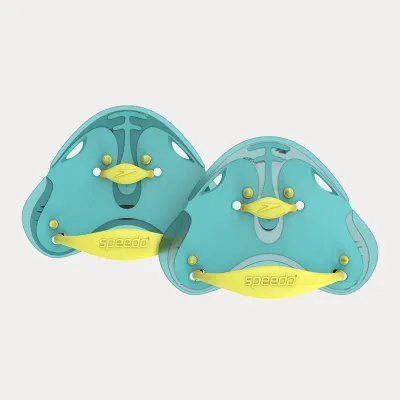
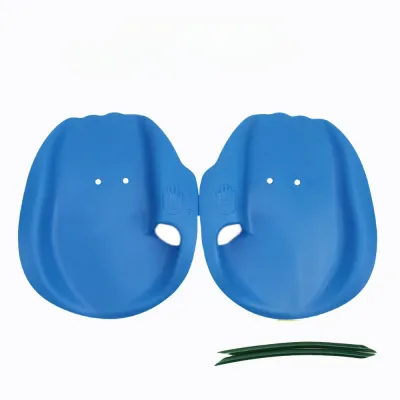
![[SG Stock] Swimming Hand Paddles Freestyle Fins Adjustable Straps Training Swim Gear Kids Youth Adult Free Style](https://img.lazcdn.com/g/p/02cadd7576dd384ce5d11112d7afff54.jpg_400x400q80.jpg_.webp)
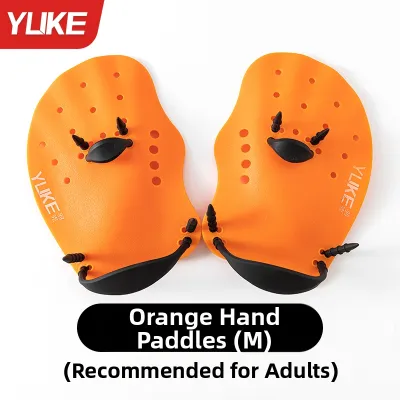
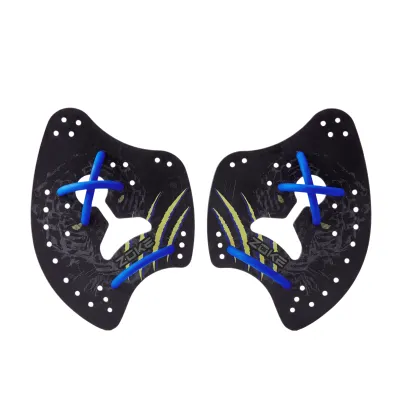
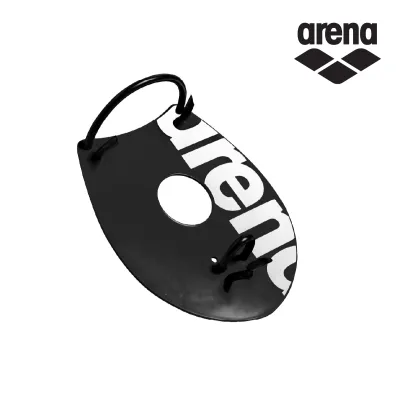
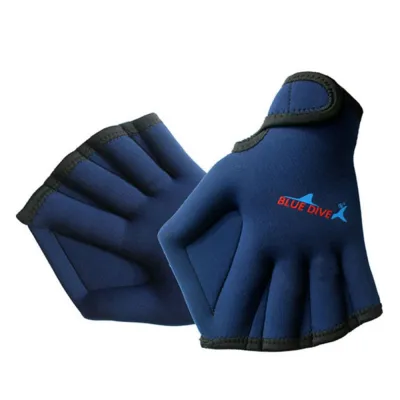
Prices are valid at publication and may change. Please refer to the product page for the latest price.
Swimmers must remain highly sensitive to early warning signs of shoulder strain. A dull ache in the front or side of the shoulder, sharp twinges during the catch phase, or persistent stiffness after a training session are clear indicators of overuse. If you experience any joint discomfort, clicking, or localized pain that does not subside with rest, you must stop using the paddles immediately.
Equipment cannot replace proper technique or physical conditioning. It is highly recommended to consult a qualified swim coach to analyze your stroke before integrating paddles into your routine. If persistent pain occurs, seek advice from a medical professional or physical therapist specializing in sports injuries to prevent long-term damage.
Selecting Hand Paddles for Beginners: Technique and Water Feel
For those new to structured swim training, the primary goal is to develop a feel for the water—specifically, learning how to “catch” and hold the water with the forearm and hand rather than letting the arm slip through. Beginners should look for paddles that are smaller than their actual hand size, often referred to as finger paddles. These tools cover only the fingers, leaving the palm exposed to the water.

This design allows the swimmer to feel the pressure of the water against their palm while receiving subtle feedback on their hand entry and pull angle. By keeping the surface area small, finger paddles minimize the stress placed on undeveloped shoulder muscles, allowing novices to focus entirely on perfecting their stroke mechanics without risking early fatigue or injury.
When selecting beginner paddles, look for models made from lightweight, slightly flexible plastics or rubberized materials. Flexible edges are highly forgiving, reducing the sudden impact on the shoulder joint if the hand enters the water incorrectly. Ergonomic contours that mimic the natural curve of a relaxed hand are preferable over flat, rigid boards. Minimalist strap setups—such as a single finger loop—are ideal because they force the swimmer to maintain constant pressure against the water; if the stroke path is incorrect, the paddle will slip or shift, providing instant sensory feedback.
Novice swimmers must strictly avoid oversized paddles, highly rigid carbon-fiber or heavy plastic plates, and complex, multi-strap locking systems. Large paddles create excessive drag that a beginner’s shoulder muscles are not yet conditioned to handle. Rigid materials do not flex under pressure, which can mask poor technique and lead to rapid muscle fatigue or acute joint strain. Heavy resistance tools often cause beginners to drop their elbows and drag their hips, defeating the purpose of technical training.
Selecting Hand Paddles for Intermediate Swimmers: Power and Form
As stroke mechanics become more consistent, intermediate swimmers can transition to hand-sized paddles or models that extend slightly beyond the fingertips (typically no more than one to two centimeters past the hand outline). This step up introduces moderate resistance, allowing the swimmer to build upper-body strength and endurance while continuing to refine their stroke path.
At this level, shape variations become highly relevant. Contoured paddles that follow the natural palm shape help maintain a relaxed hand position and encourage a clean entry into the water. Finger-shaped or asymmetrical designs are engineered to guide the hand through the optimal pulling path, helping to correct common errors like hand crossing or outward sweeping. Rectangular paddles offer a classic, uniform resistance profile but require a highly stable wrist and forearm to control throughout the entire pull phase.
Training with intermediate paddles requires careful self-monitoring. Because the resistance is higher, muscle fatigue will set in much faster than during unassisted swimming. Swimmers should pay close attention to their stroke rate and form; if the elbows begin to drop, the recovery phase becomes sloppy, or the lower body starts to sag, it is time to remove the paddles.
Adjust training volume gradually to ensure technique remains uncompromised. Start with short distances, such as 50-meter or 100-meter sets, and cap paddle work at a small percentage of the total workout volume. If you find your stroke breaking down after a few laps, revert to unassisted swimming or switch back to smaller finger paddles until your endurance improves.
Selecting Hand Paddles for Advanced Swimmers: Power and Specialization
Advanced swimmers with well-established stroke mechanics and robust shoulder conditioning can utilize oversized, highly rigid paddles to target specific training outcomes. These paddles are designed to maximize water resistance, forcing the major muscle groups of the back, chest, and shoulders to work at peak capacity. This high-load training is highly effective for building explosive pulling power, increasing sprint speed, and improving specific muscle recruitment patterns required for competitive racing.
Advanced training often incorporates specialized paddle designs tailored to specific strokes or technical drills. For instance, triangular or hydrodynamic paddles are frequently used to refine the high-elbow catch in freestyle and butterfly. Some advanced paddles are completely strapless, relying solely on the pressure of the water and correct hand positioning to stay in place. If the swimmer’s technique falters even slightly during a high-speed set, the strapless paddle will immediately fall off, making it an excellent tool for maintaining absolute precision at race pace.
Advanced swimmers also frequently combine these paddles with pull buoys to isolate the upper body completely, allowing for intense, focused strength sets. This combination removes the kick from the equation, placing the entirety of the workload on the upper body and core, which is ideal for simulating the fatigue experienced during the latter half of a race.
Despite advanced conditioning, the risk of injury remains high when training with maximum resistance. Advanced swimmers must adhere to strict limits on usage volume, rarely exceeding a quarter of their total weekly yardage in paddles. A thorough, unassisted warm-up is absolutely mandatory before putting on high-resistance paddles. This warm-up should include dynamic shoulder mobility exercises on land and several hundred meters of easy, technical swimming to ensure the joints are fully lubricated and the muscles are warm before facing high mechanical loads.
Verifying Sizing, Strap Configurations, and Physical Fit
To find the correct paddle size, measure the length of your hand from the base of your palm to the tip of your middle finger, as well as the width across your knuckles. Map these measurements directly to the manufacturer’s sizing charts, as sizing conventions vary significantly between brands. A paddle that is too large will overload your shoulders, while one that is too small will not provide enough resistance to meet your training goals.
The way a paddle attaches to your hand dictates how it behaves in the water. Dual-strap configurations (one across the fingers and one across the wrist) offer maximum stability and are excellent for heavy strength sets, but they can mask poor technique by keeping the paddle attached even during a sloppy pull. Single-finger or strapless designs require a highly neutral wrist and continuous water pressure to stay aligned, making them superior for technical feedback.
When trying on paddles at home or at a local sports retailer in Singapore, perform a physical fit check. Place your hand flat on the paddle; your fingers should align comfortably with the contours, and the edges of the paddle should not restrict your wrist’s natural range of motion. The straps should be snug enough to prevent shifting but loose enough to avoid cutting off circulation or forcing your fingers into a cramped position. Many local sports outlets allow you to handle the gear in-person, which is highly recommended to verify the tactile feel and flexibility of the materials before purchasing.
Frequently Asked Questions (FAQ)
How often should I use hand paddles during a weekly training routine?
For most swimmers, hand paddles should be treated as a specialized training tool rather than a constant accessory. Limit paddle usage to one or two sessions per week, incorporating them into specific strength or technical sets rather than entire workouts. A safe guideline is to keep paddle work under 25 percent of your total weekly swim volume. If you notice your stroke rate slowing down significantly, or if you experience any shoulder stiffness or dull aches, remove the paddles immediately and focus on unassisted, easy recovery swimming.
Can I combine hand paddles with a pull buoy or swim snorkel?
Yes, combining hand paddles with a pull buoy is a common and effective way to isolate the upper body, allowing you to focus entirely on pulling power and core stability without the distraction of kicking. Adding a swim snorkel further enhances this combination by eliminating the need to turn your head to breathe, keeping your spine aligned and allowing you to watch your hand entry and catch mechanics directly. However, because this combination completely isolates the upper body, it increases the mechanical load on your shoulders, so you should shorten your sets and monitor your fatigue levels closely.
How do I clean and store hand paddles to prevent material degradation?
To extend the lifespan of your hand paddles, always rinse them thoroughly with fresh, clean water after every swim to remove chlorine, salt, and other pool chemicals. Allow them to air-dry completely in a shaded, well-ventilated area before packing them into your swim bag. Avoid leaving your paddles in direct sunlight, inside a hot car, or near direct heat sources, as Singapore’s high humidity and heat can cause the plastic plates to warp and the rubber straps to become brittle and snap prematurely.
Community discussion
Share your experience or ask a question. Comments are reviewed before publication.