
Beginners selecting their first tennis grip setup often face a choice between the built-in cushioning of a premium base replacement grip like the Head Hydrosorb Pro and the temporary, thin layer of a standard overgrip. While the Head Hydrosorb Pro is technically a replacement grip designed to wrap directly onto the bare handle bevels, its comparison to popular overgrips is crucial for beginners trying to find the right balance of comfort, sweat absorption, and handle size. Understanding how these layers interact determines not only how comfortable the racket feels during long practice sessions on hot, humid courts but also how effectively you can control your shots.
For a new player, the grip is the sole point of contact with the racket, making it a critical factor in stroke development. A grip that is too slippery can cause the racket to twist on off-center hits, while a grip that is too thick can prevent your fingers from wrapping securely around the handle. By comparing the structural design of a base replacement grip like the Hydrosorb Pro with the characteristics of common overgrips, you can build a setup that supports your learning curve, protects your arm from harsh vibrations, and fits your budget.
Identifying Your Beginner Grip Requirements
Before comparing specific products, you must define your personal baseline needs for racket control and hand comfort. The first major decision is choosing between a tacky (sticky) surface and a dry (absorbent) surface. Tacky grips offer a high-friction feel that helps keep the racket secure with minimal hand pressure, which is highly beneficial for beginners who are still building forearm strength. Dry grips, which often feel like soft suede, are designed to absorb moisture rapidly, preventing the handle from turning into a slippery surface when your hands sweat.
Products mentioned in this guide
Prices are valid at publication and may change. Please refer to the product page for the latest price.
Your playing environment plays a massive role in this decision, especially in regions with high humidity like Singapore. On outdoor courts, high temperatures and humidity can cause rapid sweating, which often overwhelms standard tacky grips and makes them feel greasy. If you play primarily on sheltered or indoor courts with air conditioning, your sweat levels may remain moderate, allowing you to enjoy the consistent stickiness of a tacky grip without frequent slippage.
Another critical factor is grip thickness and its effect on handle bevel feedback. The bevels are the flat, angled sides of the racket handle that allow you to feel your grip alignment without looking down. Wrapping a thick grip or multiple overgrips over the handle rounds out these bevels, making it difficult to distinguish between a continental and an eastern grip. Beginners should aim for a setup that provides enough cushioning to prevent blisters while keeping the bevels distinct enough to guide proper hand placement.
Profile of the Head Hydrosorb Pro
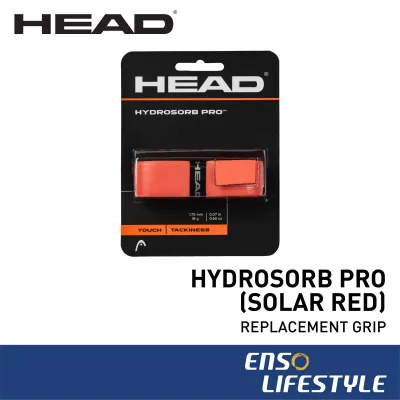
The Head Hydrosorb Pro is designed as a premium replacement grip, meaning it is engineered to be wrapped directly onto the handle’s raw graphite frame rather than over an existing grip. It features a polyurethane construction with a twin-channel system designed to facilitate airflow and channel moisture away from the palm. The surface texture is formulated to offer a balanced feel, providing a moderate level of tackiness that secures the hand without feeling overly glued to the skin.

In terms of specifications, the Hydrosorb Pro typically features a thickness of approximately 1.75 millimeters. This is significantly thicker than a standard overgrip, which usually ranges from 0.4 to 0.6 millimeters. This thickness is intended to provide substantial shock absorption and a plush feel, but it also means that installing it will maintain or slightly increase the original grip size of your racket.
This profile makes the Hydrosorb Pro highly suitable for players who want a direct, cushioned connection to the racket handle without the need for frequent overgrip changes. It is particularly well-suited for moderate sweaters who play in controlled environments or those who prefer a clean, single-layer setup that preserves the engineered shape of the handle while offering reliable vibration dampening.
Comfort and Cushioning Comparison
When comparing the comfort of the Head Hydrosorb Pro to standard overgrips, the primary difference lies in the cushioning material. The Hydrosorb Pro utilizes an elastomer backing that absorbs high-frequency vibrations before they reach your hand and forearm. Standard overgrips, due to their ultra-thin profile, offer very little inherent cushioning and rely almost entirely on the condition of the underlying base grip to absorb shock.
For beginners, vibration dampening is a key safety and comfort consideration. New players are more likely to hit the ball off-center, which transmits harsh shocks up the racket frame. Over time, these repeated vibrations can contribute to muscle fatigue and joint strain, commonly referred to as tennis elbow. A thick, cushioned base grip like the Hydrosorb Pro helps mitigate this risk by dampening the impact of off-center hits, whereas a thin overgrip wrapped over a worn-out, compressed base grip will offer minimal protection.
However, comfort remains highly subjective and depends on your hand size. Beginners should check the manufacturer specifications for exact millimeter thickness before modifying their grip setup. If you have smaller hands, wrapping a thick overgrip over a replacement grip like the Hydrosorb Pro can make the handle too bulky, forcing you to squeeze harder to maintain control, which ironically increases arm strain.
Durability and Wear Tracking
To manage your gear effectively, you must learn to identify when your grip setup has reached the end of its functional life. Visual indicators of wear include surface pilling, where the material begins to shred into small fibers, and noticeable discoloration from dirt and sweat. Tactile indicators are even more critical; if the grip feels slick, hard, or loses its ability to absorb moisture, it is time for a replacement.
The degradation rate varies significantly between absorbent dry grips and synthetic tacky surfaces. Dry overgrips tend to wear out quickly because their porous fibers stiffen and lose their soft texture after repeated sweat-and-dry cycles. Tacky overgrips, while physically intact, can lose their sticky surface coating within a few hours of intense play, especially when exposed to dust and hand oils.
Your playing frequency and how tightly you hold the racket also dictate your replacement cycle. Beginners who play once a week might find that a premium replacement grip like the Hydrosorb Pro maintains its performance for several months. However, if you wrap a thin overgrip over it, you should expect to change that outer layer every 6 to 10 playing hours to maintain optimal friction and hygiene.
Value and Replacement Economics
Evaluating the cost of your grip setup requires looking beyond the initial purchase price to calculate the long-term maintenance costs over a season. In Singapore, a single Head Hydrosorb Pro replacement grip typically retails between S$12 and S$18 at local specialty tennis shops and online marketplaces. In contrast, a pack of three standard overgrips usually costs between S$8 and S$15, making the individual overgrip unit price significantly lower.
However, the true cost depends on how often you need to replace each component. Because the Hydrosorb Pro is a durable base grip, it can remain on your racket for six months to a year depending on usage. If you apply a thin overgrip over it, you only need to replace the inexpensive outer layer when it wears out, preserving the expensive base grip underneath. This hybrid approach is often the most economical strategy for active beginners.
When purchasing grips, also consider the inclusion of essential accessories. Premium replacement grips like the Hydrosorb Pro always include adhesive backing along the entire length and a dedicated strip of finishing tape to secure the top. Some budget-friendly bulk overgrip packs do not feature full adhesive backing, relying instead on tension to stay in place, which can make installation more challenging for beginners.
Decision Matrix: Which Overgrip Fits Your Game?
To finalize your grip strategy, match your physical preferences and playing conditions to the appropriate product type.
Choose the Head Hydrosorb Pro if you are replacing an old, worn-out factory grip and want a high-quality base layer that offers moderate moisture absorption, reliable vibration dampening, and a balanced, non-slip feel without the need to constantly wrap and re-wrap temporary overgrips.
Choose a thin, tacky overgrip to wrap over your existing base grip if you prefer a highly sticky surface that keeps the racket secure with minimal effort, want to preserve the sharp feel of the handle bevels, and do not mind replacing the grip every few weeks.
Choose a dry, highly absorbent overgrip if you sweat heavily, play frequently on humid outdoor courts, and find that tacky grips quickly become slippery and difficult to control during play.
Before making a purchase, verify if you have any skin sensitivities to specific synthetic elastomers or polyurethane formulations. Additionally, measure your hand size or consult a local coach to ensure your combined base grip and overgrip thickness does not exceed your ideal racket handle size.
Frequently Asked Questions (FAQ)
How often should a beginner replace their tennis overgrip?
A beginner should replace their tennis overgrip as soon as they notice physical signs of degradation, such as flaking, surface tearing, or a complete loss of friction. In humid climates like Singapore, sweat and dirt accumulate quickly, causing tacky grips to become slick and dry grips to harden. As a general guideline, if you play once or twice a week, plan to replace your overgrip every three to four weeks to maintain a secure hold and prevent the racket from twisting during hits.
Can I apply an overgrip directly over the original base grip?
Yes, overgrips are specifically designed to be wrapped directly over the factory-installed base grip of your racket. This layering protects the more expensive base grip from sweat and wear, allowing you to refresh your handle feel cheaply and quickly. You should never remove the original base grip unless you are replacing it entirely with a dedicated replacement grip like the Head Hydrosorb Pro, as wrapping an overgrip directly onto the bare graphite handle will not provide enough cushioning to protect your hand from blisters and impact shock.

Community discussion
Share your experience or ask a question. Comments are reviewed before publication.