
The HeroClip Medium is safe only for organizing non-safety-critical, lightweight accessories on your climbing harness, such as chalk bags, approach shoes, or empty water bottles. It is absolutely unsafe and not designed for any life-support, load-bearing, or safety-critical climbing applications. Because it lacks climbing-specific safety certifications, using it for anything other than basic gear storage poses severe risks of structural failure or accidental unclipping during a climb.
When managing gear on a harness, climbers must distinguish between convenience accessories and life-safety equipment. While a multi-functional utility clip offers unique hanging options at the crag or the gym, it cannot replace the engineered safety of a certified climbing carabiner. Understanding the physical limits, mechanical risks, and proper application of utility clips is essential to maintaining a safe climbing system.
Core Safety Boundary: Life-Loading vs. Gear Organization
The most critical rule of climbing safety is that every component in your safety chain must be rated for life-support. Certified climbing carabiners are highly engineered devices designed to catch high-impact falls and support thousands of kilograms of force. In contrast, utility clips are designed solely for static convenience, such as hanging a backpack off the ground or keeping accessories organized.
Products mentioned in this guide
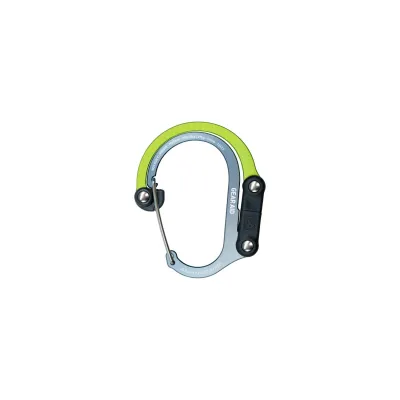
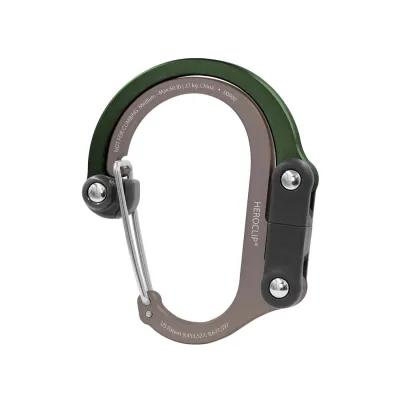
Prices are valid at publication and may change. Please refer to the product page for the latest price.
To determine if a piece of hardware is safe for life-loading, you must verify its certifications. Look at the body of the clip for engraved markings indicating compliance with international climbing standards, such as the UIAA (International Climbing and Mountaineering Federation) or CE (Conformité Européenne) standards. Specifically, climbing carabiners must meet the EN 12275 standard, which guarantees they have undergone rigorous destructive testing to withstand dynamic forces.
If a clip lacks these explicit safety markings, it must never be used in any scenario where its failure could lead to injury or equipment loss. This includes anchoring, belaying, rappelling, tying in, or securing critical gear that you cannot afford to drop. If you ever find yourself questioning whether a clip on your harness is certified for climbing, treat it as a non-rated utility item and keep it completely out of your safety system.
Weight Limits and Structural Failure Risks
Every utility clip comes with a maximum static load rating specified by the manufacturer, which you can typically find on the product packaging or official documentation. For a medium-sized utility clip, this limit is designed for everyday items like backpacks or water bottles. However, this rating applies strictly to static loads—meaning the weight must be hanging completely still without any sudden movement or bouncing.

In a dynamic climbing environment, static ratings quickly lose their relevance. If you slip, jump, or make a sudden dynamic move, any item attached to your harness will experience shock loading. A lightweight water bottle that weighs less than a kilogram statically can exert many times that force on a clip during a sudden drop. This sudden spike in tension can easily exceed the structural limits of a non-certified utility clip, causing it to bend, snap, or release.
Furthermore, utility clips are highly vulnerable to cross-loading, which occurs when the load shifts away from the strongest vertical spine and pulls against the gate or the weaker horizontal axes. Over time, repeated exposure to outdoor elements, sweat, and grit can cause material fatigue. Before every climbing session, inspect your utility clips for hairline cracks, bent frames, loose pivot pins, or a weak gate spring that fails to snap shut instantly.
Locking Mechanism and Accidental Unclipping Risks
The defining feature of the HeroClip is its rotating, folding hook, which allows you to hang gear from almost any surface. While this design is incredibly useful for keeping your backpack off the damp ground at the base of a crag, it introduces significant physical hazards when worn on a moving climbing harness. The extra joints and the protruding hook can easily snag on rock features, tree branches, or adjacent gear loops.
During high-movement climbing, such as squeezing through chimneys, jamming into cracks, or high-stepping, your harness constantly rubs against the rock face. This friction can easily force the non-locking wire gate of a utility clip open. This phenomenon, sometimes compounded by “gate flutter” during rapid movements or vibrations, creates a high risk of your attached gear slipping out unnoticed.
Unlike utility clips, certified climbing carabiners designed for gear management often feature locking sleeves or highly tensioned gates that resist accidental opening. Relying on a non-locking, multi-jointed utility clip on a highly active part of your body increases the likelihood of dropping expensive gear, such as climbing shoes or cameras, down the cliff face, creating a serious hazard for belayers below.
Safe Gear Organization Strategies for Your Harness
If you choose to use a utility clip for organizing non-essential items, you must do so strategically to minimize safety and operational risks. Only use the clip for lightweight, low-risk items that will not compromise your safety if they fall. Excellent candidates include your chalk bag, a lightweight windbreaker packed into its own pocket, or approach shoes clipped securely by their heel loops.
Position the utility clip exclusively on your rear gear loops, well away from your belay loop and front gear loops. Your front loops must remain completely clear for critical climbing protection, quickdraws, and your belay device. Placing a bulky, rotating utility clip near the front of your harness can lead to dangerous confusion during high-stress gear placements or rope management.
To prevent the clip and its attached gear from swinging wildly and throwing off your balance, tuck the items close to your body or secure them with an additional elastic strap if necessary. In humid tropical climbing environments, such as outdoor crags in Singapore, sweat and moisture can make plastic and metal surfaces exceptionally slick. Ensure that whatever you clip has a reliable, non-slip attachment point so it does not slide off the utility hook during a climb.
When to Use Certified Climbing Carabiners Instead
There is a clear line where utility clips must be put away and replaced with certified climbing carabiners. Any item that is essential to your descent, rescue, or overall safety must be secured with a certified locking or non-locking climbing carabiner. This includes your belay device, personal anchor systems, prusik loops, nut tools, and first aid kits.
Climbing in harsh environments—such as highly abrasive granite crags, dusty sandstone, or wet, humid sea cliffs—demands materials that can withstand extreme friction and environmental wear. Certified climbing carabiners are constructed from high-grade, hot-forged aluminum alloys designed to resist deep scratching and structural degradation under heavy use.
When purchasing gear, use this quick checklist to verify that your carabiner is safe for climbing applications:
- UIAA or CE Stamp: Look for the official certification codes engraved on the spine.
- Load Ratings: Ensure the major axis rating is at least 20 kilonewtons (kN), the minor axis is at least 7 kN, and the open-gate rating is at least 7 kN.
- Gate Type: Choose a locking gate (such as a screwgate or twist-lock) for any connection that is critical to your safety or holds high-value gear.
Frequently Asked Questions (FAQ)
Can I use the HeroClip Medium to attach my belay device to my harness?
No, you must never use a utility clip to attach a belay device to your harness. A belay device is a critical safety component that manages the rope during a catch or descent, subjecting the connection to massive dynamic forces. You must only connect your belay device to your harness belay loop using a certified, locking climbing carabiner that meets EN 12275 standards.
Will the rotating hook damage my climbing harness webbing?
Yes, there is a distinct risk of abrasion over time. The metal edges, rotating joints, and hinges of a utility clip can rub against the soft nylon or Dyneema webbing of your harness gear loops, especially when loaded with gear. Regularly inspect your harness gear loops for signs of fuzziness, fraying, or broken stitching, and retire any harness that shows structural wear.
Is it safe to clip multiple items to one HeroClip on my harness?
Clipping multiple items to a single utility clip is highly discouraged. Grouping gear increases the total weight, making it much easier to exceed the static load limit during sudden movements. It also increases the risk of the items tangling with each other, cross-loading the clip, or accidentally forcing the wire gate open when you attempt to retrieve a single item.
Community discussion
Share your experience or ask a question. Comments are reviewed before publication.