
Choosing the right anti-slip yoga towel is not just about matching colors; it is about understanding how the towel interacts with the physical properties of your yoga mat. The performance of a slip-resistant towel depends heavily on the top-layer material of your mat and its overall thickness. While some combinations lock together seamlessly to provide a rock-solid foundation, others can result in frustrating bunching, sliding, or premature wear on your gear.
To achieve a stable and safe practice, you must evaluate the mechanical relationship between the towel’s backing and the mat’s surface. Thinner mats generally offer a firmer, more stable base that keeps towels flat, whereas thicker, cushioned mats introduce compression that can cause the fabric to shift. By understanding these dynamics, you can select a setup that supports your movement and protects your equipment.
Evaluating Mat Brands by Their Surface Materials
When assessing how a yoga towel anti slip accessory will perform, look past the brand logo and focus entirely on the mat’s surface material. Yoga mats are broadly categorized into open-cell and closed-cell structures, and each type interacts differently with towel backings. You can identify these materials by reading the manufacturer’s specification label or product documentation.
Products mentioned in this guide
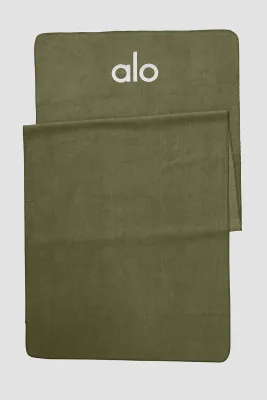
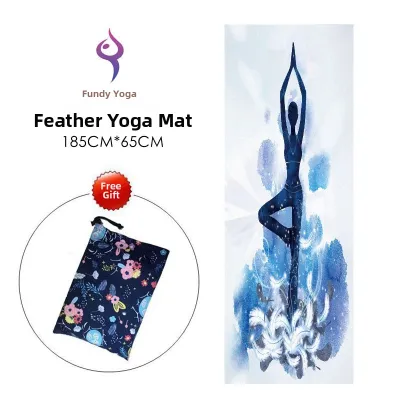
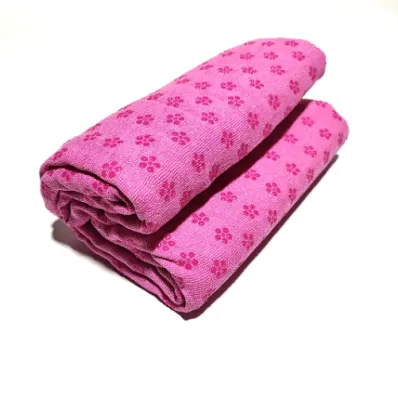
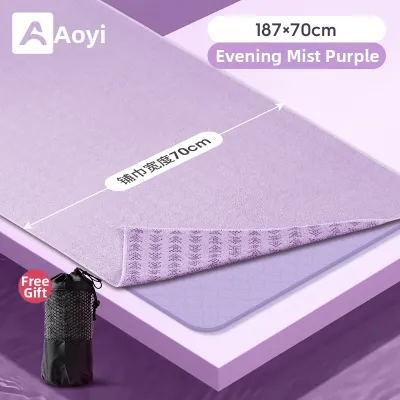
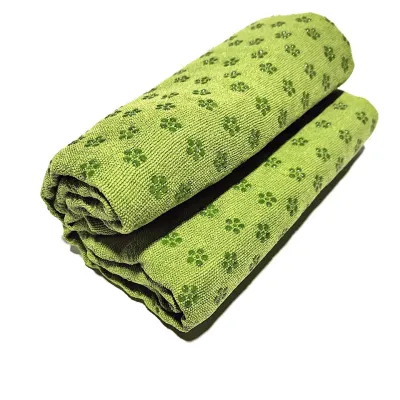
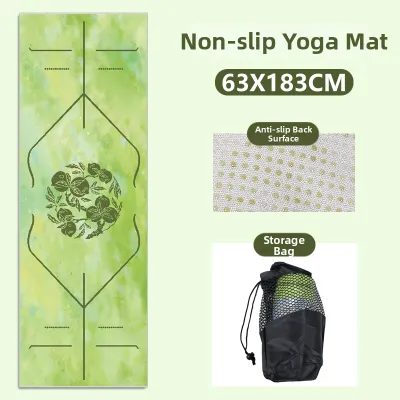
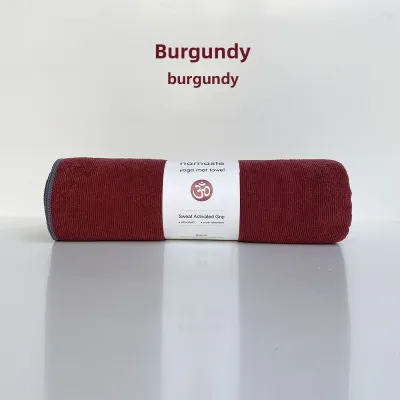
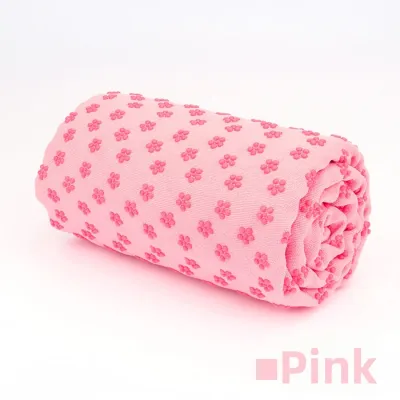
Prices are valid at publication and may change. Please refer to the product page for the latest price.
Open-cell mats, often made from polyurethane (PU) or natural rubber, are designed to absorb moisture directly. Because these surfaces naturally provide high traction when wet, pairing them with an aggressive, silicone-dotted towel is often unnecessary and can even be counterproductive. The high-friction dots can rub against the open-cell surface, leading to micro-tears, pilling, or accelerated wear on the mat’s premium finish.
Closed-cell mats, typically composed of polyvinyl chloride (PVC) or thermoplastic elastomer (TPE), repel moisture completely. During a sweaty session, perspiration pools on top of these mats, creating a slick barrier that compromises your grip. A microfiber towel is highly effective on closed-cell surfaces because it absorbs this pooled moisture, using the dampness to activate its own slip-resistant properties.
Before layering any towel over your mat, always consult the brand’s care guide and warranty terms. Some manufacturers explicitly warn against using certain textured accessories or rubber-backed towels on their delicate finishes. Ensuring compatibility beforehand prevents you from accidentally voiding your warranty or damaging a high-end mat.
How Mat Thickness Influences Towel Stability
Mat thickness directly dictates how much a yoga towel will shift, wrinkle, or bunch during your practice. The physical compression of the mat under your body weight alters the flat plane of the towel, affecting your balance and stability. Understanding this relationship helps you anticipate how your gear will behave during transitions.

Thin mats and travel mats, which typically measure between 1mm and 3mm, provide a highly stable, firm foundation. Because these mats compress very little under your hands and feet, the towel remains flat against the surface with minimal shifting. While this setup minimizes towel bunching and offers excellent ground feedback for balancing poses, it provides less cushioning for sensitive joints like the knees and wrists.
Standard and extra-thick mats, ranging from 4mm to 6mm or more, offer superior joint protection but present challenges for towel stability. As you press down during dynamic movements like sun salutations or lunges, the thick foam or rubber compresses deeply. This localized sinking causes the overlying towel to pull, wrinkle, and pocket, which can disrupt your footing and create a tripping hazard.
To mitigate shifting on thicker mats, it is crucial to match your towel’s dimensions to the exact size of your mat. Standard mats are typically 68 inches long, while extra-long versions reach 72 inches or more. An oversized towel that hangs over the edges can easily catch on your feet, while an undersized towel will slide around the exposed borders of the mat.
Practical Tests to Verify Anti-Slip Performance
Rather than waiting for a challenging studio class to discover your setup is unstable, perform a few safe, observable tests at home. These simple checks allow you to evaluate the dry and wet traction of your towel-mat combination before committing to a full session. Always conduct these tests on a flat, level floor free of debris.
Begin with the dry-grip test to evaluate the initial mechanical connection between the towel and the mat. Spread the towel completely flat over your dry mat, step onto the center, and assume a wide standing posture like Warrior II. Gently press your feet away from each other and observe if the towel’s corners lift or if the fabric slides beneath your soles.
Next, conduct a moisture-activation test to simulate a sweaty practice. Since many microfiber towels require dampness to achieve maximum grip, lightly mist the hand and foot placement areas with a spray bottle filled with clean water. Transition slowly into downward-facing dog, applying firm, forward pressure through your hands and backward pressure through your heels.
During these movements, actively watch for specific failure points. If the towel bunches up between your hands, slides forward on a closed-cell mat, or causes your hands to drift, the combination lacks sufficient grip. Identifying these issues in a controlled environment allows you to adjust your setup safely without risking a slip during a fast-paced sequence.
Decision Framework: Choosing the Right Towel-Mat Setup
To establish a reliable, slip-free practice environment, use a structured decision framework to pair your mat with the correct towel backing. The goal is to balance the physical texture of the mat with the mechanical grip of the towel. This prevents both sliding and material damage.
If your mat has a smooth, closed-cell surface (such as PVC or TPE), choose a towel equipped with silicone dots or a full rubber backing. The raised silicone or rubber elements grip the slick surface of the mat, preventing the towel from sliding even when dry. This setup is ideal for hot yoga styles where heavy sweating is expected on non-absorbent mats.
If your mat features a highly textured surface or an open-cell polyurethane finish, opt for a smooth microfiber or suede-backed towel without raised grip elements. The natural texture of the mat will hold the smooth fabric in place, while the lack of abrasive dots protects the delicate open-cell surface from friction damage and pilling.
If you are practicing on an exceptionally thick, soft mat (6mm or thicker), standard towels may bunch regardless of their backing due to deep compression. In this case, consider switching to a thinner mat for active flows, or select a specialized towel that features corner anchor pockets. These pockets slip over the corners of your mat, keeping the towel taut despite the soft cushioning underneath.
Care and Maintenance to Preserve Grip
Proper care and maintenance are vital to preserving the anti-slip properties of both your towel and your mat over time. Overlooking simple washing and drying protocols can lead to a permanent loss of traction, making your gear unsafe to use. Always follow a disciplined routine to protect your investment.
When washing your anti-slip towel, always read the manufacturer’s care label and avoid using fabric softeners or bleach. Fabric softeners coat the microfiber and silicone dots with a thin, waxy film designed to make fabrics feel soft. This film clogs the absorbent fibers and makes the silicone dots extremely slippery, destroying the towel’s grip. Use a mild, fragrance-free detergent instead.
Drying protocols are equally important for maintaining material integrity. Air-drying your towel in a well-ventilated area is the safest method to prevent the silicone dots from melting or peeling. If you must use a dryer, select a low-heat setting. Ensure both the towel and your yoga mat are completely dry before rolling them together; trapping moisture can cause the materials to degrade and foster odor-causing bacteria.
Finally, verify your mat’s cleaning compatibility before applying any sanitizing sprays or DIY vinegar solutions. Some harsh chemicals can strip the slip-resistant coatings off your mat, making it permanently slick. Keep your mat clean using only manufacturer-approved methods to ensure your towel can grip the surface effectively during every practice.
Frequently Asked Questions (FAQ)
Do I need to wet my anti-slip yoga towel before practice?
It depends on the specific material and backing of your towel. Standard microfiber towels often require a light spray of water on the hand and foot areas to activate their grip, as dry microfiber can slide against smooth mats. However, towels with integrated silicone dots or rubber backings typically do not require pre-wetting, as they rely on physical friction to stay in place. Always check the manufacturer’s care and usage label for specific activation instructions.
Can I use a yoga towel on a suede-finish yoga mat?
You should exercise caution when using a towel on a suede-finish mat. Layering a towel with aggressive silicone dots or rough rubber backings can cause friction damage, pilling, or color transfer on delicate suede surfaces. If you need a towel for sweat absorption on a suede mat, choose a smooth microfiber towel without raised grip elements, and verify the mat manufacturer’s warranty regarding layered accessories to prevent accidental damage.

Community discussion
Share your experience or ask a question. Comments are reviewed before publication.