
Using a running machine inside a Singapore Housing & Development Board (HDB) flat is a highly convenient way to stay fit, but it comes with a significant risk of disturbing your neighbours. The short answer is yes: if you set up a standard machine directly on your bare floor and run at high speeds, your downstairs and adjacent neighbours are very likely to hear and feel the vibrations. However, understanding how sound travels through concrete structures allows you to take proactive steps to minimise the disturbance.
Understanding Running Machine Noise and Vibration
To address the noise, you must first understand the two distinct types of sound a running machine produces. Airborne noise is the sound that travels through the air, which primarily consists of the electric motor’s hum, the whirring of the running belt, and any music or television audio you play during your workout. While this sound can be annoying to people in the same room, it rarely penetrates thick concrete walls unless your doors or windows are wide open.
The far more challenging issue in an HDB block is structure-borne noise, also known as impact vibration. Every time your foot strikes the deck of the running machine, a kinetic shockwave travels down through the machine’s frame and directly into the concrete floor slab. Concrete is an excellent conductor of low-frequency vibrations, meaning these heavy thuds can easily telegraph through the floor and resonate in the ceiling of the flat directly below you, sounding like a rhythmic, low-pitched drum.
Products mentioned in this guide


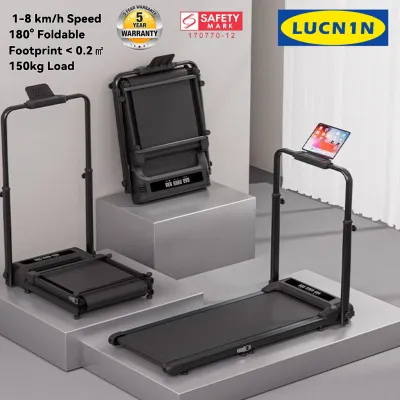
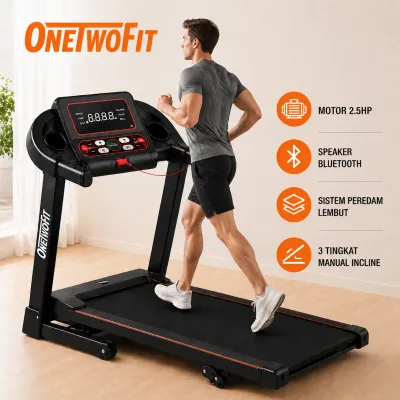
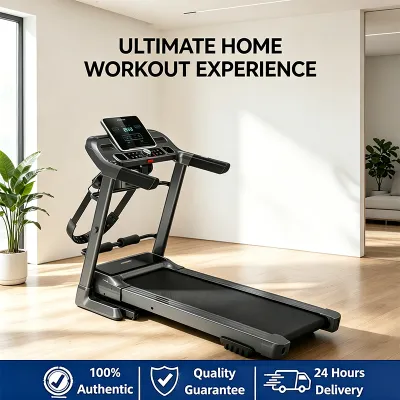
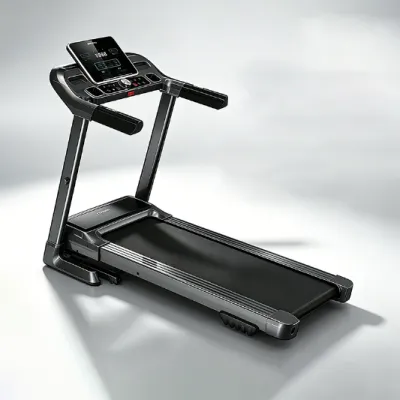
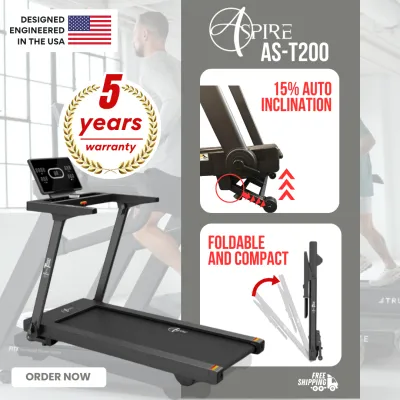
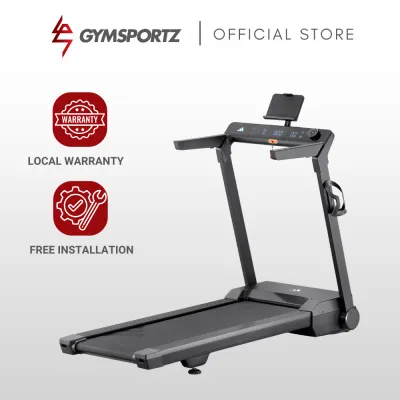
Prices are valid at publication and may change. Please refer to the product page for the latest price.
Several factors influence how intense these vibrations will be. A heavier runner striking the deck with a high-impact running gait naturally generates greater downward force than a lighter runner or someone walking. Higher running speeds also increase the frequency and force of these impacts. Additionally, a lightweight or unstable machine will rattle and bounce, amplifying the mechanical vibrations transferred into your home’s structure.
Features to Look for in a Quiet Running Machine
When shopping for a running machine suitable for an HDB flat, the specifications of the motor and frame are critical. Look for a machine equipped with a high-quality Direct Current (DC) motor rather than an Alternating Current (AC) motor, as DC motors typically operate much more quietly at residential speeds. Pay close attention to the continuous horsepower (CHP) rating; a motor with a higher CHP does not have to work as hard to maintain your speed, resulting in a smoother, quieter hum.

The deck’s cushioning and shock absorption system is your primary defense against structure-borne noise. High-quality running machines feature advanced elastomeric dampers, springs, or flexible deck materials designed to compress under your feet. This compression absorbs a significant portion of the kinetic energy from your footstrikes, preventing that energy from converting into structural vibrations that travel into the floor.
Do not overlook the physical weight and build quality of the machine itself. While a heavy machine is more difficult to move, its mass acts as a natural dampener, absorbing vibrations and keeping the frame planted firmly on the ground. Look for models with larger roller diameters, as these reduce wear on the belt and minimise high-pitched mechanical whining. A thick, multi-ply running belt also muffles the sound of your shoes scraping against the surface.
Setup and Habits to Minimise Disturbance to Neighbours
Even the quietest running machine requires proper installation to prevent complaints. Your first step should be purchasing a high-density, heavy-duty anti-vibration mat specifically designed for gym equipment. Avoid thin yoga mats, which compress completely under the weight of the machine and offer zero impact dampening. Instead, opt for thick rubber tiles or specialized acoustic underlayments that decouple the machine from the concrete floor.
Where you place the machine within your flat makes a massive difference in sound transmission. Position the running machine directly over or near structural load-bearing walls and concrete columns, where the floor slab is stiffest and least prone to flexing. Avoid placing the machine in the middle of a room, where the floor slab can act like a giant drumhead. Additionally, keep the machine away from shared bedroom walls to prevent the motor hum from keeping your neighbours awake.
Your workout schedule is just as important as your physical setup. Establish a routine that respects the natural quiet hours of your community, generally restricting high-impact running sessions to mid-day or early evening when ambient neighborhood noise is higher. If you must exercise early in the morning or late at night, limit your workouts to low-speed walking, which produces significantly less impact noise.
Regular maintenance is essential to keep mechanical noise from developing over time. Consult your manufacturer’s manual to establish a routine for lubricating the running deck, as a dry belt creates friction, squeaks, and strains the motor. Periodically check the alignment and tension of the belt to prevent it from slipping or rubbing against the side rails, and tighten any loose bolts on the frame to eliminate metallic rattling.
Low-Impact Cardio Alternatives for Shared Housing
If your HDB flat’s layout or your running style makes a traditional running machine impractical, several low-impact cardio alternatives offer excellent workouts with a fraction of the noise. Elliptical trainers are highly effective because your feet never leave the pedals, completely eliminating footstrike impact noise. The motion is smooth and fluid, transferring virtually no structural vibration to the floor below.
Stationary exercise bikes and indoor rowing machines are also excellent options for shared housing. Exercise bikes operate with magnetic resistance, making them nearly silent, while rowing machines produce a consistent, low-frequency swooshing sound that is far less disruptive than rhythmic thumping. Both options keep your body weight supported, ensuring that your workout remains quiet even during high-intensity intervals.
For those committed to walking, a compact walking pad or under-desk treadmill is a viable compromise. These devices are designed for lower speeds and have smaller motors, making them inherently quieter than full-sized running machines. However, keep in mind that compact or foldable models often feature thinner decks and less robust cushioning systems, meaning they still require a high-quality anti-vibration mat to prevent localized vibrations.
Frequently Asked Questions (FAQ)
Do manual running machines make less noise than motorized ones?
Manual running machines do not have an electric motor, which eliminates the continuous background hum of a motorized unit. However, they do not solve the problem of structure-borne noise. Because you must use your own physical force to push the belt backward, your footstrikes on a manual machine can actually be heavier and more forceful, generating significant impact vibrations that will still travel through concrete HDB floors.
Is it acceptable to use a running machine late at night in an HDB flat?
Using a running machine late at night is highly likely to result in complaints from your neighbours. During the late hours, ambient environmental noise drops significantly, making any low-frequency thuds or motor hums much more noticeable and disruptive. To maintain good relations with your neighbours, it is best to restrict running workouts to daytime hours and limit late-night sessions to silent stretching or low-impact walking on a well-dampened surface.
Community discussion
Share your experience or ask a question. Comments are reviewed before publication.