
A tennis tote bag typically holds between one and six rackets, but its true capacity depends heavily on how you balance your frames with essential court gear. While manufacturers rate these bags by the number of rackets that can physically slide into the designated compartments, real-world utility is a trade-off between rackets and personal accessories. If you pack a pair of bulky court shoes, a large water bottle, and a fresh change of clothes, the actual space left for rackets decreases significantly. Finding the right balance requires looking past the simple number on the label and analyzing your daily routine, playing habits, and transit methods.
Assessing Your Regular Gear Loadout
Your ideal bag capacity starts with a realistic audit of what you carry to the court for different types of sessions. A casual weekend hitting session requires very little: one racket, a can of balls, a water bottle, and perhaps a small towel. For these light days, a compact bag keeps you agile and prevents you from carrying unnecessary bulk.
In contrast, an intensive training session or a competitive match day demands a much more comprehensive gear loadout. You will likely need at least two rackets in case a string breaks, multiple overgrips, wristbands, a larger hydration flask, and nutrition like energy bars. If you play on outdoor courts in Singapore’s tropical heat, you will also need to pack extra towels and a complete change of dry clothing to remain comfortable after a high-intensity match.
Products mentioned in this guide


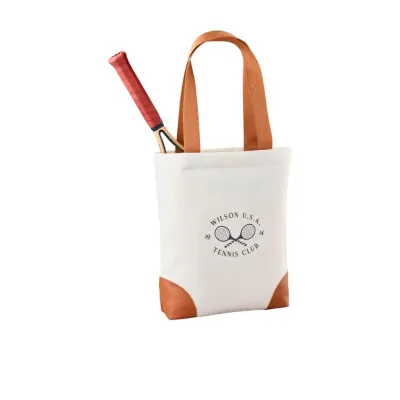
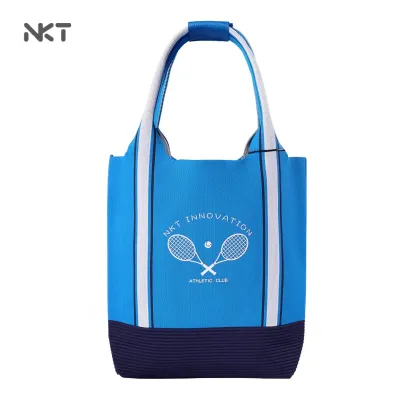
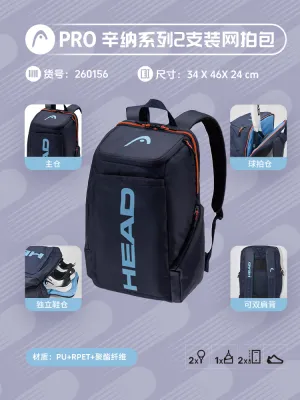
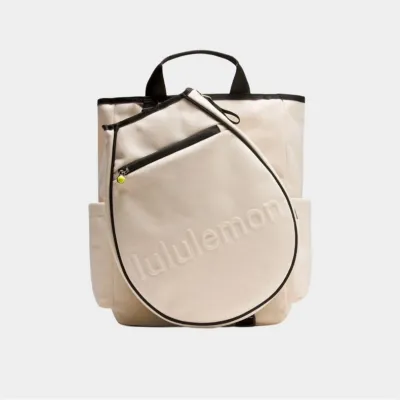

Prices are valid at publication and may change. Please refer to the product page for the latest price.
The spatial equation becomes even more complex if you commute directly from the office or school to the tennis center. Carrying a laptop, work documents, toiletries, and a change of shoes alongside your tennis gear requires a bag with highly organized, separate compartments. Without dedicated zones, your clean professional attire risks coming into contact with sweaty court gear, and your expensive electronics could be exposed to moisture.
To determine your spatial needs, lay out all your regular items on a table before shopping. Group them into “must-have” tennis gear, “nice-to-have” accessories, and “non-tennis” daily essentials. This visual representation will immediately clarify whether you can get away with a streamlined tote or if you need a high-volume option with specialized compartments.
Understanding Tennis Tote Bag Capacity Ratings
When browsing sports retailers, you will notice that tennis tote bags are almost always categorized by a racket capacity rating, such as a two-racket or four-racket model. This rating does not mean the bag is exclusively designed to hold that many rackets and nothing else. Instead, it indicates the physical dimensions of the dedicated racket compartment, particularly its length, structural stiffness, and gusset width.

A key distinction to look for is how the bag isolates your rackets from the rest of your gear. High-quality totes often feature a dedicated, padded racket compartment, sometimes lined with thermal protective material to shield your strings and frames from extreme heat. Other designs rely on an open main cavity with an internal sleeve, which saves space but offers less protection against impact and temperature fluctuations.
It is also important to understand that a bag’s total volume, often measured in liters by manufacturers, includes all exterior pockets, water bottle sleeves, and accessory compartments. A tote advertised with a high liter capacity might actually have a relatively narrow main compartment if much of that volume is distributed among external storage zones. Therefore, you should always check the physical dimensions of the primary compartment rather than relying solely on the total volume rating.
Furthermore, the way rackets sit in a tote bag affects its overall footprint and carrying ergonomics. Some totes allow the racket handles to stick out of the top or side at an angle, while others enclose the entire frame and handle within a zippered pocket. Enclosed designs offer superior weather protection but are inherently bulkier, whereas open-handle designs remain compact but leave your grips exposed to rain and humidity.
Real-World Packing: What Fits in 2, 4, and 6-Racket Totes
2-Racket Totes
A two-racket tennis tote bag is the quintessential choice for minimalists and recreational players who prefer to travel light. In a typical setup, this bag comfortably holds one or two rackets in the designated sleeve, leaving the main compartment free for basic personal items. You can easily pack a standard water bottle, a can of tennis balls, a small towel, and your keys, phone, and wallet in the accessory pockets.
However, space in a two-racket tote is premium, meaning you will have to make compromises regarding footwear and apparel. If you need to carry a dedicated pair of court shoes, they will likely consume most of the main compartment, leaving little to no room for a change of clothes. This size is best suited for players who arrive at the court already dressed in their tennis attire and wearing their court shoes.
4-Racket Totes
The four-racket tote serves as the versatile standard for the active club player who demands a balance of capacity and portability. When carrying only two rackets, this bag opens up a generous amount of internal space in the main compartment. This extra volume easily accommodates a pair of court shoes, a large insulated water bottle, a full-sized shower towel, and a complete change of clothes.
For players who commute or head to the courts straight from work, the four-racket size is often the sweet spot. It provides enough physical separation to keep your clean clothes and laptop away from your damp tennis gear. Even when fully loaded with two rackets and all your daily essentials, these bags maintain a manageable profile that is comfortable to carry on public transit or store in a standard gym locker.
6-Racket Totes
Designed for tournament players, coaches, and gear enthusiasts, the six-racket tote offers maximum storage capacity. If you actually pack six rackets, the bag will be tightly packed, leaving room only for flat accessories like extra strings, overgrips, and medical tape. However, most players use this size to carry three or four rackets while utilizing the remaining space for heavy gear loads.
With a six-racket tote, you do not have to compromise on what you bring to the court. You can easily pack multiple pairs of shoes, bulkier warm-up jackets, training cones, resistance bands, and a massive hydration jug. This capacity is particularly beneficial for long tournament days where you might spend several hours at the venue and need to carry multiple meals, extra layers of clothing, and extensive recovery gear.
Key Design Features That Maximize Usable Space
To make the most of your tennis tote bag, look for specific structural features that optimize how space is utilized. A dedicated, ventilated shoe compartment is one of the most valuable additions you can find. By isolating your dirty, clay-covered court shoes in a separate pocket that vents to the outside, you protect your clean clothes and rackets from dirt, moisture, and persistent odors.
Exterior quick-access pockets are equally crucial for maintaining organization on the court. Mesh side sleeves are perfect for holding water bottles or cans of tennis balls, keeping them upright and preventing leaks inside the bag. Zippered exterior pockets allow you to store small items like dampeners, overgrips, keys, and transit cards where they can be reached instantly without rummaging through the main compartment.
Inside the bag, adjustable internal dividers or padded sleeves play a vital role in protecting your equipment. These dividers prevent your racket frames from scraping against each other, which can damage the paint and structural integrity of the graphite. Padded sleeves also help absorb shock during transit, ensuring your strings do not take unnecessary impact when you set the bag down on hard surfaces.
Finally, pay attention to the base of the tote bag. A reinforced, structured bottom allows the bag to stand upright on its own when placed on the court bench or ground. This self-standing capability makes it much easier to pack and unpack your gear, while also preventing the sides of the bag from collapsing and crushing the delicate items stored inside.
Common Capacity Mistakes to Avoid
One of the most frequent mistakes players make is overestimating their racket capacity needs. While investing S$100 to S$200 in a high-capacity bag might seem like a good future-proof strategy, carrying a half-empty, bulky bag can be highly inconvenient. A bag that is too large for your needs can also cause your gear to shift around excessively during transit, potentially leading to damage.
Conversely, ignoring the bag’s empty weight and strap design can lead to significant discomfort. A fully loaded tennis tote can easily weigh several kilograms, placing a heavy load on your shoulder. Look for wide, padded shoulder straps that distribute weight evenly, and verify that the bag itself is made from lightweight yet durable materials like ripstop nylon or polyester.
Lastly, always measure the bag’s exterior dimensions and compare them to your daily environment. If you commute on crowded buses or trains, a massive tote can be highly inconvenient for both you and your fellow passengers. Ensure the bag can fit comfortably into your car trunk, a standard gym locker, or under an office desk before making your final decision.
Frequently Asked Questions (FAQ)
Can I use a regular fashion tote bag for tennis?
While a standard fashion tote can physically hold a racket, it lacks the specialized structural support and protection required for tennis gear. Regular totes do not have padded compartments to shield your racket frames from impact, nor do they feature thermal linings to protect your strings from tension loss in hot weather. Additionally, they lack dedicated, ventilated compartments for dirty shoes and wet clothes, which can quickly lead to odor buildup and damage to your personal items.
How do I clean a tennis tote bag after a sweaty session?
To keep your tennis tote fresh and prolong its lifespan, always empty all compartments immediately after a session, removing damp clothes, towels, and used overgrips. Leave all the zippers open and allow the bag to air-dry completely in a well-ventilated, shaded area. For cleaning, gently wipe down the interior and exterior linings with a damp microfiber cloth and a mild, non-abrasive soap, avoiding harsh chemical cleaners that can strip away water-resistant coatings.

Community discussion
Share your experience or ask a question. Comments are reviewed before publication.