
Selecting the right running gear is a balancing act between carrying enough fuel to sustain your performance and keeping your load light enough to maintain a natural stride. In hot, humid tropical climates like Singapore’s, where temperatures regularly hover between 27°C and 32°C, hydration and electrolyte management are critical safety priorities rather than minor performance details. Investing in a high-quality running bottle belt is one of the most effective ways to carry your fluids and nutrition without the bulk of a full backpack.
Your ideal carrying capacity depends on your projected time on your feet, your individual sweat rate, and the availability of on-course aid stations. For a short 5K or 10K run, a minimal, low-profile waist pouch is often sufficient to carry a single emergency gel and your keys. As you transition to half marathons, full marathons, or ultramarathons, your storage needs escalate, requiring a specialized running bottle belt that can securely hold multiple flasks and up to eight energy gels without bouncing or chafing. Finding the perfect equilibrium between your physiological needs and your belt’s physical capacity is the key to a successful, uninterrupted race.
Calculate Your Baseline: Fluid and Fuel Needs Before Choosing a Belt
Before browsing different belt designs, you must calculate your actual hourly fluid and nutritional requirements. Many runners make the mistake of choosing a belt based solely on the race distance listed on their registration ticket. However, your capacity needs are driven by your total time on the course and your unique physiology, not just the physical distance. A runner targeting a three-hour marathon has vastly different hydration and fuel requirements than a runner expecting to finish the same distance in five hours.
Products mentioned in this guide
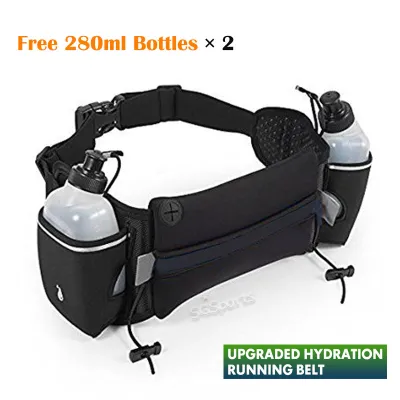
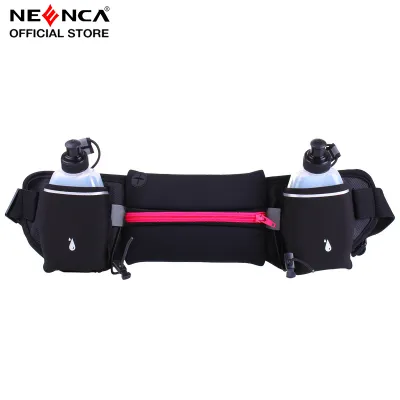
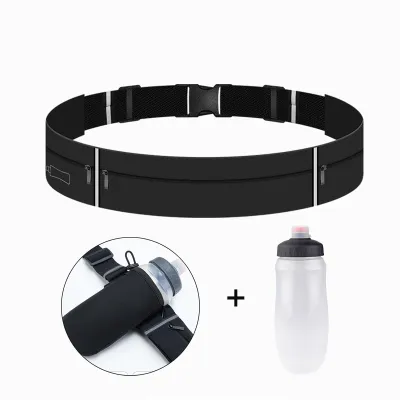
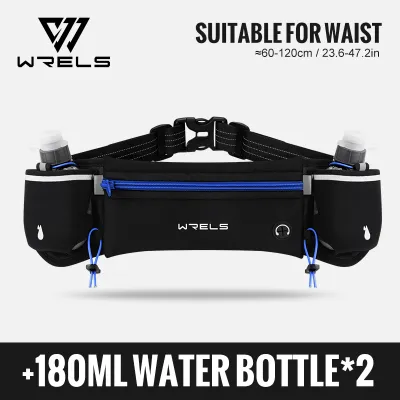
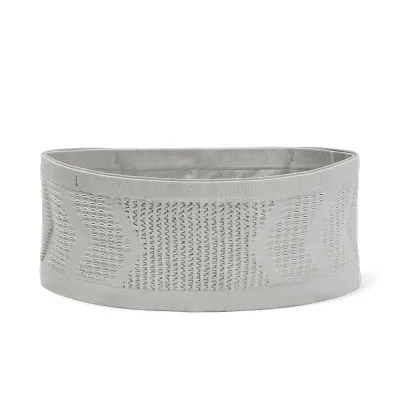
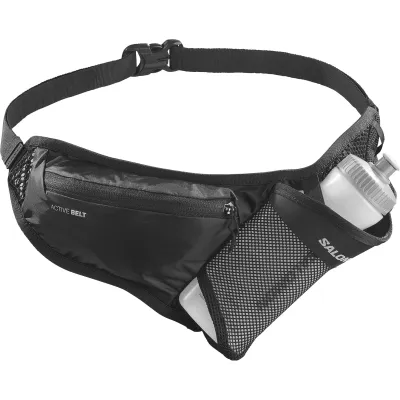
Prices are valid at publication and may change. Please refer to the product page for the latest price.
To determine your hourly fluid requirements, you can calculate your personal sweat rate during your training runs. Weigh yourself in kilograms without clothing immediately before a one-hour run at your target race pace. Run without consuming any fluids, or carefully track the exact volume of water you drink in litres. After the run, towel off completely and weigh yourself again under the same conditions. Subtract your post-run weight from your pre-run weight, and add the volume of any fluid consumed during the run; every kilogram of weight lost equates to approximately one litre of sweat loss. In highly humid environments, active runners frequently record sweat rates exceeding 1.0 to 1.5 litres per hour, highlighting the need for a structured hydration plan.
Alongside fluid replenishment, your body requires a steady stream of carbohydrates to prevent your glycogen stores from depleting during prolonged efforts. For running sessions lasting longer than 60 to 90 minutes, a standard fueling framework recommends consuming 30 to 60 grams of carbohydrates per hour. Highly trained endurance athletes may train their digestive systems to tolerate up to 90 grams per hour. Because a standard energy gel typically contains between 20 and 25 grams of carbohydrates, you will need to carry and consume approximately two to three gels for every hour you expect to be running.
Your personal gut tolerance and level of heat acclimatization will ultimately dictate the upper limits of what you can comfortably consume and carry. High ambient temperatures draw blood flow away from your stomach and toward your skin to assist with cooling, which can impair digestion and increase the risk of gastrointestinal distress. It is vital to test your nutrition strategy during your long training runs in local weather conditions. This testing helps you determine if your stomach tolerates concentrated energy gels or if you require liquid-formulation gels, which are easier to digest but take up significantly more physical space in your running bottle belt.
How to Match Your Running Bottle Belt Capacity to Your Race Distance
Once you have established your hourly fluid and carbohydrate baselines, you can match these requirements to specific belt configurations. Different race distances and training intensities demand distinct storage layouts to optimize your aerodynamics, comfort, and weight distribution.

Short Distances (5K to 15K) and Speedwork
For short-distance runs and high-intensity interval sessions, your primary gear objectives are minimalism and freedom of movement. For efforts lasting under an hour, most runners do not need to carry dedicated hydration, provided they hydrate adequately before and after the session. A low-profile, highly elastic waist belt with a single secure zipper pocket is usually sufficient. This setup allows you to carry your keys, an identification card, and a single energy gel for late-run insurance without adding unnecessary bulk.
If you prefer to have immediate access to water, or if you are training in the peak afternoon heat, a single small soft flask with a capacity of 150ml to 200ml is ideal. Look for a stretchy, tube-style waist belt that allows you to tuck the small flask flat against your lower back. This placement keeps the center of gravity close to your spine, minimizing bounce during fast, high-cadence efforts.
Medium Distances (Half Marathon)
Stepping up to the half marathon distance introduces a 1.5-hour to 3-hour effort window, making dedicated hydration and structured fueling essential. For this distance, look for a running bottle belt that can accommodate one or two medium-sized flasks, providing a total fluid capacity of 300ml to 600ml. Carrying your own fluids allows you to sip water or electrolyte mixes at your own pace rather than waiting for crowded race-day aid stations.
In addition to fluid storage, your belt must comfortably house three to five energy gels. Look for belts equipped with dedicated external silicone gel loops or deep, elasticized mesh pockets. These features allow you to slide gels out quickly with sweaty hands without having to open a main zipper compartment, saving valuable seconds and maintaining your running rhythm.
Long Distances (Marathon and Ultras)
For marathons and ultramarathons lasting four hours or longer, your carrying requirements increase dramatically. You will need to carry at least six to eight energy gels, electrolyte salt capsules, a mobile phone, and potentially emergency gear or lightweight weather protection. To support this load, high-capacity belts utilize dual large flasks, typically 500ml each, positioned symmetrically on the hips or lower back to balance the weight.
Carrying more than a litre of fluid on your waist introduces a critical decision point regarding comfort and stability. A full litre of water weighs exactly one kilogram, and when combined with the weight of your phone and fuel, a waist belt can begin to sag or bounce. At this threshold, you must weigh the lower profile and breathability of a maxed-out waist belt against the superior, bounce-free stability of a dedicated hydration vest. If you choose to use a belt for these distances, you must plan to use the on-course aid stations strategically to refill your flasks, rather than attempting to carry all your water from the start line.
Evaluate Belt Design: Usable Capacity vs. Stated Capacity
When shopping for a running bottle belt, it is easy to be misled by manufacturer claims regarding storage volume. A belt that claims to hold a large phone, a 500ml bottle, and six gels may technically fit those items, but they may cause the belt to bounce uncontrollably or chafe your skin once you are in motion. Evaluating the physical design and construction of the belt is essential to ensure its stated capacity is actually usable.
One of the most important design choices is the type of flask the belt utilizes. Traditional hard plastic bottles hold their shape but can slosh loudly as they empty, and their rigid structure can press uncomfortably against your pelvic bones or lower back. In contrast, soft flasks made from flexible thermoplastic polyurethane (TPU) conform to the contours of your body. As you drink from a soft flask, it shrinks and collapses, eliminating the air pocket inside to prevent sloshing and significantly reducing bounce.
Weight distribution is another critical factor in how a belt handles a full load. Traditional belts with a single plastic clip and adjustable nylon straps tend to concentrate all the weight of the water and fuel in one or two localized pouches. This concentration can cause the belt to ride up your waist or dig into your hips. Continuous, 360-degree tube belts, which you pull on like a pair of shorts, distribute the weight evenly around your entire circumference. This wide band of compression keeps your gear pressed flat against your center of gravity, making a heavy load feel significantly lighter.
+-----------------------------------------------------------------------------+
|                          BELT DESIGN COMPARISON                             |
+------------------------------------+----------------------------------------+
| Continuous 360-Degree Tube Belts   | Traditional Clip-On Holster Belts      |
+------------------------------------+----------------------------------------+
| * Even weight distribution         | * Weight concentrated in local pouches |
| * Minimal bounce, high stability   | * Prone to shifting or riding up       |
| * Pull-on style, seamless fit      | * Adjustable plastic buckle closure    |
| * Excellent breathability          | * Can cause localized pressure points  |
+------------------------------------+----------------------------------------+
The materials used in the construction of the belt directly impact your comfort, especially in hot and humid climates. When a fully loaded belt is cinched tightly against your waist, any coarse seams or non-breathable fabrics will quickly cause painful chafing. Look for belts constructed from high-performance power mesh or seamless, moisture-wicking synthetic blends. These materials allow sweat to evaporate quickly, keeping your skin dry and preventing the belt from absorbing water weight and stretching out of shape.
Finally, always verify the physical dimensions of the storage pockets against your actual gear. Many modern smartphones are exceptionally large, especially when housed in rugged protective cases. If a pocket is made of a stiff, non-stretch material, inserting a large phone can warp the shape of the belt, reducing the remaining space available for your energy gels. Look for pockets made from high-stretch elastane fabrics that expand outward, away from your body, ensuring that packing your phone does not restrict your breathing or press painfully against your stomach.
Common Capacity and Packing Mistakes to Avoid
Even the most advanced running bottle belt will underperform if it is packed incorrectly or sized poorly. Avoiding several common mistakes during your preparation can prevent race-day discomfort and help you get the most out of your gear.
- Overpacking Hydration: Carrying maximum water capacity "just in case" is a common error that adds unnecessary dead weight to your waist. If your race features well-stocked aid stations every two kilometers, carrying a full litre of water from the start is counterproductive. Study the official race route map beforehand and carry only enough fluid to bridge the gap between stations, keeping your belt light and comfortable.
- Ignoring the Empty Weight and Bulk: Some high-capacity belts feature thick neoprene padding, heavy plastic buckles, and multiple layers of fabric. While these features may feel durable in a store, they absorb sweat like a sponge during a long run, becoming heavy, saggy, and abrasive. Prioritize lightweight, minimalist designs that utilize high-strength mesh to keep empty weight to an absolute minimum.
- Misjudging Stretch Limits: Straining a belt's pockets to their absolute physical limits ruins the elasticity of the fabric and can damage the zippers. Overstuffing also compromises the belt's tension against your waist, leading to excessive bouncing and sagging. If you find yourself struggling to zip your belt shut or if the fabric is stretched translucent, it is time to upgrade to a belt with a larger storage volume or distribute some of your gear to your apparel pockets.
- Skipping the Dress Rehearsal: Never wear a brand-new running belt, or try a new packing layout, for the first time on race day. A belt that feels comfortable while standing in your living room can behave very differently when loaded with full flasks and bouncing at your target race pace. Use your peak-mileage weekend training runs to test your fully loaded belt, ensuring you can easily access your gels with sweaty hands and that the belt remains securely in place.
Frequently Asked Questions (FAQ)
Can I use a running belt for a full marathon instead of a hydration vest?
Yes, you can successfully use a running belt for a full marathon, but it requires strategic planning. Because a belt has a lower fluid capacity than a vest, you cannot carry all of your hydration from start to finish. You must rely on refilling your soft flasks at the official on-course aid stations. Use the belt primarily to carry your specific, preferred energy gels and electrolyte capsules, which may not be available on the course, and keep your water volume to the minimum required between stations to reduce bounce and fatigue.
How do I prevent my running belt from bouncing when the bottles are full?
To prevent your running belt from bouncing, pay close attention to its positioning and fit. For traditional clip-on belts, wear the band low across your hips, resting securely on your pelvic bones rather than high on your soft stomach. For elastic tube-style belts, wear them slightly higher, snug against your natural waistline where they can grip your torso. Always tighten the belt securely before you begin running, use soft flasks that compress as you drink to eliminate sloshing, and distribute the physical weight of your phone, keys, and gels symmetrically around your waist.
Community discussion
Share your experience or ask a question. Comments are reviewed before publication.