
Quick Answer: Finding the Right Thickness and Brand for Your Practice
When selecting a yoga mat, there is no single brand or thickness that universally excels for every practitioner. The ideal choice depends on your specific style of practice, your joint health, and the environment in which you flow. Leading brands like Manduka, Lululemon, Liforme, and Jade Yoga have intentionally segmented their product lines to address these varying needs, offering everything from paper-thin travel sheets to dense, heavy studio cushions.
The primary trade-off in mat selection lies between floor connection and joint cushioning. Thinner mats, typically measuring between 1mm and 2mm, prioritize stability and portability, making them excellent for dynamic practices where balance is paramount. Thicker mats, measuring 5mm or more, focus on joint protection and comfort during slow, floor-based sessions, though they can introduce instability if the material is too soft.
To make an informed decision, you must look beyond brand names and marketing claims. Evaluating specific material compositions, such as open-cell polyurethane or closed-cell polyvinyl chloride (PVC), alongside density specifications, will guide you to a mat that supports your body and stands up to your practice environment.
Products mentioned in this guide

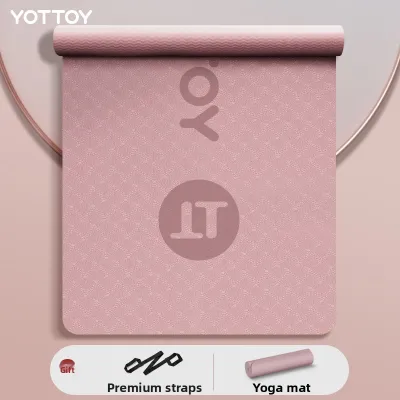
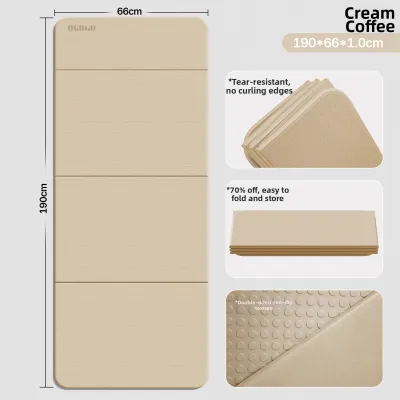
Prices are valid at publication and may change. Please refer to the product page for the latest price.
Yoga Mat Thickness Guide: What the Numbers Mean for Your Joints and Balance
The thickness of a yoga mat directly influences your physical stability, joint comfort, and overall sensory feedback during a session. Ranging from ultra-thin 1mm travel options to plush 6mm professional cushions, each thickness category alters how your body interacts with the ground. Understanding these dimensions allows you to choose a mat that aligns with your physical requirements and practice locations.

Thin Mats (1mm – 2mm): Stability and Travel
Ultra-thin mats, which generally fall within the 1mm to 2mm range, are engineered primarily for portability and maximum ground feedback. Popular examples include travel-specific models like the Manduka eKO Superlite (1.5mm) or the Jade Voyager (1.6mm). These mats are highly flexible, allowing them to be folded into tight squares or rolled compactly to fit into a backpack or tote bag, which is highly convenient for daily commuters using public transit.
Because these mats place your hands and feet almost directly on the subfloor, they offer exceptional stability for standing balances and active Vinyasa transitions. The lack of compression prevents your ankles from wobbling, giving you a secure foundation. However, this minimal profile offers virtually no shock absorption, meaning your knees, elbows, and wrists will feel the hard surface beneath you during floor poses like Low Lunge (Anjaneyasana) or Camel Pose (Ustrasana).
Many practitioners use these thin travel mats as hygienic toppers over studio-communal mats rather than using them directly on bare floors. This hybrid approach provides the familiar cushioning of a standard mat with the personalized, clean grip of your own travel layer.
Standard Mats (3mm – 4mm): The Versatile Middle Ground
The 3mm to 4mm range represents the industry standard and is the default thickness offered by the majority of mainstream brands. Products like Lululemon’s 3mm mats or the Jade Travel (3.2mm) are designed to provide a balanced compromise between joint protection and standing stability. This versatility makes them the most popular choice for general practitioners who do not specialize in a single style of yoga.
In this middle ground, the mat provides just enough compression to take the pressure off your sit bones and joints during floor work without causing your feet to sink or wobble during standing balances. It is thick enough to damp the coldness of tiled or hardwood floors while remaining light enough to roll up and carry to a local studio without excessive physical strain.
If your weekly routine consists of a varied mix of Hatha, moderate Vinyasa, and general bodyweight fitness classes, a standard-thickness mat is typically the most practical investment. It adapts seamlessly to different movements, ensuring you do not need to switch gear between different class formats.
Thick Mats (5mm and Above): Maximum Joint Protection
Extra-thick mats, measuring 5mm, 6mm, or more, are built for maximum comfort and joint decompression. High-density options like the Manduka PRO (6mm) or Lululemon’s 5mm mats are favored by practitioners who experience chronic joint sensitivity, those recovering from injuries, or anyone practicing on unforgiving surfaces like concrete or ceramic tiles.
The primary benefit of a thick mat is its ability to absorb impact and cushion sensitive areas of the body, such as the knees, hips, and spine, during prolonged floor contact. This makes them highly suited for slow-paced, passive practices like Yin Yoga, Restorative Yoga, or deep stretching sessions where poses are held for several minutes at a time.
However, extra thickness introduces a distinct trade-off in terms of weight and stability. Thicker mats can be heavy and bulky to transport, making them less ideal for active commuting. Furthermore, if the mat is constructed from low-density foam, your hands and feet will sink deeply into the material, which can strain your wrists in Downward-Facing Dog and compromise your balance in standing poses like Tree Pose.
Comparing Core Performance: Grip, Durability, and Cushioning
Beyond thickness alone, the performance of a yoga mat is governed by its material composition and manufacturing quality. The way a mat responds to sweat, how long it resists wear and tear, and how effectively it cushions your body are all determined by the physical properties of the materials used by different brands.
Grip and Traction Across Materials
Traction is perhaps the most critical safety feature of any yoga mat, and it behaves differently depending on whether the surface is dry or wet. Natural rubber mats, such as those made by Jade Yoga, feature an open-cell structure that offers exceptional dry grip. The microscopic pores in the rubber create a high-friction surface that naturally holds your hands and feet in place without requiring a “break-in” period.
For practices that involve significant sweating, such as hot yoga or fast-paced power flows, polyurethane (PU) top layers—found on Liforme mats and Lululemon’s performance lines—are highly regarded. PU is highly absorbent, drawing moisture away from the surface to maintain a reliable “wet grip” even when wet. This is particularly beneficial in warm, humid climates like Singapore’s, where sweat accumulation can turn other mats into slippery surfaces.
Conversely, polyvinyl chloride (PVC) mats, like the Manduka PRO, utilize a closed-cell construction that does not absorb moisture. While this makes them highly hygienic, sweat will pool on the surface, requiring the use of a specialized yoga towel to prevent slipping during intense sessions. Additionally, brand-new PVC mats often feature a thin manufacturing film that must be worn off through regular use or a salt scrub before the material reaches its optimal dry traction.
It is also important to note that on very thick, low-density mats, the surface material can shift or stretch horizontally when you apply diagonal force. This shearing effect can make you feel as though you are slipping, even if the surface texture itself has high traction, highlighting the importance of material firmness.
Durability and Resistance to Wear
A mat’s lifespan is closely tied to whether its material is open-cell or closed-cell. Closed-cell materials, such as PVC and certain thermoplastic elastomers (TPE), are highly resistant to wear because they do not absorb liquids. This non-porous barrier prevents sweat, oils, and bacteria from penetrating the interior of the mat, making them exceptionally easy to sanitize and highly resistant to rotting or peeling over years of heavy use.
Open-cell materials, such as natural rubber and polyurethane, offer superior traction precisely because they are porous, but this absorbency makes them more vulnerable to degradation. Over time, the absorption of body oils, sweat, and cleaning agents can break down the molecular structure of natural rubber, causing it to become brittle, shed tiny particles, or lose its springiness.
To maximize the lifespan of your mat, look for high-density construction and reputable brand warranties. High-density mats resist the permanent compression divots that can form from repetitive hand and foot placements in poses like Warrior II. Checking the manufacturer’s care instructions is vital, as improper cleaning is one of the most common causes of premature mat failure.
Comfort, Density, and Shock Absorption
Many practitioners mistakenly equate thickness with comfort, but the true measure of support is material density. A mat’s density determines how well it resists collapsing under concentrated weight. For example, a heavy, high-density 4mm natural rubber mat will often feel more supportive than a lightweight, low-density 6mm foam mat because the rubber resists bottoming out.
When you place your full body weight onto a localized point, such as a single knee or elbow, a low-density mat will compress completely, leaving your joint pressed directly against the hard subfloor. A high-density mat, by contrast, distributes the downward force laterally across a wider surface area, keeping your joint suspended and cushioned.
To achieve the optimal balance of comfort and stability, some brands utilize dual-layer constructions. These designs feature a highly dense bottom layer to prevent bottoming out against the floor, topped with a softer, textured upper layer to provide skin comfort and immediate traction, giving you the benefits of both worlds.
Decision Framework: Match Your Mat to Your Yoga Style
Selecting the right yoga mat requires analyzing your personal practice habits, physical needs, and lifestyle constraints. By matching your primary style of yoga and your joint health to the correct thickness and material specifications, you can avoid the frustration of an unsuitable purchase. Use the following guidelines to identify the optimal category for your needs.
Choose a thin (1mm – 2mm) natural rubber or polyurethane mat if:
- You commute frequently: You need a lightweight mat that can easily fold or roll into a standard backpack or carry-on bag for travel or MRT rides.
- You layer your mats: You primarily practice hot yoga or high-intensity Vinyasa and prefer to layer your own clean, grippy surface over a thicker studio-provided rental mat.
- You prioritize floor feedback: You want absolute stability during complex standing balances and active transitions, and you do not suffer from joint sensitivity.
Choose a standard (3mm – 4mm) high-density mat if:
- You practice multiple styles: You practice a diverse mix of dynamic and static yoga styles, such as Hatha, Ashtanga, and gentle flow, and require a single versatile mat for all sessions.
- You want balanced support: You have standard joint cushioning needs and want a reliable balance of comfort during floor work and stability during standing poses.
- You value easy storage: You want a mat that is relatively straightforward to roll, carry, and store within a typical home environment without taking up excessive space.
Choose a thick (5mm+) or dual-layered mat if:
- You focus on slow practices: Your practice focuses on slow, floor-based disciplines like Yin Yoga, Restorative Yoga, or deep stretching, where postures are held for long durations.
- You have sensitive joints: You experience chronic joint discomfort in your knees, wrists, or spine, or you regularly practice on exceptionally hard flooring such as ceramic tile or concrete.
- You practice mostly at home: You practice primarily at home or are willing to transport a heavier, bulkier mat (often priced in the S$120 to S$180 range) to the studio in exchange for maximum joint decompression and comfort.
Verify first if:
- Latex Allergies: If you have a known sensitivity to latex, you must avoid natural rubber mats, which contain plant proteins that can trigger an allergic reaction. Instead, look for high-quality PVC, TPE, or specialized synthetic rubber alternatives.
- Vegan and Ethical Standards: While natural rubber is harvested from trees, some manufacturing processes involve the use of animal-derived processing agents like stearic acid. If you require strictly vegan products, verify the brand's certifications and material sources before making a purchase.
- Climate and Care: In warm, humid environments, open-cell mats require diligent maintenance to prevent mold and unpleasant odors. Always ensure your mat is dried completely in a shaded, well-ventilated indoor space before rolling it up, and avoid exposing natural rubber to direct sunlight, which accelerates material breakdown.
Frequently Asked Questions (FAQ)
Does a thicker yoga mat always mean better joint support?
No, a thicker mat does not automatically guarantee superior joint support. Support is determined by a combination of thickness and material density. A thick mat made of cheap, low-density foam will compress fully under localized pressure, allowing your joints to make contact with the hard floor beneath. Conversely, a high-density mat, even at a standard 4mm thickness, will resist collapsing under your body weight, distributing pressure evenly and keeping your joints safely elevated.
How should I clean and maintain a thick, open-cell yoga mat?
Because open-cell mats act like sponges to absorb sweat and oil, they require regular, gentle cleaning to maintain their grip and hygiene. After each session, wipe down the surface using a soft microfiber cloth dampened with water and a highly diluted, mat-specific cleaner or a few drops of mild dish soap.
To protect the integrity of the mat, never submerge or soak it in water, and avoid using a washing machine, as excessive saturation can break down the internal material bonds and permanently ruin the surface traction. Do not use harsh household chemicals, bleach, or high concentrations of essential oils, which can degrade the open-cell structure. Always allow the mat to air dry completely in a flat, shaded, well-ventilated area before rolling it up for storage.
Community discussion
Share your experience or ask a question. Comments are reviewed before publication.