
When shopping for a supportive prop, finding a yoga knee pad thick enough to cushion your joints without compromising your balance is the primary goal. For the vast majority of practitioners, a dedicated knee pad with a thickness of 6mm to 8mm provides the ideal middle ground, offering sufficient protection during kneeling postures without making you wobble. If you have highly sensitive joints, suffer from pre-existing knee discomfort, or focus primarily on slow, restorative styles of yoga, a thicker option ranging from 10mm to 15mm or more can offer the deep cushioning required for prolonged holds.
The key is to understand that more padding is not always better. While a thicker pad reduces the immediate pressure on your kneecaps, it also increases the distance between your body and the floor, which can reduce your overall stability and grounding during balancing poses. Finding your personal sweet spot depends on your physical needs, the style of yoga you practice, and the material composition of the pad itself.
Quick Answer: General Thickness Ranges and Trade-offs
Dedicated yoga knee pads generally fall into two primary thickness categories, each designed to address different practice requirements. Standard protective pads typically measure between 6mm and 8mm, which is designed to supplement a standard yoga mat without adding excessive bulk. For practitioners requiring maximum impact absorption, extra-thick knee pads range from 10mm to 15mm or more. These measurements represent common industry standards rather than absolute rules, as your personal comfort will ultimately dictate the best choice.
Products mentioned in this guide
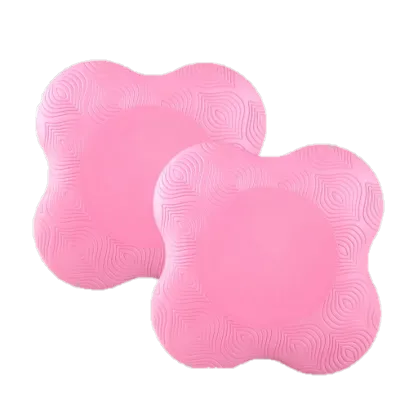
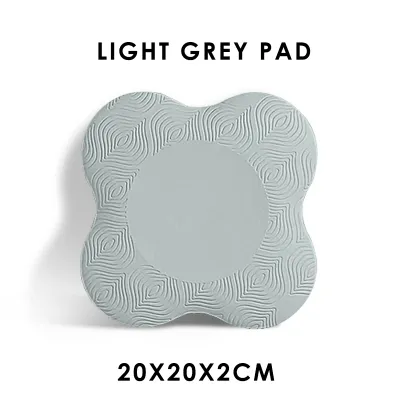
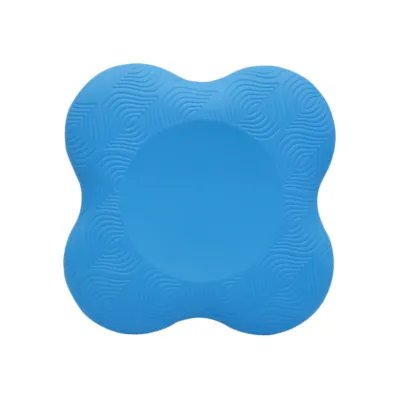
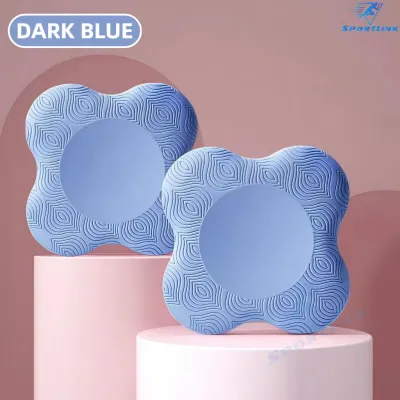
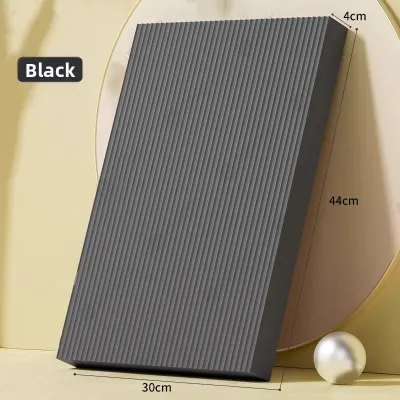
Prices are valid at publication and may change. Please refer to the product page for the latest price.
The fundamental trade-off of knee pad thickness centers on the tension between joint cushioning and proprioception. Proprioception—your body’s ability to sense its position and movement in space—relies on a firm, stable connection to the ground. As thickness increases, the distance between your joint and the solid floor grows, which successfully reduces the impact on your patella. However, this extra layer can also make the surface beneath you feel unstable, making it harder to maintain your footing or hand placement during complex sequences.
Ultimately, the perfect thickness is highly personal and depends on your unique physical profile. If you are carrying your gear to a local studio in Singapore or practicing in a compact home space, portability and storage might also influence your decision. A moderate pad is easy to slip into a standard tote bag, while an ultra-thick foam pad may require dedicated carrying straps and more storage space.
Why a Yoga Knee Pad Thick Spec Matters for Cushioning and Stability
To understand how a yoga knee pad thick profile affects your practice, you must look at how it manages your body weight during specific poses. During kneeling postures like Camel pose (Ustrasana), low lunges (Anjaneyasana), or Gate pose (Parighasana), a significant portion of your weight concentrates on a very small surface area of the kneecap. A well-designed pad disperses this concentrated downward force across a wider surface area, reducing localized pressure on the patella and preventing joint strain.

However, stability requires a firm connection to the ground. If a pad is excessively thick or made of low-density foam, your knee or wrist will sink unevenly into the material. This uneven sinking can alter your joint alignment, putting unnecessary torque on your ankles, knees, or wrists during poses like Tabletop or kneeling spinal twists. Over time, this misalignment can lead to micro-strains in the surrounding ligaments, defeating the purpose of using a protective pad in the first place.
You can easily test whether a pad’s thickness is appropriate for your body by performing a simple “sinking test” on your studio floor. Place your knee on the pad in a low lunge; if you can feel the hard floor directly beneath your kneecap, the pad is bottoming out due to insufficient thickness or density. Conversely, if your ankle wobbles or you feel your knee shifting side-to-side while trying to hold a stable posture, the pad is likely too thick or too soft for your current practice.
Matching Thickness Specs to Your Yoga Style
Your preferred style of yoga should directly dictate the thickness of the accessory you choose. In slower, passive practices like Yin, Restorative, or Prenatal yoga, poses are frequently held for three to five minutes or longer. For these styles, thicker pads in the 10mm to 15mm range are highly beneficial, as they provide sustained, comfortable support without requiring dynamic balance or rapid transitions.
Active and flow-based styles like Vinyasa, Power Yoga, or Hatha require a different approach. Because these practices involve rapid transitions, jump-throughs, and standing balance poses, a moderate thickness of 6mm to 8mm is much more practical. This thickness provides just enough relief during brief kneeling moments while ensuring you can transition smoothly without tripping over a bulky obstacle on your mat.
Additionally, consider the difference between targeted props and full-mat upgrades. Using a small, dedicated knee pad allows you to keep your primary mat thin and stable for standing poses while placing targeted cushioning only where needed. Upgrading to a full-length, extra-thick mat might seem convenient, but it can negatively affect your wrist angles and overall alignment during poses like Downward-Facing Dog, where a firm, non-slip foundation is critical.
Beyond Thickness: The Role of Density and Material Specs
Thickness is only one part of the joint protection equation; material density plays an equally vital role. A thin, high-density pad made of natural rubber can actually offer superior joint protection compared to a much thicker pad made of cheap, low-density foam. This is because high-density materials resist compression, maintaining their structural integrity under the full weight of your body.
Key Material Specifications to Look For
When browsing options on an online marketplace or at a local sporting goods store, pay close attention to the material specifications listed on the product label:
- Thermoplastic Elastomer (TPE): Lightweight and offers moderate density, making it easy to carry to the studio.
- Natural Rubber: Provides exceptional density and grip but is heavier and requires more care.
- High-Density EVA Foam: Offers excellent durability and water resistance, which is ideal for humid tropical climates like Singapore where sweat can quickly degrade lower-quality materials.
Before committing to a purchase, perform a quick manual compression check if you are shopping in person. Press your thumb firmly into the center of the pad; a high-quality, supportive pad should offer immediate resistance and spring back to its original shape instantly. If your thumb easily compresses the material down to the counter surface, the pad will likely bottom out during your practice, regardless of how thick it appears.
Frequently Asked Questions (FAQ)
Can I just fold my regular yoga mat for extra knee padding?
Folding your regular mat is a common quick fix, but it comes with distinct physical trade-offs. While folding doubles or triples the thickness under your knee, it creates an uneven, unstable edge that can easily catch your toes during transitions or cause your ankle to roll. Furthermore, a folded mat can create awkward elevation changes that strain your wrists and lower back, whereas a dedicated knee pad features tapered edges designed to transition smoothly to the mat surface.
Is a thicker yoga knee pad always better for bad knees?
Not necessarily, as excessive thickness can introduce new risks for sensitive joints. When a pad is too thick or overly soft, the small stabilizing muscles around your knee and ankle must work twice as hard to keep you upright, which can lead to fatigue and joint strain. For those managing knee sensitivity, a high-density pad of moderate thickness (6mm to 8mm) often provides safer, more reliable support by keeping the joints properly aligned and stable.
Community discussion
Share your experience or ask a question. Comments are reviewed before publication.