
Yes, parallettes can absolutely fit into an HDB flat, but success depends on matching the equipment type to your available floor space and planned exercises. Unlike bulky home gym gear, parallettes are highly compact and portable. However, the true space requirement is not just the physical footprint of the bars; it is the dynamic clearance your body needs when swinging, pressing, and balancing. By measuring your room layout, understanding your body’s range of motion, and selecting the right equipment design, you can safely integrate these versatile training tools into even the most compact Singaporean apartment.
Understanding Parallette Dimensions and Footprints
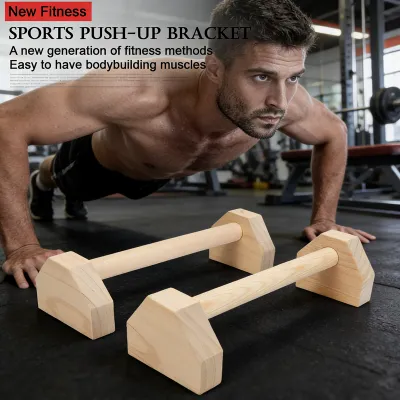
Parallettes come in several distinct sizes, and there is no single industry standard. Before making a purchase, you must understand the differences between mini, standard, and tall models. Mini parallettes, often made of wood or lightweight steel, typically have a very small footprint, measuring around 30 to 40 centimetres in length and sitting low to the ground. These are highly portable and excellent for basic handstands, L-sits, and push-ups, making them ideal for tight spaces.
Standard parallettes generally range from 50 to 70 centimetres in length and stand about 30 centimetres high. This height provides more ground clearance, which is helpful for beginners who need extra room to swing their legs through during transitions. Tall models, sometimes referred to as dip bars, can stand up to 70 or 80 centimetres tall. While these allow for a wider range of exercises like full dips, they also require significantly more storage space and a wider base to remain stable.
Products mentioned in this guide
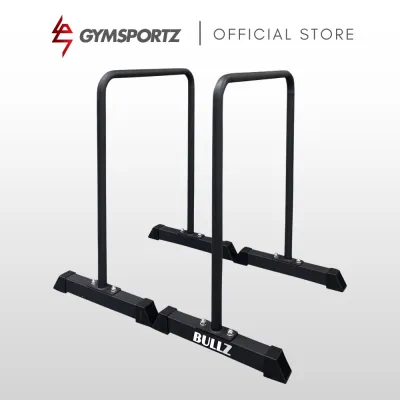
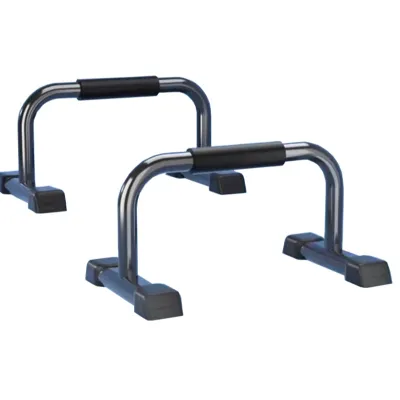
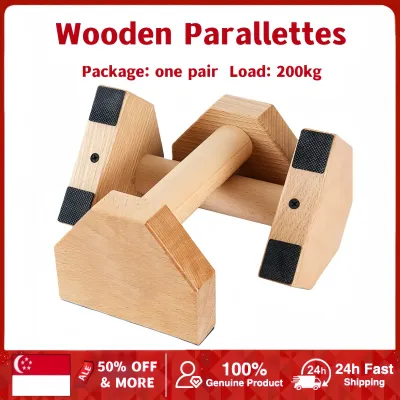
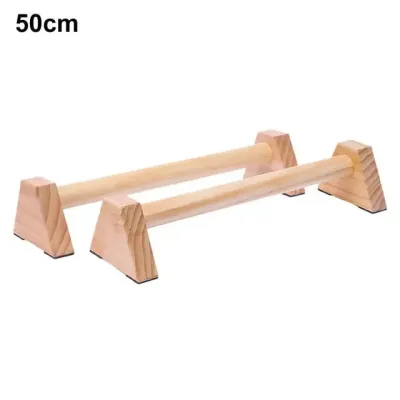
![[SG SELLER LOCAL STOCK] 2PCS Wooden Parallettes 50cm Handstand Stands Bars Gymnastic Russian Style Stretch Push Up Double](https://img.lazcdn.com/g/p/ba9ad10170aaea6a5aee07d592add26e.jpg_400x400q80.jpg_.webp)
![🇸🇬 [READY STOCK] 2PCS Wooden Parallettes (30CM 50CM LENGTH)Handstand Pushups Stands Bars Gymnastic Russian Style Stretch Push-Ups Double Rod](https://img.lazcdn.com/g/p/b99799540fc942ab54f232614eacbbb2.jpg_400x400q80.jpg_.webp)
Prices are valid at publication and may change. Please refer to the product page for the latest price.
The critical distinction you must make is between the static physical footprint of the equipment and the required operational area. The static footprint is simply the length and width of the bases resting on your floor. The operational area, however, is the total space your body occupies while performing exercises. A pair of mini parallettes might only take up a tiny corner of your room when sitting idle, but using them requires a much larger zone. Always verify the exact product dimensions—specifically the length, base width, and height—directly on the retailer’s product page before purchasing.
Evaluating Potential Workout Zones in Your HDB Flat
Finding the right spot for your workouts in a typical HDB layout requires balancing safety, convenience, and household harmony. The living room is often the most popular choice because it usually offers the largest open floor area. A corner of the living room can easily accommodate a temporary workout station, allowing you to move coffee tables or light furniture aside when it is time to train.

Bedrooms are another option, though they present tighter space constraints. If you plan to train in a bedroom, you will need to be highly mindful of furniture corners, wardrobe doors, and bed frames. Enclosed balconies can also serve as excellent dedicated workout zones, provided they are shielded from heavy rain and have sufficient width to accommodate your body’s lateral movements.
Regardless of which room you choose, the floor surface is a critical consideration. Most HDB flats feature ceramic tiles, vinyl, or laminate flooring. Placing heavy metal or wooden parallettes directly on these surfaces can cause scratches, scuffs, or even cracks over time. Furthermore, dynamic movements can cause the equipment to slide, posing a safety risk. Using a high-density exercise mat is essential to protect your flooring, provide grip for the parallette bases, and dampen impact noise to maintain good relations with your downstairs neighbors.
Finally, do not forget to look upward. Ceiling heights in HDB flats are generally standard, but overhead obstructions can severely limit your exercise options. Check the placement of ceiling fans, hanging light fixtures, and air-conditioning trunking. If you are performing handstands, high-parallette dips, or any movement that raises your hips or feet high into the air, an unexpected collision with a spinning ceiling fan or a hard concrete beam can cause serious injury.
Calculating Safe Clearance for Dynamic Movements
To train safely, you must calculate the dynamic clearance required for your specific routine. Exercises on parallettes are rarely static; they involve leg extensions, L-sits, planches, and lateral body shifts. If you only measure the space needed to place the bars on the floor, you run the risk of kicking a wall or crashing into a television cabinet mid-exercise.
A practical framework for calculating your total required area is to add the physical footprint of the parallettes to your personal physical dimensions. Start by measuring the length of the parallettes and the distance you prefer to place them apart. Next, add your wingspan to the lateral width to account for arm movements and shoulder shifts. For longitudinal clearance, measure your height or your maximum leg extension from your hips to your toes. This total length represents the absolute minimum clear path you need along the floor to perform movements like leg tucks, L-sits, or full body swings without obstruction.
Always account for nearby furniture, walls, and high-traffic walkways within this calculated zone. If your workout area overlaps with a main walkway in your home, ensure other household members are aware of your training times, or choose a time when foot traffic is low. A buffer zone of at least 50 centimetres beyond your maximum reach in all directions is highly recommended to prevent accidental collisions with solid objects or passing family members.
Planning Storage and Space-Saving Solutions
One of the greatest advantages of parallettes is their potential for easy storage, which is incredibly valuable in an HDB flat where space is at a premium. When selecting your equipment, evaluate the portability and design features that facilitate storage. Some modern parallettes feature foldable frames or detachable bases that allow them to lay completely flat when not in use. Others are designed to nest together, reducing their storage footprint by half.
If you choose lightweight wooden or mini steel parallettes, they can easily be tucked away under a bed, placed at the bottom of a wardrobe, or stored on a dedicated shelf in a utility closet. Heavier, taller dip-bar style parallettes require more planning. Because of their height and weight, they cannot easily be hidden under standard furniture. For these, you might need to allocate a permanent corner in a study or balcony, or use decorative screens to blend them into your living space when they are not in use.
You must weigh the trade-offs between maintaining a permanent, dedicated workout station and using easily stowable equipment. A permanent setup means you can start training instantly without any preparation, which can help maintain workout consistency. However, in shared HDB living spaces, a permanent setup can clutter common areas and restrict daily activities. Opting for highly portable, easily stowable parallettes allows you to reclaim your living space immediately after your session, keeping your home organized and multi-functional.
Avoiding Common Space-Planning Mistakes
Many fitness enthusiasts make the mistake of purchasing home gym equipment based solely on product photos, only to find it unusable in their actual living space. The most common error is measuring only the static base of the parallettes while completely ignoring the user’s body mechanics and full range of motion. Remember that during a handstand or a push-up, your head, shoulders, and feet will extend well beyond the physical boundaries of the wooden or metal bars.
Another frequent oversight is ignoring the condition and levelness of the floor. HDB tiles or vinyl planks must be clean and free of dust before you lay down your exercise mat. Dust and moisture can cause even high-quality rubber mats to slip during dynamic movements, compromising your stability. Never place parallettes on uneven surfaces, rugs, or loose mats that do not offer adequate traction.
To prevent costly purchasing mistakes, always test your designated workout space before buying. Use low-tack masking tape to outline the exact dimensions of the parallettes on your floor. Once the outline is marked, physically stand or lie down within the space and simulate your planned exercises. Extend your arms and legs fully to verify that you will not hit any walls, furniture, or low-hanging fixtures. This simple simulation takes only a few minutes but provides absolute certainty that your chosen equipment will fit your home and your training style.
Frequently Asked Questions (FAQ)
Do I need a special mat for using parallettes on HDB flooring?
Yes, using a high-density exercise mat is highly recommended when training with parallettes on HDB flooring. Standard HDB flooring materials, such as ceramic tiles, vinyl, or laminate, can easily be scratched or dented by the metal or wooden bases of the equipment under the pressure of your body weight. A dense rubber or PVC mat provides a protective barrier that prevents surface damage and keeps the parallettes from sliding during dynamic movements.
Additionally, a quality mat plays a crucial role in noise mitigation. High-density living in HDB estates means that vibrations and impact sounds travel easily through concrete floors to the units below. A thick mat helps absorb the impact of your movements and dampens the sound of the equipment shifting, ensuring your home workouts remain quiet and respectful of your neighbors. When choosing a mat, ensure its dimensions are large enough to cover your entire movement area, rather than just the small footprint of the parallettes themselves.
Can I use parallettes in my HDB bedroom if the space is very tight?
Yes, you can successfully use parallettes in a tight HDB bedroom by choosing the right equipment design and adapting your workout routine. In highly restricted spaces, avoid tall or wide dip bars and opt instead for mini or compact wooden parallettes. These models have a very small footprint, sit low to the ground, and can be easily stored under a bed or inside a wardrobe when your workout is complete.
To train safely in a confined area, you should also modify your exercise selection. Focus on static holds and vertical movements, such as L-sits, tuck sits, handstands, and push-ups, which require minimal horizontal space. Avoid dynamic exercises that involve wide leg swings, lateral body shifts, or deep forward extensions. Always maintain a safety buffer of at least 50 centimetres between your body and nearby furniture, walls, or wardrobe doors to prevent painful accidental contact during your sessions.
Community discussion
Share your experience or ask a question. Comments are reviewed before publication.