
Selecting a kids swimming vest requires a careful balance of verified safety credentials and a precise, secure fit. While these vests are excellent tools for helping children build confidence in the water, they are not universal safety devices. A vest that is too loose, uncertified, or poorly adjusted can easily slip off or fail to keep a child’s head above water. To ensure your child remains safe, you must systematically verify the product’s safety certifications, match the vest to their exact physical measurements, and perform rigorous fit tests both on land and in a controlled aquatic environment. Remember that no flotation device can ever replace active, hands-on adult supervision and proper water safety training.
Understanding Safety Certifications and Labels
Before purchasing any swimming vest, you must inspect the physical labels printed directly on the fabric or sewn into the inner seams. Reliable manufacturers print safety standards, weight ranges, and usage instructions directly on the product. Look for recognized regional or international certification codes, such as the European Standard EN 13138 (which covers buoyant aids for swimming instruction) or ISO standards. These markings indicate that the vest has undergone independent testing for buoyancy, material strength, and seam durability. Avoid products that only feature generic marketing claims like “safety approved” without referencing an official testing standard.
It is critical to distinguish between a swimming aid and a dedicated life jacket or Personal Flotation Device (PFD). A kids swimming vest is typically classified as a swimming aid, designed to help a child maintain a natural swimming position while they actively kick and paddle in a controlled environment like a pool. These aids do not have the buoyancy or design required to turn an unconscious wearer face-up in the water. If you are planning activities in open water, on a boat, or in rough conditions, you must use a certified life jacket rather than a standard swim vest.
Products mentioned in this guide
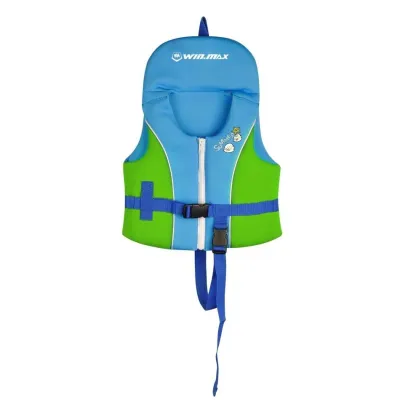
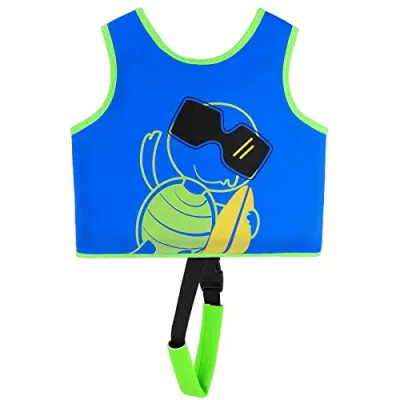
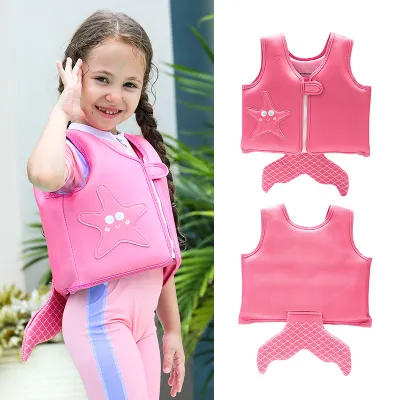
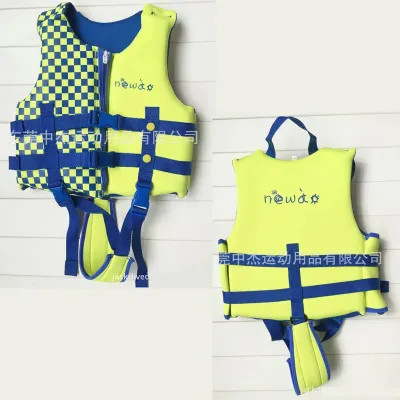
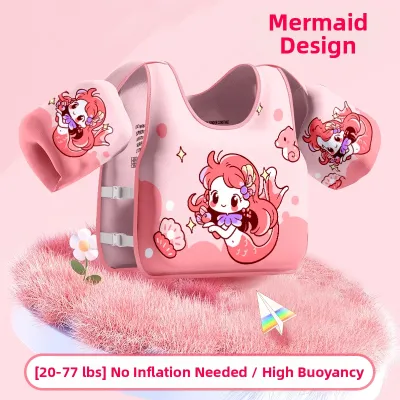
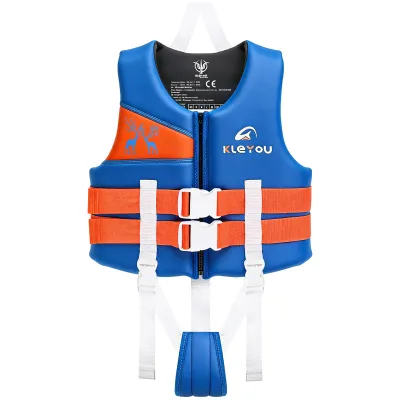
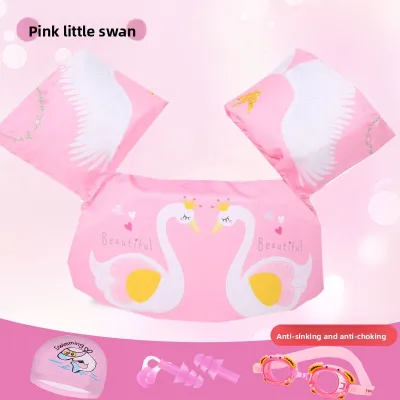

Prices are valid at publication and may change. Please refer to the product page for the latest price.
Always read the mandatory manufacturer warnings printed on the inside of the vest. These warnings outline the physical limits of the gear, including the maximum weight and age recommendations. Most importantly, they will explicitly state that the vest is not a life-saving device and requires constant, arm’s-reach adult supervision. Treat these labels as your primary safety guide and reject any product that lacks clear, legible safety warnings in your local language.
Matching the Vest to Your Child’s Weight and Size
When choosing a kids swimming vest, you must use your child’s current weight as the primary filtering criterion. Buoyancy is a physical calculation; a specific volume of foam can only support a specific mass in the water. If a child exceeds the maximum weight limit of a vest, the device will not provide enough upward force to keep their head comfortably above the surface. Conversely, if a child is too light for the vest, the device will sit too high in the water, which can push the child’s face forward or cause the vest to float up around their ears.

To find the correct size, do not rely on age ranges, as children of the same age can vary significantly in body shape and mass. Use a flexible measuring tape to measure your child’s chest circumference at the widest point, directly under the armpits. Compare this measurement, along with their current weight, against the manufacturer’s specific sizing chart. The vest should fit snugly around the torso, providing uniform support without compressing the chest or restricting deep breathing.
Avoid the common temptation to buy a larger size to allow room for future growth. While this practice is common for everyday clothing, it is highly dangerous for water safety gear. An oversized vest leaves large gaps around the armholes and neck. When the child enters the water, the buoyancy of the vest will force it upward, allowing the child’s body to slip down through the bottom of the vest, creating an immediate drowning hazard. Always buy a vest that fits perfectly right now.
Performing a Pre-Purchase Fit and Adjustment Check
Before your child gets near the water, perform a thorough physical inspection of the vest’s adjustment systems. Examine the straps, buckles, and zippers to ensure they are robust and function smoothly. High-quality vests feature heavy-duty nylon webbing straps with quick-release buckles that require a firm squeeze to open, preventing accidental release by the child. Check that the straps can be adjusted easily but remain locked in place once tightened.
Pay close attention to the presence of a crotch strap, which is a critical safety feature for younger children and toddlers. This strap runs between the child’s legs and connects the front and back of the vest, preventing the entire device from riding up over the child’s head when they float. Ensure the crotch strap is adjustable, padded to prevent chafing, and equipped with a secure buckle that cannot be easily undone by curious fingers.
Inspect the zipper and its surrounding closures. The zipper should slide smoothly and feature a protective fabric flap, or chin guard, at the top to prevent the metal or plastic teeth from pinching the child’s skin. Additionally, look for a secondary security closure, such as a Velcro tab or a snap button that covers the zipper pull. This secondary lock prevents the zipper from sliding down during active play or being pulled down by the child while in the water.
Finally, examine the buoyancy modules themselves. If the vest uses removable foam inserts, verify that the pockets housing them are securely stitched and feature reliable closures. The foam panels should not shift, bunch up, or slide out of position, as uneven buoyancy distribution can cause the child to tilt dangerously to one side in the water. For vests with permanent foam, feel along the panels to ensure they are flat, intact, and evenly distributed.
Conducting a Safe In-Water Fit Test
Once the vest passes your dry inspection, you must conduct an in-water fit test in a controlled, shallow environment, such as a wading pool. An adult must remain in the water at arm’s reach, maintaining constant hands-on contact during this test. Do not perform this test in deep water, open sea, or crowded areas where you cannot immediately assist the child if the vest fails to perform correctly.
Place the child in the water and observe how the vest behaves as they float. Gently pull upward on the shoulders of the vest to simulate the natural upward force of the water. If the vest slides up past the child’s chin, nose, or ears, the straps are too loose or the vest is too large. The vest should remain firmly in place on the child’s torso, keeping their chin and mouth well clear of the water surface without riding up.
Encourage your child to move around, kick, and practice basic arm strokes while you support them. Watch their movements closely to see if the fabric or straps rub against their underarms, neck, or inner thighs. Chafing is a clear sign of a poor fit or improper adjustment, which will quickly cause discomfort and discourage the child from swimming. The vest should allow a full range of motion in the arms and legs without shifting or twisting on the body.
Establish clear stop-use conditions before every swimming session. If you observe the vest sliding up excessively, if the child complains of pain or pinching, or if the vest fails to keep the child’s head in a stable, upright position, exit the water immediately. Do not attempt to modify the vest yourself by cutting straps or removing foam; instead, adjust the straps again or transition to a different size or model that fits correctly.
Maintenance, Inspection, and When to Replace
To preserve the safety and buoyancy of a kids swimming vest, you must establish a consistent post-swim maintenance routine. After every use, rinse the vest thoroughly with clean, fresh water to remove chlorine, salt, sand, and organic matter. These elements can degrade synthetic fabrics, weaken stitching, and corrode zippers over time. Gently squeeze out excess water without wringing or twisting the vest, which can damage the internal foam structure.
Dry the vest by hanging it in a shaded, well-ventilated outdoor area or a dry indoor space. Never expose the vest to direct sunlight for extended periods when drying, as ultraviolet (UV) radiation breaks down nylon fabrics and makes internal buoyancy foam brittle. Avoid using artificial heat sources, such as clothes dryers, radiators, or hair dryers, as extreme heat can warp, melt, or shrink the materials, permanently compromising the vest’s buoyancy.
Before the start of every swim season, and periodically throughout the year, conduct a detailed structural inspection. Check all seams for frayed or broken stitching, inspect the straps for loss of elasticity or wear, and test the buckles to ensure they snap shut securely. Feel the internal foam panels to confirm they have not become lumpy, compressed, or cracked. If you detect any structural damage, the vest must be retired immediately.
Finally, monitor your child’s physical growth closely. Even if a swimming vest appears to be in perfect physical condition, you must replace it immediately once your child’s weight exceeds the maximum limit printed on the safety label. Using an outgrown vest compromises safety by failing to provide adequate buoyancy. Keep an updated record of your child’s weight and chest measurements to ensure their gear always matches their current physical profile.
Frequently Asked Questions (FAQ)
Can a kids swimming vest replace a certified life jacket on a boat?
No, a kids swimming vest cannot replace a certified life jacket or Personal Flotation Device (PFD) on a boat. Swimming vests are designed as swim aids to assist children who are actively learning to swim in calm, supervised pool environments. They lack the high buoyancy, collar support, and self-righting capabilities required to keep an unconscious wearer’s face above water in open or rough conditions. For boating and marine activities, local maritime regulations typically mandate the use of specifically certified life jackets that meet strict safety standards for open-water survival.
How do I clean a swimming vest without damaging the buoyancy foam?
To clean a swimming vest safely, hand wash it in cool, fresh water using a mild, non-detergent soap. Avoid using harsh chemical detergents, bleach, fabric softeners, or stain removers, as these substances can break down the closed-cell structure of the buoyancy foam and degrade the protective outer fabric. Never wash the vest in a washing machine or spin dryer, as the mechanical agitation can crush the foam inserts and tear the seams. Always air dry the vest completely in a shaded, well-ventilated area before storing it in a cool, dry place away from direct sunlight.
Community discussion
Share your experience or ask a question. Comments are reviewed before publication.