
Choosing a back spine stretcher for Pilates as a beginner requires distinguishing between specialized Pilates apparatuses and simple passive traction arches. In Singapore’s active wellness landscape, many practitioners seek home-use equipment to complement their studio sessions. However, selecting the wrong type can lead to poor spinal alignment, discomfort, or early equipment wear due to the local humid climate. A beginner must prioritize a gentle curve profile, high-density supportive materials, and verified stability to ensure safe, progressive spinal extension.
Rather than relying on generic rankings or universal claims, finding the right equipment involves understanding your own body mechanics and verifying product specifications. By focusing on structural integrity and design suitability, you can select a tool that safely supports your back while helping you master the foundational movements of Pilates. This guide outlines the essential differences in equipment types, key selection criteria, safety protocols, and practical buying strategies to help you make an informed decision.
Understanding the Equipment: Pilates Arcs vs. Generic Back Stretchers
To make an appropriate purchase, you must first understand that a true Pilates spine stretcher is designed for active, dynamic movement, whereas generic back stretchers are typically built for passive traction. The most common Pilates-specific tools are the Pilates Arc (often referred to as a Spine Corrector) and the Small Barrel. These apparatuses feature a distinct dual-curve geometry, usually consisting of a steep curve on one side, a gentler slope on the other, and a step or “well” in the middle. This specialized shape is mathematically designed to support the natural contours of the spine during active articulation, lateral flexion, rotation, and core stabilization exercises.
Products mentioned in this guide
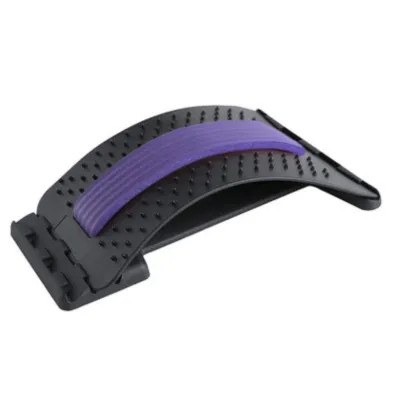
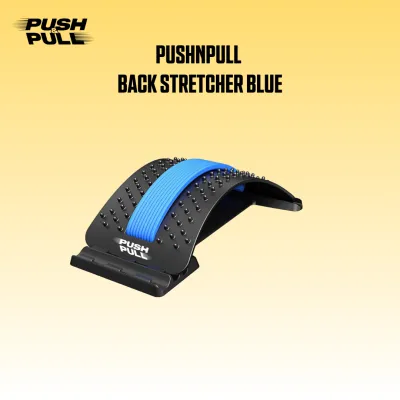
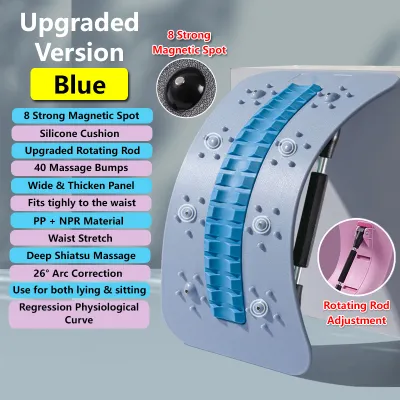
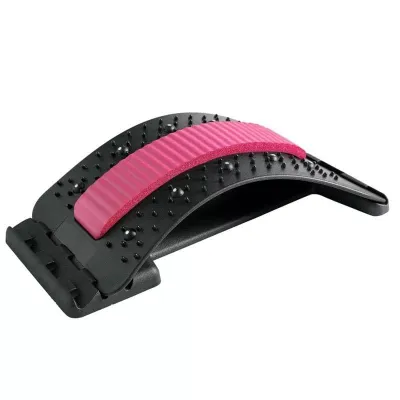
Prices are valid at publication and may change. Please refer to the product page for the latest price.
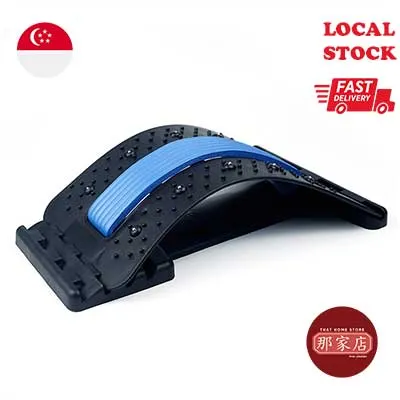
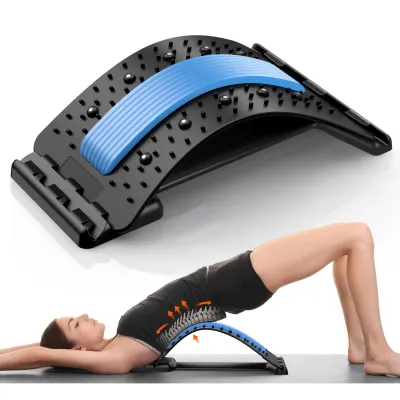
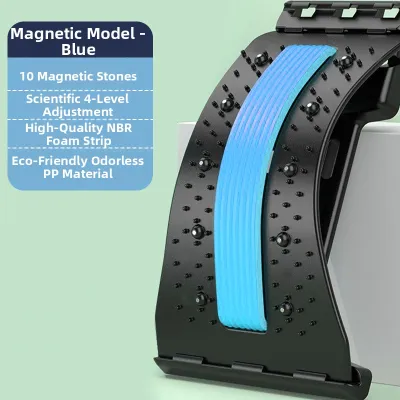
In contrast, generic back stretchers are usually flat, low-profile plastic arches, sometimes featuring adjustable height levels, plastic massage nubs, or magnetic points. These devices are designed almost exclusively for passive lying, where the user remains static to gravity-stretch the lumbar spine. They lack the structural volume, the step, and the high-density foam support required to execute dynamic Pilates exercises safely. Attempting to perform Pilates rolling or abdominal work on a narrow, rigid plastic traction board can cause bruising along the spinous processes and fails to provide the lateral stability needed for balanced movement.
Proper Pilates-specific design relies on high-density foam cores or upholstered wooden frames that offer a firm yet forgiving surface. High-density expanded polystyrene (EPS) or dense polyurethane foam provides the necessary resistance to support your body weight without bottoming out. If a stretcher compresses too easily under your weight, your spine loses its supportive pivot point, which can strain the lower back or neck. Furthermore, in Singapore’s humid climate, open-cell foams can absorb ambient moisture and sweat, leading to rapid material degradation and hygiene issues, whereas professional-grade closed-cell materials resist moisture absorption and maintain their structural shape over years of regular use.
Key Selection Criteria for a Beginner-Friendly Spine Stretcher
When evaluating a spine stretcher for beginner use, the arc height and curve profile are the most critical factors to consider. Beginners often present with tight thoracic spines, limited lumbar mobility, or general back stiffness from prolonged sitting. A steep, high arch—characteristic of classical wooden spine correctors—can force a stiff spine into hyperextension too quickly, leading to muscle guarding or joint pinching. For novice practitioners, a gentler, more gradual slope is highly recommended. Many modern three-in-one Pilates arcs feature a detachable wedge or a shallower curve that allows you to gradually increase your extension range of motion as your flexibility improves.

Surface material and grip are equally important for maintaining control during transitional movements. The upholstery should offer a balance of comfort, durability, and slip resistance. High-quality vinyl or vegan leather upholstery provides excellent tactile feedback, preventing your torso from sliding out of alignment when performing extension or lateral flexion. Because tropical humidity and active workouts lead to perspiration, look for textured finishes that maintain grip when damp. Avoid cheap, smooth plastics or low-grade foam sleeves that become slick, as sliding mid-exercise can compromise your balance and strain stabilizing muscles.
Base footprint and weight determine how stable the equipment remains on your floor. Lightweight foam arcs are highly portable and easy to store in space-conscious apartments, but they require a high-grip surface underneath to prevent sliding. If you plan to use a lightweight foam model, ensure you place it on a high-density, non-slip Pilates mat. Heavier wooden spine correctors with upholstered tops offer superior stability and are highly resistant to tipping, but they are more difficult to move and store. Verify that the base footprint is wide enough to prevent lateral tipping, especially during side-lying lateral flexion exercises where your center of gravity shifts outward.
Size variations must align with your individual torso height to ensure proper lumbar and thoracic support. A spine stretcher that is too short for your frame will place the apex of the curve in the wrong position, potentially hyperextending your lower back while leaving your neck hanging unsupported. Conversely, a stretcher that is too large can prevent you from reaching the floor or the step comfortably, reducing the effectiveness of the exercise. Before purchasing, measure your torso length from your tailbone to the base of your skull, and compare this with the manufacturer’s specified arc length to ensure your head and neck will remain fully supported during full extension.
Safety Boundaries and Setup Checks for Spinal Extension
Before beginning any home practice session, perform a thorough pre-use inspection of your equipment. Check for any structural cracks, deep indentations, or seam separations in the foam or upholstery. If you are using a modular or multi-piece Pilates arc, verify that the interlocking joints, friction-fit pegs, or locking mechanisms are fully engaged and flush. Inspect the underside of the unit to ensure that any non-slip pads or rubber grips are clean and free of dust, which can significantly reduce traction on tiled or hardwood floors.
Understanding your body’s movement limits and pain signals is paramount when performing spinal extension. A productive stretch should feel like a broad, distributing opening across the front of your body, accompanied by a gentle, active engagement of your back extensors. It must never cause sharp, shooting, or localized pain in the vertebrae, nor should it produce tingling, numbness, or radiating sensations down your legs or arms. If you experience any of these warning signs, stop the exercise immediately and return to a neutral seated position. Remember that home equipment is a tool to assist your practice; it cannot replace personal physical judgment or professional instruction.
Certain physical conditions serve as strict contraindications for unsupervised spinal extension. If you have a history of herniated discs, spondylolisthesis, severe osteoporosis, spinal stenosis, or recent abdominal surgery, you must consult a healthcare professional before using a spine stretcher. Beginners are strongly encouraged to complete several supervised studio sessions with a certified Pilates instructor to learn correct pelvic placement and abdominal engagement. This professional guidance ensures you understand how to articulate your spine over the arc rather than simply collapsing your weight into your lower back.
Your physical environment must be properly prepared to prevent accidents during your workout. Position the spine stretcher on a flat, level surface, away from furniture, sharp corners, or glass doors. Ensure there is at least one meter of clear space on all sides of the equipment to allow for full arm and leg extension during rolling or stretching sequences. Never attempt to stand on top of a spine stretcher, suspend heavy external loads from it, or anchor unverified resistance bands to the unit unless the manufacturer’s manual explicitly documents these actions as safe and provides dedicated, reinforced anchor points.
Building Your Shortlist: How to Evaluate Options Before Buying
To build a reliable shortlist, start by carefully reading the manufacturer’s technical specifications rather than relying on promotional descriptions. Look for the exact dimensions, weight of the unit, and the maximum load capacity. A high-quality home-use Pilates arc typically supports a weight capacity of at least 110kg to 150kg, indicating robust structural integrity. Pay close attention to the core material; expanded polystyrene (EPS) is highly favored for home use because it is lightweight, structurally rigid, and does not deform under repeated use, whereas cheap open-cell polyurethane foam will quickly lose its height and curve profile.
Evaluating return policies and warranties is a crucial step in protecting your investment. Because spinal anatomy is highly individual, a curve profile that feels comfortable for one person may cause discomfort or strain for another. Prioritize retailers or distributors that offer a clear return window or a trial period, allowing you to assess the physical fit of the arc in your home. Additionally, verify that the warranty covers manufacturing defects, foam deformation, and upholstery splitting under normal residential use, typically for a minimum of one year.
Assessing seller credibility helps you avoid low-quality, drop-shipped imitations that flood online marketplaces. Look for authorized distributors of established Pilates equipment brands or specialized fitness retailers that maintain physical showrooms or dedicated customer service channels. Credible sellers will readily provide detailed material safety data sheets, clear usage instructions, and responsive support. Purchasing from a reputable source ensures that the materials used in the foam and upholstery are non-toxic, flame-retardant, and free of harmful volatile organic compounds (VOCs) that can off-gas in enclosed, air-conditioned rooms.
Budget considerations should reflect the long-term durability and safety of the equipment. In the local market, entry-level high-density foam Pilates arcs generally range from S$150 to S$250, while professional-grade wooden spine correctors with premium vinyl upholstery can cost between S$400 and S$800. While passive plastic back stretchers are available on generic ecommerce platforms for under S$50, they do not support the dynamic movement repertoire of Pilates and lack the necessary structural safety. Investing in a mid-range, high-density foam arc offers the best balance of safety, durability, and versatility for a beginner practicing at home.
Frequently Asked Questions (FAQ)
Can I use a back spine stretcher every day as a beginner?
Daily use of a back spine stretcher is generally not recommended for absolute beginners. The deep ligaments, intervertebral discs, and small stabilizing muscles of your spine require adequate recovery time to adapt to the new forces introduced by passive and active extension. When starting out, limit your practice to two or three sessions per week, keeping each session to approximately 5 to 10 minutes of focused extension work. Overuse can lead to ligamentous strain, muscle guarding, or localized soreness in the back. Always ensure your routine balances spinal extension with gentle spinal flexion, lateral bending, and core stabilization exercises to maintain a balanced, functional spine.
How do I clean and maintain the upholstery on my Pilates Arc?
To maintain hygiene and prolong the lifespan of your equipment, wipe down the surface after every use with a soft, damp microfiber cloth to remove sweat, body oils, and dust. Avoid using harsh chemical cleaners, bleach, alcohol-based sanitizers, or heavy solvents, as these substances will dry out, discolor, and crack vinyl, vegan leather, or foam surfaces over time. For a deeper clean, use a highly diluted solution of mild dish soap and warm water, wiping the surface dry immediately afterward with a clean towel. Store your spine stretcher in a cool, dry, and well-ventilated indoor area away from direct sunlight, as prolonged UV exposure can degrade foam cores and cause upholstery materials to peel.
Community discussion
Share your experience or ask a question. Comments are reviewed before publication.