
Choosing the right badminton swing trainer depends on aligning the tool’s mechanical feedback with your current physical and technical development. Beginners require lightweight, feedback-driven trainers that teach correct grip and forearm pronation, while intermediate players benefit from adjustable resistance or weighted shafts to build explosive power and racket head speed. Selecting the wrong tool can lead to poor habits or joint strain, making it essential to match the trainer’s features to your specific skill level.
To make an informed purchase, you must understand how different training tools interact with your body. A well-chosen trainer acts as a bridge between off-court conditioning and on-court performance, helping you refine your technique in a controlled environment. By evaluating your current abilities and training space, you can select a tool that safely accelerates your development.
Understanding Badminton Swing Trainers and Their Purpose
Badminton swing trainers are specialized off-court tools designed to isolate and improve specific components of your stroke. Unlike standard rackets, these devices use various mechanisms—such as added weight, air resistance fins, or sliding clickers—to provide immediate physical feedback. They help players develop muscle memory, improve forearm rotation, and increase overall swing speed without the need for a court or a training partner.
Products mentioned in this guide
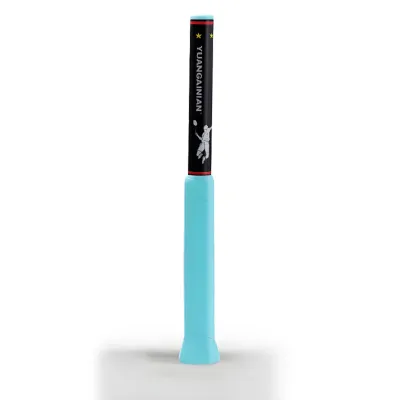
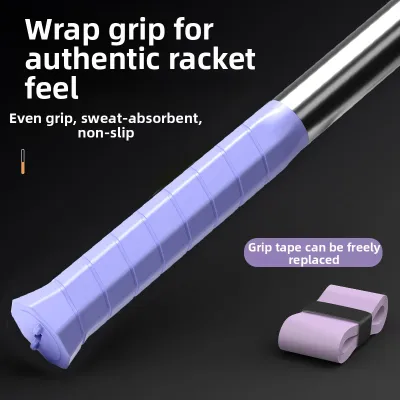
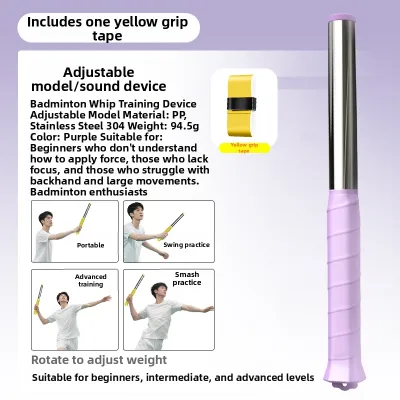
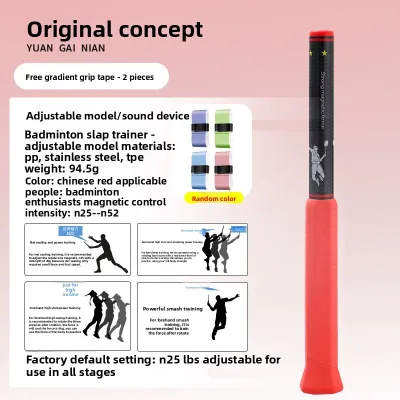
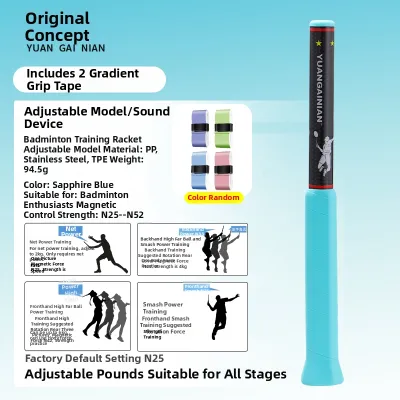
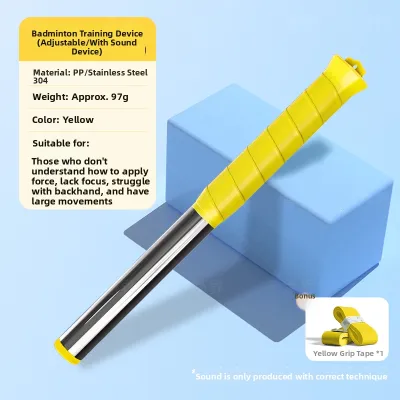
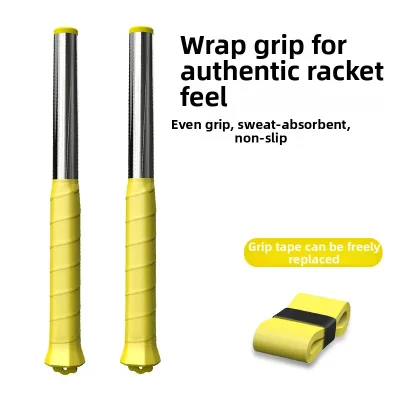
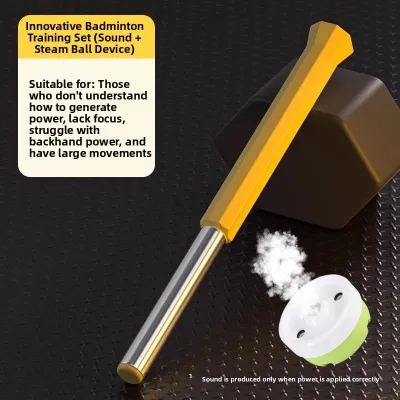
Prices are valid at publication and may change. Please refer to the product page for the latest price.
However, swing trainers have distinct limitations that you must consider before purchasing. Because they do not involve hitting an actual shuttlecock, they cannot replicate the precise timing, impact vibration, or hand-eye coordination required during a live rally. Overusing a heavy trainer without balancing it with regular racket practice can temporarily disrupt your timing and feel for the shuttlecock.
These tools are highly effective for supplementary conditioning and technical reinforcement, but they are not a substitute for active play. They are best used to build the physical foundation of your swing, such as forearm strength and wrist flexibility. For tactical positioning, footwork integration, and stroke refinement, you should combine trainer drills with professional coaching and on-court practice.
Key Features to Evaluate Before Buying
When shopping for a swing trainer, the resistance mechanism is the most critical feature to evaluate. Some trainers use fixed weights, while others feature adjustable weights or air-resistance fins that increase drag as your swing accelerates. If you want a tool that can grow with your skill level, look for models with removable weight rings or adjustable resistance settings.

Handle design and grip compatibility are equally vital for preventing injury and ensuring a natural transition to your match racket. The trainer should feature a grip size and shape that closely mirrors standard badminton handles, typically G4 or G5 sizes. Ensure the handle material allows you to apply your preferred overgrip, which helps maintain consistent hand placement and prevents the tool from slipping during high-speed swings.
Safety features must not be overlooked, especially when using high-resistance or weighted tools. Check for robust construction, secure locking mechanisms for adjustable weights, and non-slip wrist straps if provided. If you are considering resistance bands that anchor to a door or post, inspect the quality of the tubing and connection points to avoid dangerous snap-backs during use.
Portability and your training environment also dictate the best choice. In urban living spaces, such as typical apartments in Singapore, low ceilings and limited clearance can make swinging a full-length racket hazardous. Short-shaft swing trainers are specifically designed for indoor use, allowing you to practice full overhead strokes safely in confined spaces without hitting ceiling fans or light fixtures.
Choosing for Beginners: Building Fundamental Mechanics
For beginners, the primary goal of training is to establish correct swing mechanics, particularly forearm pronation and supination. Novices should avoid heavy, high-resistance trainers, which often force the body to compensate by using the shoulder or back, leading to poor form and potential injury. Instead, look for lightweight trainers that focus on structural guidance and sensory feedback.
Trainers equipped with audible clickers or sliding magnets are ideal for players learning the basic overhead stroke. These devices feature a weight that slides along the shaft, producing a distinct clicking sound only when you achieve maximum acceleration at the correct contact point. This immediate auditory feedback teaches you to snap your wrist at the peak of your swing rather than releasing your power too early.
When using these tools, beginners must watch out for common technique errors, such as holding the racket with a rigid “panhandle” grip during overhead shots. Ensure your trainer allows you to practice the correct forehand grip transition, where the racket face remains perpendicular to your forearm until the moment of rotation. Focus on smooth, relaxed movements rather than trying to swing with maximum physical force.
To build muscle memory safely, keep your practice sessions short but highly frequent. Dedicating five to ten minutes, three times a week, to slow, deliberate swings is far more effective than a single, exhausting weekly session. Stop immediately if you feel fatigue creeping in, as tired muscles naturally revert to incorrect, compensatory movements.
Choosing for Intermediate Players: Refining Speed and Power
Intermediate players who have mastered basic stroke mechanics can transition to trainers designed to build explosive power and racket head speed. At this stage, your body is prepared for higher physical loads, making weighted training shafts or air-resistance fins highly effective. These tools challenge your forearm and shoulder stabilizers, helping you generate more power in your smashes and clears.
Air-resistance trainers, which feature small fins or a modified frame, are particularly useful for intermediate players. Unlike static weights, air resistance increases exponentially the faster you swing, forcing you to accelerate continuously through the entire hitting zone. This teaches your muscles to drive through the stroke, preventing the common mistake of decelerating before making contact with the shuttlecock.
To ensure these power-building drills translate to the court, you must actively manage the transition to your standard racket. A highly effective strategy is to alternate your training sets: perform five controlled swings with your resistance trainer, followed immediately by five swings with your match racket. This contrast helps your nervous system retain the sensation of high-speed acceleration while maintaining your natural timing.
Because intermediate training involves higher physical intensity, setting strict safety boundaries is essential for preventing overuse injuries. Weighted and high-resistance tools place significant stress on the rotator cuff, elbow, and wrist joints. Limit your high-intensity trainer drills to two sessions per week, and always prioritize clean, explosive technique over sheer volume of repetitions.
Integrating a Swing Trainer into Your Practice Routine
Before picking up a swing trainer, you must perform a thorough warm-up to prepare your joints and muscles for the unique stresses of resistance swinging. Spend at least five minutes performing dynamic stretches, focusing on arm circles, wrist rotations, and shoulder mobility exercises. Swinging a weighted tool with cold, stiff muscles significantly increases the risk of strains and sprains.
Structure your training sessions using sets and repetitions that prioritize quality over quantity. For strength and speed development, aim for three to four sets of ten to twelve high-quality swings, resting for at least one minute between sets to allow your muscles to recover. If you are using the trainer to refine a specific stroke, such as the backhand clear, perform the movements slowly and deliberately to ensure perfect form.
In humid tropical climates like Singapore, sweat can quickly compromise your grip stability during intense indoor workouts. Keep a towel nearby to dry your hands, and regularly inspect the grip wrap on your trainer to ensure it remains tacky and secure. A slipping trainer not only ruins your swing mechanics but also poses a safety hazard to your surroundings.
Always listen to your body and establish clear stop conditions for every practice session. If you experience sharp joint pain, persistent muscle soreness, or a noticeable breakdown in your swing path, halt the exercise immediately. If a specific movement consistently feels awkward or painful, consult a qualified badminton coach to analyze your technique before continuing with the trainer.
Frequently Asked Questions (FAQ)
Can I use a regular heavy racket instead of a dedicated swing trainer?
While some players use older, heavier rackets or add lead tape to their current frames, a dedicated swing trainer is generally a safer and more effective option. Standard rackets are not engineered to handle the unbalanced torque created by adding DIY weights, which can place uneven stress on your wrist and elbow joints. Furthermore, dedicated trainers often feature shorter shafts designed specifically for safe indoor use, whereas a full-length heavy racket requires significant clearance and increases the risk of hitting household objects.
Dedicated trainers also offer specialized feedback mechanisms, such as sliding weights or aerodynamic fins, that a modified standard racket cannot replicate. These features target specific phases of the swing, such as the acceleration point or the follow-through, providing a more structured training stimulus. If you do choose to use a weighted training racket, ensure it is professionally manufactured and balanced to minimize the risk of joint strain.
Will using a swing trainer ruin my actual stroke technique?
Using a swing trainer can negatively affect your technique only if it is used incorrectly or with excessive resistance. If a trainer is too heavy, your body will naturally compensate by slowing down the swing and using larger muscle groups, which can lead to a pushing motion rather than a clean, snapping stroke. This slow-motion habit can carry over to the court, reducing your overall racket head speed and disrupting your timing.
To prevent this negative transfer, always choose a resistance level that allows you to maintain your natural swing speed and mechanics. Balance your trainer sessions by regularly practicing with your standard match racket to keep your muscle memory aligned with the actual weight and feel of your gear. If you notice your timing on the court becoming sluggish, reduce the frequency of your trainer workouts and focus on light, high-speed shadow badminton instead.
Community discussion
Share your experience or ask a question. Comments are reviewed before publication.