
Selecting the right boxing gloves holder requires matching the holder’s hook depth, spacing, and weight capacity to the physical dimensions of your gear. While compact competition gloves weighing 8oz to 10oz fit easily on almost any standard rack, heavy-duty training and sparring gloves in the 14oz to 16oz range feature thick foam padding and wide, stiff cuffs. These larger gloves demand deeper hooks, wider horizontal spacing (typically at least 15 to 20 cm between hooks), and robust mounting hardware to support their weight and promote vital airflow. Proper storage is not just about keeping your space tidy; it directly impacts how quickly your gloves dry, which is critical for preventing mold, mildew, and premature material breakdown in humid climates.
Before purchasing any storage system, check the manufacturer instructions for both your boxing gloves and the holder itself. Different glove materials, such as genuine cowhide leather or synthetic polyurethane, have specific care requirements regarding structural tension and ventilation. Always verify that your chosen holder’s design and installation method align with these guidelines to preserve your equipment’s shape and warranty.
Understanding Glove Dimensions by Weight and Brand
While boxing gloves are categorized and sold by weight in ounces (oz), this rating measures the amount of protective padding inside the glove rather than its physical dimensions. Consequently, a 16oz sparring glove has a significantly larger physical footprint and volume than an 8oz or 10oz competition glove. The extra foam required to absorb heavy impacts adds bulk to the knuckle area, widens the hand compartment, and lengthens the wrist cuff. If you try to store a pair of thick 16oz gloves on a rack designed for lightweight gear, you will likely find that they crowd the adjacent hooks or slide off entirely.
Products mentioned in this guide
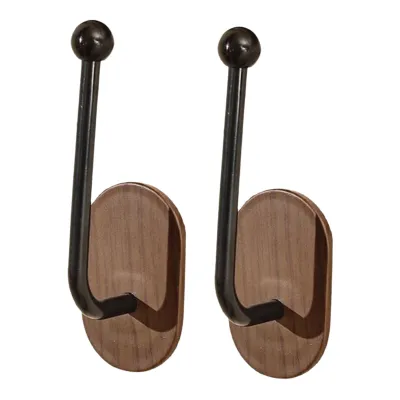
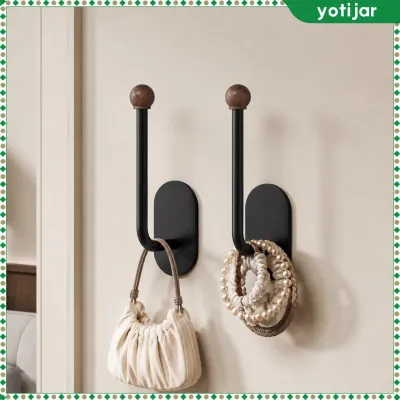
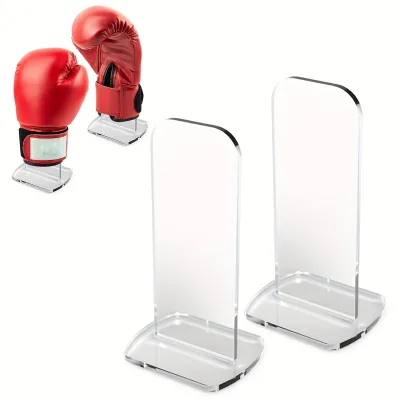
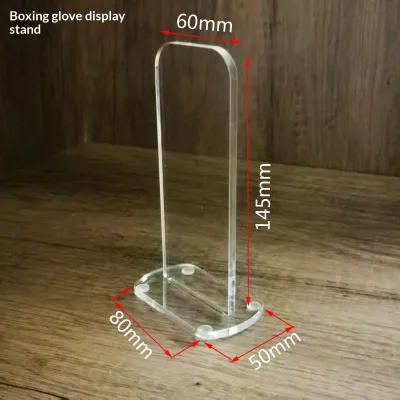
Prices are valid at publication and may change. Please refer to the product page for the latest price.
Beyond weight, brand-specific construction plays a massive role in a glove’s physical size. Thai-style gloves, for example, are engineered for kickboxing and Muay Thai, featuring a more compact hand compartment but a wider, flatter profile across the knuckles to assist in blocking kicks. Conversely, traditional Western boxing gloves tend to have a longer, more streamlined, and rounded profile with stiffer, elongated cuffs for wrist support. Furthermore, some brands utilize dense multi-layered foam that keeps the glove profile relatively slim, while others use high-volume injection-molded foam that creates a highly bulky glove, even at lower weights like 12oz.
To ensure your new boxing gloves holder is a perfect fit, do not rely on the ounce rating alone. Take a few moments to measure your largest pair of gloves using a standard tape measure. Measure the maximum width across the knuckles, the total depth from the back of the hand to the palm side when the glove is closed, and the inner diameter of the cuff opening. These measurements establish the minimum clearance and hook depth your holder must provide. A hook that is too thick will stretch the wrist opening, while a hook that is too short will fail to hold a deep, bulky glove securely.
Types of Boxing Gloves Holders and Their Capacity
Wall-Mounted Hooks and Racks
Wall-mounted racks are the most space-efficient and popular storage option for home gyms and commercial training spaces alike. These systems typically feature steel, wooden, or heavy-duty plastic pegs protruding outward from a central backplate. For collections that include bulky 14oz or 16oz sparring gloves, wall-mounted racks are highly effective because they elevate the gear off the ground and utilize vertical space. However, you must pay close attention to the horizontal distance between the hooks. Racks with closely grouped hooks are only suitable for small 8oz bag gloves; heavy sparring gloves will overlap, trapping moisture and defeating the purpose of the rack.

Freestanding Towers and Stands
If you rent your home or prefer not to drill holes into your walls, a freestanding tower or stand is an excellent alternative. These units feature a vertical spine with multiple tiers of glove pegs extending outward. Because they carry multiple pairs of heavy gloves, stability is the primary concern. A freestanding tower must have a wide, heavy base to lower its center of gravity. Without proper base weighting, the dynamic force of pulling a heavy 16oz glove off an upper peg can cause the entire stand to wobble or tip over, potentially damaging your gear or surrounding property.
Mesh or Wire Baskets and Bins
While large wire baskets or plastic bins are convenient for tossing in hand wraps, jump ropes, and focus mitts, they are poorly suited for primary glove storage. Stacking heavy 14oz or 16oz gloves on top of one another in a deep bin compresses the internal foam padding, which can permanently deform the protective layers over time. Furthermore, bins restrict airflow to the inside of the gloves. Sweat-soaked gloves thrown into a dark, stagnant bin become breeding grounds for bacteria and mold, leading to persistent odors that are incredibly difficult to eliminate.
Over-the-Door and Portable Hangers
Over-the-door hangers and portable strap systems are highly convenient for travel or athletes with limited space. These systems usually consist of nylon straps with plastic hooks or lightweight wire frames that hang over standard room doors. While they work well for a single pair of light training gloves, they generally lack the structural rigidity and spacing required to support multiple heavy, sweat-saturated gloves. The continuous weight of heavy gear can cause plastic hangers to sag, warp, or pull away from the door frame, making them a temporary or light-duty solution at best.
Key Features for Heavy vs. Light Gloves
Hook Length and Curvature
To safely support heavy gloves without damaging their structural integrity, the shape of the storage hook is critical. Heavy 14oz and 16oz gloves require longer, gently curved hooks (typically between 12 and 15 cm in length) that extend deep into the wrist cuff. The curve should mimic the natural shape of a human wrist, distributing the glove’s weight evenly across the inner lining. Avoid sharp, narrow, or straight metal pegs; these concentrate all the downward pressure on a single seam or a small patch of leather, which can cause permanent creasing, stretching, or tearing over time.
Spacing and Clearance
In warm, humid environments, moisture evaporation is naturally slow, making airflow your primary defense against mold and odor. When gloves are hung too close together, they block air circulation and transfer moisture to one another. For light 8oz to 10oz gloves, a horizontal spacing of 12 to 15 cm between hook centers is usually sufficient. However, for bulky 14oz to 16oz gloves, look for a boxing gloves holder that provides at least 18 to 22 cm of space between the hook centers. This ensures a clear air gap of several centimeters between the outer edges of the hung gloves.
Material and Weight Capacity
A single pair of dry 16oz sparring gloves weighs approximately 900 grams, but when saturated with sweat after an intense training session, that weight can increase significantly. If you are mounting a four-pair rack, the holder must easily support a static load of 4 to 5 kg. Furthermore, you must account for the dynamic downward pull force applied every time you grab or hang your gloves. For heavy collections, prioritize holders constructed from powder-coated steel, solid hardwood, or high-density aluminum. Avoid thin, flexible plastics or adhesive-backed models, which are prone to snapping or peeling off the wall under heavy loads.
Ventilation Design
An effective holder does not just hold the glove; it actively aids the drying process. Look for open-frame, slatted, or hollow wire peg designs. These configurations allow ambient air to flow directly up into the hand compartment and finger pockets, accelerating the evaporation of sweat. Solid wooden blocks or wide plastic plates might look aesthetically pleasing, but they act as plugs that seal the glove’s opening, trapping humid air inside the finger cavity and lengthening the drying time.
Measuring Your Space and Installation Requirements
Wall Space Assessment
Before drilling any holes, measure the physical area where you plan to install your wall-mounted boxing gloves holder. Do not just measure the dimensions of the empty rack; you must account for the physical “envelope” of the fully loaded system. A pair of 16oz sparring gloves can protrude 25 to 30 cm outward from the wall and hang down an additional 30 to 40 cm. Ensure the mounting location provides enough clearance so that the hanging gloves do not obstruct walkways, clash with nearby furniture, or get hit by swinging doors.
Wall Type and Anchoring
In many modern apartments and concrete-built homes, wall construction dictates your installation method. Solid concrete, brick, or masonry walls require a rotary hammer drill, high-quality plastic wall plugs (rawplugs), and heavy-duty steel screws to secure the rack. If you are mounting the holder to a hollow drywall partition, you must locate the timber or metal studs behind the drywall and screw directly into them. If a stud is not available at your desired location, you must use specialized heavy-duty toggle bolts or hollow-wall anchors. Never rely on standard drywall screws or adhesive tape to hold a multi-pair rack loaded with heavy, sweat-soaked gloves, as the dynamic pulling force will eventually tear the rack from the wall.
Freestanding Footprint
For freestanding towers, measure your available floor space carefully. A stable tower designed for four or more pairs of gloves typically requires a dedicated floor footprint of at least 40 cm by 40 cm. Ensure the floor surface is flat, level, and non-slip. If you have slick tile or polished wood floors, place a rubber gym mat under the stand to prevent it from sliding or shifting when you remove your gear.
Environmental Placement
Where you place your holder is just as important as how you mount it. Avoid installing your rack in direct sunlight, such as next to a balcony or an unshaded window. Intense UV rays and heat will dry out genuine leather and synthetic polyurethane (PU), causing the materials to crack, peel, and stiffen. Instead, position the holder in a shaded, well-ventilated area with consistent airflow—ideally near a ceiling fan, an air conditioning unit, or a well-ventilated hallway. This ensures rapid drying while protecting the longevity of your glove materials.
Common Sizing and Capacity Mistakes to Avoid
Buying Solely for Your Current Collection
Many martial artists purchase a boxing gloves holder that fits only their current gear, such as a single-pair rack for their initial 12oz training gloves. However, as your training progresses, you will likely add a heavier 16oz pair for sparring and a lighter 10oz pair for pad work. Buying a rack with no room for expansion forces you to purchase an entirely new storage system later. It is highly recommended to choose a holder with at least one or two extra slots than your current inventory requires.
Ignoring Horizontal Hook Spacing
Do not assume that a rack advertised as a “four-pair holder” will comfortably fit four pairs of heavy sparring gloves. Many generic sports organizers are designed for smaller items like bicycle helmets or lightweight garden tools. If the horizontal distance between the hook centers is less than 15 cm, your 14oz and 16oz gloves will bunch up against each other. This lack of clearance restricts airflow, keeps the gloves damp for longer, and can cause color transfer between different leather surfaces.
Overloading Lightweight or Adhesive Mounts
No-drill adhesive hooks are highly popular in rental properties because they leave no holes in the wall. However, these adhesives are rarely rated for the combined static weight of heavy gloves and the dynamic downward force of pulling them off the pegs. A sudden failure of the adhesive can send your expensive leather gloves crashing to the floor, potentially damaging the wrist support or scuffing the leather, while also risking damage to your wall paint.
Assuming a Universal Fit
Many generic utility racks or coat hangers are marketed as “universal” storage solutions. However, these hooks often lack the specific length, thickness, and curvature required to support the unique shape of a boxing glove. Standard narrow coat hooks can puncture the internal foam or put excessive stress on the delicate stitching around the glove’s cuff. Always verify the actual hook depth, weight limits, and clearance specifications of a holder before committing to a purchase.
Frequently Asked Questions (FAQ)
Can I use a standard coat hook for 16oz boxing gloves?
While a standard coat hook can temporarily hold a single pair of gloves, it is not recommended for long-term storage. Standard coat hooks are typically too short and narrow, which concentrates the weight of a heavy 16oz glove on a small area, risking damage to the inner lining or stretching the cuff stitching. Additionally, standard hooks do not offer the necessary horizontal spacing to keep bulky gloves separated for proper airflow and drying.
How do I prevent my heavy gloves from smelling bad on the rack?
A boxing gloves holder is designed to facilitate drying, but it cannot eliminate existing bacteria on its own. To prevent odors, always wipe down the exterior and interior of your gloves with a clean, dry cloth immediately after training to remove excess sweat. Insert moisture-absorbing cedar chips or glove dogs into the hand compartments before hanging them on the rack, and ensure your holder is installed in a well-ventilated area with active air circulation.
Community discussion
Share your experience or ask a question. Comments are reviewed before publication.