
Choosing a first kite for a child or a beginner is more than just picking a colorful toy from a shelf. To ensure a frustration-free experience that builds confidence, a beginner-friendly kite must balance visual appeal with aerodynamic stability, structural durability, and manageable handling. A butterfly kite is one of the most popular and successful designs for first-time flyers, offering a forgiving flight path and excellent light-wind performance when selected with the right specifications.
To find a model that will successfully launch, stay airborne, and survive the inevitable rough landings, you need to look beyond the graphics. The ideal butterfly kite features a single-line control system, a stable delta-wing or dihedral frame profile, a durable ripstop fabric sail, and flexible fiberglass spars. Matching these features to your local flying venue and your child’s physical strength will turn a potentially frustrating outdoor activity into a rewarding, active hobby.
Why the Butterfly Shape Works for First-Time Flyers
The organic, sweeping curves of a butterfly kite provide an immediate psychological advantage for young children and beginners. Unlike geometric diamond or box kites, which can feel abstract, a butterfly kite mimics a living creature dancing in the sky. This high level of visual engagement keeps children motivated to keep trying, even if their initial launch attempts fail. The flapping motion of the wingtips in shifting breezes adds a dynamic, lifelike quality that naturally holds a child’s attention far longer than static designs.
Products mentioned in this guide
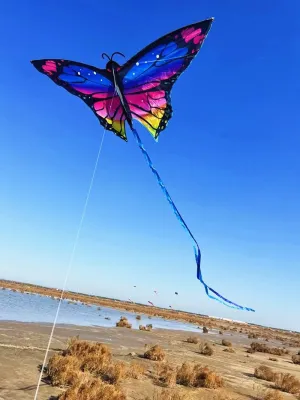
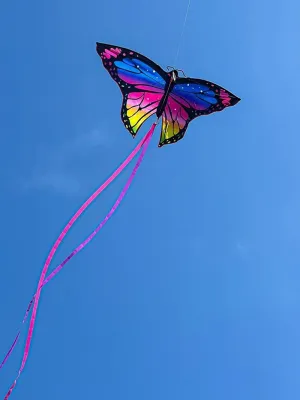
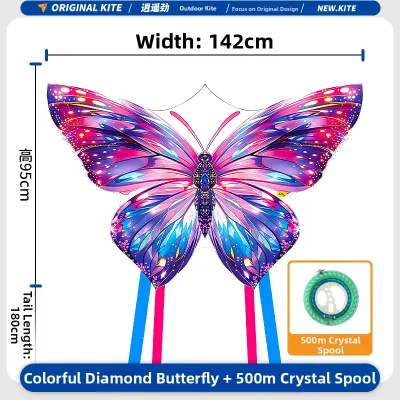
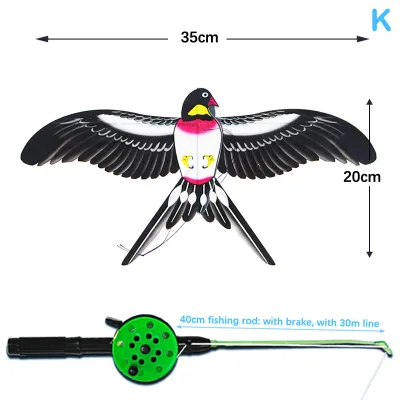
Prices are valid at publication and may change. Please refer to the product page for the latest price.
From an aerodynamic perspective, a well-proportioned butterfly shape offers a highly forgiving flight path. The wide, sweeping wings provide a generous surface area relative to the kite’s overall weight, allowing it to generate high lift even in gentle breezes. The naturally symmetrical layout helps distribute wind pressure evenly across both sides of the sail, reducing the risk of sudden side-slips or uncontrollable dives. This inherent balance makes it much easier for a novice flyer to keep the kite centered and stable in the sky.
However, it is important to recognize that visual shape alone does not guarantee a successful flight. While the silhouette of a butterfly is aerodynamically promising, the actual ease of flying depends entirely on structural engineering, material choices, and bridle placement. A poorly constructed butterfly kite made of heavy, rigid materials or featuring an unbalanced frame will struggle to fly, regardless of how beautiful it looks on the ground. Understanding the key design features is the first step to selecting a kite that performs as beautifully as it looks.
Design Features That Keep the Kite Stable and Easy to Fly
To maintain a child’s patience and interest, a beginner’s kite must be exceptionally stable. It should rise smoothly into the air and remain there with minimal intervention, rather than constantly spinning, diving, or crashing. Several specific structural elements work together to provide this self-correcting stability.

Single-Line Design for Simple Control
For young children and absolute beginners, a single-line kite is the only practical option. Single-line kites require no complex steering or coordinated two-handed maneuvers; the flyer simply needs to manage the tension of the line by letting it out or winding it in. This simplicity allows beginners to focus entirely on learning how the kite responds to the wind, without the steep learning curve associated with dual-line stunt kites or power kites.
When browsing for a butterfly kite, look for models that come pre-assembled with a single, fixed bridle point. The bridle is the short network of strings that connects the main flying line to the kite’s frame. A pre-set bridle ensures that the kite always meets the wind at the mathematically correct angle of attack. Avoid kites that require manual bridle adjustments, as even a millimeter of misalignment can cause the kite to spin persistently to one side or refuse to lift off entirely.
Delta Wing vs. Traditional Flat Shapes
The cross-sectional profile of a butterfly kite plays a massive role in how it handles turbulent or uneven air. Traditional flat butterfly kites are visually classic, but they tend to be highly sensitive to wind shifts. Without built-in aerodynamic stabilizers, a flat kite can easily stall or roll over if a sudden gust hits it from the side. These traditional shapes require precise wind conditions and constant, active line adjustments to stay airborne, which can quickly overwhelm a young flyer.
For a much more forgiving experience, opt for a “delta-wing” hybrid butterfly design. These kites incorporate a slight V-shape, known as a dihedral angle, where the wings slope upward from the central spine. This dihedral angle acts as a natural stabilizer: if a gust of wind tilts the kite to the left, the left wing becomes flatter to the wind and generates more lift, while the right wing tilts away and loses lift. This automatic imbalance pushes the kite back to a level, centered position without any input from the flyer.
Tails and Keel for Wind Balance
Drag is a crucial component of kite stability, acting as an anchor that keeps the kite aligned with the wind direction. Long, flowing ribbon tails attached to the wingtips or the tail end of a butterfly kite are not just decorative; they create essential aerodynamic drag. This drag pulls the bottom of the kite downward and downwind, preventing the kite from spinning out of control when wind speeds increase or become gusty.
In addition to tails, many high-quality butterfly kites feature a built-in fabric keel. The keel is a triangular piece of sail material that runs vertically along the underside of the central spine, where the flying line attaches. The keel acts like the centerboard of a sailboat, channeling the wind smoothly across the sail and preventing the kite from sliding sideways in crosswinds. Kites with a prominent keel and integrated trailing edges often require shorter tails, making them less prone to tangling during storage or transport.
Durable Materials That Survive Crashes and Rough Play
A beginner’s kite will inevitably crash. Whether it dives nose-first into the grass, gets snagged in a low tree branch, or is dragged across rough pavement, the materials must be tough enough to withstand impact and abrasion without tearing or snapping. Investing in durable materials saves money over time and prevents the disappointment of a ruined day out.
Sail Materials: Ripstop Nylon vs. Plastic
The sail is the fabric body of the kite that catches the wind. For maximum durability, look for sails made from ripstop nylon or high-grade polyester. Ripstop fabrics are woven with a special reinforcing grid of thicker threads spaced closely together. If the sail suffers a small puncture from a sharp twig or dry grass, this grid pattern stops the tear from spreading across the fabric, allowing you to easily patch the hole with specialized kite tape and continue flying.
In contrast, cheap butterfly kites often use thin plastic sheets or paper sails. While these materials are incredibly lightweight and inexpensive, they offer virtually no tear resistance. A single crash into a bush can shred a plastic sail beyond repair, and exposure to Singapore’s intense tropical sun can make cheap plastic brittle and prone to cracking within a few uses. Paper sails are even more fragile, easily ruined by damp grass, high humidity, or sudden afternoon showers.
Frame Options: Fiberglass vs. Carbon Rods
The frame, consisting of the vertical spine and horizontal spars, provides the structural rigidity needed to keep the sail spread open. For children’s kites, solid or hollow fiberglass rods are the absolute best choice. Fiberglass is exceptionally flexible, meaning it can bend into dramatic curves during a high-impact crash and snap back to its original shape without breaking. It is also highly weather-resistant and will not warp in high humidity.
While carbon fiber rods are lighter and stiffer than fiberglass—making them popular for high-performance adult kites—they are also more brittle and significantly more expensive. A hard nose-dive can shatter a carbon rod, creating sharp splinters that are hazardous for children. Wooden dowels, which are still found in some budget or DIY kites, should be avoided entirely for children’s toys, as they warp easily in humid climates and snap under minimal stress, often tearing through the sail fabric.
Matching Kite Size to Your Child’s Strength and Local Winds
Kite size directly dictates how much lift and pulling force the kite will generate. Choosing the wrong size for your child’s age or your local wind conditions can lead to a frustrating experience where the kite is either too heavy to lift or pulls so hard that it becomes dangerous to hold.
For young children between the ages of 4 and 8, a butterfly kite with a wingspan of 30 to 45 inches (approximately 75 to 115 cm) is ideal. This size range provides enough surface area to easily catch light breezes and lift off, yet it does not generate excessive pulling force. A child can easily hold the spool and control the kite independently, building a sense of accomplishment without feeling overwhelmed by the physical strain.
Larger butterfly kites, with wingspans exceeding 50 inches (127 cm), generate substantially more lift. While these large display kites look spectacular in the sky, they require stronger, steadier winds to launch and can pull with surprising force. In moderate winds, a large kite can easily cause painful line burns if the string slips through a child’s fingers, or it may even pull a lightweight child off balance. These larger models are best reserved for older children, teenagers, or situations where an adult is actively assisting.
Your local flying environment should also guide your size choice. If you plan to fly your kite in sheltered neighborhood parks or open fields surrounded by trees and buildings, the wind is likely to be light, turbulent, and variable. In these conditions, a smaller, ultra-lightweight butterfly kite is easier to launch and keep aloft. If you are heading to wide-open coastal areas with steady, moderate sea breezes—such as East Coast Park or the spacious green roof of Marina Barrage—a slightly larger, heavier framed kite will perform beautifully, cutting through the steady wind with excellent stability.
Recommended Butterfly Kite Profiles for Different Skill Levels
Butterfly kites come in several distinct profiles, each suited to different user needs, wind conditions, and storage preferences. Understanding these styles will help you select the perfect match when browsing online marketplaces or visiting local outdoor toy shops.
The Single-Line Delta Butterfly
The single-line delta butterfly is the ultimate starting point for absolute beginners and young children. This profile combines the classic butterfly silhouette with the high-performance geometry of a delta kite, featuring a prominent triangular keel and a moderate wingspan of around 40 inches. It is designed to launch effortlessly in light winds and offers self-correcting stability that handles turbulent air with ease.
- Benefits: Exceptional lift in light winds, highly stable, self-correcting design, and very easy to launch solo.
- Limitations: Requires basic assembly of the fiberglass spars before flight, and the rigid frame means it cannot be folded down into a pocket-sized package.
The Frameless Parafoil Butterfly
For families who travel frequently or want a completely hassle-free experience, the frameless parafoil butterfly is an excellent option. This kite has no rigid frame rods at all; instead, it is constructed from soft ripstop fabric with hollow chambers or cells. When held up to the breeze, the wind enters these cells, inflating the kite into a rigid, aerodynamic wing shape that flies beautifully.
- Benefits: Virtually indestructible because there are no rods to break during crashes, requires zero assembly, and folds down into a tiny, pocket-sized pouch that fits easily into a backpack or beach bag.
- Limitations: Requires a slightly stronger, steadier breeze to fully inflate and maintain its shape compared to framed kites, and can collapse if the wind suddenly drops to zero.
The Large Display Butterfly with Long Tails
If you are buying for an older child (aged 9 and up) or want a kite that makes a dramatic visual statement at major flying sites, a large display butterfly is the perfect choice. These kites feature wingspans of 50 inches or more, often accompanied by multiple long, flowing ribbon tails that can stretch up to several meters in length.
- Benefits: Stunning visual presence in the sky, highly stable in moderate to strong winds due to the heavy drag from the long tails, and highly satisfying for older kids who can handle the physical pull.
- Limitations: Requires more physical strength to hold, needs a larger open area to launch safely without tangling the long tails in trees or bushes, and is more difficult to transport due to the longer frame rods.
Safety Boundaries and Setup Checks for a Successful Flight
Before heading out to fly, establishing clear safety rules and performing a quick equipment check will ensure that your outdoor adventure is both safe and enjoyable. Kites can climb to significant heights and generate surprising tension, making situational awareness essential.
First and foremost, always check your surroundings and establish strict physical boundaries. Never fly a kite near overhead power lines, busy roads, railway tracks, or airports. If a kite does become tangled in a power line, do not attempt to retrieve it yourself; leave it immediately and contact the utility company. Additionally, always check the local weather forecast before leaving. In tropical climates, sudden thunderstorms can develop rapidly; always pack up and seek shelter immediately if you see dark storm clouds or hear thunder, as wet kite lines can conduct electricity.
To protect small hands, consider using a simple wrist strap or wearing lightweight gardening or athletic gloves. If a sudden gust of wind grabs the kite, the line can zip out of the spool rapidly, causing painful friction burns on bare skin. Teach children to never wrap the kite line around their fingers, hands, or neck, and to let go of the handle if the pull ever becomes too strong or uncomfortable.
Before launching, perform a quick pre-flight checklist to ensure everything is put together correctly. Always refer to the manufacturer’s care and assembly instructions for your specific model.
- Frame Check: Ensure all fiberglass rods are fully pushed into their rubber or plastic connectors. Loose spars can puncture the sail or cause the kite to fly lopsided.
- Bridle Check: Inspect the bridle lines to ensure they are completely untangled and free of knots. The tow loop should sit perfectly centered.
- Line Connection: Verify that the flying line is securely tied to the bridle loop, preferably using a secure lark's head knot or a high-quality metal swivel clip.
- Tail Attachment: Ensure the stabilizing tails are securely fastened to the designated attachment loops on the kite's lower edge.
Frequently Asked Questions (FAQ)
What is the best wind speed for flying a beginner butterfly kite?
A gentle to moderate breeze ranging from 5 to 15 miles per hour (approximately 8 to 24 kilometers per hour) is ideal for most beginner butterfly kites. You can easily judge these conditions without any special equipment by observing your surroundings. If leaves are rustling gently and you can feel the wind light on your face, the conditions are perfect. If large tree branches are swaying or it is difficult to walk comfortably against the wind, the breeze is too strong for a beginner kite and may damage the frame or overpower a child.
How do I untangle a kite line without breaking it?
Untangling a line requires patience and a gentle touch. Lay the tangled section flat on a patch of grass to prevent the string from bunching up. Start working from the loose end of the line, gently loosening the loops rather than pulling them tight. Pulling a knot tight compresses the fibers, making it much harder to undo and permanently weakening the line at that spot. If you encounter a stubborn knot, rubbing a small amount of talcum powder or cornstarch into the knot can help lubricate the fibers, making them easier to slide apart.
Can a butterfly kite fly without a tail?
Whether a butterfly kite can fly without a tail depends entirely on its specific design. Modern delta-wing butterfly kites or those featuring integrated fabric keels are often engineered to fly stably without any external tails. However, traditional flat butterfly kites almost always require a tail to create the drag necessary to keep the nose pointed upward. If your butterfly kite is spinning in circles, diving erratically, or refusing to stay centered in the sky, attaching a tail—or adding a longer, heavier tail—is the most effective troubleshooting step to restore balance.
Community discussion
Share your experience or ask a question. Comments are reviewed before publication.