
Selecting the right hydration pack—commonly referred to as a camel bag—for cycling on Singapore’s Park Connector Network (PCN) requires balancing capacity, ventilation, and stability. Because the PCN consists of flat, paved paths with frequent access to amenities, your hydration setup does not need to mimic an extreme backcountry pack. Instead, you should prioritize a lightweight design that manages heat buildup in tropical humidity, offers secure storage for essentials during sudden downpours, and remains stable without restricting your movement.
Understanding Your Hydration Needs on the PCN
Before choosing a hydration pack, you must evaluate how long you typically ride and how much water you consume. Singapore’s tropical climate features high temperatures and relative humidity levels that often exceed 80 percent. In these conditions, your body sweats heavily to cool down, but the moisture does not evaporate quickly from your skin. This means you need to replenish fluids more frequently than you would in cooler, drier climates.
For a typical recreational ride on the PCN lasting between one and two hours, a reservoir capacity of 1.5 liters is generally sufficient for most cyclists. If you plan to tackle longer cross-island routes, such as the Round Island Route or the Coast-to-Coast Trail, you should consider a 2-liter or 2.5-liter bladder. Carrying more water than necessary, however, adds unwanted weight to your shoulders. Since water weighs approximately one kilogram per liter, a fully loaded 3-liter pack can quickly become uncomfortable on flat, paved paths where you do not need heavy survival gear.
Products mentioned in this guide
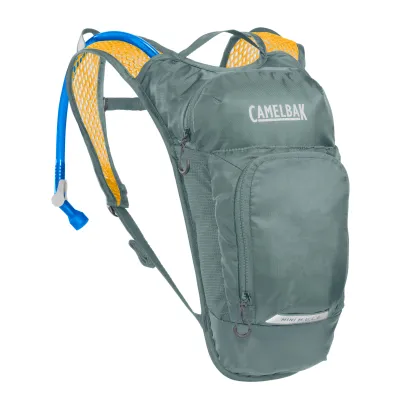
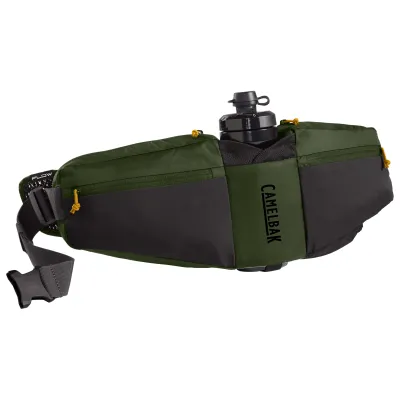
Prices are valid at publication and may change. Please refer to the product page for the latest price.
You should also weigh the benefits of a hydration pack against alternative setups like waist packs or standard frame-mounted water bottles. Bottle cages are highly convenient and keep your back completely free of sweat, but they are limited by your bicycle frame’s mounting points and can collect road grime. Waist packs offer a middle ground by lowering your center of gravity and keeping your upper back open to the breeze, making them excellent for shorter rides. A dedicated hydration backpack remains the most versatile choice for longer journeys, providing integrated storage for tools, spare tubes, mobile phones, and rain gear alongside your water supply.
Key Features to Evaluate for Tropical Cycling
The primary challenge of wearing any backpack while cycling in Singapore is heat retention. To minimize sweat buildup and discomfort, you must closely examine the back panel design of any pack you consider. Look for models that feature a suspended mesh back panel, which creates a physical air gap between your back and the reservoir. If a suspended mesh design is not available, look for deep, molded foam channels covered in breathable mesh to encourage continuous airflow as you ride.

The shoulder straps and harness system should also prioritize breathability. Avoid thick, heavily padded straps that trap heat against your chest and shoulders. Instead, look for lightweight, perforated foam or open-mesh straps that allow air to pass through freely. These materials dry much faster and reduce the risk of skin irritation or chafing caused by salt buildup from dried sweat.
Sudden tropical downpours are a common occurrence along the PCN. To protect your phone, wallet, and spare electronics, check the weather resistance of the pack’s materials. Look for lightweight ripstop nylon or polyester fabrics treated with a water-resistant coating. While few standard hydration packs are completely waterproof, many models include a high-visibility rain cover stored in a dedicated bottom pocket. This cover can be quickly pulled over the pack when a sudden shower begins, keeping your gear dry and increasing your visibility to other path users.
Finally, pay close attention to the design of the bite valve and the hydration hose. High humidity and warmth accelerate the growth of mold and bacteria inside wet tubes. Choose a system with a quick-disconnect hose that allows you to easily detach the tube from the bladder for thorough cleaning. The bite valve should feature a reliable mechanical lock-out lever to prevent slow leaks when you set your pack down. A magnetic tube clip on the sternum strap is also highly useful, keeping the valve securely in place so you can drink hands-free without losing focus on the path ahead.
Fit, Comfort, and Safety Considerations
A poorly fitting hydration pack will bounce, slide, and chafe, turning an enjoyable PCN ride into an uncomfortable experience. When trying on a pack, adjust the shoulder straps so the bulk of the weight rests comfortably against your mid-to-upper back. The pack should sit high enough that it does not interfere with your jersey pockets or press against your lower back when you lean forward into a cycling posture.
The sternum strap is critical for stabilizing the pack as you pedal. Look for a chest strap that can be adjusted vertically to find the most comfortable position across your chest. A thin, removable waist belt can also help prevent the pack from swaying side-to-side when you stand up on the pedals to climb short slopes or navigate tight corners on the connector paths. Ensure all straps have elastic loops or keepers to tuck away excess webbing, preventing loose straps from flapping in the wind or getting caught on tree branches.
Safety is paramount on shared paths like the PCN, where you share space with pedestrians, runners, and other personal mobility devices. Your hydration pack should enhance your visibility, especially during early morning or evening rides. Look for packs with integrated reflective strips, piping, or logos on both the rear panel and the front shoulder straps. A dedicated attachment loop for a clip-on rear LED safety light is an essential feature, allowing you to mount a flashing red light at eye level for trailing path users.
You must also check how the pack interacts with your cycling helmet. When you lean forward over the handlebars, your head naturally tilts backward to look ahead. If the top of the hydration pack is too tall or bulky, it can push against the rear adjustment dial of your helmet, forcing the helmet forward over your eyes. Ensure there is adequate clearance between the top of the pack and the base of your helmet when you are in your typical riding position, allowing you to perform unrestricted shoulder checks at junctions and crossings.
Building Your Shortlist: What to Check Before Buying
When you are ready to compare different models on online marketplaces or at local specialty sports stores, compile a checklist of technical specifications. Start by comparing the empty weight of the packs on your shortlist. A lighter empty pack reduces overall fatigue, allowing you to ride longer with less strain. Verify the exact dimensions of the pack to ensure it matches your torso length, as a pack that is too long can rub against your saddle or lower back.
Always check whether the hydration bladder is included with the pack or must be purchased separately. Some manufacturers sell the backpack alone, which can lead to unexpected extra costs. If the bladder is included, verify its opening mechanism. Wide-mouth openings or slide-top closures are much easier to fill, empty, and clean than small screw-cap openings, making them highly preferable for regular maintenance.
Investigate the local availability of replacement parts before making your purchase. Over time, bite valves can wear out, hoses can become discolored, and O-rings can lose their seal. Choosing a well-established brand ensures you can easily find replacement bladders, hoses, valves, and specialized cleaning kits in local shops. This availability prevents you from having to replace the entire backpack if a single small component fails.
Lastly, read user reviews with a focus on long-term durability in tropical environments. Pay attention to feedback regarding zipper performance, as salt from sweat can cause low-quality metal zippers to corrode and seize. Look for comments on seam strength and the durability of the bladder material. A robustly constructed pack with high-quality plastic zippers and reinforced stitching will withstand the demanding combination of high humidity, sweat, and frequent washing.
Frequently Asked Questions (FAQ)
How do I prevent mold in my hydration bladder in a humid climate?
To prevent mold and bacterial growth in Singapore’s humid climate, you must clean and dry your hydration system immediately after every ride. Empty any remaining water, rinse the bladder thoroughly, and wash it with mild dish soap if you have used hydration tablets or electrolyte mixes. Use a specialized drying hanger, a kitchen whisk, or a dedicated plastic frame to keep the internal walls of the bladder separated, allowing air to circulate freely. Hang the bladder upside down in a well-ventilated, shaded indoor area until it is completely dry. Once dry, store the bladder in a cool, dark cupboard, or place the clean, dry bladder in the freezer to completely inhibit bacterial growth, provided this is permitted by the manufacturer’s care guidelines.
Can I use a running hydration vest instead of a cycling-specific camel bag?
While you can use a running hydration vest for cycling on the PCN, there are several functional differences to consider. Running vests are designed to fit snugly around your ribs to eliminate bounce while you are in an upright, vertical posture. When you lean forward into a cycling position, this snug fit can sometimes feel restrictive around your chest and stomach. Additionally, running vests typically place storage pockets on the front chest straps for quick access on the run, which can interfere with your movement or feel bulky when you are bent over the handlebars. Cycling-specific packs are tailored to sit higher on your back, keeping your chest open for easier breathing and featuring back panels designed to channel airflow while you are in a riding posture.
Community discussion
Share your experience or ask a question. Comments are reviewed before publication.