
Finding the ideal treadmill for a Singapore Housing & Development Board (HDB) flat requires balancing physical space, structural noise constraints, and your personal fitness goals. The best compact and foldable treadmill for your home is one that matches your specific workout intensity—whether walking, jogging, or running—while folding down small enough to clear your living area or bedroom when not in use. By systematically measuring your floor plan, evaluating folding mechanisms, checking motor specifications, and implementing noise-dampening strategies, you can enjoy convenient home cardio workouts without crowding your living space or disturbing your downstairs neighbors.
Measure Your Available Space and Clearance
Before browsing online marketplaces or local fitness showrooms, you must determine the exact footprint your new equipment will occupy. Start by measuring the dedicated floor area where you plan to use the treadmill. Do not just measure the physical dimensions of the machine itself; safe operation requires a clear safety zone. You should allow for at least 1 to 1.5 meters of unobstructed clearance behind the running belt in case of slips or emergency stops, along with 0.5 meters of open space on both sides.
Next, map out the delivery path from your building’s entrance to your apartment. HDB lifts, narrow corridors, and tight front doors or metal gates can present significant obstacles for bulky fitness equipment. Measure the height and width of your front door frame, bedroom doors, and any tight corners in your hallway to ensure the boxed or pre-assembled unit can physically pass through during delivery.
Products mentioned in this guide
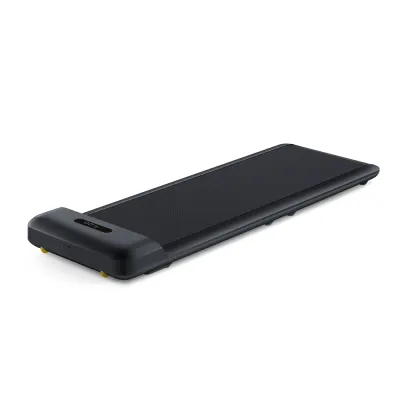
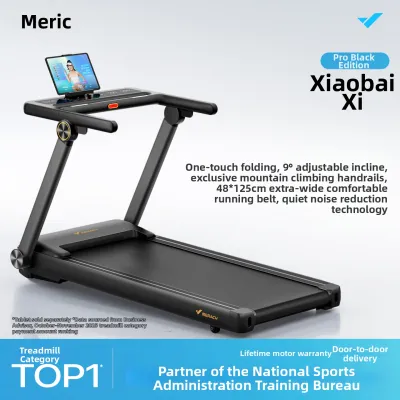
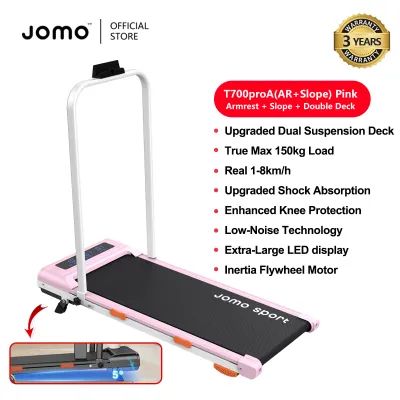
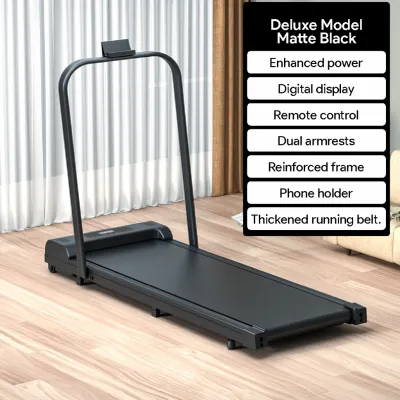
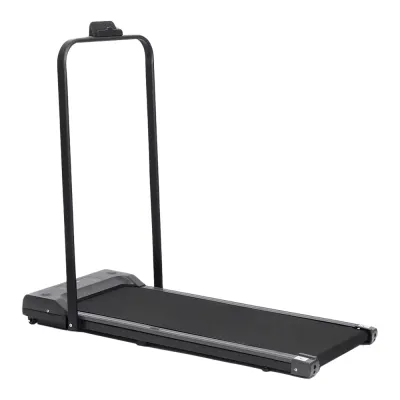
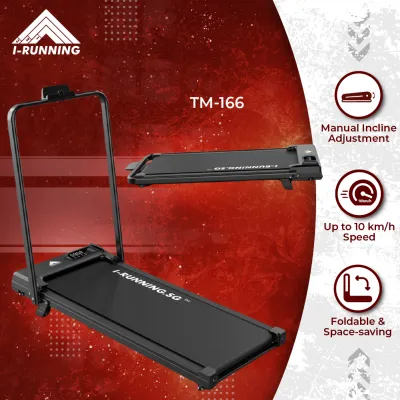
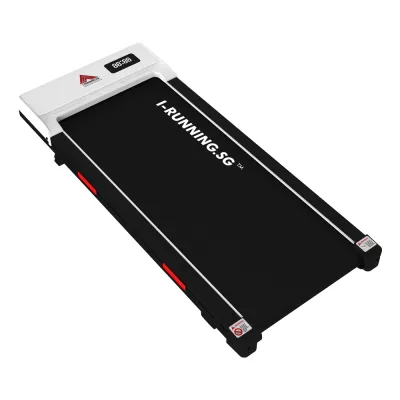
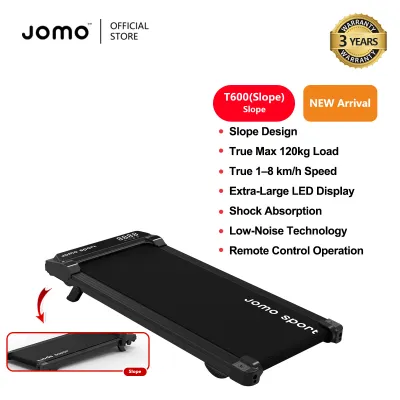
Prices are valid at publication and may change. Please refer to the product page for the latest price.
Finally, calculate your ceiling clearance. Standard HDB ceilings typically sit around 2.6 meters high. To find your safe ceiling height, add the height of the treadmill’s running deck to your own height, then add an extra 30 centimeters of clearance for your head movement while running. If you plan to buy a model with an incline feature, perform this calculation using the deck’s maximum incline height to prevent accidental head injuries.
Compare Folding Mechanisms and Storage Footprints
Foldable treadmills generally fall into two design categories: flat-folding models and upright-folding models. Flat-folding treadmills fold completely flat, often reducing their height to 15 centimeters or less. This design allows you to slide the machine horizontally under a bed frame or a raised sofa, keeping it entirely out of sight when your workout is finished.

Upright-folding models use a hinge system to lift the running deck vertically toward the console. While these units take up more vertical space, they dramatically reduce the floor footprint, making them ideal for tucking into a corner of a living room or study. Many upright models feature soft-drop hydraulic systems. These gas-charged struts support the weight of the deck when unfolding, allowing it to lower slowly and hands-free to the floor, which prevents sudden impacts on your flooring.
When comparing these designs, consider the physical effort required to move the machine. Even compact treadmills can weigh between 30 and 60 kilograms. Look closely at the transport wheel configuration; models with multi-directional or four-wheel systems are significantly easier to maneuver around tight HDB layouts than basic two-wheel models that require you to tilt the entire weight of the machine before rolling.
Match Belt Size and Motor Power to Your Workout
To ensure your treadmill remains safe and functional over years of use, you must match its specifications to your primary exercise style. The running belt size directly impacts your comfort and safety. If you only plan to walk or light jog, a belt width of 40 centimeters and a length of 120 centimeters is generally sufficient. However, if you are taller or plan to run at faster speeds, look for a belt that is at least 45 centimeters wide and 130 centimeters long to accommodate your natural stride length and lateral sway.
Motor power is measured in Continuous Horsepower (CHP), which represents the sustained power output of the motor under load, rather than Peak Horsepower, which only measures maximum short-term output. For walking and light power walking, a motor with 1.5 to 2.0 CHP is perfectly adequate. Jogging requires a slightly stronger motor of 2.0 to 2.5 CHP, while regular running demands at least 2.5 to 3.0 CHP to prevent the belt from stuttering or lagging under your footstrikes.
Additionally, always verify the manufacturer’s maximum user weight capacity. To preserve the lifespan of the motor and the folding joints, select a machine with a weight limit that exceeds your actual body weight by at least 15 to 20 kilograms. Operating a treadmill too close to its maximum weight capacity accelerates wear on the internal drive belt and deck cushioning.
Manage Noise and Vibration for HDB Living
Living in close proximity to neighbors means noise management is a critical consideration for any home gym setup. The sound of a treadmill comes from two sources: the motor and the physical impact of your feet on the deck. To minimize motor noise, look for models equipped with modern brushless motors, which operate much more quietly and run cooler than traditional brushed motors.
To address impact noise, pay close attention to the deck’s built-in shock absorption system. High-quality elastomers, rubber dampeners, or spring-loaded suspension systems absorb the downward force of your steps, reducing both joint strain and the thudding sound that travels through the floor. Avoid budget models with rigid decks, as they transfer almost all impact energy directly into the building’s structure.
Even with excellent built-in shock absorption, you should always place a high-density anti-vibration mat beneath your treadmill. A thick rubber or specialized PVC equipment mat isolates the machine from the concrete floor slab, preventing structural vibrations from traveling down to the flat below. For optimal noise reduction, position your treadmill away from shared household walls and avoid running directly above your neighbors’ bedrooms during early morning or late-night hours.
Final Verification Checklist Before You Buy
Before finalizing your purchase, run through a quick verification process to ensure the machine is a practical fit for your home and lifestyle. First, compare the manufacturer’s official folded dimensions against your measured storage space, making sure to account for any protruding parts like handrails, safety keys, or power cords that might block closet doors or bed frames.
Next, review the warranty terms carefully. A reliable treadmill warranty should offer separate coverage periods: look for multi-year coverage on the structural frame and the motor, and at least one year of coverage for parts and labor. Be cautious of brands that offer vague, short-term warranties on the folding mechanism itself, as this is a primary moving part subject to regular wear.
Finally, confirm the availability of local after-sales service and assembly support in Singapore. Treadmills are complex mechanical devices that may eventually require belt tension adjustments, lubrication, or electronic troubleshooting. Choosing a brand with an established local service center ensures you can easily source replacement parts and secure professional maintenance assistance when needed.
Frequently Asked Questions (FAQ)
Can I place a treadmill directly on HDB floor tiles without a mat?
Placing a treadmill directly on bare HDB floor tiles is not recommended. The intense, repetitive vibrations and slight shifting of the machine during a workout can scratch, scuff, or even crack ceramic and homogenous tiles over time. Furthermore, without an intervening barrier, the impact noise from your footsteps will transfer directly into the concrete floor slab, significantly increasing the likelihood of disturbing your downstairs neighbors. Always use a high-density rubber or PVC equipment mat to protect your flooring and dampen sound.
Are walking pads a good substitute for foldable treadmills?
Walking pads are excellent, ultra-compact alternatives if your primary fitness goal is low-intensity walking, active recovery, or keeping moving while working at a standing desk. However, they are not suitable substitutes for running. Walking pads typically feature smaller motors, often under 1.5 CHP, and are physically capped at lower speeds, usually around 6 to 10 kilometers per hour. They also lack the robust frame stability, wider running belts, and advanced shock absorption systems required to safely handle the high-impact forces of running.
Community discussion
Share your experience or ask a question. Comments are reviewed before publication.