
Finding space for fitness equipment in a Singapore HDB flat requires careful planning, as bulky gear quickly crowds limited living areas. A grip strength meter is an exceptionally space-efficient tool for tracking hand and forearm strength without sacrificing floor space. To choose the right model for your flat, look for a highly adjustable device that serves multiple household members, features protective storage options, and fits easily into existing drawer or pegboard organization systems.
Confirm Your Space Needs Before Choosing a Meter
Unlike stationary exercise bikes, pull-up bars, or heavy dumbbell sets, a grip strength meter occupies a footprint no larger than a standard book. This minimal physical size makes it an ideal addition to a home fitness routine where floor space is at a premium. You do not need to rearrange furniture or dedicate a corner of your living room to accommodate this tool.
However, the primary spatial challenge in a typical HDB apartment is not floor space, but the accumulation of small, single-use gadgets that clutter drawers and storage cabinets. A poorly chosen fitness accessory often ends up buried under household tools, tangled in charging cables, or damaged by heavier items. To prevent this, evaluate a grip meter based on how easily it integrates into your existing storage systems rather than just its standalone dimensions.
Products mentioned in this guide
![[High Accuracy] Digital Hand Dynamometer Grip Strength Tester - 180kg Capacity | USB Rechargeable | Professional Strength Meter for Athletes & Rehab](https://img.lazcdn.com/g/p/87e36774e75fb717776246e3d960fe47.png_400x400q80.png_.webp)
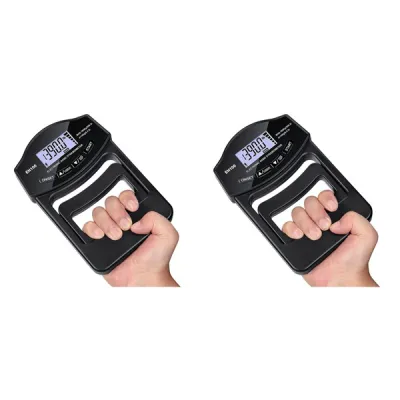
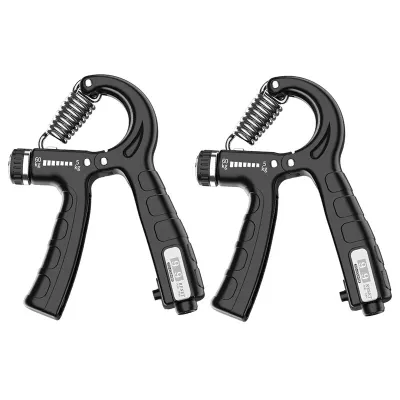
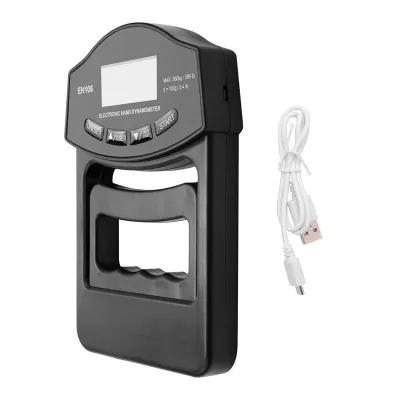
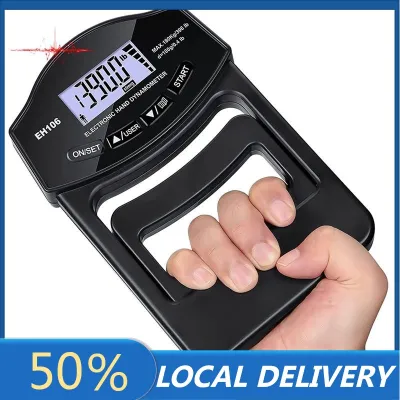
![[SG Stock] Digital Hand Dynamometer | 90kg/198lbs High Precision Grip Strength Tester | 19 User Memory Record | Electronic Hand Grip Force Meter | Strength Tracking for Gym](https://img.lazcdn.com/g/p/2b038ef3a6705c646599d4405ba69b72.png_400x400q80.png_.webp)
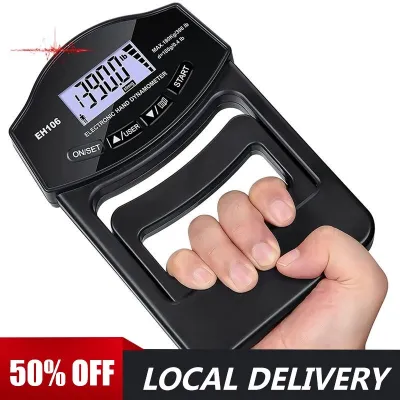
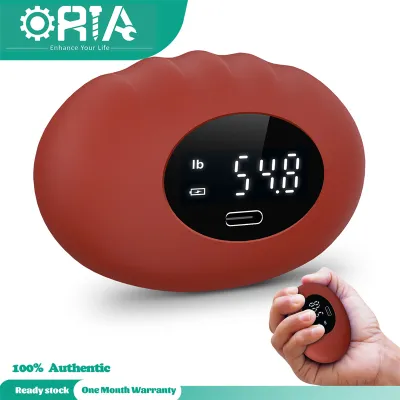
Prices are valid at publication and may change. Please refer to the product page for the latest price.
A truly space-friendly device is one that can be neatly organized, quickly retrieved, and safely stored without requiring dedicated, specialized shelf space. By focusing on storage compatibility and multi-functional design, you can maintain a clutter-free home while still tracking your physical progress effectively.
Select an Adjustable Model for Multi-Member Households
In a multi-generational HDB household, family members of varying ages and fitness levels may want to track their grip strength. Instead of purchasing multiple fixed-resistance grippers or separate testing tools for seniors, adults, and teenagers, select a single adjustable dynamometer. A highly versatile device replaces an entire collection of individual tools, significantly reducing physical clutter in your storage drawers.

When evaluating adjustable models, check the manufacturer’s specifications for the maximum and minimum resistance thresholds. A wide range allows a single device to accommodate a senior family member focusing on joint mobility as well as an active adult training for climbing or weightlifting. Verify that the adjustment mechanism is smooth and does not require proprietary tools to change the tension settings.
Ergonomic handle adjustment is equally critical for multi-member households. Hand sizes vary significantly, and testing grip strength with an improperly sized handle can lead to inaccurate readings or hand strain. Look for models featuring an adjustable knob or slider that alters the distance between the handle and the frame.
This allows users with smaller hands, such as teenagers or seniors, to maintain proper form, while those with larger hands can extend the grip to a comfortable starting position. Ensuring proper fit is essential for obtaining consistent, reliable measurements over time across different users.
You must also consider the physical trade-offs between dial-based mechanical adjustments and digital adjustment systems. Mechanical dial systems often feature a protruding wheel or spring housing that adds bulk to the device’s overall profile, potentially making it harder to slide into shallow drawers. Digital adjustment systems, while sleeker and more uniform in shape, rely on internal sensors and electronic menus that require careful handling and battery power. Assess your household’s comfort level with digital interfaces versus tactile mechanical dials before making a decision.
Evaluate Storage Accessories and Hanging Options
Efficient organization in compact apartments often relies on vertical storage solutions. When floor and drawer space are limited, utilizing walls, the backs of doors, or utility pegboards keeps your living areas tidy. Look for grip strength meters designed with built-in lanyards, integrated hanging loops, or molded eyelets that allow you to hang the device on a standard hook. This keeps the tool visible and accessible for regular use while keeping drawers completely clear.
If you prefer to store your fitness tools out of sight, drawer organization is paramount. Crowded utility drawers pose a risk to delicate measuring instruments, as heavy tools, keys, or kitchen utensils can scratch screens or misalign mechanical dials. Prioritize models that include a dedicated protective pouch, a hard-shell carrying case, or a fitted protective cap. A sturdy case cushions the device against impact and prevents dust accumulation during periods of inactivity.
Before purchasing, measure the exact physical dimensions of the device—including its protective case—against your designated storage area. Standard HDB built-in wardrobes and sideboard drawers often have shallow depths that may not accommodate bulky, hard-shell cases. Verifying these measurements beforehand ensures the device fits comfortably into your planned storage setup without forcing you to dedicate a larger, more valuable cabinet to a single fitness tool.
Decide Between Digital and Mechanical for Long-Term Storage
Choosing between a digital and a mechanical grip strength meter involves weighing the convenience of electronic tracking against the durability and low maintenance of analog components. Digital models typically feature clear LCD or LED screens that display precise readings instantly, making them highly user-friendly. However, these screens are susceptible to cracking if stored under heavy objects, and the internal circuitry can be sensitive to the high humidity levels common in Singapore’s climate.
Analog mechanical meters, on the other hand, utilize physical springs and pointer dials to display measurements. While they may require a slightly larger physical casing to house the internal spring mechanism, they are generally more robust and less vulnerable to screen damage in a packed drawer. Mechanical models also eliminate the need for battery management, ensuring the device is always ready for use even after months of storage.
If you opt for a digital model, verify that it features an automatic shutoff function to preserve battery life when stored. Constant battery drain can lead to unexpected corrosion inside the battery compartment, especially during long periods of non-use in humid environments. Check how easy it is to access the battery compartment; models that require specialized micro-screwdrivers can be inconvenient to service, whereas tool-free battery covers simplify maintenance.
Use This Pre-Purchase Checklist for Compact Homes
Before finalizing your choice, use this quick checklist to ensure the grip strength meter fits your HDB flat’s spatial constraints and your household’s specific needs:
- Resistance Range: Does the device offer a wide enough adjustable range to accommodate the weakest and strongest members of your household?
- Handle Adjustability: Can the grip span be easily adjusted to fit different hand sizes without requiring external tools?
- Physical Dimensions: Have you measured the device (and its case) to confirm it fits into your designated drawer, cabinet, or pegboard hook?
- Storage Protection: Does the meter come with a protective pouch or case to shield the screen or dial from damage in a crowded drawer?
- Power Source: If choosing a digital model, does it have an auto-shutoff feature, and is the battery compartment easy to access?
Frequently Asked Questions (FAQ)
Do I need a smart grip meter that connects to a phone app?
Smart grip meters with Bluetooth connectivity allow you to sync your progress directly to a smartphone app. This digital tracking eliminates the need for physical logbooks, notebooks, or printed progress charts, which helps reduce paper clutter in small homes. However, ensure the app is intuitive and does not require a paid subscription or constant troubleshooting, as a device that is difficult to pair may end up unused in the back of a drawer.
How should I store a digital grip meter to prevent screen damage?
To protect a digital screen in a shared household drawer, always store the meter inside its designated protective pouch or a soft-lined compartment. Avoid placing heavy items, such as metal tools or dumbbells, directly on top of the device. If you plan to store the meter unused for several months, remove the batteries entirely to prevent chemical leakage and corrosion, which can permanently damage the internal electronics.
Community discussion
Share your experience or ask a question. Comments are reviewed before publication.