
Finding the right rehabilitation bicycle for a Housing & Development Board (HDB) flat requires balancing your physical recovery needs with the realities of compact apartment living. To select the ideal model, you must prioritize a small footprint, high structural stability, and easy storage options that do not obstruct daily household traffic. Because rehabilitation exercises require consistent, safe movement, the equipment must fit seamlessly into your living room or bedroom without turning into a permanent obstacle. By focusing on key physical dimensions, safety specifications, and storage mechanisms, you can maintain an active recovery routine right at home.
Assessing Your Available Floor Space
Before purchasing any exercise equipment, you must accurately measure the specific area where you plan to use and store the bicycle. Use a measuring tape to map out the available floor length and width, and do not forget to check the ceiling height if you are considering an upright model where you sit higher. It is essential to account for door swings, wardrobe panels, and the natural flow of household traffic so that the machine does not block pathways.
A common oversight is failing to plan for the mounting and dismounting clearance. You need to ensure there is at least 50 to 60 centimeters of open space on at least one side of the bicycle to allow you to get on and off safely, especially if your mobility is currently limited. If you are recovering from an injury or surgery, tight spaces can increase the risk of accidental trips or bumps against nearby furniture.
Products mentioned in this guide
![🏅Foldable Pedal Exerciser Bike Fitness Bike Upper And Lower Limb Rehabilitation Bicycle [SG READY STOCK]](https://img.lazcdn.com/g/p/b00b708351a7cf456de462fe83053b11.jpg_400x400q80.jpg_.webp)
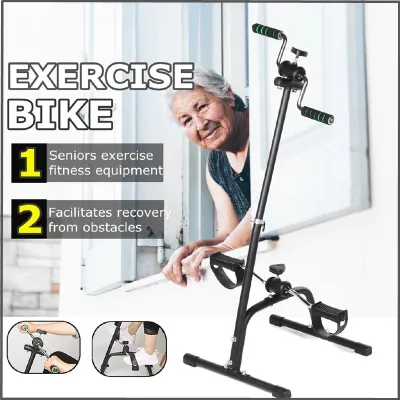
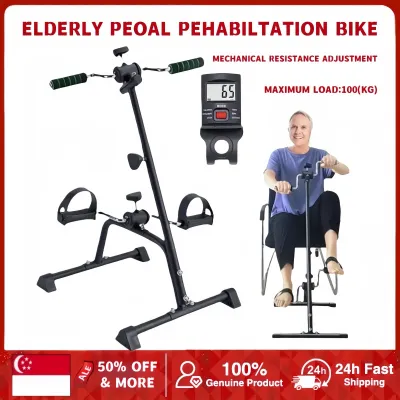
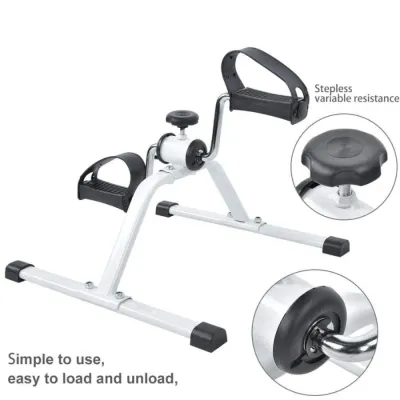
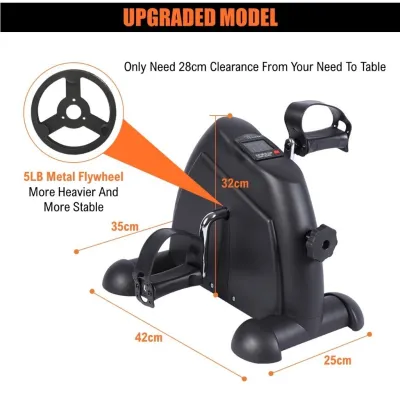
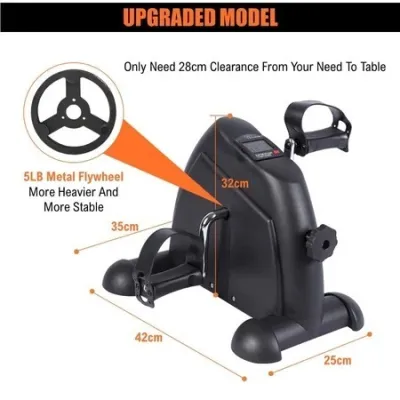
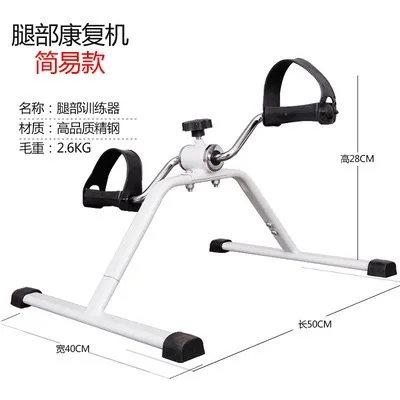
Prices are valid at publication and may change. Please refer to the product page for the latest price.
Additionally, evaluate the floor surface and load capacity of your chosen spot. While HDB floors are structurally robust, the concentrated weight of a stationary bike combined with your body weight can exert significant pressure on delicate flooring materials like vinyl, laminate, or parquet. Checking the floor condition and planning for a protective barrier will help prevent permanent indentations, scratches, or slipping during your exercise sessions.
Essential Features for Compact Rehabilitation Bicycles
When space is at a premium, you must decide between a foldable frame and a fixed compact frame. Foldable models are excellent if you plan to exercise a few times a week and want the equipment completely out of sight between sessions. However, if your rehabilitation program requires multiple short sessions every day, a fixed compact frame—such as a mini pedal exerciser that sits under a table—might be more practical as it eliminates the setup effort.

Always verify the manufacturer’s official specifications for both the fully assembled and folded dimensions. Do not rely on promotional images, which can often make equipment look smaller than it is in reality. Compare these measurements directly against your pre-measured floor space and storage compartments to ensure a perfect fit.
Ergonomics should never be sacrificed for a smaller footprint. Check that the bicycle offers a wide range of seat and handlebar adjustments to accommodate your height and leg length. A frame that is too small or non-adjustable can force your body into unnatural angles, which can strain your joints and actively hinder your rehabilitation progress.
Finally, look for design details that make the bicycle easy to move around your flat. Built-in transport wheels on the front stabilizer bar allow you to tilt and roll the machine effortlessly, while lightweight materials like aluminum alloys can reduce the physical strain of lifting. These features are particularly important if you live alone or have physical limitations that prevent heavy lifting.
Balancing Size with Stability and Safety
A compact design must never come at the expense of structural integrity. Always check the manufacturer’s stated maximum weight capacity and compare it to your own weight, leaving a generous safety margin of at least 10 to 15 percent. Operating a machine close to its structural limit can cause frame flexing, squeaking, and premature wear on the internal components.
The stability of a rehabilitation bicycle depends heavily on its base width and frame geometry. Compact bikes often have shorter stabilizer bars, which can make them prone to tipping if you pedal vigorously or lose your balance. Look for models with wider, low-profile bases or flared legs that distribute weight evenly across the floor, ensuring the bike remains rock-solid during use.
To secure the equipment on smooth HDB flooring like polished ceramic tiles or smooth vinyl, look for non-slip rubber foot pads or adjustable leveling feet. Leveling adjusters are crucial for correcting minor floor unevenness, preventing the bicycle from rocking back and forth while you pedal.
The type of resistance mechanism also plays a vital role in a shared living environment. Magnetic resistance systems are highly recommended for HDB flats because they operate almost silently and provide smooth, consistent tension. This allows you to complete your rehabilitation sessions early in the morning or late at night without disturbing family members or neighbors.
Storage Solutions and Daily Movement
Integrating a rehabilitation bicycle into your daily routine requires a clear storage plan. Identify designated storage zones in your flat, such as the space under your bed, inside a utility closet, or in an unused corner of the room. Measure these storage spaces beforehand to confirm they can accommodate the folded dimensions of your chosen bicycle.
When planning your storage layout, ensure that the stored equipment does not block emergency exit routes, household ventilation grates, or natural light sources. Keeping your hallways and doorways completely clear is a fundamental safety requirement in any high-density housing environment.
Establishing a simple, consistent routine for moving and securing your bicycle will help you maintain a clutter-free home. If the process of retrieving and setting up the bike is too difficult, you are less likely to stick to your rehabilitation schedule. Choose a model that you can easily deploy and pack away within a couple of minutes to keep your recovery on track.
Frequently Asked Questions (FAQ)
Can I use a rehabilitation bicycle on a carpeted floor?
Yes, you can use a rehabilitation bicycle on a carpeted floor, but you must take precautions to protect both the carpet fibers and the machine. Check the manufacturer’s guidelines to ensure the bicycle’s base does not block any lower ventilation ports. Placing a dense, non-slip equipment mat under the bicycle is highly recommended to prevent the heavy frame from leaving deep indentations and to stop carpet fibers from entering the internal resistance mechanism.
Do foldable rehabilitation bicycles require assembly every time?
No, foldable rehabilitation bicycles do not require complete assembly before each use. Most designs feature a simple frame hinge secured by a quick-release pin or a locking knob. You simply unfold the frame, insert the safety pin to lock it in place, and adjust the seat height if necessary. This process typically takes less than a minute and requires no tools, making it easy to transition from storage to exercise.
How do I maintain a compact rehabilitation bicycle in a humid climate?
Singapore’s humid climate requires regular maintenance to prevent rust and ensure smooth operation. After every workout, use a clean, dry microfiber cloth to wipe down the frame, handlebars, and seat to remove sweat and moisture. Additionally, check the manufacturer’s instructions for lubricating the pedals and moving joints, and keep the bicycle stored away from direct sunlight and open windows where rain or high humidity could accelerate corrosion.
Community discussion
Share your experience or ask a question. Comments are reviewed before publication.