
Finding the right balance between staying active and managing limited square footage is a common challenge for residents living in Singapore’s Housing & Development Board (HDB) flats. A compact walking pad treadmill offers a practical solution, allowing you to accumulate daily steps from the comfort of your living room or study without the bulky footprint of a traditional gym treadmill. However, selecting the ideal machine requires careful consideration of your home’s layout, storage options, and daily routine to ensure the equipment integrates seamlessly into your living space rather than becoming a disruptive obstacle.
To make an informed decision, you must evaluate how a walking pad’s physical dimensions, folding mechanisms, and operational noise levels align with the specific constraints of high-density residential living. By focusing on verifiable specifications and practical home measurements, you can find a model that supports your fitness goals while respecting your shared household environment and neighbors.
Assessing Your Available Space and Layout
Before browsing online marketplaces or visiting local showrooms, you must accurately assess the physical space where you plan to use and store your walking pad treadmill. HDB flats, particularly newer Build-To-Order (BTO) units, often feature compact layouts where every square meter counts. Begin by identifying a dedicated exercise zone and using a measuring tape to determine the clear floor area, ensuring you account for surrounding furniture, door swings, and wardrobe clearance.
Products mentioned in this guide
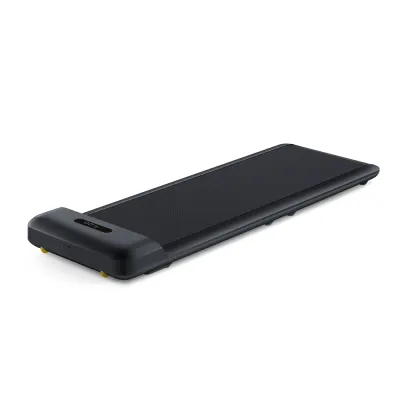
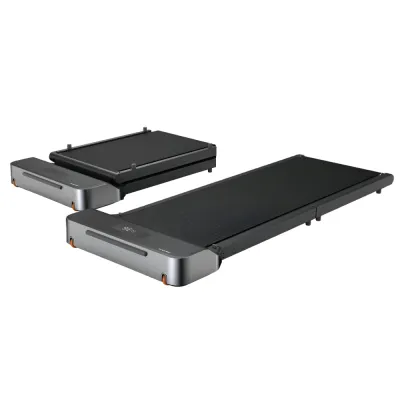
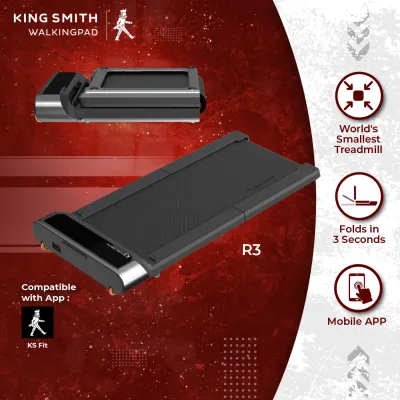
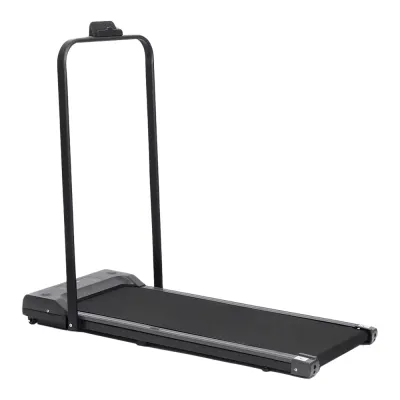
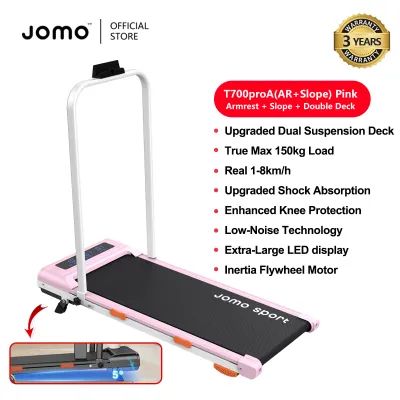
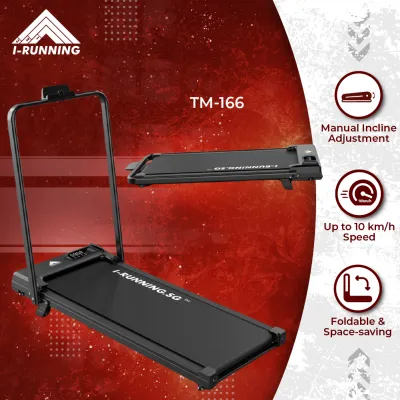
![[INSTOCK] Home Manual Treadmill / Belt Treadmill / Walking Pad](https://img.lazcdn.com/g/p/252e9cdd1aff5e5f5ac7bf3fc98134c9.png_400x400q80.png_.webp)
Prices are valid at publication and may change. Please refer to the product page for the latest price.
Safety guidelines typically recommend maintaining a clear zone behind the treadmill and on each side. In a tight bedroom or living room layout, this means checking that the path of the walking belt does not overlap with high-traffic walkways or block access to emergency exits. If you plan to place the walking pad in front of a television or under a standing desk, verify that you can easily step off the machine to the side or rear without colliding with walls, coffee tables, or shelving units.
Ceiling height is another critical factor, especially if you are considering a walking pad with an integrated handrail or a model that offers a slight incline. While standard HDB ceiling heights generally range from 2.6 to 2.8 meters, taller users must calculate their combined height when standing on the treadmill deck to avoid overhead obstructions, low-hanging ceiling fans, or light fixtures. Measure the step-up height of the walking pad—which is the distance from the floor to the top of the running belt—and add this to your own height to ensure comfortable clearance during use.
Finally, evaluate the proximity of your chosen exercise spot to standard electrical wall outlets. Walking pads require a stable power source, and running long extension cords across your living room floor creates a significant tripping hazard and can overload electrical circuits. Identify a location where the manufacturer-supplied power cable can reach a wall outlet directly without being stretched taut or routed under rugs, where friction could damage the cord over time.
Core Selection Criteria for Compact Walking Pads
When evaluating different walking pad models, physical specifications are the most reliable indicators of how well a machine will fit into your daily life. The primary appeal of these devices is their ability to disappear when not in use, making the comparison between folded and unfolded dimensions paramount. You must measure the height of the clearance under your sofa or bed frame if you plan to slide the unit underneath, keeping in mind that some models have protruding motor housings or wheels that require more vertical clearance than the main deck.

Deck size directly influences both the safety and comfort of your walking sessions. A deck that is too narrow or too short can restrict your natural gait, forcing you to walk with an unnatural stride or risk stepping onto the non-moving side rails. For most adults, a walking belt width of at least 40 centimeters and a length of 110 centimeters provides sufficient space for a comfortable stride at moderate walking speeds. Taller individuals or those with longer strides should look for slightly longer decks to prevent their heels from slipping off the back of the belt.
Portability features determine how easily you can transition the walking pad from storage to active use. Look for units equipped with high-quality, built-in transport wheels at the front of the frame, which allow you to tilt and roll the machine across your floors with minimal effort. The overall weight of the unit is also a key consideration; while heavier machines often offer greater stability, they can be challenging to maneuver, especially if you need to lift them over door thresholds or transition from hard flooring to thick rugs.
Recessed handles or dedicated lifting points on the frame can significantly improve your grip and reduce physical strain during daily setup and teardown. If you live alone or have physical limitations, prioritizing a lightweight model with a highly maneuverable wheel system will ensure that the effort of moving the machine does not become a barrier to your daily exercise routine.
Comparing Walking Pad Designs for Small Apartments
Walking pads generally fall into three distinct design categories, each offering unique trade-offs between storage convenience, stability, and user experience. Understanding these differences allows you to match the machine’s structural design to your specific living arrangements and fitness preferences.
Under-desk flat models are designed with the minimalist in mind, featuring a completely flat profile without any handrails or consoles. These units offer the smallest overall footprint and are exceptionally easy to slide under low furniture or stand upright against a wall. They are ideal for integration with standing desks during work-from-home sessions, but they require excellent personal balance, as there is no physical support to grab onto if you lose your footing.
Foldable models with detachable or folding handrails provide an extra layer of safety and stability, making them suitable for faster walking speeds or users who feel insecure without a handhold. The handrail typically folds down flat against the deck or can be removed entirely for storage. While these models offer greater versatility, the folded handrail often increases the overall thickness of the unit, which may prevent it from fitting under low-clearance sofas or beds, requiring you to store it vertically against a wall or inside a wardrobe.
Ultra-slim sliding-fold or 180-degree fold models represent the cutting edge of space-saving engineering, featuring a deck that folds completely in half. This design reduces the storage length of the machine by half, allowing it to fit into incredibly tight spaces, such as narrow utility closets or the gap beside a refrigerator. However, the folding hinge introduces a seam in the middle of the walking belt, which some users may feel underfoot, and these models often require a slightly more involved setup process compared to single-piece flat decks.
To help you visualize the trade-offs between these designs, consider the following comparison of typical structural characteristics:
| Design Type | Storage Footprint | Setup Effort | Stability & Support | Ideal User Profile |
|---|---|---|---|---|
| Under-Desk Flat | Minimal (Very thin, slides under low gaps) | Instant (Plug and play) | Low (No handrails or physical supports) | Multi-taskers, remote workers, confident walkers |
| Folding Handrail | Moderate (Thicker profile when folded) | Low (Requires raising and locking handrail) | High (Sturdy handrail for balance) | Brisk walkers, seniors, those prioritizing safety |
| 180-Degree Fold | Ultra-Compact (Shortest length, thicker profile) | Moderate (Requires unfolding and locking deck) | Medium (Stable deck, may have a slight seam feel) | Residents with extremely limited storage space |
Evaluating Performance: Motor, Speed, and Weight Capacity
Beyond physical dimensions, the internal components of a walking pad dictate its longevity, performance, and safety. The motor is the heart of the machine, and understanding its specifications is crucial for selecting a unit that can handle regular use. When reviewing product details, distinguish between continuous horsepower (CHP) and peak horsepower (PHP). CHP represents the motor’s ability to maintain a consistent speed under a continuous load, making it the more critical metric for long walking sessions, whereas PHP only indicates the motor’s maximum power output for short bursts.
A motor with insufficient continuous power will struggle under the weight of the user, leading to belt hesitation, increased friction, and premature motor failure. For standard walking speeds up to 6 kilometers per hour, a motor with a rating of 1.0 to 1.5 CHP is generally sufficient for average-weight users. If you plan to use the machine for light jogging or if multiple household members will use it consecutively, look for a slightly more robust motor to ensure smooth operation and prevent overheating.
Maximum weight capacity is a fundamental safety specification that must never be overlooked. Always verify the manufacturer’s stated weight limit and apply a conservative safety margin of at least 15 to 20 kilograms. For example, if you weigh 80 kilograms, choosing a machine rated for at least 100 kilograms ensures that the motor, frame, and suspension system are not operating at their absolute limits, which extends the lifespan of the equipment and provides a more stable walking experience.
Speed limits on walking pads are typically lower than those on traditional running treadmills, usually topping out between 6 and 10 kilometers per hour. If your primary goal is low-intensity steady-state walking while working or watching television, a model with a top speed of 6 kilometers per hour is perfectly adequate. However, if you wish to incorporate brisk walking or light jogging into your routine, ensure the model you select supports higher speeds and features a handrail for safety when operating at its upper limits.
Managing Noise, Vibration, and HDB Living Considerations
Operating motorized fitness equipment in a high-density HDB flat requires a proactive approach to noise and vibration management to maintain harmonious relationships with your neighbors. The sound of a walking pad is not just the hum of the motor; it also includes the impact noise of your footsteps transmitting through the floorboards and the structural concrete slab of the building.
When shopping, look for models that highlight quiet brushless motors, which tend to operate with less mechanical friction and noise than traditional brushed motors. Additionally, prioritize decks designed with multi-layer shock absorption systems, such as flexible rubber cushions or spring-loaded suspension points. These features not only protect your joints by reducing impact forces but also significantly lower the structural vibration transmitted into the floor.
To further mitigate noise, you should always place a high-density, anti-vibration equipment mat beneath your walking pad. These specialized mats, typically made of dense rubber or PVC, absorb the high-frequency vibrations and thuds generated by your footsteps, preventing them from echoing into the flat below. A good mat also protects your flooring from scratches, indentations, and any accidental lubricant drips.
Finally, establish a considerate usage routine that respects the quiet hours of your building. Avoid using the walking pad early in the morning or late at night when ambient noise levels are low and neighbors are sleeping. Regular maintenance, particularly lubricating the walking belt according to the manufacturer’s instructions, is also essential for noise control, as a dry belt increases friction, leading to loud squeaking noises and unnecessary strain on the motor.
Pre-Purchase Checklist and Setup Guidelines
Before finalizing your purchase from an online marketplace or local retailer, run through a final checklist to ensure a smooth ownership experience. First, verify the warranty terms and the availability of local after-sales support in Singapore. Purchasing from a seller that offers a local warranty and has a physical service center or responsive customer support team is invaluable if you encounter mechanical issues or require replacement parts like belts or sensors.
Confirm that the walking pad’s electrical specifications are fully compatible with Singapore’s standard 230V, 50Hz power supply. Most models sold locally will come with a standard UK-style three-pin plug, but if you are importing a unit, double-check that it does not require a voltage converter or a heavy-duty adapter, which can introduce safety risks and void your warranty.
Lastly, plan a realistic daily setup and teardown routine. If the process of retrieving, unfolding, and plugging in your walking pad is too cumbersome, you are far less likely to use it regularly. Choose a storage location that is easily accessible and ensure that the path to your exercise spot is clear of obstacles, allowing you to transition from sitting to walking in just a few minutes.
Frequently Asked Questions (FAQ)
Can I use a walking pad directly on vinyl or laminate flooring?
While you can physically place a walking pad on vinyl or laminate flooring, doing so directly is not recommended. The continuous vibration, friction, and weight of the machine during use can cause scuffs, scratches, or permanent indentations on softer flooring materials. Additionally, heat generated by the motor can potentially affect the adhesive or structure of laminate planks over time. To protect your floors and prevent the machine from sliding, always place a high-density rubber or PVC equipment mat underneath the walking pad before your first workout.
Do compact walking pads require regular maintenance?
Yes, compact walking pads require routine maintenance to ensure smooth operation and longevity. The most critical task is regular belt lubrication, which reduces friction between the walking belt and the deck, preventing motor strain and noise. Depending on your usage frequency, you should apply a manufacturer-approved silicone lubricant every three to six months. Additionally, you must periodically check the alignment and tension of the walking belt, adjusting the tension bolts at the rear of the frame if the belt begins to drift to one side or slip during use.
Is a walking pad effective for fitness compared to a standard treadmill?
A walking pad is highly effective for accumulating daily steps, improving cardiovascular health, and increasing daily energy expenditure, making it an excellent tool for low-intensity steady-state exercise. While it lacks the high speeds, steep incline features, and robust frames of standard commercial treadmills designed for intense running, it excels in convenience and accessibility. For individuals looking to combat a sedentary lifestyle, particularly those working from home in compact HDB flats, a walking pad provides a practical and highly consistent way to maintain physical activity throughout the day.
Community discussion
Share your experience or ask a question. Comments are reviewed before publication.