
Storing a Brompton folding bicycle on a wall mount requires careful consideration of the bike’s unique frame geometry, folding mechanisms, and weight distribution. Standard bicycle wall mounts designed for traditional diamond-frame bikes often fail to accommodate the curved main tube, small 16-inch wheels, and delicate cable routing of a Brompton. To store your bike safely without risking frame scratches, hinge misalignment, or cable damage, you must choose a wall mount that is specifically compatible with folding bikes. Compatible options generally fall into three categories: wide, padded main-frame cradles that support the bike in its unfolded state; specialized vertical wheel hooks designed for small-diameter rims; and dedicated folded-state shelves or heavy-duty pegs that cradle the bike’s compact folded footprint. The most suitable choice depends on whether you prefer to display your bike fully assembled or store it compactly when folded, as well as the structural integrity of your wall.
Understanding Brompton's Unique Frame and Mounting Challenges
A Brompton bicycle is a highly engineered machine, but its distinctive design presents several challenges when it comes to wall storage. Unlike standard road or mountain bikes that feature a symmetrical diamond frame with a straight top tube, a Brompton utilizes a single, low-slung, curved main tube. This tube connects the front folding hinge to the rear frame hinge. Because the tube is curved and lacks a traditional horizontal top tube, generic wall hooks designed to cradle a straight frame will often cause the bike to sit at an awkward, unstable angle. This instability increases the risk of the bike slipping off the mount.
Furthermore, the presence of folding hinges and quick-release clamp plates along the main tube introduces vulnerable points that must never bear the concentrated weight of the bicycle. Placing a narrow metal hook directly against a hinge mechanism or its clamping plate can warp the hardware, leading to alignment issues when folding or riding. Additionally, the Brompton’s control cables—including the brake inner/outer cables and gear cables—run closely along the main tube. A poorly designed wall mount can easily pinch or crush these cables against the frame, degrading shifting and braking performance over time.
Products mentioned in this guide
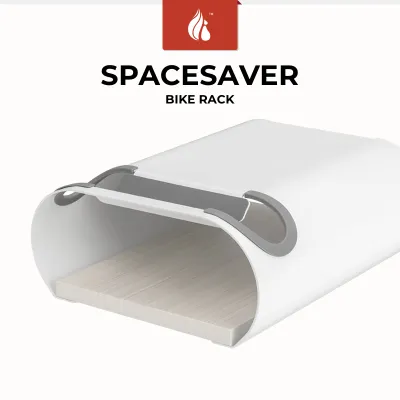
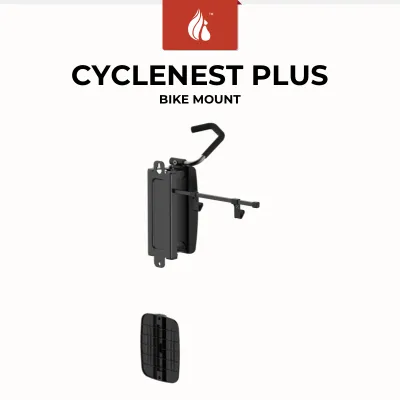
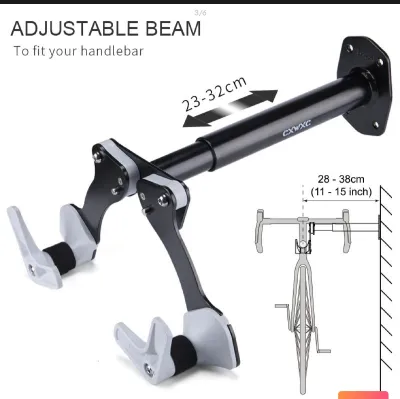
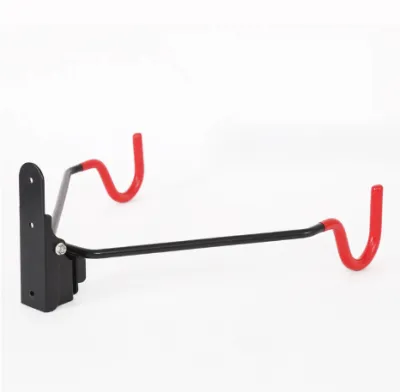
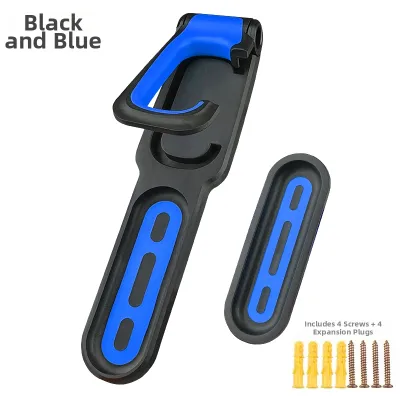
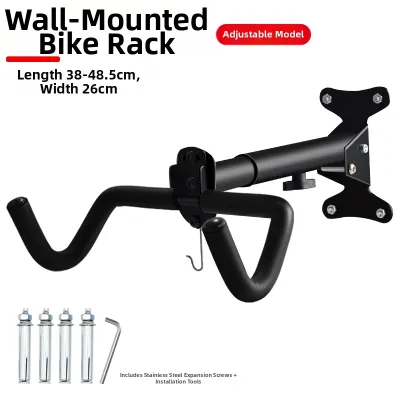
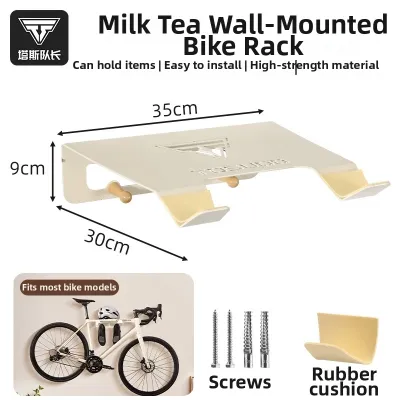
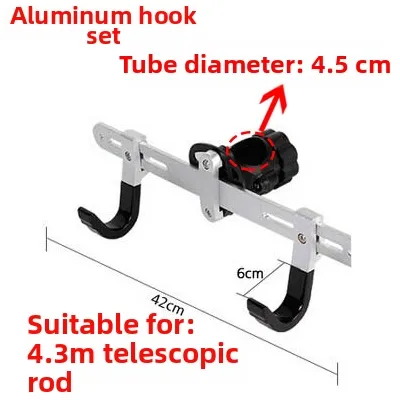
Prices are valid at publication and may change. Please refer to the product page for the latest price.
The bike’s small 16-inch wheels and compact rear triangle also complicate vertical storage. Standard vertical wall mounts are engineered with deep wheel trays meant to stabilize large 700c or 29-inch tires. When a small-wheeled Brompton is placed in these mounts, the wheel may not reach the stabilizing cradle, or the hook may press directly against the mudguards, causing them to bend or crack.
Finally, the center of gravity shifts dramatically depending on whether the bike is stored folded or unfolded. In its unfolded state, the weight is distributed across the wheelbase, though still slightly biased toward the rear due to the internal gear hub or derailleur system. When fully folded, the Brompton becomes a dense, compact package weighing between 9 kg and 13 kg, with the center of gravity concentrated tightly in the middle. Storing the bike folded requires a mount that can support this concentrated mass close to the wall, whereas storing it unfolded requires a wider projection to clear the handlebars and pedals.
Key Compatibility Criteria for Brompton Wall Mounts
Before purchasing any wall mount for your Brompton, you must evaluate several critical technical specifications to ensure a secure fit and prevent long-term damage to your bicycle.

First and foremost, prioritize contact point and frame protection. The main tube of a Brompton is typically made of steel or titanium, finished with a high-quality paint or lacquer. To prevent paint chips, scratches, and localized tube deformation, any mount that contacts the frame must feature wide, contoured, and heavily padded surfaces. Look for cradles lined with thick, high-density foam, soft rubber, silicone, or durable leather. Avoid narrow, bare metal hooks or hard plastic cradles, as these concentrate the bike’s weight onto a tiny surface area, which can mar the finish or even dent the thin-walled tubing.
Second, verify the weight capacity and safety margin of the wall mount. While a standard Brompton is relatively light compared to some utility bikes, it still carries significant weight, especially when outfitted with front carrier blocks, luggage, rear racks, mudguards, or aftermarket components. A typical setup can easily weigh up to 13 kg or more. To ensure optimal safety, select a wall mount with a certified weight capacity that exceeds your bike’s fully loaded weight by a comfortable margin—ideally at least 1.5 to 2 times the actual weight. This safety margin accounts for the dynamic forces applied when lifting the bike onto and off the mount.
Third, decide on the mounting state: folded or unfolded. If you have limited floor space and want to keep the bike completely out of the way, a folded-state mount is highly efficient. These mounts typically consist of a sturdy shelf or a pair of heavy-duty pegs that support the bike under its main frame or bottom bracket when folded. If you prefer to showcase the bike’s classic silhouette or want quick access for daily commuting without unfolding it first, look for an unfolded-state mount, such as a horizontal frame cradle or a vertical wheel hook.
Fourth, consider wall clearance and handlebar width. The handlebars on a Brompton—particularly the high-rise H-type or the wide M-type—extend significantly outward from the frame. If the wall mount does not project far enough from the wall, the handlebars or pedals will press hard against the wall surface. This can scuff your wall paint and force the bicycle into an awkward, unstable tilt. Measure the distance from the center of your bike’s main tube to the outer edge of the handlebar grip, and ensure the wall mount’s arm length provides sufficient clearance.
Evaluating Common Wall Mount Types for Folding Bikes
Understanding the strengths and limitations of different wall mount styles will help you choose the best configuration for your home, office, or garage.
Wheel-hook mounts are a popular, space-saving option that hangs the bicycle vertically by either the front or rear wheel. However, standard vertical hooks designed for large mountain or road bikes are rarely a suitable fit for a Brompton’s 16-inch wheels. The hook’s curvature must be tight enough to grip the small rim securely without slipping, yet wide enough to clear the tire profile. Additionally, because Bromptons are often equipped with full-coverage mudguards, a standard hook can press directly against the plastic or aluminum guard, causing it to warp or snap. If you choose a wheel-hook mount, look for models with adjustable hook angles or those specifically rated for small-wheel folding bikes, and ensure the hook contacts only the metal rim and tire, completely clearing the mudguard.
Top-tube or main-frame cradles support the bike horizontally in its unfolded state. These mounts usually feature two arms or a single wide cradle that holds the main tube. When evaluating these, look for adjustable cradles where the angle and width of the support arms can be customized. Because the Brompton’s main tube is curved, an adjustable mount allows you to level the bike so it hangs parallel to the floor. It is vital to position the cradle arms so they support the solid sections of the main tube, keeping them well clear of the main folding hinge, the rear frame hinge, and any exposed gear or brake cables.
Folded-state shelves and pegs are specifically engineered to hold the Brompton in its most compact form. These mounts are often designed as elegant wooden or metal shelves with a cutout or recess that matches the shape of the folded bike’s frame or bottom bracket. Some designs utilize two sturdy, padded pegs that slide under the folded frame’s tubes. This method is highly stable because the bike’s center of gravity is kept very close to the wall, minimizing the leverage force exerted on the wall anchors. It also keeps dirty tires and chains contained, preventing them from marking your walls. However, lifting a folded 12 kg bike onto a high shelf requires good physical strength and proper lifting technique to avoid back strain.
When choosing between vertical and horizontal orientation, consider both your available wall space and your physical comfort. Vertical mounting (hanging by a wheel) is a highly efficient space-saving option, allowing you to line up multiple bikes side-by-side. However, it requires you to lift the bike vertically and guide the wheel onto the hook, which can be awkward. Horizontal mounting (using a frame cradle or shelf) takes up more wall real estate but keeps the lifting motion straightforward and ergonomic, making it a better choice for daily commuters who need to store and retrieve their bike quickly.
Pre-Purchase and Installation Safety Checklist
A high-quality wall mount is only as secure as its installation. Before drilling any holes, run through this safety checklist to ensure your Brompton remains safely secured to the wall.
First, verify your wall material. This is the most critical step in preventing a catastrophic mount failure. In many modern apartments and homes, particularly in concrete-dense urban environments like Singapore, interior walls may be made of solid concrete, brick, or hollow drywall. Never mount a bicycle holder directly into drywall using simple plastic plug anchors; the weight and leverage of a Brompton will quickly pull the anchors out, damaging your wall and your bike. For drywall, you must locate the wooden or metal studs behind the wall and secure the mount directly into them using heavy-duty wood screws. For solid concrete or brick walls, use high-quality masonry wall plugs or expansion anchors designed to handle shear loads.
Second, determine the optimal mounting height. Hold your Brompton at various heights against the wall to find a position that is comfortable to reach. If you store the bike folded, the mount should be low enough that you do not have to lift the compact, heavy bundle above chest height. If you store it unfolded, ensure there is enough clearance underneath so you do not bump into the wheels or pedals as you walk past.
Third, consult both the wall mount’s installation manual and your Brompton owner’s manual. Check for any specific warnings regarding frame clamping or load-bearing limits. Never clamp a wall mount tightly around the Brompton’s tubes; the mount should cradle the bike’s weight using gravity, not compress the frame.
Fourth, establish a routine inspection schedule. Over time, the vibrations from placing and removing the bike can loosen wall anchors or mounting screws. Every few months, check the mount for any play or wobbling. Inspect the protective padding on the cradles or hooks to ensure it has not worn thin, exposing raw metal or plastic that could scratch your frame.
Frequently Asked Questions (FAQ)
Can I hang a Brompton by its front or rear wheel?
Yes, you can hang a Brompton by its front or rear wheel, but you must take specific precautions. The small 16-inch wheels feature robust double-wall rims and tensioned spokes that are fully capable of supporting the bike’s weight when suspended. However, because of the compact wheel size, standard large-bike hooks may press against the mudguards or spokes rather than resting securely on the rim. Always verify that the hook is small enough to fit between the spokes and rest directly on the tire and metal rim. Additionally, ensure the hook does not put lateral pressure on the spokes, which can cause the wheel to go out of true over time.
Will hanging my Brompton damage the folding hinges?
Hanging your Brompton will not damage the folding hinges as long as the weight of the bike is supported correctly. The hinges are designed to handle the immense dynamic forces of a rider’s weight during cycling, so the static weight of the bike itself is negligible by comparison. However, damage can occur if the wall mount’s cradles or hooks press directly against the hinge clamps, quick-release levers, or locking mechanisms. To prevent damage, always position the wall mount’s contact points on the solid, straight sections of the main steel or titanium tube, completely clear of the folding joints and cable guides.
Community discussion
Share your experience or ask a question. Comments are reviewed before publication.